First Published: 2012-08-11


Head of Libya's new assembly pledges to overcome divisions with neutrality


Megaryef pledges to remain neutral, seek to unite ranks in country, where post-revolution divisions are still deep.


Middle East Online

By Imed Lamloum – TRIPOLI

‘Congress has a huge and important responsibility’

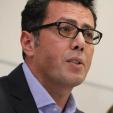
The head of Libya's newly-empowered national assembly Mohamed al-Megaryef pledged on Friday to remain neutral and seek to unite ranks in the country, where post-revolution divisions are still deep.

"My main duty is to stand aside, away from political, regional and tribal considerations," Megaryef said as he presided over the first official meeting of the General National Congress.

Speaking just a day after he was elected head of the 200-seat assembly, Megaryef, who is seen as pro-Islamist, announced that he will quit as president of the Libyan National Salvation Front.

Megaryef, a veteran opponent of slain Libyan strongman Moamer Gathafi's ousted regime, defeated liberal independent Ali Zidane in a run-off by 113 votes to 85.

He said he will keep an "equal distance" with all members of the assembly and called for a broad national dialogue involving politicians and members of civil society, including those outside the legislative body.

He also underlined the need to "remain close to the people" and suggested that all meetings of the assembly be broadcast live on Libyan television.

"Of course there will be differences of opinion. But we must exchange views in order to reach common agreement for the supreme interest of the nation," he said.

"The Congress has a huge and important responsibility," said Megaryef, adding that Libya was at an "important and dangerous" crossroad in its history.

Thursday's vote in the assembly, elected in landmark polls on July 7, came after the National Transitional Council handed over power on Wednesday, in a symbolic move marking the first peaceful transition in Libya's modern history after four decades of Gathafi's iron-fisted rule.

The assembly is tasked with choosing an interim government that will steer the country until fresh elections can be held under a new constitution to be drafted by a panel of 60 members.

Its new president is an economist with a doctorate from Britain, who held leading posts in the Gathafi regime in the 1970s before defecting in 1980 to join the opposition in exile.

He was a founding member of the Salvation Front, which grouped exiled opponents of Gathafi.

Hounded by Gathafi's intelligence service, Megaryef survived assassination attempts in Rome in 1981, in Casablanca in 1984 and in Madrid in 1985, his daughter Asma said.

The Gathafi regime also took reprisals against family members who stayed in Libya, jailing several of his brothers.

Regarded as a moderate Islamist close to the Muslim Brotherhood, Megaryef was elected to the assembly on the ticket of his former exiled grouping, now renamed the National Front Party.

A member of the Brotherhood's Justice and Construction Party (JCP), who asked not to be identified, said Megaryef's election was "a victory for the Islamists."

Megaryef was born in 1940 in Libya's second city Benghazi, which was the cradle of last year's uprising but many of whose residents have complained their role has not been sufficiently rewarded in the post-Gathafi Libya.

The assembly also elected two vice presidents: Jommaa Atiga, an independent from Libya's third-largest city Misrata, and JCP candidate Salah al-Makhzoum.

Under the interim constitution, decisions in the assembly require a two-thirds majority to pass, making cooperation necessary to avoid gridlock in the delicate transition.

The majority of the assembly's 200 seats were set aside for independent candidates, many of whose loyalties and ideologies remain unclear but who are being wooed by various blocs.

Political parties were allowed to contest just 80 of the seats.

The liberal National Forces Alliance of Mahmud Jibril, who served as premier during last year's conflict, won 39 on its own. It can also count on the support of a centrist party led by Ali Tarhuni, who held several key posts during last year's revolt, and which won two seats.

The JCP took 17 seats but its leader, Mohammed Sawan, has said it can match the support of Jibril's party in the assembly with the backing of independents.


Khamenei’s tailored election: Rafsanjani and Mashaie barred from presidential race

Bouteflika’s heath condition: Another Algerian state secret?

Egypt gears up for possible rescue operation with large security sweep

Qusayr battle reveals widening scope of proxy war in Syria

Dubai successfully foils smuggling of 259 African ivory tusks

‘Crucifixion’ of Yemenis in Jizan: Everything old is new again in Saudi Arabia

UAE court readies verdict in secret organization case

Saudi nabs 10 more Iran spy suspects

Syrian attack on Israeli patrol: Accounts contrast

Tunisia radical Islamists engage in trial of strength with Ennahda

Deadly SARS-like virus reaches Tunisia

Blood of Iraqi Ambassador sanctioned in Jordan

Massive tornado: Obama declares major disaster in Oklahoma

US rings alarm bell over rising tide of religious intolerance

First sea turtle nest spotted at Saadiyat Beach

Iran wants to take part in Syria peace conference

IMF predicts Saudi economic slowdown

US criticises Egypt's civil rights record

Battle for Qusayr: Hezbollah sends new elite fighters

Kerry visits Oman for mega defense deal, Mideast talks

Bouteflika’s absence paralyses Algeria politics

Iran’s Guardians Council hints Rafsanjani not fit for presidency

Mauritania's ruling party: Abdel Aziz will not step down

Israel ‘fabricates’ its innocence from murder of Mohammed al-Dura

Maliki’s remedy for Iraq sectarian violence: Overhaul of security strategy

Qatar emir laments international failure over Syria

Egypt sends reinforcements to Sinai as speculation grows

Spokesman’s surrender to Mauritania deals another blow to Ansar Dine

Another ‘Bou Azizi’ in Saudi Arabia: Street vendor dies after self-immolation

Rising storm of violence hits Iraq hard in May

Bahrain court slaps nine Shiites with jail terms over 'terrorist' cell

Abu Iyadh to Tunisia rulers: Thank you tyrants, but we will never be defeated!

US drone strikes again in Yemen

15 killed in string of bomb attacks in Iraq

Battle for Qusayr: 23 Hezbollah fighters killed

Militants set their sights on mosques in Iraq

One dead in police clashes with Islamists in Tunis

UAE calls for political action to stop 'repressive Damascus’

Egypt's Morsi rejects negotiations with Sinai kidnappers

Tough measures against expatriates raise concerns in Kuwait

Maliki chooses ‘cosmetic solution’ for Iraq sectarian wounds

Clashes in Tunisia as Ansar al-Sharia clings to escalation

Strategic city of Qusayr falls into hands of Assad forces

Internet enters ‘coma’ ahead of Iran presidential election

Saudi Arabia vies to dissuade its nationals from joining ‘jihad’ in Syria