

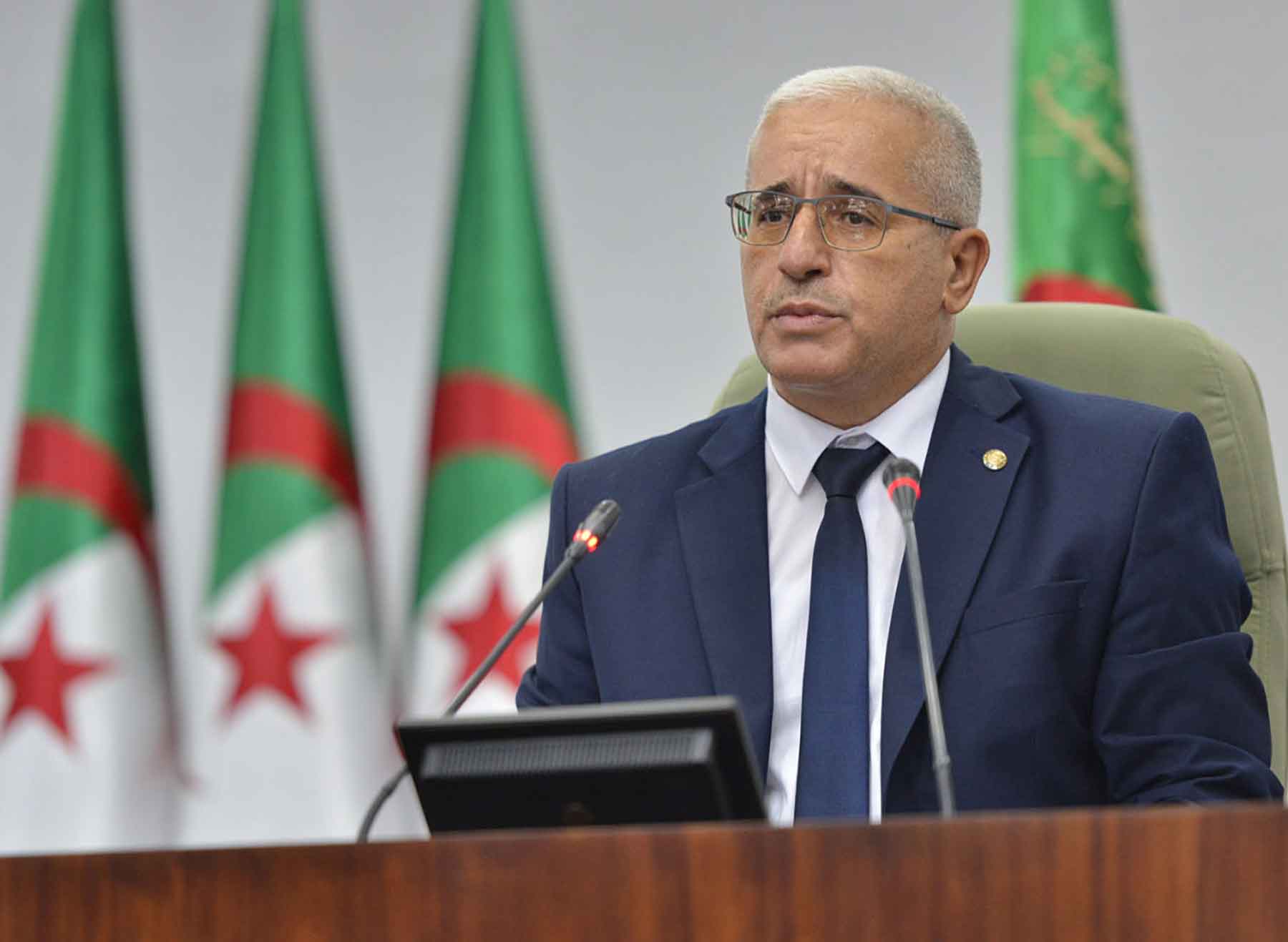
Speaker of the National People's Assembly of Algeria Ibrahim Boughali.
Algerian parliament debates bill to criminalise French colonial rule
All parliamentary blocs agreed to mandate Boughali to present the bill, describing it as “a unifying national demand.”
Sunday 21/12/2025
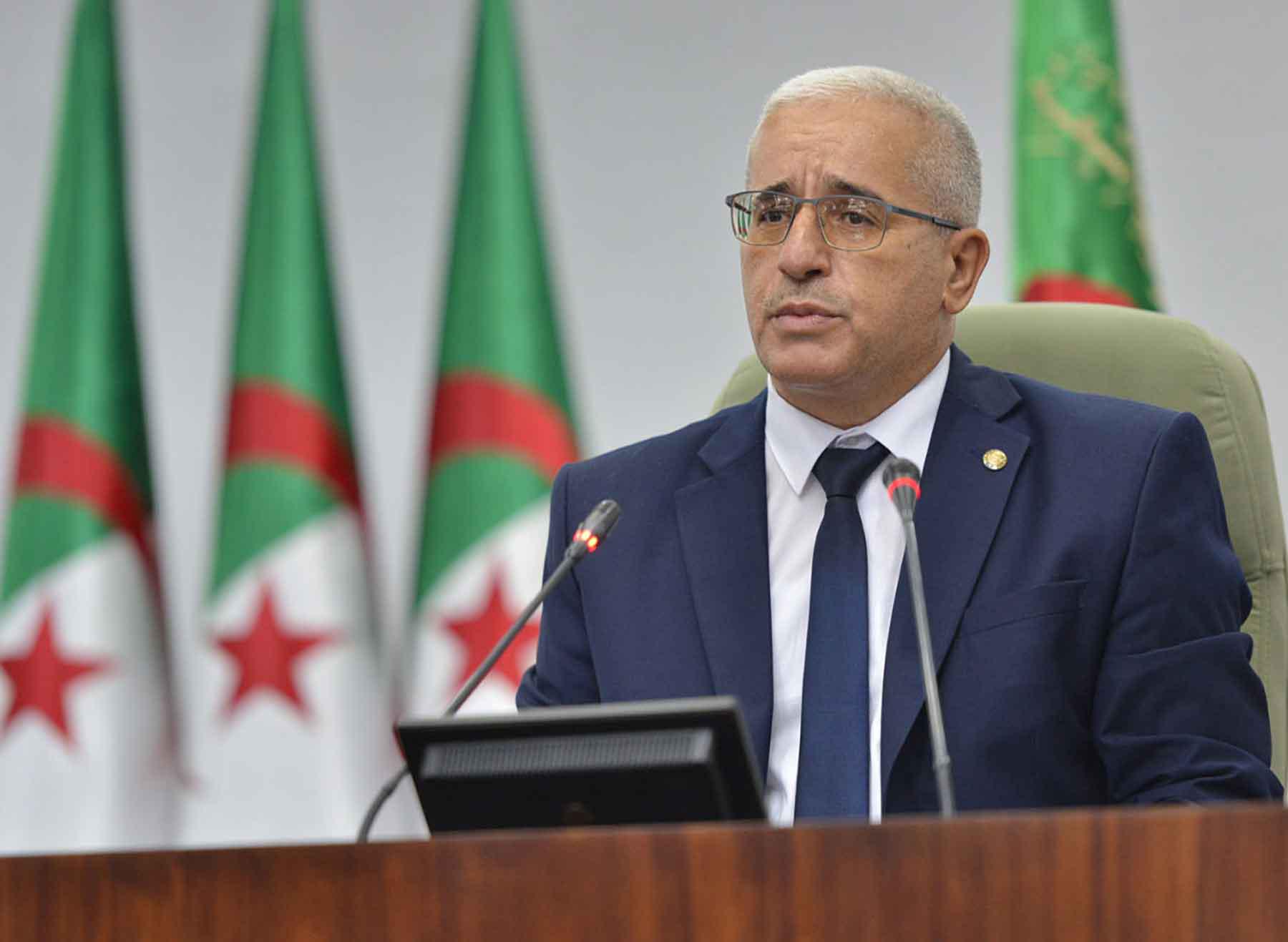
Speaker of the National People's Assembly of Algeria Ibrahim Boughali.
ALGIERS –
Algeria’s parliament on Saturday began debating a draft law that would criminalise French colonial rule between 1830 and 1962, a first in the legislature’s history, as Algiers and Paris attempt to ease tensions after years of fraught relations.
The debate took place during a public session of the National People’s Assembly, the lower house of parliament, where Speaker Ibrahim Boughali was authorised to present the bill to lawmakers and members of the government, some of whom attended wearing Algerian flags.
Colonial memory remains one of the most sensitive sources of tension between Algeria and France, centring on the legacy of French rule and the violence, repression and crimes associated with it. Algeria has repeatedly called for an explicit French acknowledgement of historical responsibility, including a formal apology and symbolic reparations.
Paris has sought to manage the issue through partial steps, such as recognising certain historical facts or selectively opening archives. Algiers, however, says this approach lacks clarity and comprehensiveness, leaving colonial memory hostage to France’s domestic political calculations.
As a result, the issue has become a recurring political lever, affecting trust between the two countries and weighing directly on bilateral cooperation in diplomacy, security and economic affairs, making reconciliation on the colonial past a delayed precondition for stable relations.
On Tuesday, all parliamentary blocs agreed to mandate Boughali to present the bill, describing it as “a unifying national demand that rises above political and partisan considerations and embodies parliamentary unity around national principles.”
In a joint statement, the blocs said the bill “reflects the sincere will of MPs and embodies the commitment of the current legislative term to preserving national memory and defending Algeria’s history and its liberation struggle with firmness and clarity.”
Presenting the draft law, Boughali said the session was “not a routine parliamentary procedure, but a sovereign act par excellence, a clear moral stance and an unambiguous political message.”
“It expresses Algeria’s unwavering attachment to its inalienable rights, its loyalty to the sacrifices of its people and to the message of its martyrs,” he added.
He said the proposal, which lists crimes committed during French colonial rule, defines the responsibility of the French state, sets out mechanisms to demand recognition and an apology, and introduces penalties criminalising the glorification or promotion of colonialism, was “not directed against a people, nor intended as revenge or to inflame hatred.”
Rather, he said, it was based on the principle that “crimes against humanity do not expire with time, are not justified by force and cannot be closed by silence.”
This is the first time parliament has debated in a public session a bill seeking to criminalise more than 130 years of French colonial rule, a move some critics view as an attempt to deflect attention from domestic policy failures.
The draft was prepared by a seven-member parliamentary committee, six representing parliamentary blocs and one independent lawmaker, appointed by Boughali on March 23.
At the time, Boughali said the move reflected “the consensus of all political currents on this issue, in honour of the memory of our forebears, from the generation of resistance to that of the glorious liberation revolution.”
According to a previous statement by the National People’s Assembly, the bill is due to be put to a vote on Wednesday, alongside other legislation.
The debate comes as Algerian-French relations are experiencing one of their worst crises in decades.
Ties have deteriorated sharply in recent months after Paris recognised Morocco’s long-standing autonomy plan for Western Sahara, a move rejected by Algeria, which backs the Polisario Front that opposes autonomy.
Relations between Algiers and Paris have repeatedly swung between tentative improvement and renewed tension, particularly over unresolved issues linked to France’s colonial legacy in Algeria from 1830 to 1962, files that Algeria says Paris continues to refuse to address despite their devastating consequences.