

A strategic investment in Dubai's future
Dubai's aviation megaproject gathers pace with $55bn expansion pipeline
The airport, once fully completed, will be capable of handling more than 260 million passengers annually and 12 million tonnes of air cargo.
Tuesday 16/06/2026
A strategic investment in Dubai's future
DUBAI – Dubai is preparing to award more than 55 billion dirhams ($14.98 billion) worth of strategic contracts for the expansion of Al Maktoum International Airport, marking a major milestone in a project designed to create the world's largest aviation hub and secure the emirate's position at the centre of global trade, tourism and logistics.
Dubai Crown Prince Sheikh Hamdan bin Mohammed bin Rashid Al Maktoum said the contracts would be awarded over the coming months as work continues according to schedule, with the first phase expected to become operational in 2032.
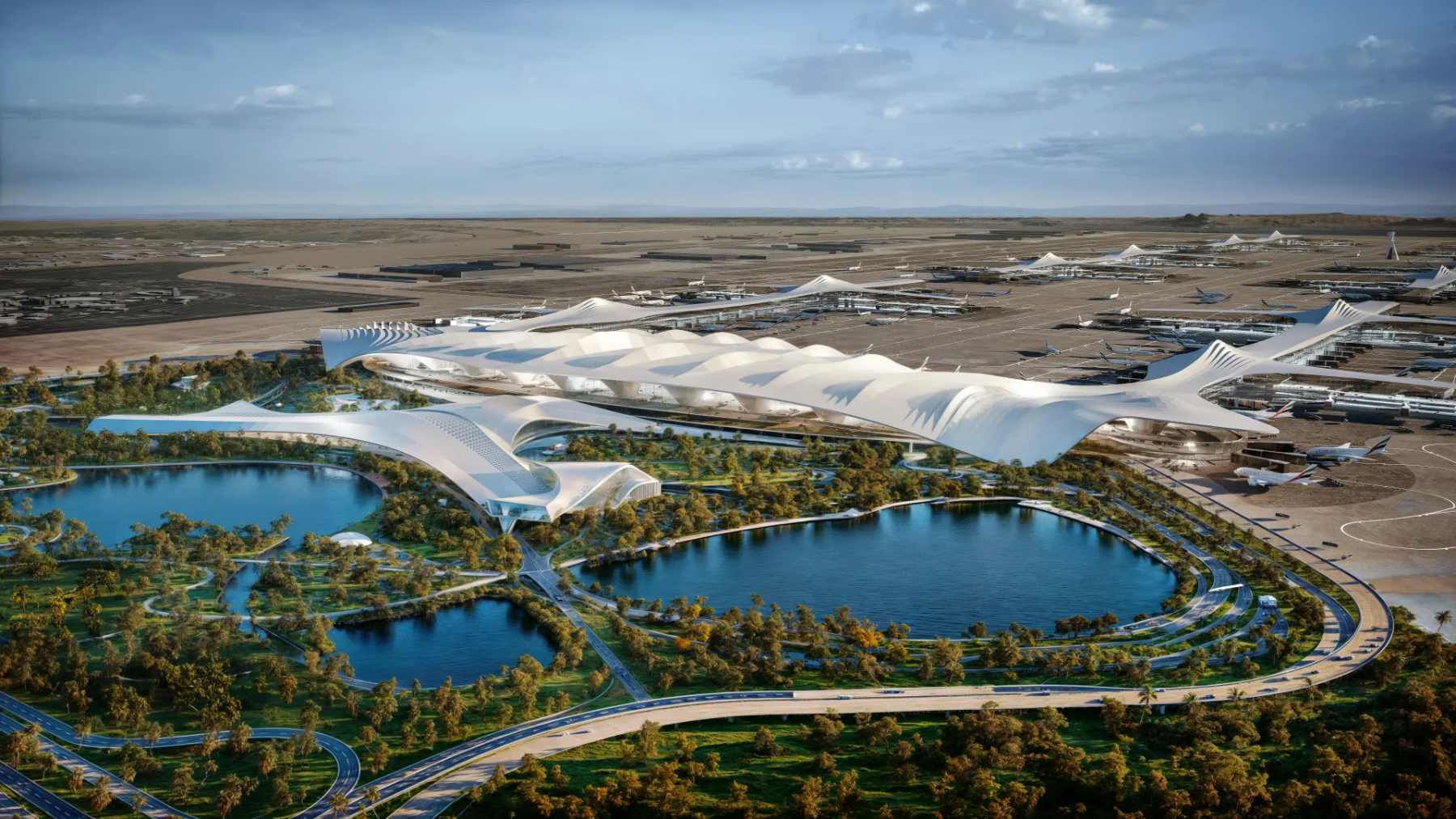
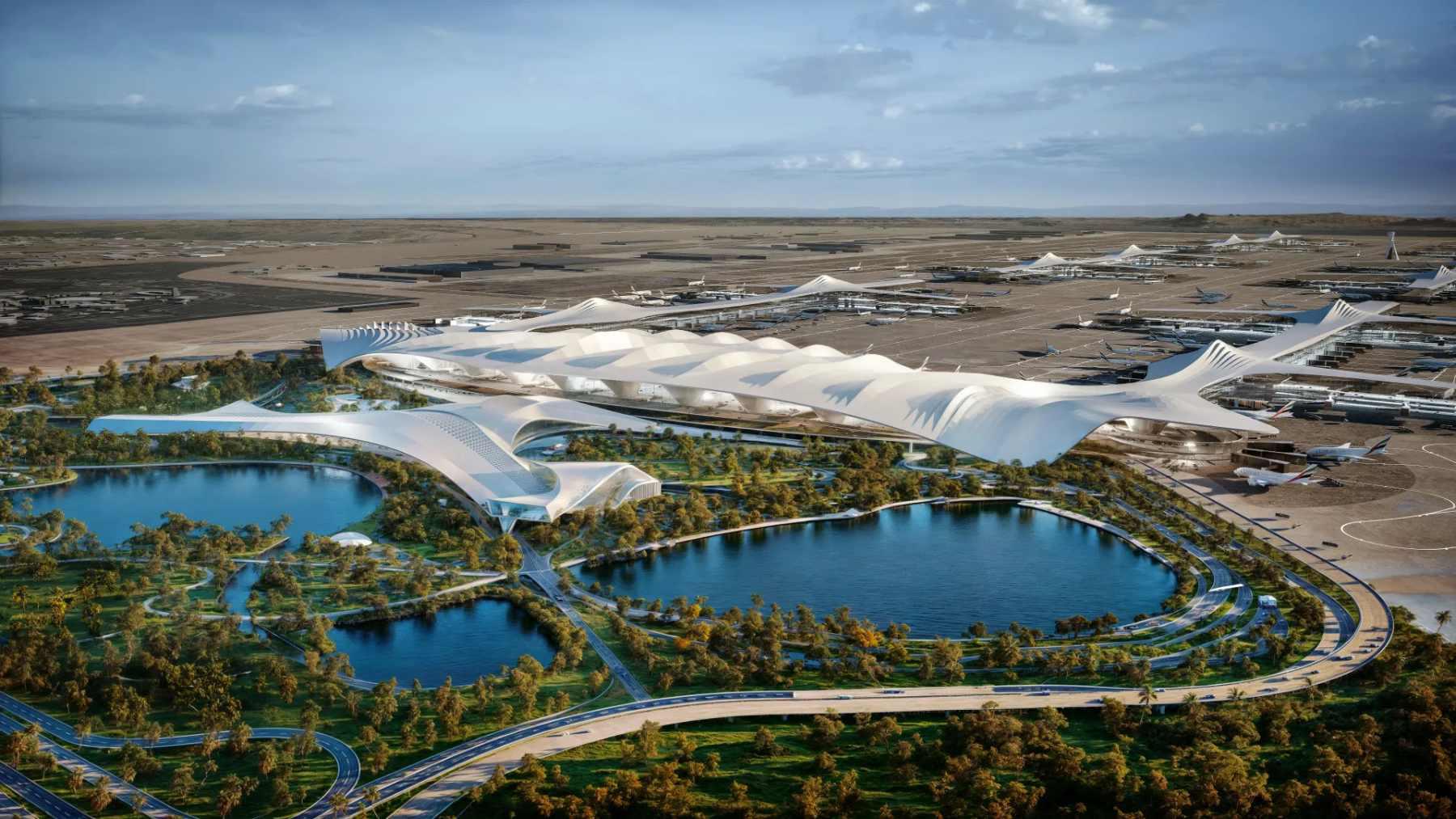
The airport, once fully completed, will be capable of handling more than 260 million passengers annually and 12 million tonnes of air cargo, making it the largest aviation facility in the world by capacity.
"Work on the Al Maktoum International Airport expansion continues according to the approved timeline, with phase one scheduled to begin operations in 2032," Sheikh Hamdan said in a post on X.
He added that contracts worth around 13 billion dirhams are already under execution and that more than 10 million work hours have been completed during the past 15 months.
The development project has now entered a large-scale construction phase, reflecting Dubai's determination to maintain its leadership in global aviation and logistics for decades to come.
According to Dubai authorities, major progress has already been achieved in enabling works, runway infrastructure and the foundations of future passenger terminals and aircraft gates.
The next round of contracts will include the western passenger terminal, new aircraft concourses, automated people-mover systems, advanced baggage-handling networks, major power-generation facilities and district cooling plants.
The airport will ultimately feature five independently operating parallel runways, two passenger terminals, seven concourses and more than 430 aircraft stands, supported by integrated air, rail and road transport connections.
Officials say the project is a cornerstone of the emirate's economic strategy and a key component of the Dubai Economic Agenda D33, which aims to strengthen Dubai's competitiveness and attract investment across multiple sectors.
Sheikh Hamdan described the development as a strategic investment in Dubai's future that will support sustainable economic growth, expand connectivity and enhance the emirate's long-term competitiveness.
Dubai Aviation City Corporation Executive Chairman Khalifa Al Zaffin said the airport would become a fully integrated global platform designed to redefine travel and logistics through advanced automation, operational intelligence and seamless connectivity.
The project is also expected to transform the wider urban landscape.
When fully completed, the airport will sit at the heart of a vast new airport city expected to accommodate around one million residents and attract some of the world's leading aviation, logistics and technology companies.
The scale of the undertaking is reflected in construction activity already under way. Dubai Aviation Engineering Projects said more than 17,000 concrete piles have been installed, over 45 million cubic metres of excavation completed and workforce numbers are expected to rise from around 9,000 today to approximately 120,000 at peak construction.
The expansion is also intended to facilitate the gradual transfer of operations from Dubai International Airport, easing congestion while creating a more flexible and technologically advanced aviation system.
Alongside the Al Maktoum development, Dubai is investing heavily in upgrades at Dubai International Airport and Dubai World Central, with a separate programme worth 16 billion dirhams aimed at increasing capacity, improving operational efficiency and enhancing the passenger experience.
The ambitious project was first unveiled by Sheikh Mohammed bin Rashid Al Maktoum in April 2024, when he announced the start of construction of a new passenger terminal costing $34.85 billion.
At the time, he said Al Maktoum International Airport would be five times larger than Dubai International Airport and would eventually absorb all of its operations.
While challenges remain, including managing one of the world's largest infrastructure projects and adapting to rapid changes in global aviation, Dubai's leadership has signalled confidence that the airport will become a defining pillar of the emirate's economic future and a symbol of its ambition to remain one of the world's most connected cities.