

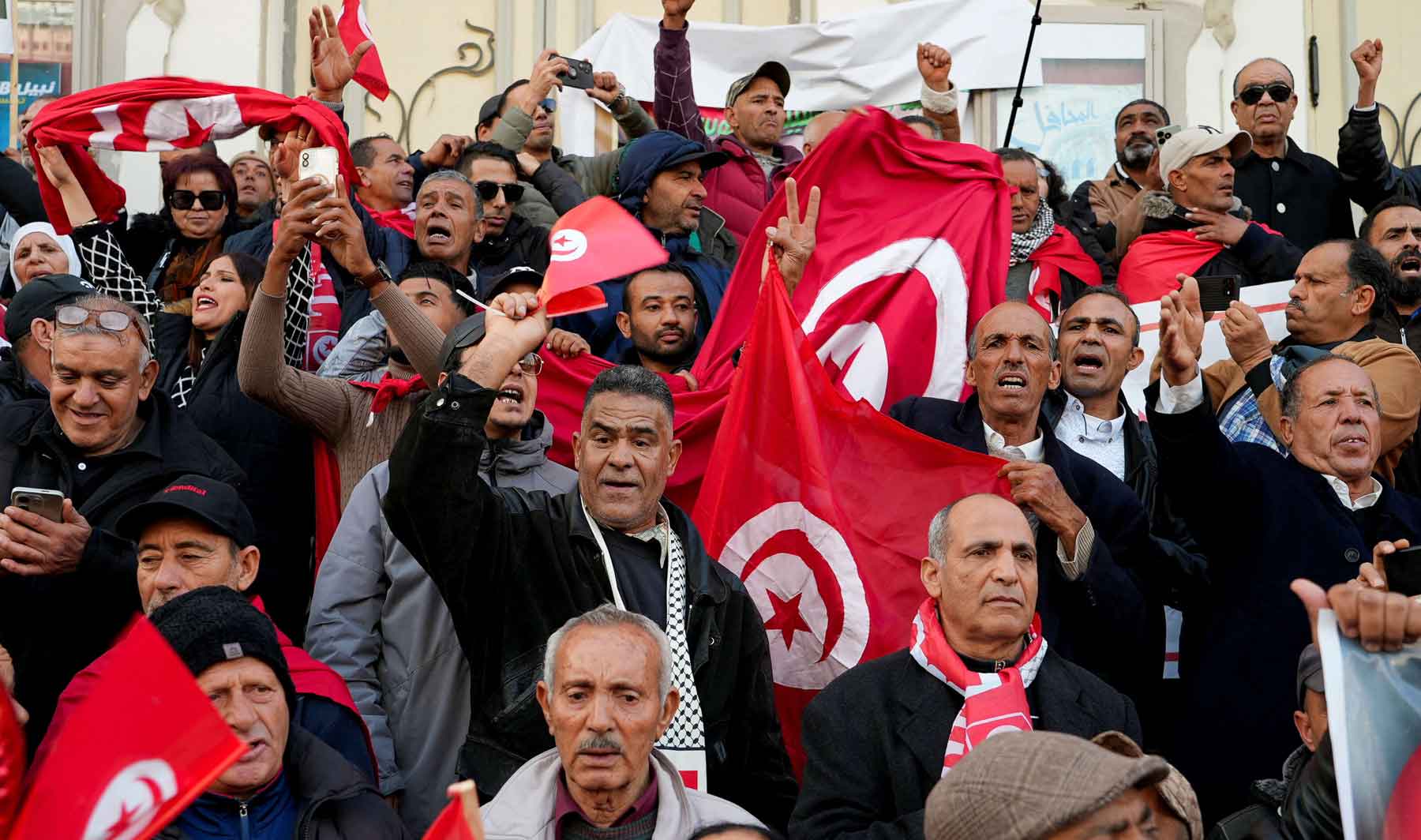
Supporters of Tunisian President Kais Saied rally in Tunis, December 17, 2025.
Fifteen years on, Tunisia struggles to balance economic reform, political division
As Tunisia reflects on 15 years since the uprising, the anniversary serves as a reminder that post-revolutionary gains remain fragile.
Wednesday 17/12/2025
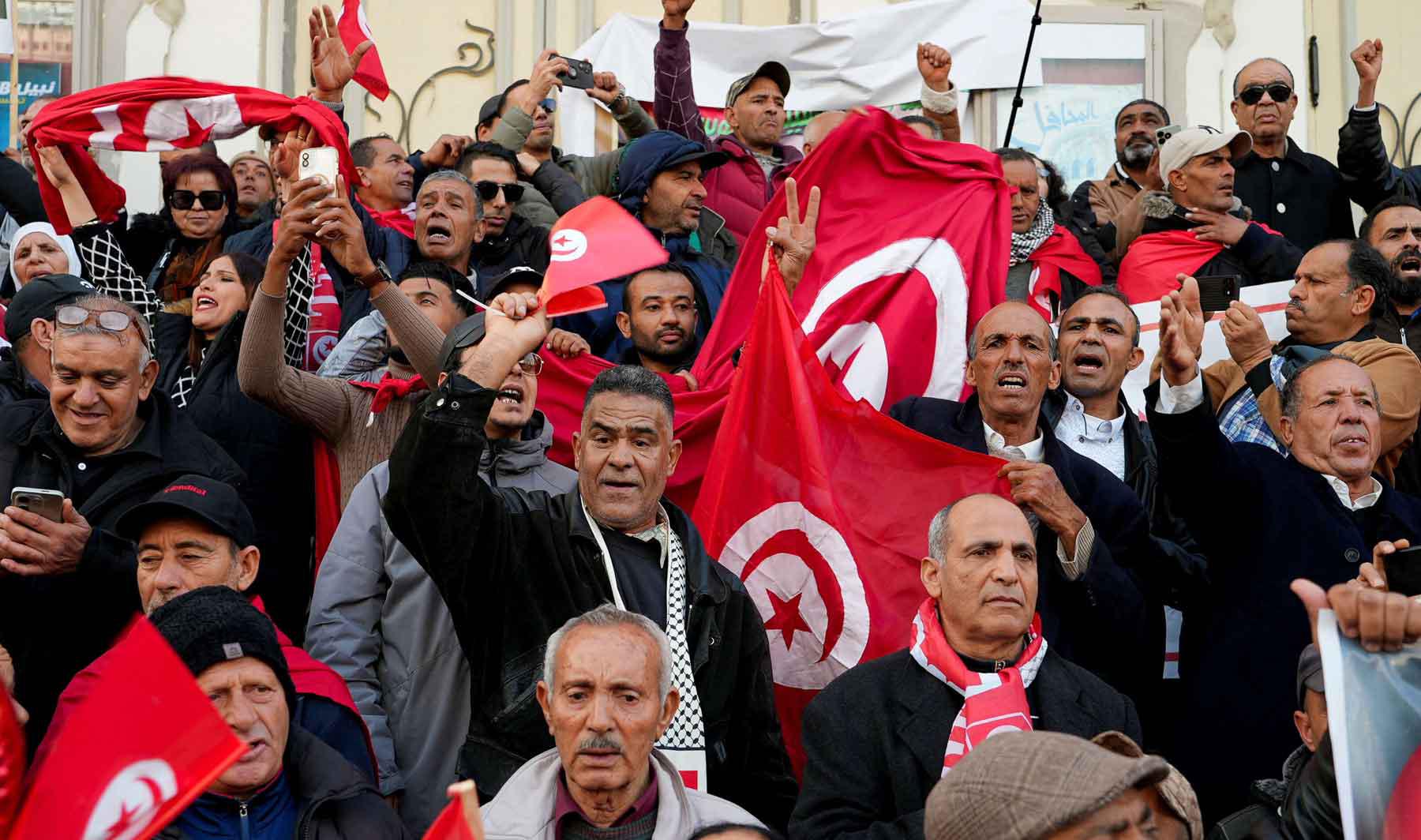
Supporters of Tunisian President Kais Saied rally in Tunis, December 17, 2025.
TUNIS -
Supporters of Tunisian President Kais Saied rallied in the capital on Wednesday, denouncing opposition figures as “traitors,” following weeks of street protests that have underscored widening political divisions. The demonstrations come amid a deepening economic crisis marked by high inflation, shortages of basic goods and faltering public services, fuelling public frustration.
Rights groups accuse Saied of an unprecedented crackdown on dissent, alleging he has leveraged the judiciary and police to silence critics. Saied rejects these claims, describing his actions as a necessary purge of “traitors and a corrupt elite.”
Demonstrators in central Tunis waved national flags and chanted slogans in support of the president, whom they credit with tackling entrenched political corruption. “We are here to rescue Tunisia from traitors and colonial lackeys,” said protester Saleh Ghiloufi.
Critics point to recent legal actions as evidence of an authoritarian drift. A court last week sentenced opposition leader Abir Moussi to 12 years in prison, while an appeals court previously handed sentences of up to 45 years to dozens of opposition figures, businesspeople and lawyers accused of conspiring to overthrow Saied.
Since assuming extraordinary powers in 2021, including dissolving the parliament and ruling by decree, Saied’s consolidation of authority has alarmed domestic opponents and international partners, who warn Tunisia risks retreating from democratic governance.
Meanwhile, the powerful UGTT union has announced a nationwide strike next month in response to political developments.
The unrest coincides with the 15th anniversary of the so-called Jasmine Revolution, which in 2011 toppled decades of autocratic rule and launched a process of political, social and economic transformation. The revolution opened the door to civic participation, economic reform and broader social inclusion.
Since 2011, Tunisia has pursued initiatives to enhance transparency, improve the business environment and attract both domestic and foreign investment. Small and medium-sized enterprises, entrepreneurship and the technology sector have expanded, generating jobs and diversifying the economy beyond traditional industries.
Tourism and craft sectors have rebounded, creating foreign exchange and employment, while women’s participation in economic activity has grown, reflecting a commitment to inclusive growth.
Yet structural challenges persist. Youth unemployment and graduate joblessness remain high, limiting social mobility and prompting emigration. Inflation and rising living costs erode household purchasing power, while inadequate infrastructure, from transport to energy, constrains industrial and entrepreneurial growth.
Analysts emphasise that sustainable progress requires continued investment in human capital, vocational training and innovation-driven sectors, alongside robust support for civil society and international technical assistance.
Observers also note that the revolution fostered broader social transformation, enhancing women’s economic roles and creating platforms for innovation and entrepreneurship.
Partnerships with international organisations have further contributed to local development, social stability and inclusive growth, highlighting the importance of collaboration between the state, civil society and the private sector.
As Tunisia reflects on 15 years since the uprising, the anniversary serves as a reminder that post-revolutionary gains remain fragile. Translating symbolic freedoms into tangible economic opportunities, reducing unemployment, improving purchasing power and building resilient infrastructure, remains an urgent task.
Analysts argue that economic inclusion, human capital development and strategic investment are critical to ensuring that the so-called Jasmine Revolution’s promises benefit all Tunisians and to maintaining political and social stability amid ongoing unrest.