

A new test for Morocco’s emergency response capabilities
Grassroots solidarity drives relief efforts amid devastating Morocco floods
Meteorological data indicate that the first half of the current winter season ranks as the third wettest on record, after the winters of 1996 and 2010.
Sunday 08/02/2026
A new test for Morocco’s emergency response capabilities
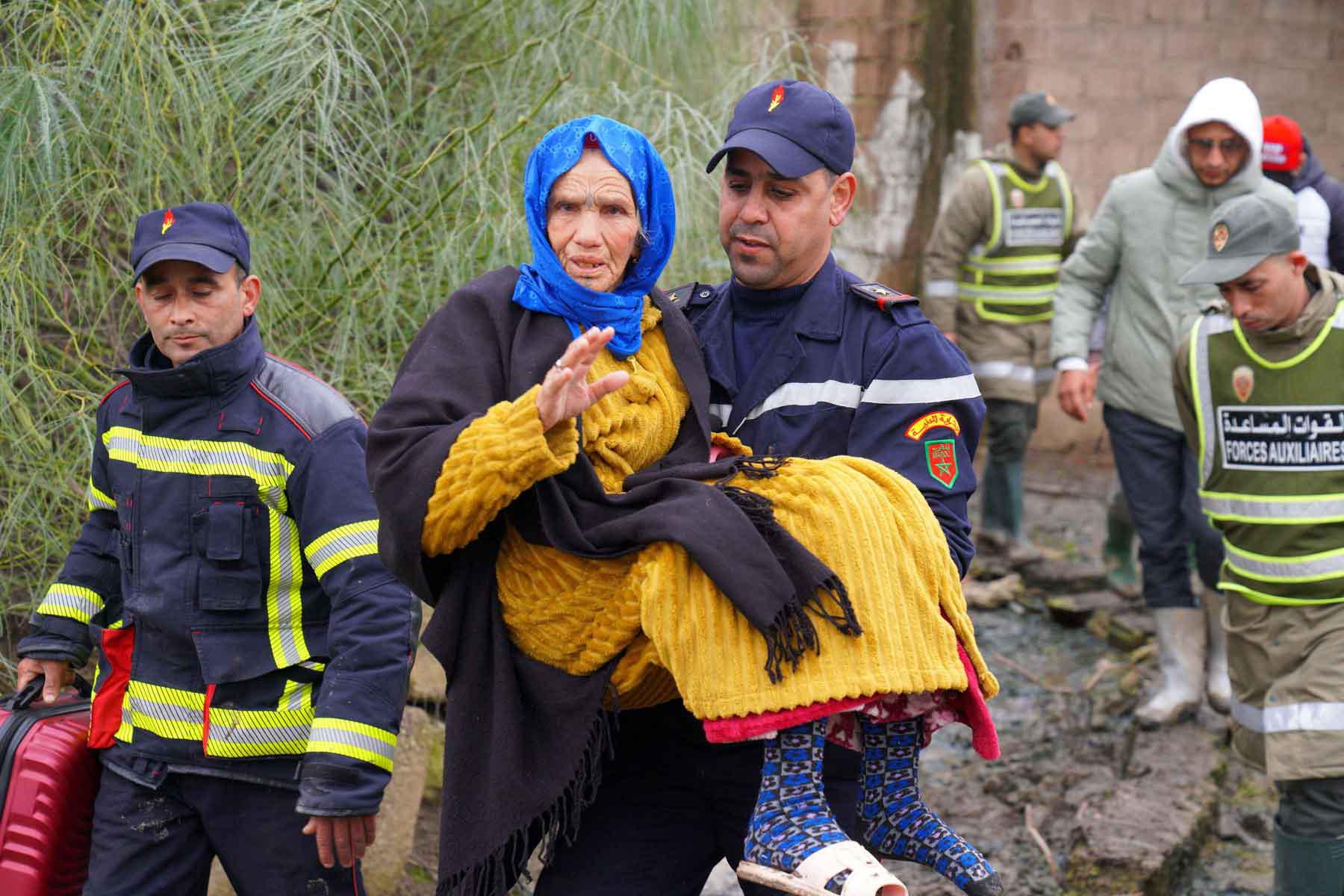
RABAT – Grassroots initiatives and nationwide solidarity efforts are accelerating across Morocco to support flood victims and mitigate the impact of severe environmental disasters that have struck parts of the country, as authorities continue evacuations and brace for a new storm expected to bring further heavy rain and strong winds.
Morocco’s national meteorological authority warned on Sunday that Storm Marta, which has already battered Spain and Portugal with torrential rain and maritime disruption, is set to affect the kingdom. Hussein Youabed, the Communications Officer for the General Directorate of Meteorology, said in a video statement that the storm would bring intense rainfall and powerful winds to several regions.
“Marta comes only days after Storm Leonardo,” he said, noting that Leonardo had already caused exceptional rainfall levels exceeding 130mm within 24 hours in some areas, and more than 140mm over two days in parts of northern Morocco, equivalent to two to three months’ worth of precipitation.
He urged residents to exercise caution, warning that rainfall could exceed 70mm in certain areas and advising against approaching rivers, valleys or flood-prone slopes.
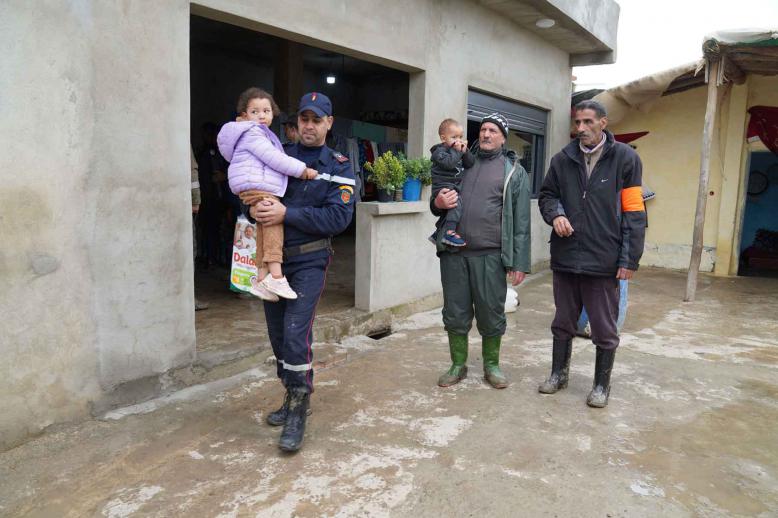
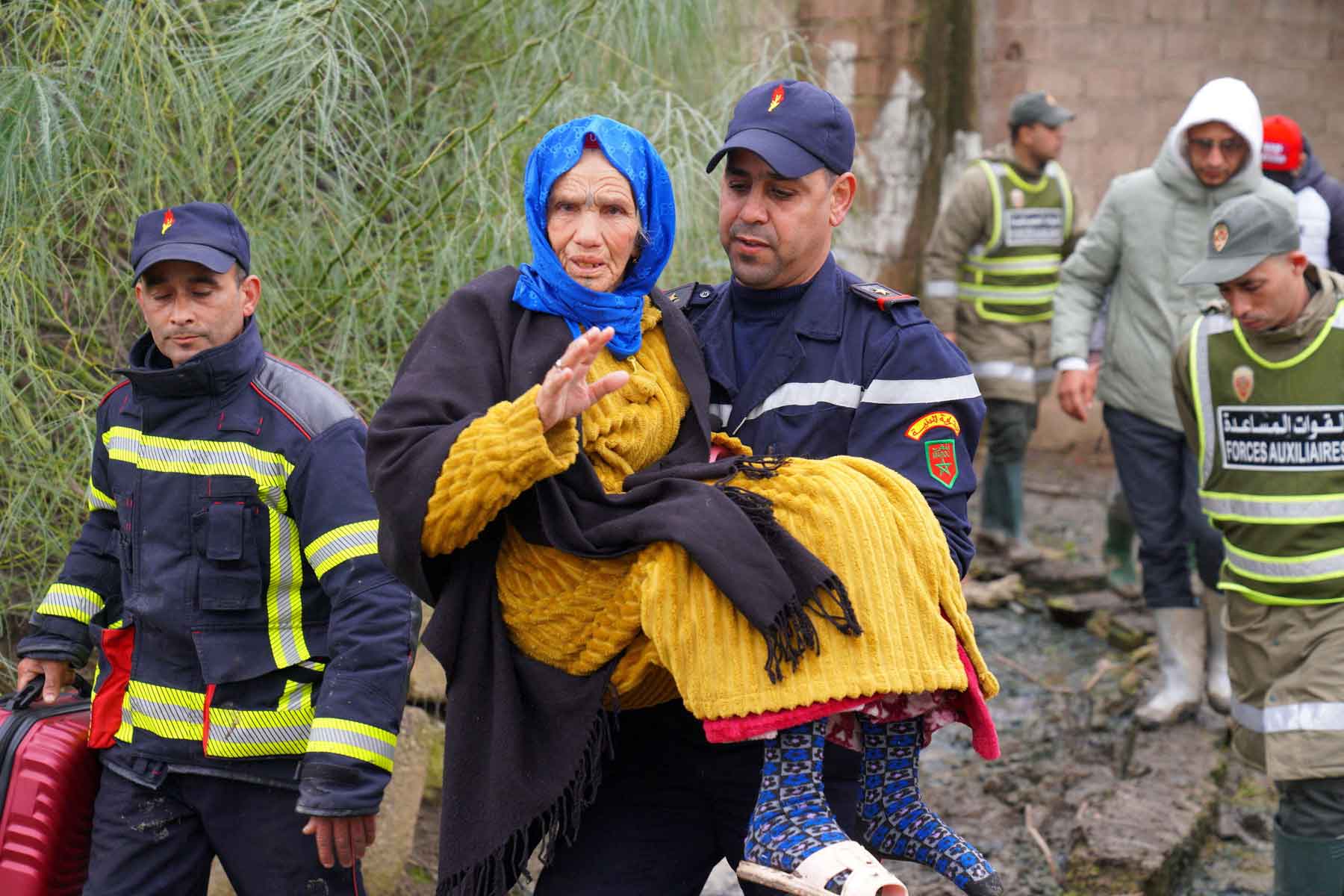
The warning comes as Moroccan authorities continue evacuating residents in four provinces ravaged by floods and flash floods for the 12th consecutive day, amid rising water levels in dams and rivers following persistent heavy rain.
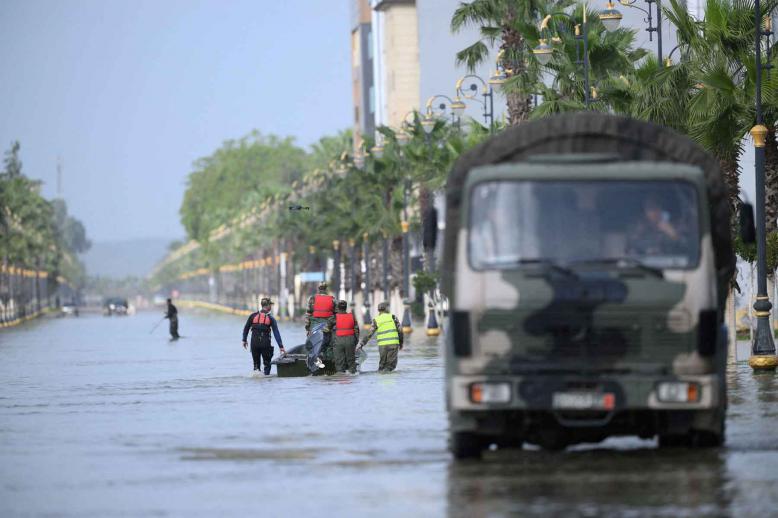
Since January 28, flooding has affected the provinces of Larache in the north, Kenitra in the west, and Sidi Kacem and Sidi Slimane in northern regions, forcing large-scale emergency interventions.
On Friday, Morocco’s Interior Ministry announced that more than 154,000 people had been evacuated from the four provinces as a precautionary measure. Government spokesman Mustapha Baitas confirmed on Thursday that no fatalities had been recorded, a development widely attributed to rapid government response and coordinated rescue operations.
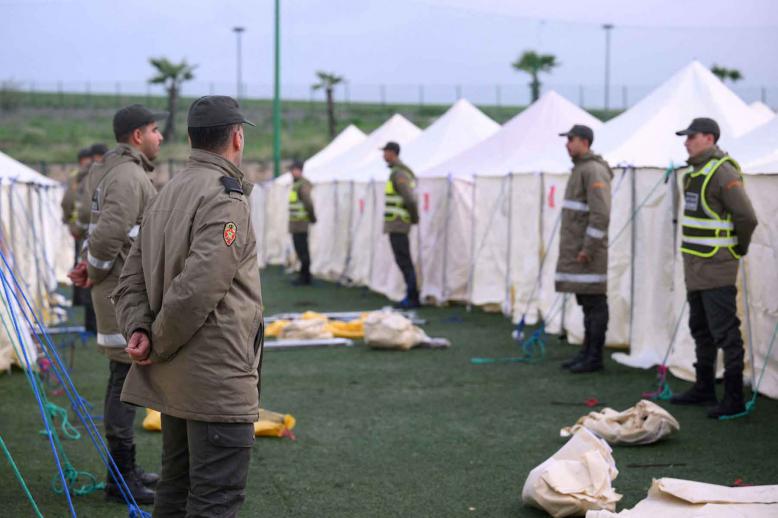
Emergency services, supported by the Royal Armed Forces, Royal Gendarmerie, navy, auxiliary forces, civil protection units and police, have deployed helicopters, military trucks, fast boats and drones in rescue operations. Temporary camps have been established, while many displaced residents have been relocated to designated shelters and public facilities.
Officials say the swift mobilisation of national rescue teams, combined with strong local community initiatives, played a decisive role in preventing loss of life despite the scale of the disaster.
Beyond the institutional response, the crisis has highlighted Morocco’s deeply-rooted culture of solidarity. Civil society groups, volunteers and local residents have organised aid campaigns, distributed supplies and provided shelter to those affected, echoing similar displays of unity seen during previous crises, including the devastating Al-Haouz earthquake and earlier flooding events.
El-Mustapha Saaliti, professor of social psychology at the Faculty of Letters and Humanities of Marrakech, Cadi Ayyad University, said the floods had placed significant psychological and material strain on affected communities.
“Morocco is going through a difficult phase in some regions due to floods, particularly in the north,” he said. “Such natural disasters cause not only material losses but also psychological distress, fear and anxiety, as they sometimes exceed people’s ability to cope and adapt.”
He added that Morocco’s societal response to crises extends beyond institutional intervention. “The Moroccan social fabric is characterised by a strong spirit of solidarity, which becomes especially visible during exceptional circumstances. This solidarity is not merely a social stabiliser; it reflects a deeply rooted culture of mutual assistance and shared responsibility.”
The floods have been particularly severe in the city of Ksar el-Kebir in Larache province, where the Loukkos River overflowed after the Oued El Makhazine dam exceeded 156 percent of its capacity for the first time, according to official data. The unprecedented overflow caused widespread flooding and displacement.
Morocco has experienced repeated extreme weather events in recent months. In December 2025, flash floods in the western city of Safi killed 37 people, underscoring the growing risks posed by increasingly volatile weather patterns.
Meteorological data indicate that the first half of the current winter season ranks as the third wettest on record, after the winters of 1996 and 2010.
As authorities continue rescue and evacuation efforts, the approaching Storm Marta presents a new test for Morocco’s emergency response capabilities. However, the combination of rapid government intervention and widespread civic solidarity has so far helped limit the human toll, even as the country faces mounting environmental and humanitarian challenges.