

Kallas: Repression cannot go unanswered
Iran denounces, Israel applauds EU’s blacklisting of Revolutionary Guards
Israel applauded the step. Foreign Minister Gideon Saar described it as “an important and historic decision,” saying the designation dealt a serious blow to Tehran’s regional standing.
Friday 30/01/2026
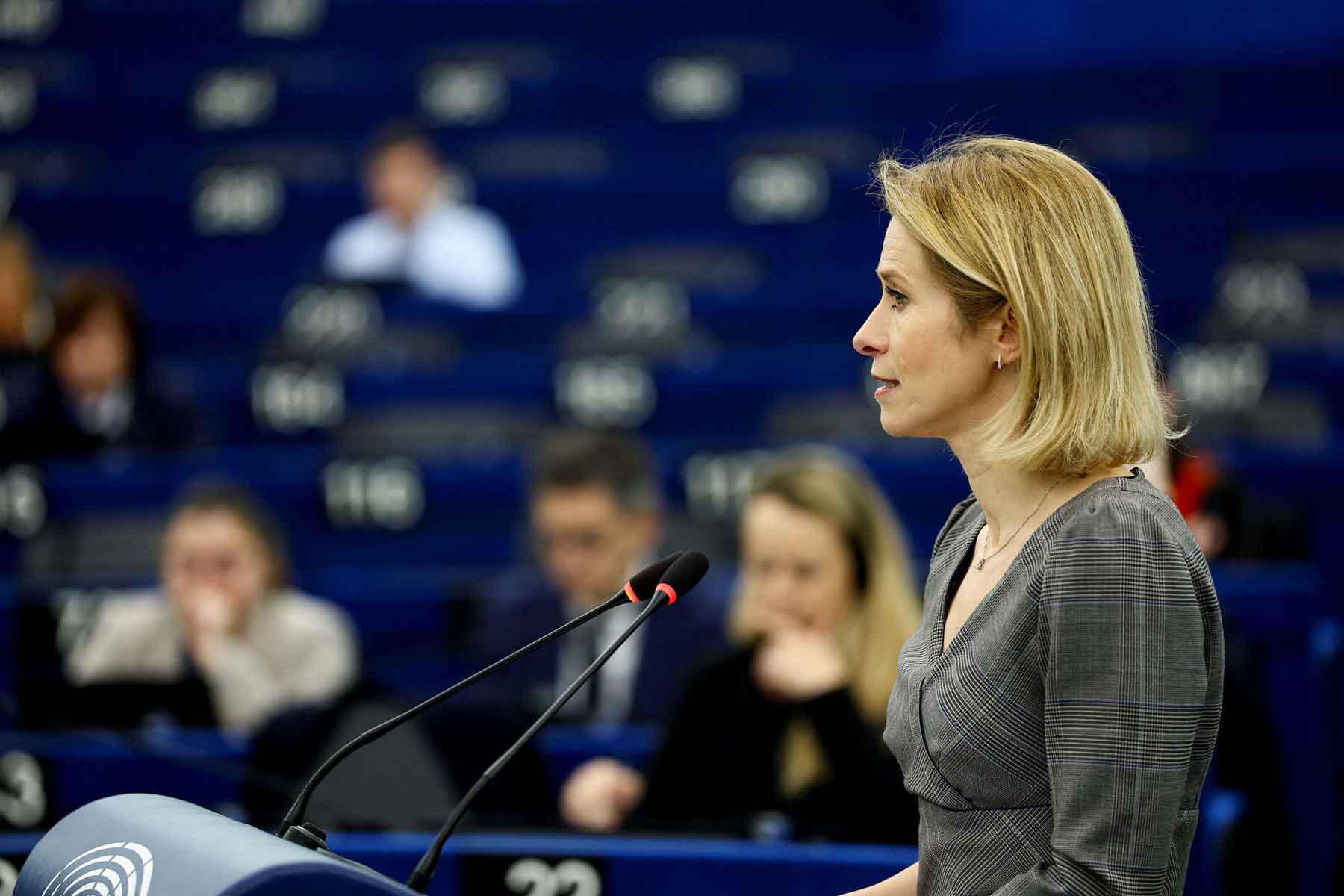
Kallas: Repression cannot go unanswered
BRUSSELS – Condemnation from Tehran, praise from Israel and a chorus of approval from European leaders followed on Thursday after the European Union designated Iran’s Islamic Revolutionary Guard Corps (IRGC) a terrorist organisation, a move hailed in Brussels as long overdue and denounced in Iran as a dangerous escalation.
European Commission President Ursula von der Leyen welcomed the decision, calling it “overdue” in the wake of Iran’s deadly crackdown on nationwide protests earlier this month. “‘Terrorist’ is indeed how you call a regime that crushes its own people’s protests in blood,” she wrote on X.
Israel also applauded the step. Foreign Minister Gideon Saar described it as “an important and historic decision,” saying the designation dealt a serious blow to Tehran’s regional standing. “The number one actor in spreading terror and undermining regional stability has now been called by its name,” Saar wrote, adding that “the legitimacy of this murderous and oppressive regime has suffered a powerful blow today.”
Iran’s response was swift and angry. Foreign Minister Abbas Araghchi accused Europe of committing “another major strategic mistake”, warning on X that the bloc’s decision was “deeply damaging to its own interests.”
Iran’s military struck an even harsher tone, with the General Staff of the Armed Forces branding the EU move “illogical, irresponsible and spite-driven” and accusing Brussels of acting in “unquestioning obedience to the hegemonic and anti-human policies of the United States and the Zionist (Israeli) regime,” according to a statement carried by the official IRNA news agency.
The reactions followed an agreement by EU foreign ministers in Brussels to add the IRGC to the bloc’s list of terrorist organisations, placing the powerful force in the same category as Islamic State and al Qaeda and marking a symbolic shift in Europe’s approach to Iran’s leadership.
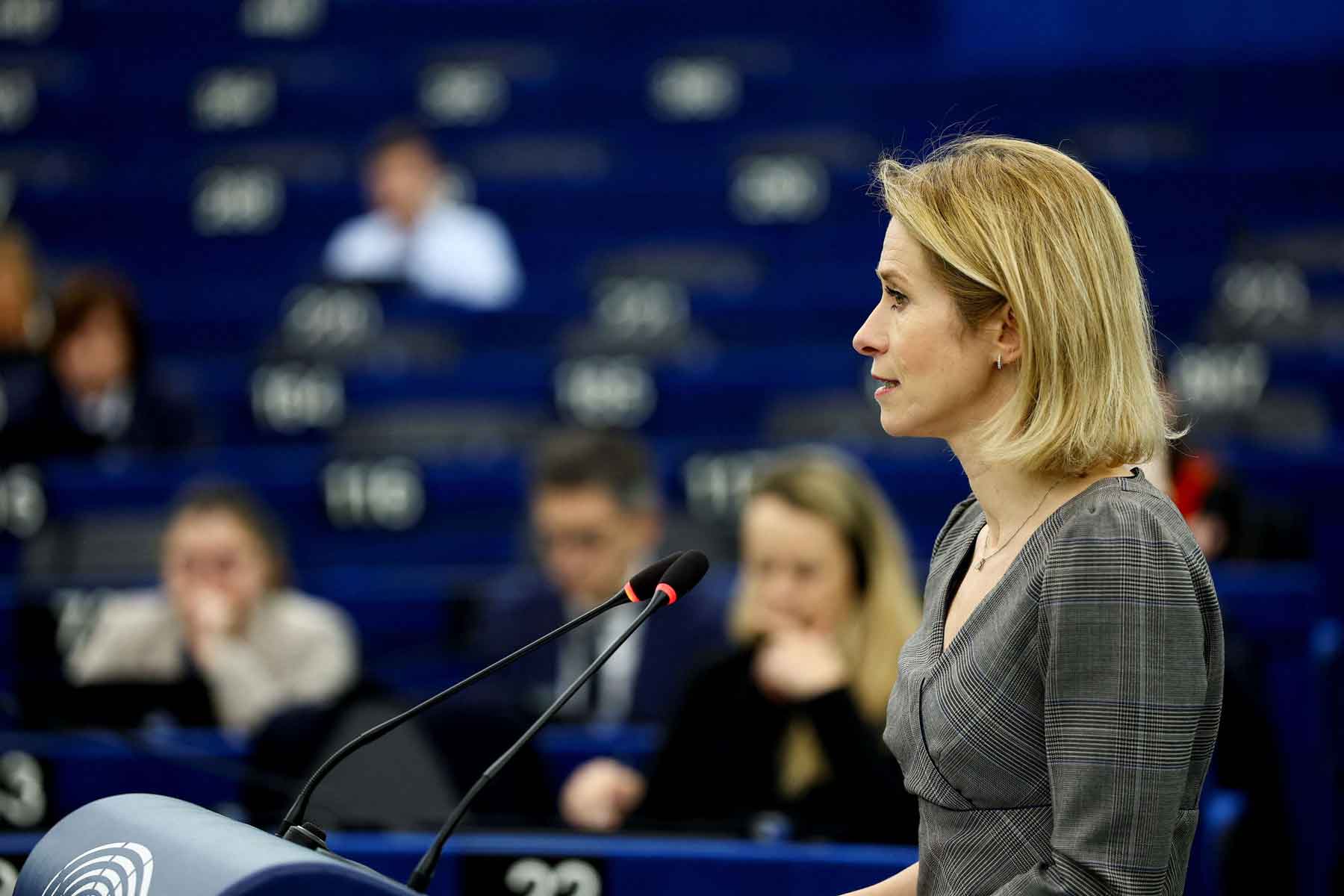
EU foreign policy chief Kaja Kallas framed the move as a moral and political necessity. “Repression cannot go unanswered,” she wrote on X. “Any regime that kills thousands of its own people is working toward its own demise.”
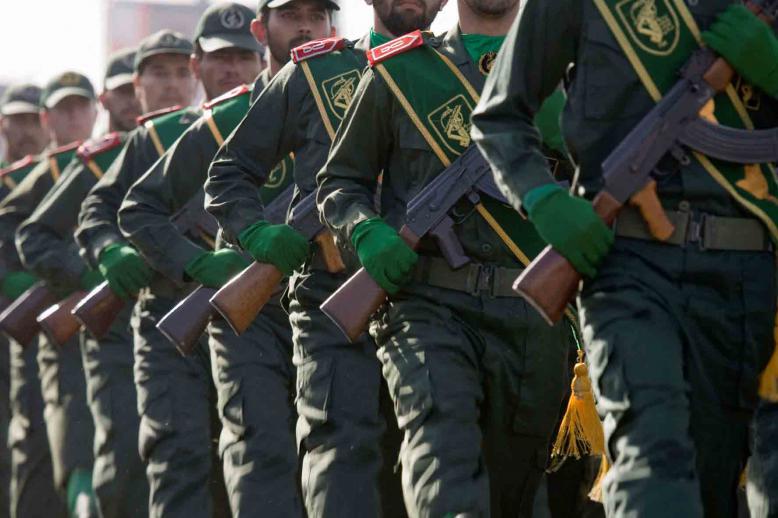
Set up after Iran’s 1979 Islamic Revolution to protect the Shia clerical ruling system, the IRGC has grown into one of the most influential institutions in the country, controlling large parts of the economy and the armed forces. It also oversees Iran’s ballistic missile and nuclear programmes, making it central to Tehran’s domestic power structure and regional posture.
While several EU member states had long pressed for the IRGC to be designated, others had resisted, warning that such a step could sever remaining lines of communication with Tehran and endanger European citizens in Iran. Momentum shifted after a brutal crackdown on protests earlier this month, in which thousands were killed.
Dutch Foreign Minister David van Weel said the designation was intended to send a clear signal. “It’s important that we send this signal that the bloodshed that we’ve seen, the bestiality of the violence that’s been used against protesters, cannot be tolerated,” he said.
France and Italy, previously among the more cautious capitals, lent their backing this week. Even so, European leaders sought to play down fears of a complete diplomatic rupture. Kallas told reporters that “the estimate is that still the diplomatic channels will remain open.”
Italy’s Foreign Minister Antonio Tajani said the decision “does not mean that we should not continue to engage in dialogue.”
Alongside the designation, the EU adopted a sweeping package of new sanctions. The bloc imposed measures on 15 individuals and six entities deemed responsible for serious human rights violations in Iran, the Council of the European Union said. Those targeted include Interior Minister Eskandar Momeni, Prosecutor General Mohammad Movahedi Azad, several IRGC commanders and senior law enforcement officials.
Entities sanctioned include the Iranian Audio-Visual Media Regulatory Authority and several software companies accused of involvement in “censoring activities, trolling campaigns on social media, spreading disinformation and misinformation online, or contributing to the widespread disruption of access to the internet by developing surveillance and repression tools”.
The EU also sanctioned four individuals and six entities linked to Iran’s drone and missile programme and extended restrictions on the export, sale, transfer or supply of EU components and technologies used in the development and production of drones and missiles.
Taken together, European officials say, the measures reflect a recalibration of the bloc’s Iran policy, elevating accountability for human rights abuses alongside long-standing concerns over regional security and military escalation, a shift that has drawn clear lines between Brussels and Tehran.