

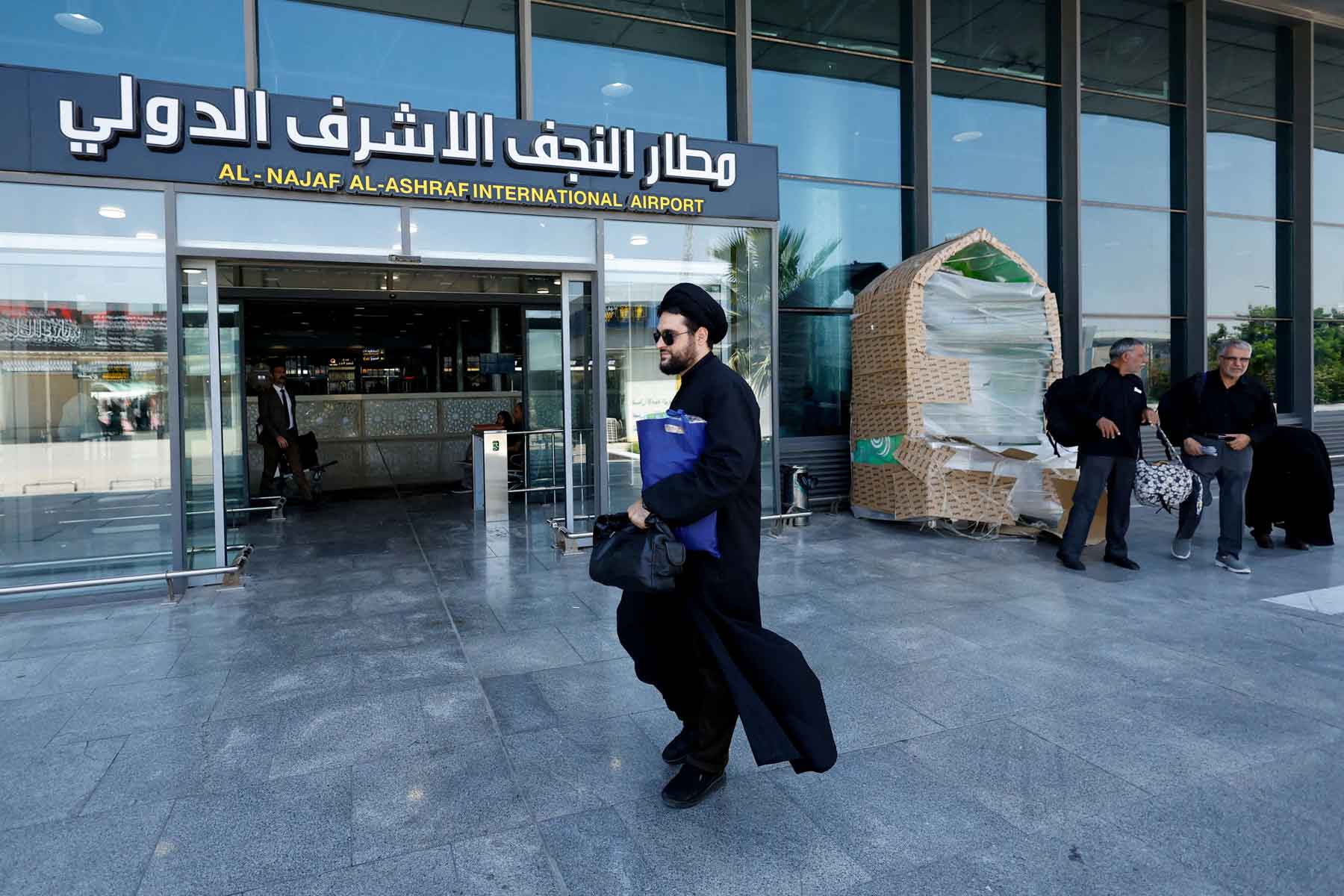
Any disruption to operations could have far-reaching consequences
Iraqi Shia power struggle puts Najaf airport operations in jeopardy
While framed as an administrative disagreement, the dispute appears to reflect a broader struggle for control over financial and investment resources tied to key state facilities.
Friday 13/02/2026
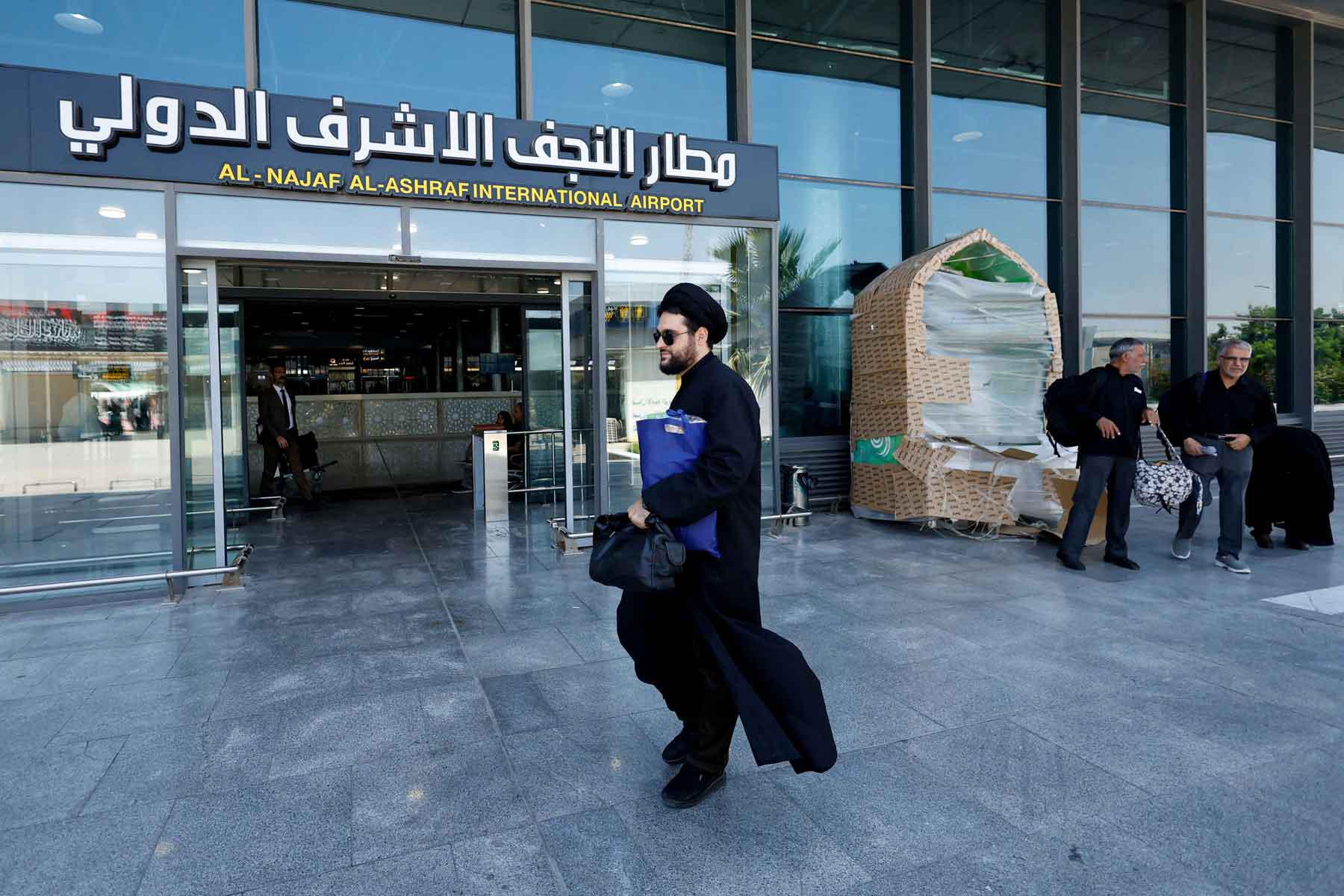
Any disruption to operations could have far-reaching consequences
BAGHDAD – Rising tensions in Iraq’s Najaf province are threatening to disrupt operations at Najaf International Airport, as a dispute between figures from the Islamic Dawa Party and the National Wisdom Movement (Hikma) intensifies over a fuel supply contract.
Najaf is one of Iraq’s most significant economic and religious centres, receiving a steady flow of visitors and pilgrims throughout the year. Any disruption to its airport operations could therefore have far-reaching consequences.
According to informed sources cited by Iraqi Kurdish outlet Shafaq News, a company linked to the Islamic Dawa Party currently supplies fuel to the airport. Meanwhile, the head of the Oil Products Distribution Company in Najaf, affiliated with the Hikma movement, oversees fuel supply operations within the authority.
The contract held by the Dawa-linked company is nearing expiry. Sources say the Hikma-aligned official has refused to renew it, insisting that the state-run authority should assume direct responsibility for supplying the airport.
While framed as an administrative disagreement, the dispute appears to reflect a broader struggle for control over financial and investment resources tied to key state facilities.
As tensions mounted, several Iraqi travel agencies announced on social media that flights from Najaf International Airport would be suspended from Friday due to fuel shortages. Although the suspension could be reversed if a compromise is reached, the halt in air traffic places considerable pressure on the city, particularly given the constant influx of religious pilgrims.
The crisis comes less than two months after security authorities detained Fayed al-Shammari, former director of Najaf Airport and a senior Dawa Party figure, upon his return to Iraq. He had previously been sentenced in absentia to three years in prison in May 2024 over irregularities in a $72 million contract signed during his tenure. Iraq’s Federal Commission of Integrity said he had contracted a factory inside the airport without proper approvals or health oversight, allegedly causing financial losses to the state.
The current dispute is widely seen as part of a deeper power struggle within Iraq’s Shia political establishment. The rivalry between the Islamic Dawa Party, historically associated with former Prime Minister Nouri al-Maliki, and the National Wisdom Movement, led by Ammar al-Hakim, extends beyond political positioning to control over financial institutions and state decision-making structures.
In Iraq’s fragmented political system, influence within ministries and economic bodies provides leverage over public spending, major projects and patronage networks. Control of parliament, meanwhile, allows factions to shape legislation in ways that entrench institutional power and sideline rivals.
Analysts suggest that the confrontation over Najaf Airport is not an isolated dispute but part of a wider contest over the nature of governance itself. As competing factions seek to consolidate their hold over state institutions, decision-making becomes increasingly politicised, often at the expense of coherent economic and development policy.
The broader Shia Coordination Framework, which brings together multiple Shia factions, remains fragile, with internal rivalries simmering beneath a surface of unity. Attempts at reconciliation, including meetings between Hikma leader Ammar al-Hakim and other Shia figures, have so far produced limited results.
At the institutional level, such divisions risk further eroding administrative efficiency, fuelling corruption and undermining the state’s ability to deliver basic services.
Handling between two and three million passengers annually, Najaf International Airport represents not only a transport hub but a strategic economic asset. Its potential shutdown underscores how Iraq’s factional struggles continue to spill into the management of critical infrastructure, with ordinary citizens and businesses bearing the consequences.