

A shared political will to strengthen regional stability
Jordan, Greece, Cyprus seek united front on Iran, Gaza, energy security
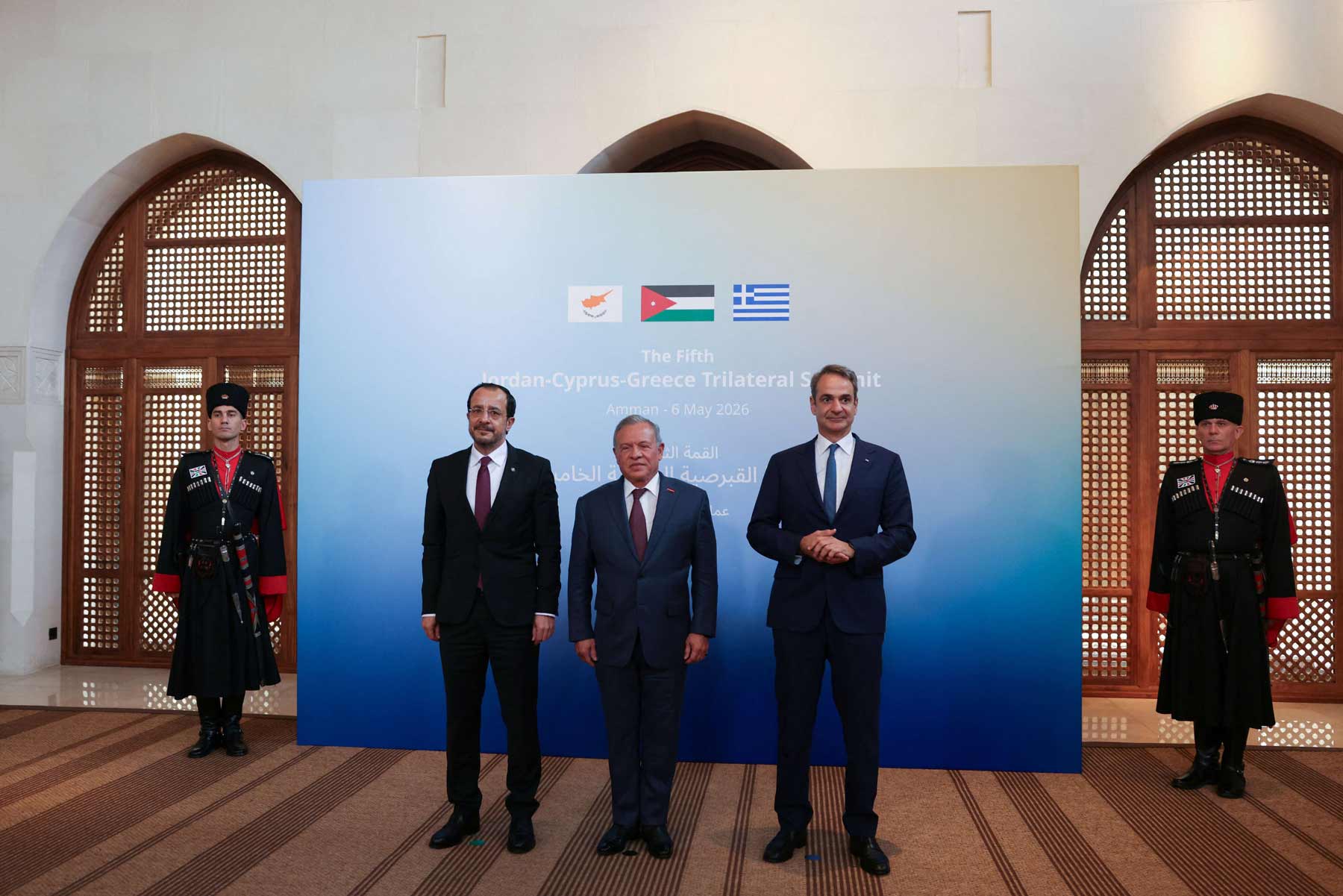
King Abdullah described the Jordan-Cyprus-Greece partnership as “an important mechanism for dialogue and joint action.”
Thursday 07/05/2026
A shared political will to strengthen regional stability
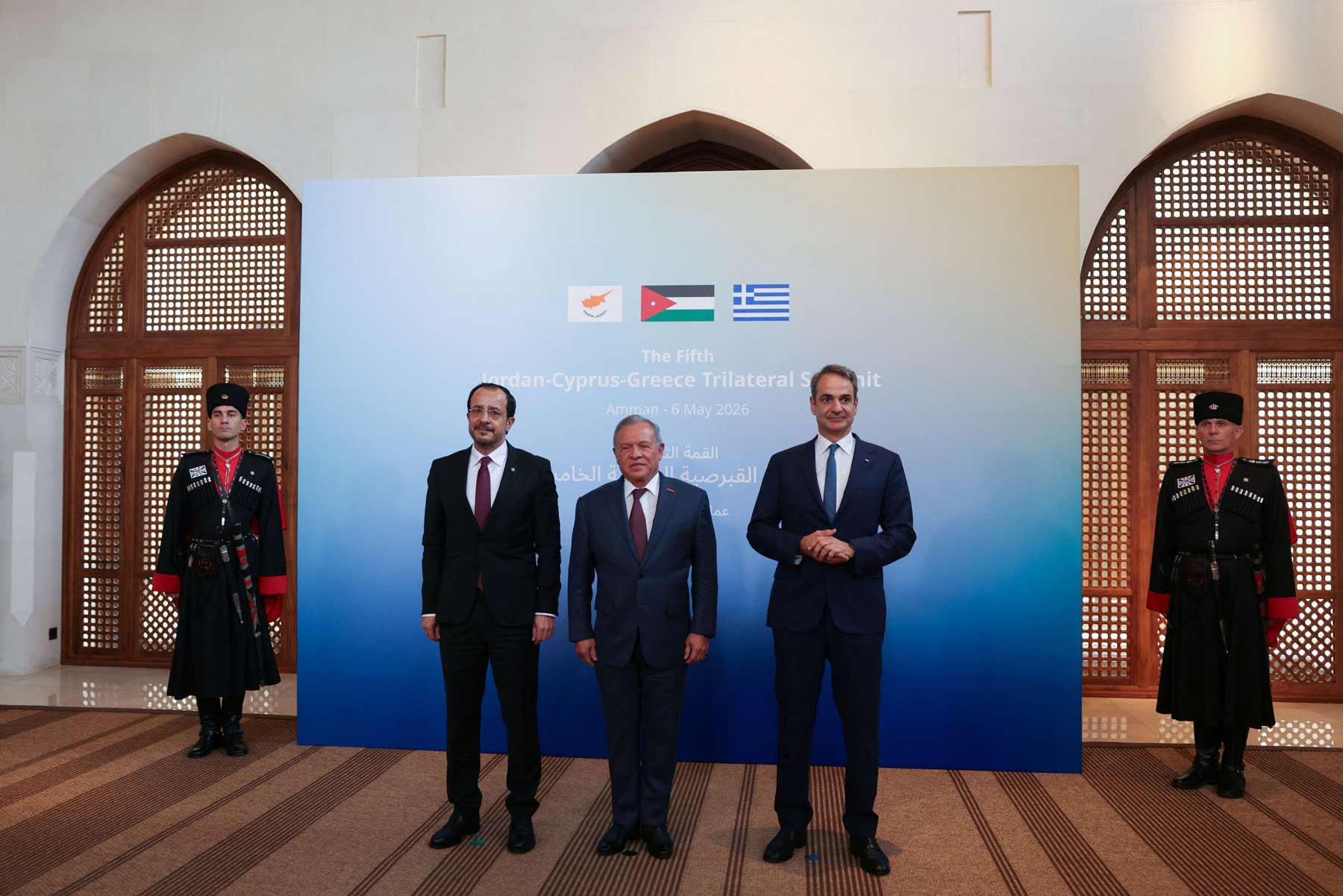
AMMAN – Jordan hosted a trilateral summit with Cyprus and Greece on Wednesday as the three countries sought to reinforce political and economic coordination amid mounting regional instability driven by the Iran war, tensions in the Gulf and continuing conflicts across the Middle East.
The fifth summit, held in the Jordanian capital, brought together Jordan’s King Abdullah II, Cypriot President Nikos Christodoulides and Greek Prime Minister Kyriakos Mitsotakis for talks focused on strengthening cooperation in strategic sectors while addressing the rapidly evolving regional crisis.
The meeting came at a critical moment as the region awaits the outcome of indirect US-Iran negotiations aimed at preserving a fragile ceasefire and easing tensions around the Strait of Hormuz, a vital artery for global energy supplies.
Jordan’s Royal Court said the leaders discussed ways to deepen trilateral cooperation across multiple sectors, strengthen Jordan’s partnership with the European Union and coordinate positions on regional developments.
King Abdullah described the Jordan-Cyprus-Greece partnership as “an important mechanism for dialogue and joint action,” stressing that it was grounded in respect for international law and state sovereignty.
He warned that the continuing conflicts in the region and their economic consequences required sustained coordination to preserve regional peace and stability, particularly as countries across the Eastern Mediterranean struggle with the financial fallout from prolonged instability.
The Jordanian monarch also urged intensified international efforts to consolidate the ceasefire between Washington and Tehran, saying any agreement to end the conflict must guarantee an end to hostilities while safeguarding the security of regional states.
His remarks came hours after US President Donald Trump announced a temporary suspension of “Project Freedom”, a naval initiative launched earlier this week to escort neutral commercial vessels stranded in the Strait of Hormuz, citing significant progress in negotiations with Iran.
The conflict, which erupted after the United States and Israel launched military operations against Iran on February 28, has killed more than 3,000 people according to Tehran. Iran has responded with attacks that caused American and Israeli casualties, as well as strikes targeting several Arab countries, including Jordan.
Some of those attacks caused civilian casualties and damage to civilian infrastructure, prompting condemnation from affected Arab states.
King Abdullah also reiterated Jordan’s firm opposition to what he described as Israeli attempts to exploit regional turmoil to impose “a new reality” in Jerusalem, the occupied West Bank and Gaza.
He stressed the need to preserve the historic and legal status quo in Jerusalem and highlighted the importance of ensuring uninterrupted humanitarian aid deliveries into Gaza.
Cypriot President Christodoulides expressed satisfaction with the growing trilateral partnership, describing it as a vital framework for strengthening regional stability, addressing common challenges and expanding economic cooperation.
He voiced Cyprus’ solidarity with Jordan following attacks linked to the recent regional escalation and emphasised the importance of dialogue in resolving conflicts and building a broader regional peace framework.
Greek Prime Minister Mitsotakis said the summit carried “a clear message of friendship, cooperation and full commitment to international law” at a time of extraordinary regional tensions.
He praised Jordan’s role in promoting regional peace and stability and reaffirmed Greece’s support for the Hashemite custodianship over Islamic and Christian holy sites in Jerusalem.
Mitsotakis also highlighted opportunities to expand cooperation in energy, transport, defence, tourism, climate policy and investment, while thanking Jordan for assistance provided to Greece during recent wildfires.
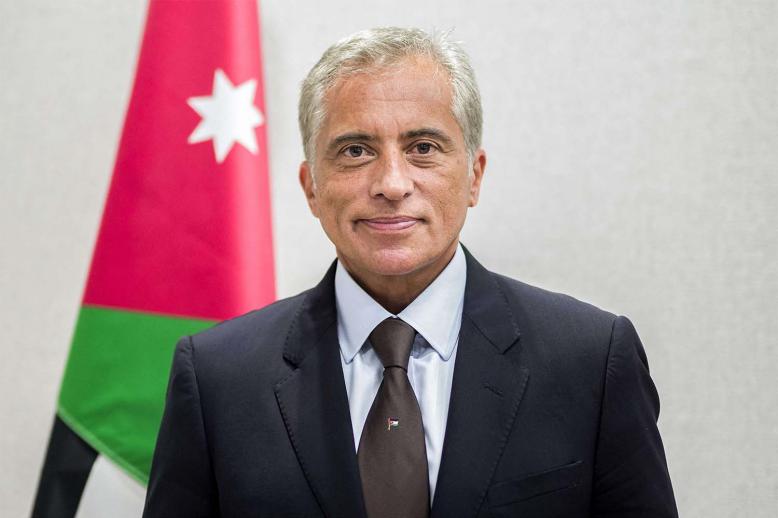
Jordanian Foreign Minister Ayman Safadi later said the trilateral mechanism reflected a shared political will to strengthen regional stability and institutionalise cooperation among the three countries.
Safadi said discussions focused on ending regional escalation, condemning attacks targeting Jordan and Gulf states, supporting Lebanon’s sovereignty and reaffirming support for a two-state solution to the Israeli-Palestinian conflict.
The ministers also discussed Syria, stressing support for the country’s sovereignty and territorial unity while rejecting foreign interference and separatist agendas. They additionally called on Israel to respect the 1974 disengagement agreement and withdraw from occupied Syrian territories.
The summit also highlighted the strategic significance of the Eastern Mediterranean as a bridge between Europe and the Arab world.
Leaders stressed the importance of building on cooperation agreements reached during previous summits, particularly in water, energy, tourism and education, while leveraging the geographical positions of the three countries to strengthen regional connectivity.
The trilateral partnership was launched in 2018 with the first summit in Nicosia, followed by meetings in Amman in 2019, Athens in 2021 and again in Nicosia in 2024.