

Expansive agenda of over 445 sessions across five core themes
Leaders gather in Dubai as World Governments Summit shifts focus to AI
Dubai has once again positioned itself not merely as a convener of global conversation, but as a proactive architect asking the pivotal questions about the world to come
Tuesday 03/02/2026
Expansive agenda of over 445 sessions across five core themes
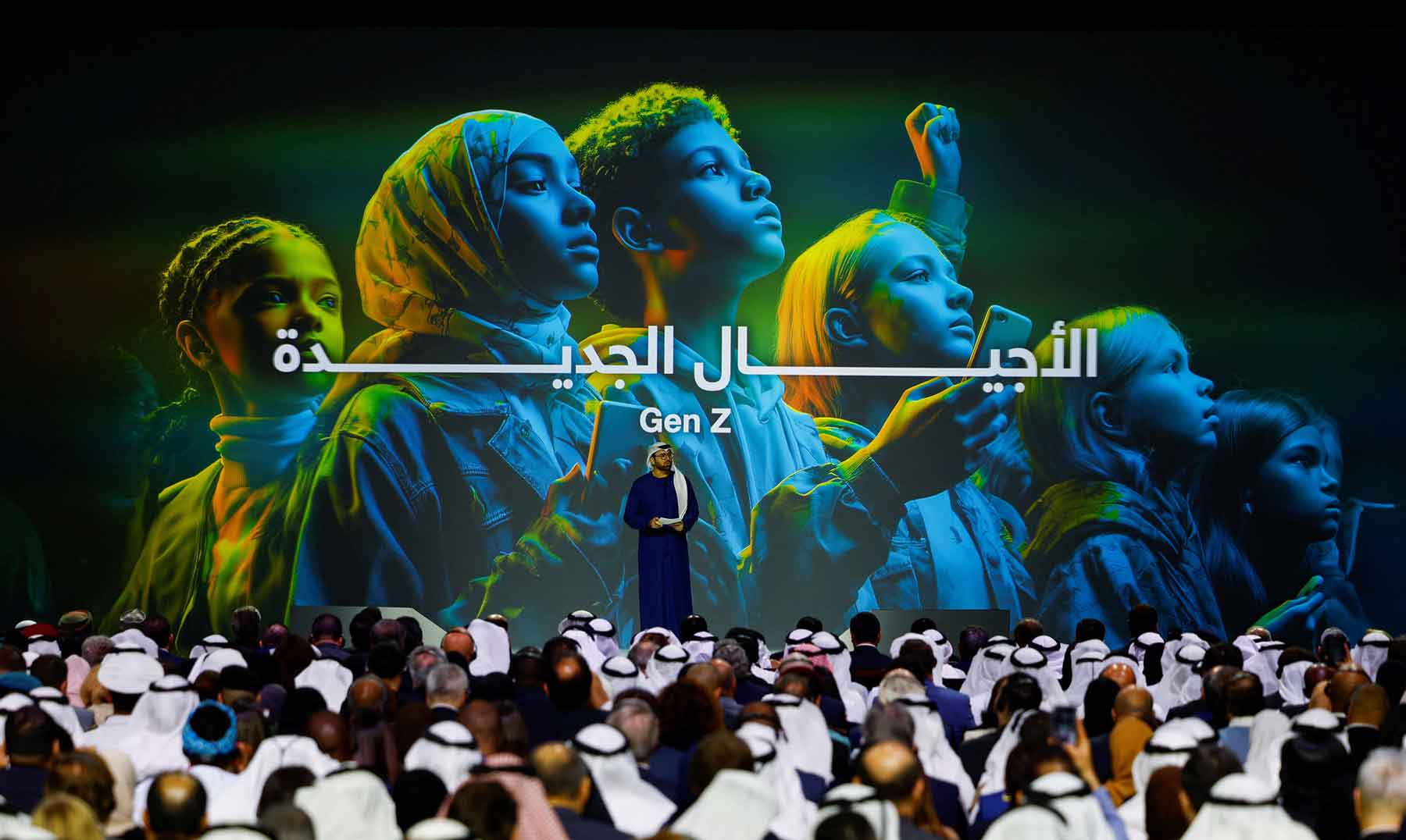
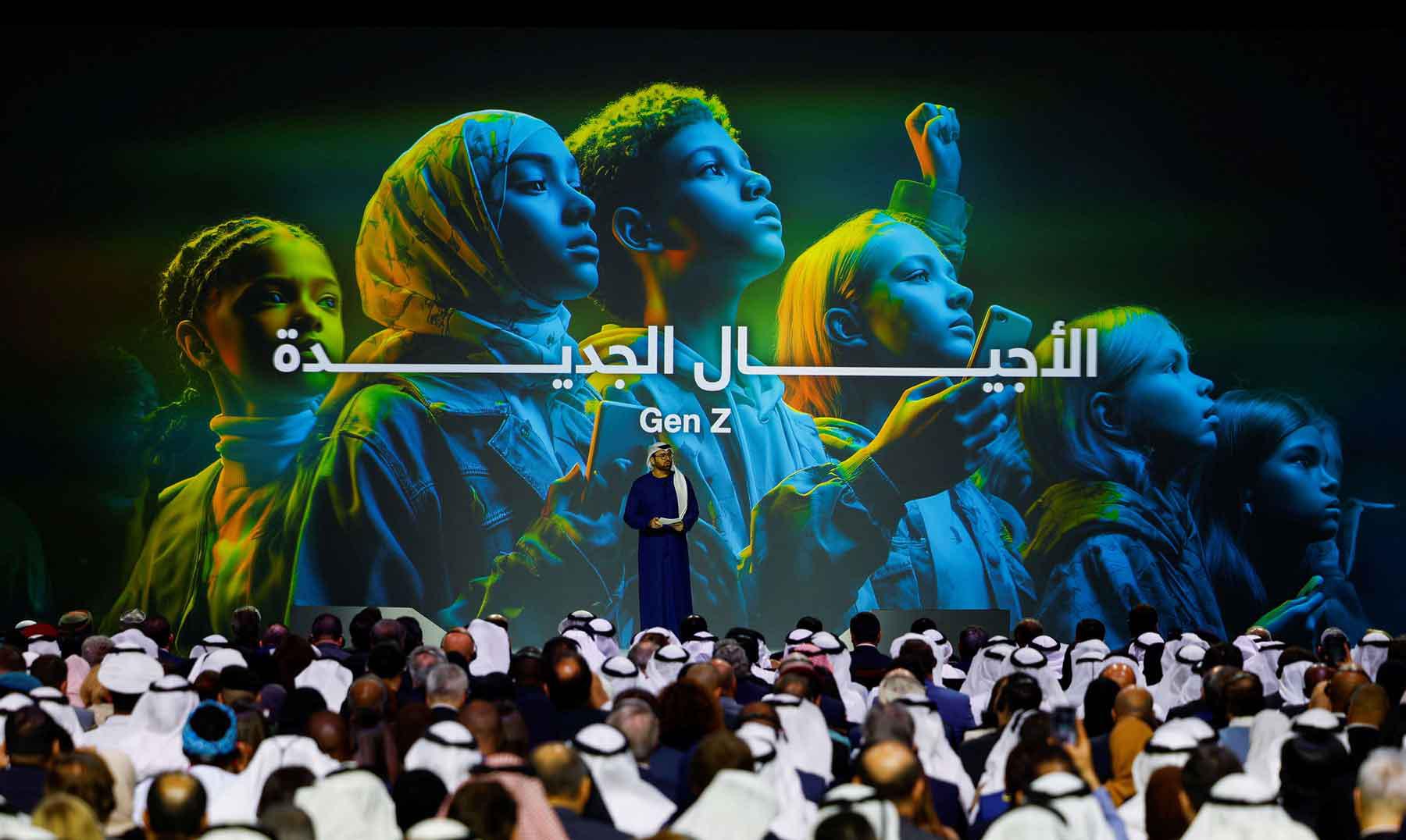
DUBAI – The World Governments Summit (WGS) opened in Dubai on Tuesday under the theme “Shaping Future Governments,” marking an exceptional and transformative gathering of global leadership. The event, which has firmly established the emirate as a premier global platform for policy and idea generation, convenes an unprecedented assembly of more than 60 heads of state and government from 150 nations, alongside international organisation leaders, technology pioneers, economists, and decision-makers.
Reflecting the urgent tone of our times, the summit’s inaugural sessions revealed its evolution from a theoretical discussion forum into a practical "living laboratory" dedicated to testing solutions and anticipating the seismic shifts redefining the global order.
UAE President Sheikh Mohamed bin Zayed Al Nahyan and Vice President and Prime Minister Sheikh Mohammed bin Rashid formally welcomed the summit’s guests. With over 6,250 participants, including 500 ministers, 700 global CEOs and 87 Nobel laureates, the 2026 edition is the largest and most consequential to date.
In his opening address, UAE Minister of Cabinet Affairs and Chairman of the World Governments Summit Foundation Mohammad al-Gergawi stated that the summit exists as an open space for governments to fundamentally rethink their tools and operational models.
"The true challenge is no longer diagnosing crises," he said, "but possessing the courage to innovate and build the future."
Gergawi outlined a world undergoing unparalleled transformation, where geopolitics, economics, and technology converge, compelling governments to move beyond traditional solutions towards more agile and proactive governance models. He highlighted the UAE’s own experience in institutionalising foresight as a practical example of a government’s ability to transition from managing the present to actively designing tomorrow.
This sentiment was echoed by global leaders. Managing Director of the International Monetary Fund (IMF) Kristalina Georgieva emphasised that the UAE model has become a global reference for future-readiness.
"The UAE has succeeded in building a legislative environment and infrastructure that enabled its transformation into a fast-emerging global hub for artificial intelligence and the digital economy," she noted, adding that this approach not only boosts economic performance but fundamentally enhances a government’s capacity to improve public services and resource management.
A key departure from previous years, evident throughout the first day’s proceedings, was the summit’s move beyond abstract technological debate into the deeper realm of sovereign AI governance.
The conspicuous presence of technology experts alongside heads of government underscored a new reality: in 2026, national power is increasingly measured not just by military or traditional economic strength, but by a government’s ability to integrate digital solutions into its administrative fabric, transform data into decisive action, and convert technology into tangible public value.
Multiple speakers stressed that artificial intelligence is no longer a luxury, but an imperative for redesigning public services, enhancing transparency and achieving financial and environmental sustainability. The summit showcased practical international case studies where algorithms are being deployed in urban planning, resource management, education and healthcare, solidifying its role as a platform for exchanging applied expertise, not merely lofty pronouncements.
The discussions further revealed how the UAE has leveraged its institutionalised practice of "foresight" into growing diplomatic capital, enabling it to lead global dialogues on intricate post-climate summit agendas, the restructuring of global supply chains, and balancing economic growth with environmental protection.
A consensus emerged that universal challenges, from climate change and pandemics to economic instability, can only be confronted through transnational partnerships founded on knowledge exchange and integrated roles.
Sheikh Mohammed bin Rashid Al Maktoum captured the summit’s spirit, saying, "The UAE firmly believes that those who lead change, rather than wait for it, are best positioned to shape the future." He added that governments today carry an "unprecedented responsibility" to design innovative systems capable of guiding societies through rapid global shifts.
The first day concluded with a powerful international consensus: the future of governments will be built on cooperation over competition, innovation over inertia and long-term vision over short-term fixes. Within this landscape, Dubai has once again positioned itself not merely as a convener of global conversation, but as a proactive architect asking the pivotal questions about the world to come and the role of governments in forging it.
The 2026 summit features an expansive agenda of over 445 sessions across five core themes: Global Governance and Effective Leadership; Societal Wellbeing and Building Capacities; Economic Prosperity and Strategic Investments; Urban Future and Evolving Demographics; and Future Realities and Emerging Frontiers. It hosts 25 dedicated global forums and over 45 high-level ministerial meetings, alongside the issuance of 36 strategic reports and prestigious awards including the Best Minister award.