

Poised for even greater visibility
From margins to mainstream, rap redefines Morocco’s music scene
As new talents continue to emerge and international interest in North African music grows, Moroccan rap appears poised for even greater visibility.
Wednesday 04/02/2026
Poised for even greater visibility
RABAT – Moroccan rap has firmly cemented its place at the heart of the country’s music scene, with new Spotify data revealing its growing dominance and underscoring a profound shift in musical taste among large segments of Moroccan youth.
Once dismissed as a marginal genre with limited appeal, rap has moved decisively into the mainstream, emerging as a defining soundtrack for a generation navigating social pressure, ambition and identity in a rapidly changing society. By blending contemporary global beats with distinctly local cultural references and Moroccan dialect, the genre has evolved into a powerful vehicle for expression, capable of articulating both collective frustrations and personal aspirations.
Spotify’s list of the most-streamed artists during the first month of the year highlights just how far Moroccan rap has travelled. At the top of the rankings is ElGrandeToto, who recorded around 3.8 million streams, reaffirming his status as one of the most influential and widely followed figures in the country’s music landscape.
ElGrandeToto’s continued success reflects more than popularity alone. His music, marked by bold lyrical themes, modern production and a strong local identity, has resonated deeply with listeners at home and abroad. Beyond digital platforms, his growing international presence at festivals and through cross-border collaborations has helped elevate Moroccan rap from a local movement to part of the contemporary global music conversation.
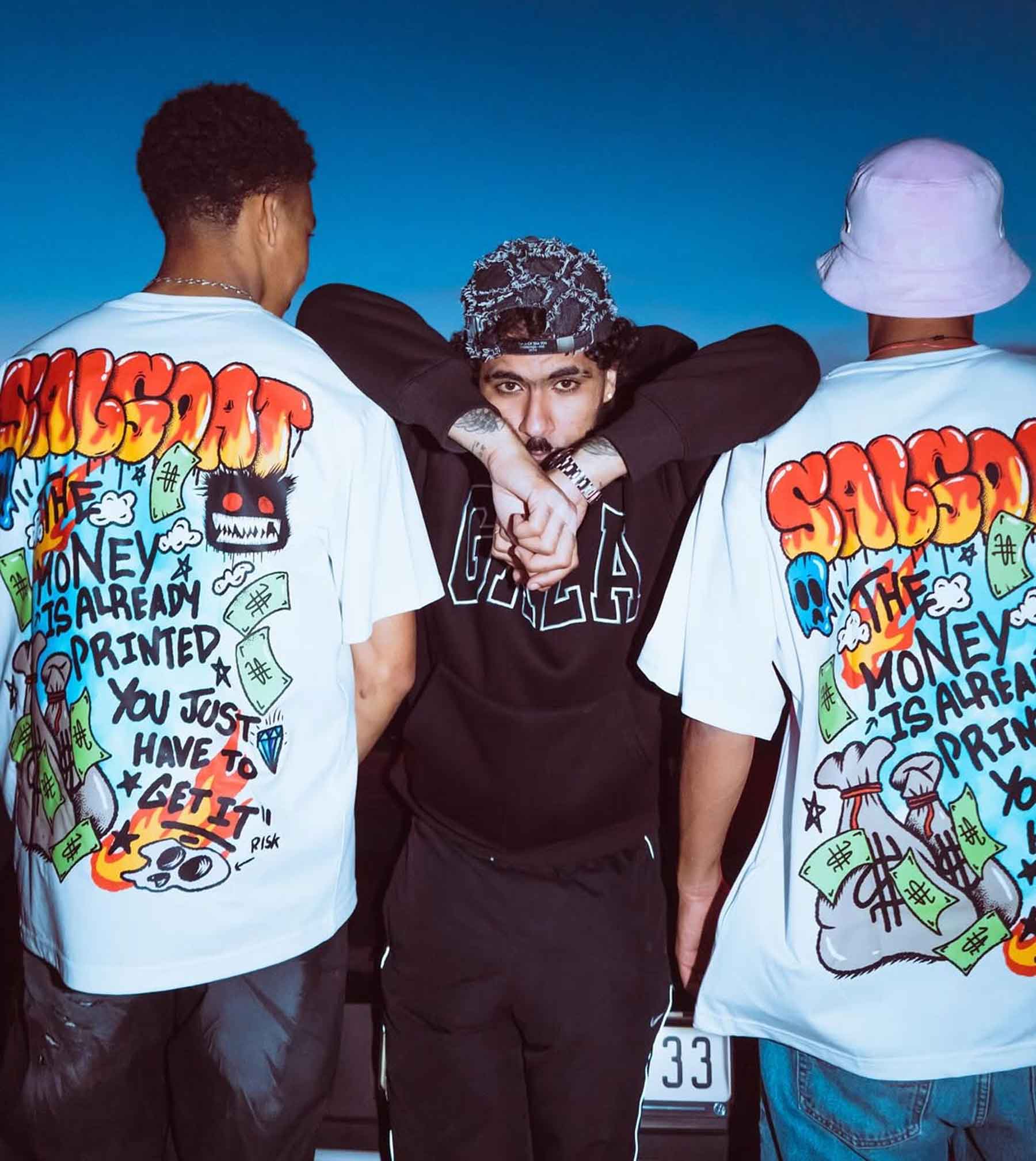
Over the past few years, Moroccan rap has increasingly crossed national boundaries, propelled by streaming platforms and social media. Artists such as ElGrandeToto, Dizzy DROS and Muslim have found audiences well beyond Morocco, particularly in Europe and the Arab world. Their distinctive musical language, combining Moroccan Darija with international rap influences, has forged a recognisable identity that sets Moroccan rap apart on the global stage.
The Spotify data also points to a widening circle of successful artists. Stormy and Draganov jointly occupied second place, each attracting roughly 1.2 million streams, a clear indication of their rising appeal among younger listeners. Stormy, in particular, stood out through tracks such as “Moon,” which garnered around 280,000 streams, as well as his collaboration with Amine Farsi on “Bali Maak,” which exceeded 268,000 streams.
Such figures highlight an increasingly collaborative and experimental scene. Rather than relying solely on competition, Moroccan rap artists are engaging in joint projects that expand creative boundaries and reach broader audiences. This spirit of experimentation has become a defining feature of the genre’s current phase.
In third place came rapper Shaw, with 837,000 streams, followed by Tagne with 710,000 and Inkonnu with 680,000. Kouz1 and LFERDA also maintained strong positions within the top ten, recording 595,000 and 587,000 streams respectively. The breadth of names across the rankings reflects a healthy and dynamic ecosystem, where success is no longer concentrated among a handful of established figures.
These trends reveal a music scene driven less by traditional media exposure and more by innovation, adaptability and immediate engagement with listeners. In the age of streaming, prominence is increasingly tied to an artist’s ability to refresh their sound, respond quickly to audience tastes and speak authentically to lived experience. This helps explain the diversity of styles and collaborative tracks dominating Spotify’s Top Maroc playlist, which features 50 of the country’s most-streamed songs.
The rise of rap also signals a broader cultural shift. Moroccan listeners, particularly younger ones, are showing greater openness to contemporary musical experiments and a faster response to new releases. Streaming platforms have become a mirror of youth sentiment, reflecting everyday realities and offering music that speaks in a language listeners recognise as their own.
At its core, the appeal of Moroccan rap lies in its ability to articulate the concerns of a new generation. From unemployment and migration to questions of identity, ambition and daily struggle, rap lyrics often address issues that resonate deeply with young Moroccans. Drawing on global influences while remaining grounded in local realities, the genre has become a tool for protest, self-assertion and, at times, celebration of achievement.
As new talents continue to emerge and international interest in North African music grows, Moroccan rap appears poised for even greater visibility, both domestically and globally. With record-breaking streaming figures and a growing presence at international festivals, the genre is no longer a passing trend but a cultural phenomenon that captures the spirit and voice of a generation.