

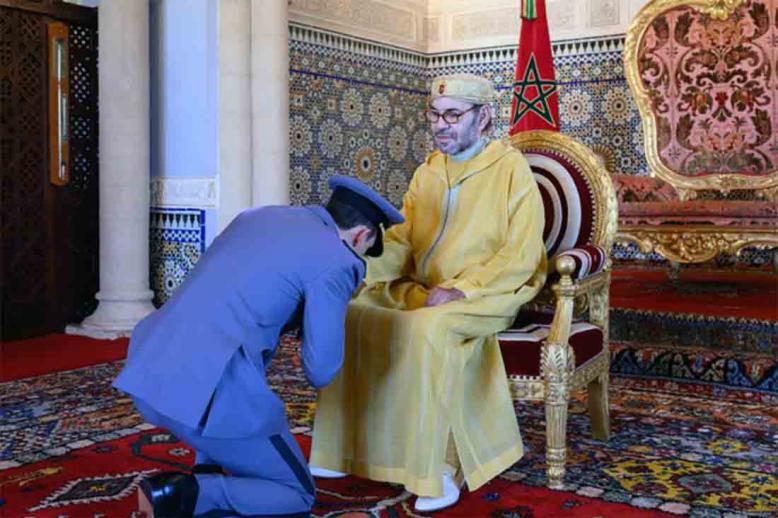
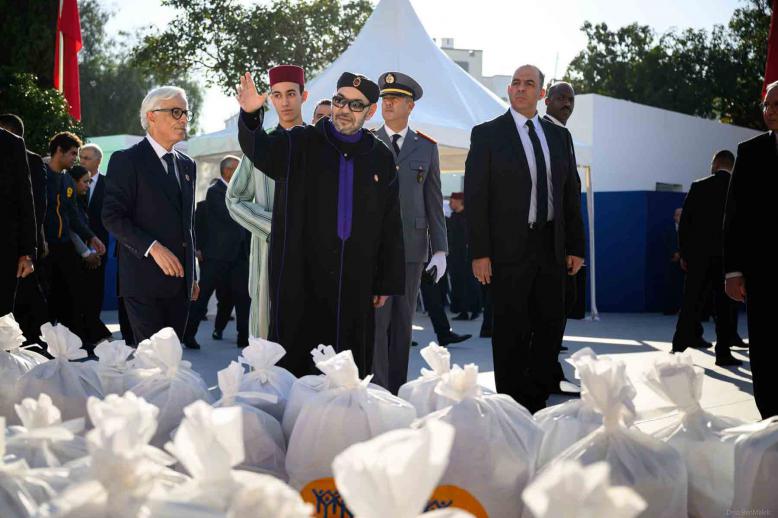
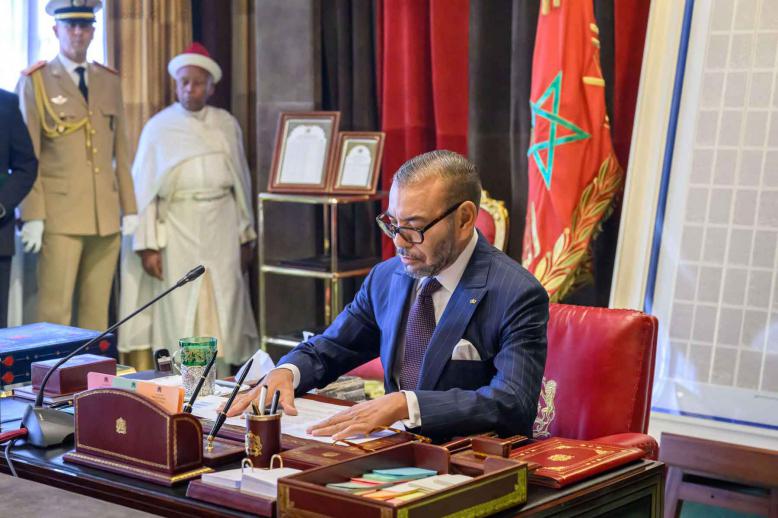
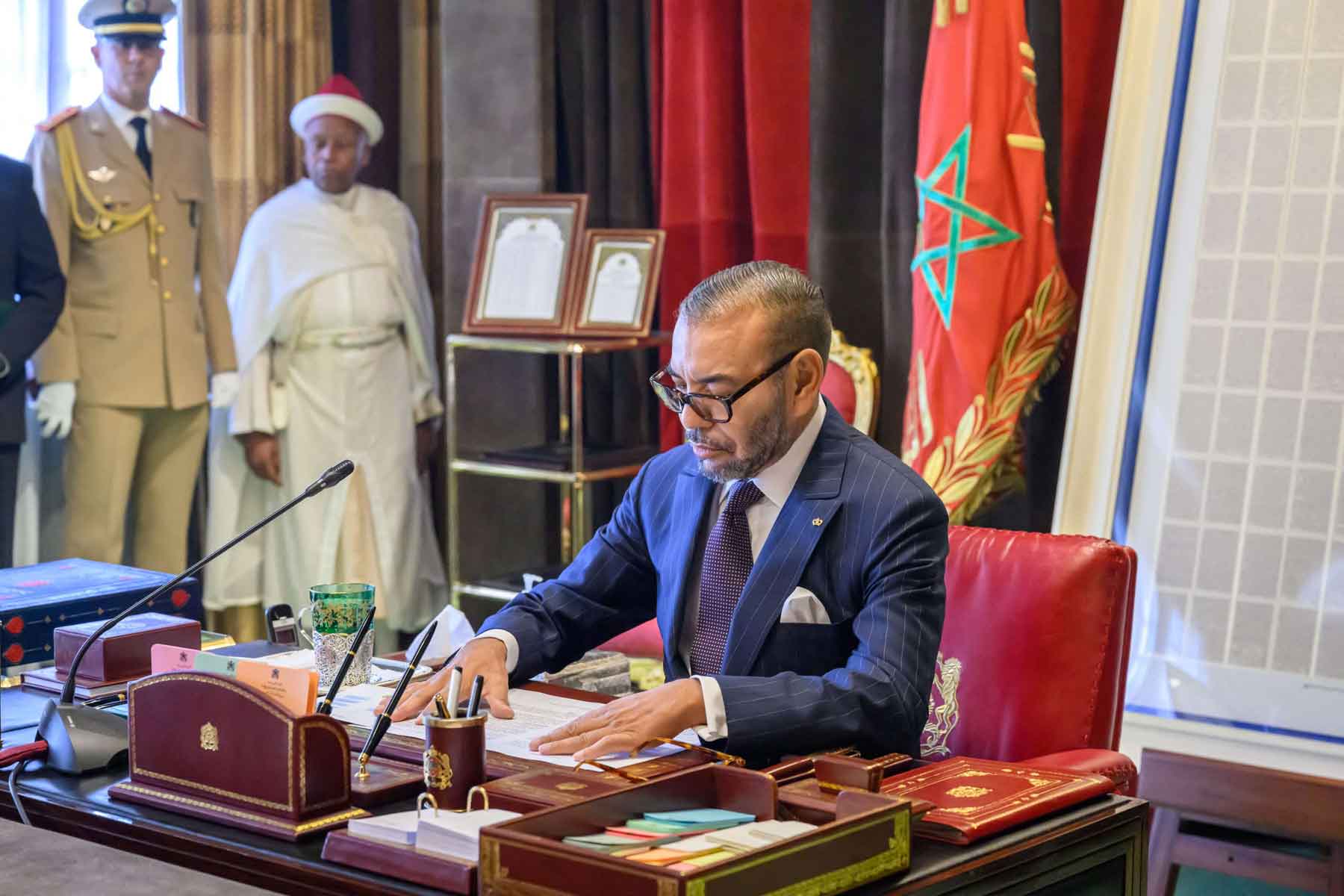
The king said the tournament would remain a landmark in the history of the continental competition
Morocco’s king says African bonds will prevail after AFCON controversy
The king underlined his personal commitment to cooperation and peaceful coexistence across Africa in all fields, including sport.
Friday 23/01/2026
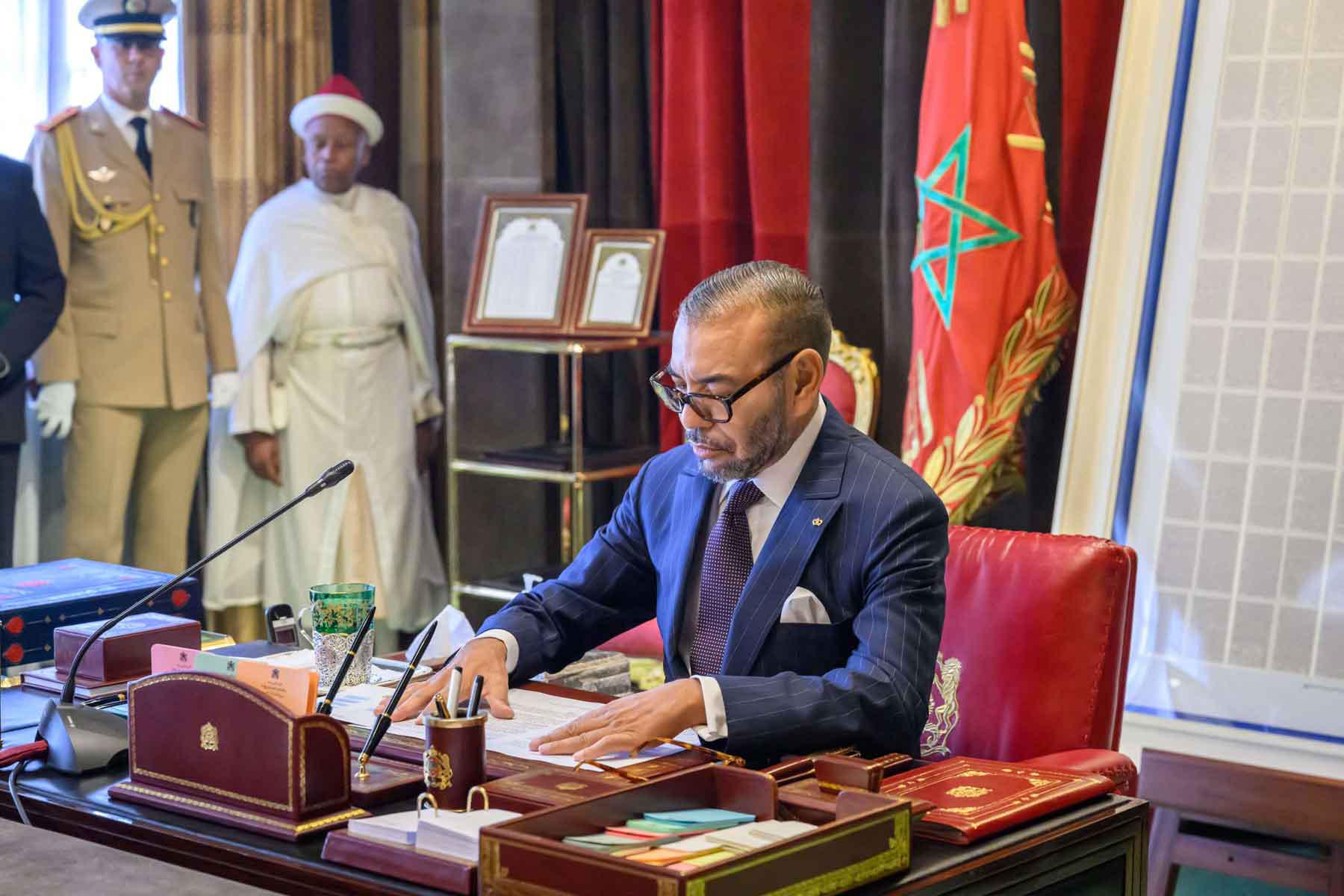
The king said the tournament would remain a landmark in the history of the continental competition
RABAT – Morocco’s King Mohammed VI said on Thursday that Africa’s bonds of fraternity would remain stronger than any attempts to sow discord, stressing that the closeness between the continent’s peoples cannot be undermined by isolated incidents, in an apparent reference to tensions that followed the Africa Cup of Nations (AFCON) final between Morocco and Senegal.
In a statement issued by the Royal Cabinet on the conclusion of the 35th Africa Cup of Nations, hosted by Morocco from December 21, 2025 to January 18, 2026, the king said,
“Nothing will alter the closeness that was fostered over centuries between our African people, nor the fruitful cooperation built hand in hand with different countries of the continent, bolstered by ever ambitious partnerships.”
The king underlined his personal commitment to cooperation and peaceful coexistence across Africa in all fields, including sport, pushing back against what he described as attempts by some to exploit the events surrounding the final to spread animosity.
Mohammed VI said the tournament would remain a landmark in the history of the continental competition, noting that beyond its sporting achievements, it showcased Morocco’s development model.
“This edition of the continental competition will stand as a milestone, as, beyond its sporting outcomes, it made for a gauge for the kingdom’s major leap on the path to development and progress, fruit of a long-term vision and a unique and efficient Moroccan model which puts the citizen at the heart of all ambition,” he said.
King Mohammed VI acknowledged that the “great continental football celebration” hosted by Morocco had been marred by unfortunate scenes in the closing minutes of the final between Morocco and Senegal, during which, he said, “deplorable” acts were recorded.
“It remains nonetheless that, once passions have subsided, inter-African fraternity will naturally prevail, for this Moroccan success is also an African success,” the king said, adding, “Morocco remains proud to have offered, on its soil, a month of popular joy and sporting emotion, and to have contributed to the prominence of Africa and its football.”
Mohammed VI also addressed what he described as defamation and attempts to undermine credibility, saying he remained convinced that hostile schemes would never achieve their aims and that Moroccans would not be drawn into hatred or division.
He congratulated citizens across the kingdom for their efforts and for their “valuable contribution” to the “historic success” of the tournament, “which has been acknowledged and acclaimed worldwide.”
Final-match drama
Senegal won the Africa Cup of Nations for the second time in their history after defeating hosts Morocco 1-0 after extra time on Sunday at the Prince Moulay Abdellah Stadium in Rabat.
The final was overshadowed by controversy late in normal time when the referee awarded Morocco a penalty in the eighth minute of stoppage time following a VAR review, after Brahim Diaz was fouled in the area by Senegal defender El Hadji Malick Diouf.
The decision sparked strong protests from Senegal’s players, particularly as it followed the disallowing of a Senegalese goal moments earlier. Senegal’s head coach ordered his players off the pitch in protest before they headed towards the dressing rooms.
Senegal captain Sadio Mane intervened at a critical moment, urging his teammates to return to the field, amid regulations stipulating that a team that does not resume play within 15 minutes is deemed to have forfeited the match.
After play resumed, Diaz struck the penalty in an audacious fashion, but goalkeeper Edouard Mendy saved the effort, leaving the match goalless at the end of normal time.
Early in the first period of extra time, Senegal took the lead through Pape Gueye, who finished off a well-worked team move with a precise long-range strike into the left corner of Yassine Bounou’s goal.
CAF praise and economic impact
Despite the incidents, the Confederation of African Football (CAF) said the Morocco edition was the best in the tournament’s history, both organisationally and in terms of record-breaking achievements.
Over the past two years, Morocco launched a series of major projects in preparation for hosting the tournament, including upgrades to stadiums, roads, railways and health facilities, a move observers described as a qualitative step to strengthen the country’s economic and tourism gains.
CAF president Patrice Motsepe said on Saturday that AFCON 2025 in Morocco would remain the best-organised edition in the competition’s history, citing the quality of infrastructure, transport, hotels, stadiums and training facilities.
CAF also announced that tournament revenues rose by more than 90 percent compared with the previous edition, describing the Morocco tournament as “the most successful commercial story in the history of African football.”
The number of commercial partners increased from nine at the 2021 Cameroon edition to 17 in Cote d’Ivoire 2023, before reaching 23 sponsors in Morocco 2025. The expansion was attributed to wider media-rights distribution and entry into new markets, particularly in East Asia, including China and Japan.
Matches were played in nine stadiums across six cities, a first in the history of the continent’s flagship competition.
Regional acclaim
Moroccan sports researcher Rachid El Fakraoui praised the tournament’s organisation and technical level, describing it as “world-class” in terms of preparation, infrastructure and public engagement, saying Morocco’s performance rivalled countries with long experience hosting major global sporting events.
Senegalese sports journalist Omar Talal said Morocco had achieved outstanding success both organisationally and technically, highlighting infrastructure quality, ease of transport and the high standard of accommodation. He called on other African nations to draw lessons from the Moroccan model, noting that sport had become a true industry capable of driving economic growth.
Technically, the tournament marked a milestone for African coaching, with Morocco, Nigeria, Egypt and Senegal all reaching the semi-finals under African or local coaches, the first time such an achievement has been recorded in 60 years.
Despite losing the final, Morocco climbed from 11th to eighth in the latest FIFA men’s world rankings, returning to the top 10 for the first time since April 1998, after recording five wins, one draw and one defeat at the tournament.