

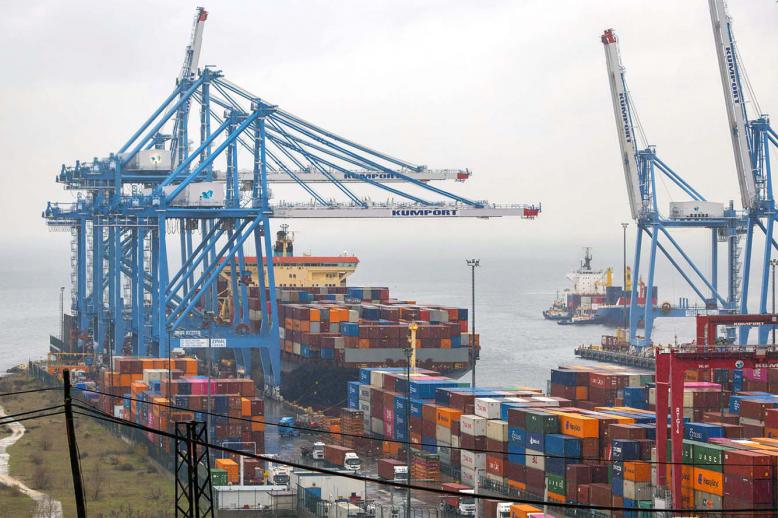


Tangier Med, Africa’s largest port, remains central to Morocco’s logistics ambitions
Morocco strengthens logistics role with new ports, trade digitisation
Among the flagship projects are Nador West Med, expected to become operational this year, and Dakhla Atlantic Port, which Moroccan officials say is around 58 percent complete.
Tuesday 19/05/2026

Tangier Med, Africa’s largest port, remains central to Morocco’s logistics ambitions
RABAT/CASABLANCA – Morocco is pressing ahead with a sweeping expansion of its port and logistics infrastructure while launching a new digital trade platform as the kingdom seeks to position itself as a major regional hub linking Europe, Africa and Atlantic trade routes.
The North African country plans to invest around 75 billion dirhams ($8 billion) under its Ports Strategy 2030, according to Sanae El Amrani, Director of Ports and the Maritime Public Domain at the Ministry of Equipment and Water.
The programme includes six new ports, expansions at five existing ports and the development of six ship repair docks as Rabat seeks to raise total annual port handling capacity above 450 million tonnes by the end of the decade from around 390 million tonnes currently.
Among the flagship projects are Nador West Med, expected to become operational this year, and Dakhla Atlantic Port, which Moroccan officials say is around 58 percent complete.
Cargo handling at Moroccan ports rose 8.9 percent last year to about 262 million tonnes, reflecting growing trade activity and increasing pressure on logistics infrastructure.
Morocco operates 44 ports, including 14 dedicated to foreign trade, and officials say the kingdom’s location between the Atlantic Ocean and Mediterranean Sea gives it strategic importance in global supply chains.
Tangier Med, Africa’s largest port, remains central to Morocco’s logistics ambitions, serving as both a shipping hub and industrial platform hosting export-oriented manufacturing facilities including Renault’s automotive operations.
Rabat is also positioning Dakhla Atlantic Port as a gateway connecting landlocked Sahel countries to Atlantic trade routes under a regional initiative launched in 2023 involving Mali, Niger, Burkina Faso and Chad.
The Dakhla project has already attracted around $1.4 billion in investment through public-private partnerships, with total infrastructure spending expected to reach $3 billion and logistics investments projected at another $2 billion.
Expected to be completed by 2028, the port is planned to handle up to 35 million tonnes annually and accommodate large vessels with depths reaching 80 metres.
Morocco is also adapting its maritime infrastructure to global energy shifts, preparing ports including Nador and Dakhla to handle future exports linked to green hydrogen and renewable energy industries targeting European markets.
Alongside physical infrastructure expansion, Moroccan authorities this week launched the PortNet Commerce Extérieur platform, a unified digital gateway designed to streamline import and export procedures.
Officials said the platform would integrate customs, ports, banks, logistics operators and government agencies into a single system aimed at reducing administrative fragmentation and accelerating trade operations.
According to officials, the system could reduce processing times by between 20% and 50% and eventually handle around 40 million trade documents annually.
“Our aim is not to create an additional platform, but to connect the numerous existing systems within a single window,” Secretary of State for Foreign Trade Omar Hejira said during the launch ceremony in Casablanca.
The project involves coordination between multiple institutions including the National Ports Agency, Tangier Med Port Authority, customs authorities and business groups.
Infrastructure Minister Nizar Baraka said Morocco’s ports handled around 95% of the country’s foreign trade and argued that competitiveness increasingly depended on the “smooth flow of logistics procedures” and digital coordination between institutions.
Officials said the platform forms part of a wider strategy to modernise Morocco’s trade system and strengthen its position as a regional logistics and industrial hub as companies increasingly seek supply chains closer to European markets.
The broader infrastructure push comes as Morocco prepares to co-host the 2030 FIFA World Cup with Spain and Portugal and rolls out projects worth more than $100 billion between 2025 and 2030 across transport, logistics and energy sectors.
Analysts say Rabat is seeking to capitalise on shifting geopolitical and economic dynamics, including growing competition over African maritime corridors and Europe’s search for alternative industrial and energy partnerships closer to home.