

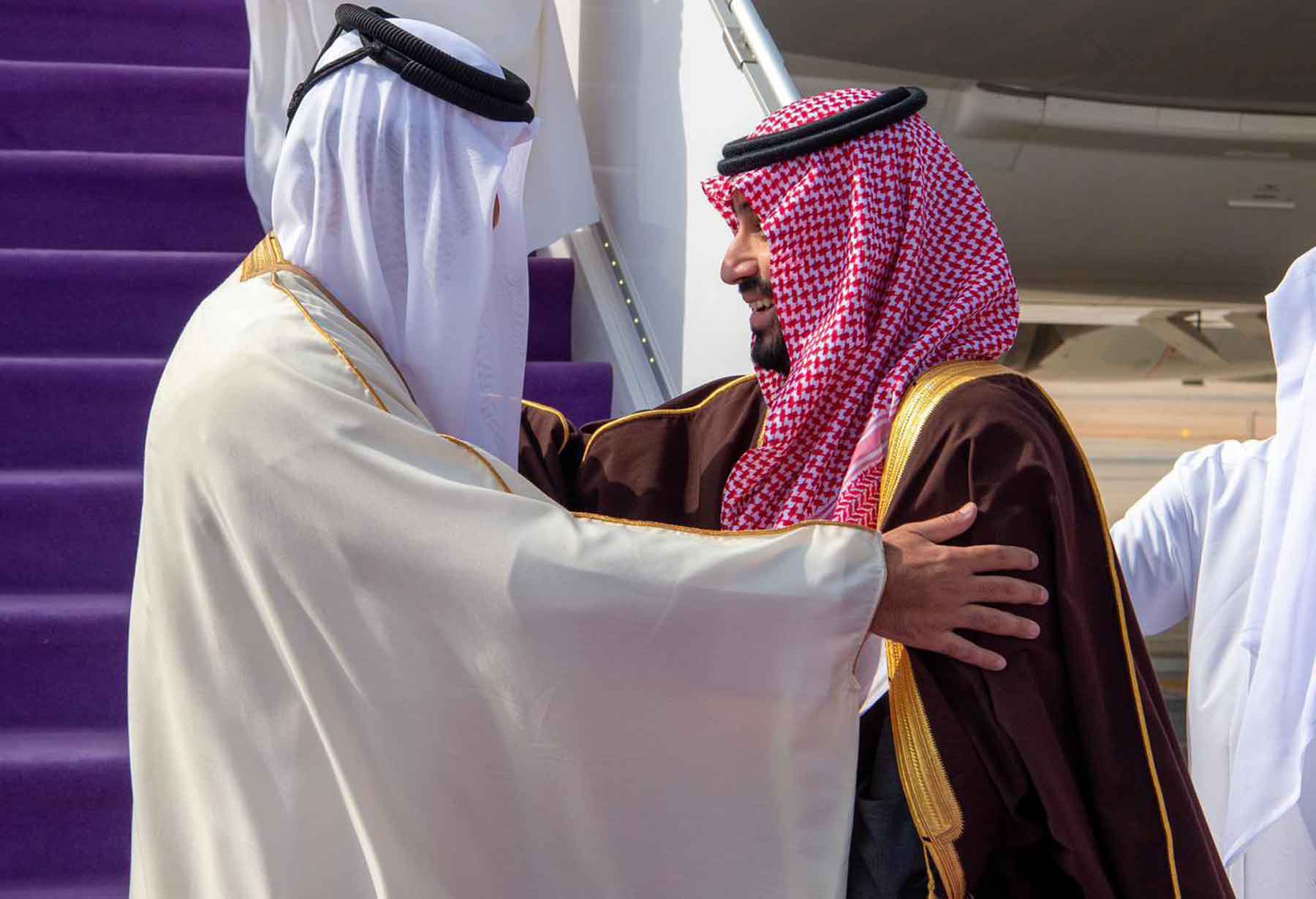
Saudi Crown Prince Mohammed bin Salman greets visiting Qatar’s Emir Sheikh Tamim bin Hamad Al Thani in Riyadh, December 08, 2025.
Saudi Arabia, Qatar push ties into new phase with major agreements
Bilateral trade reached $ 930.3 million in 2024 excluding re-exports, a jump of 634 percent compared with 2021, the year the reconciliation began to take effect.
Monday 08/12/2025
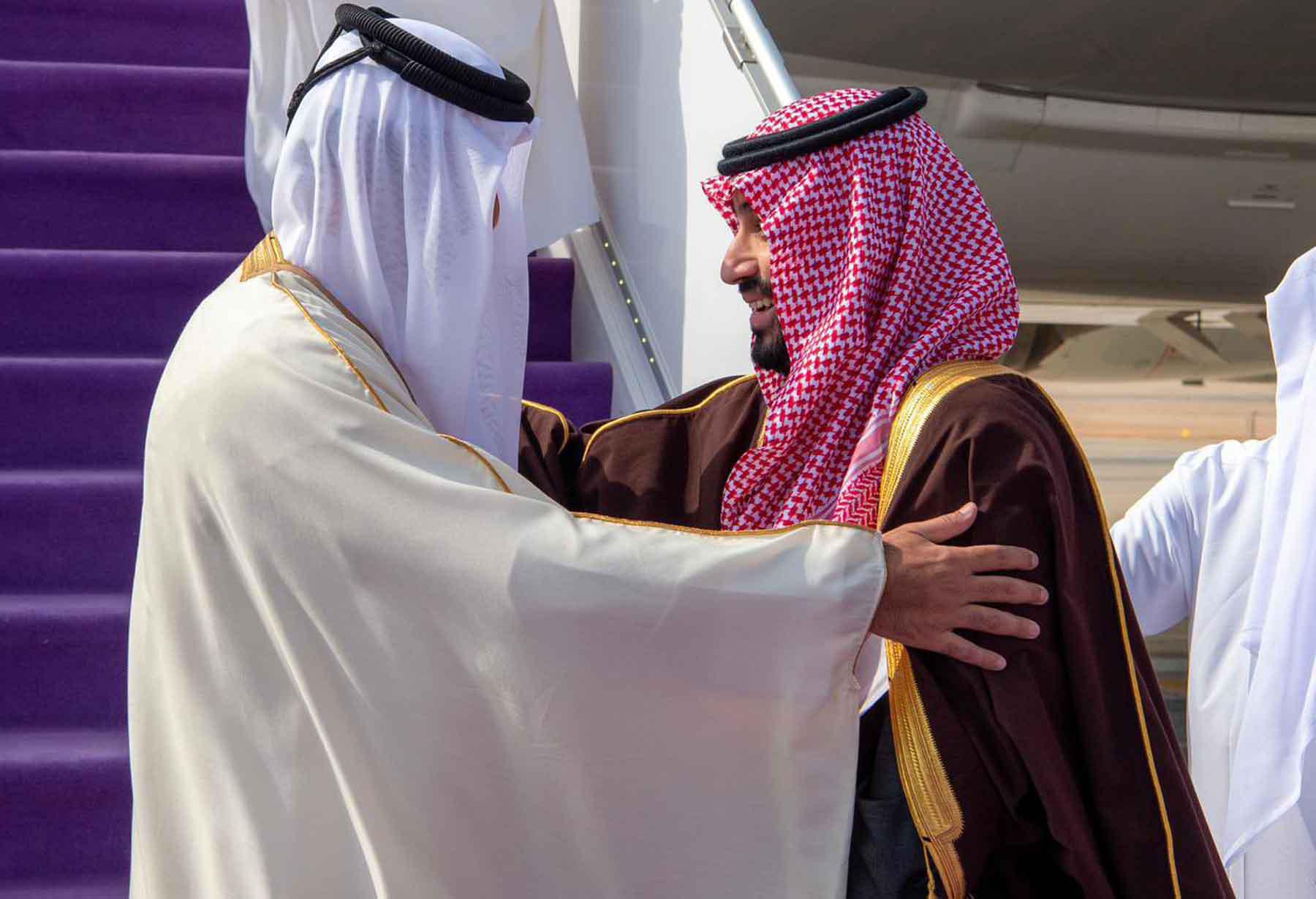
Saudi Crown Prince Mohammed bin Salman greets visiting Qatar’s Emir Sheikh Tamim bin Hamad Al Thani in Riyadh, December 08, 2025.
RIYADH
Qatar’s Emir Sheikh Tamim bin Hamad Al Thani held talks in Riyadh on Monday with Saudi Crown Prince Mohammed bin Salman in a meeting that underscored how far the two neighbours have come in rebuilding trust since the 2021 Al-Ula reconciliation, marking a new phase of coordinated diplomacy and deepening strategic cooperation across defence, energy, investment and transport.
The visit, which coincided with the eighth meeting of the Qatari-Saudi Coordination Council, reflects the steady rise in bilateral ties since the agreement ended years of diplomatic rift and restored travel, trade and full diplomatic relations between Qatar and the quartet of Saudi Arabia, the UAE, Bahrain and Egypt.
Qatar’s Emir arrived in Riyadh at the invitation of the Saudi crown prince and held an official session of talks at Al-Yamamah Palace. According to a joint statement, the discussions touched on strengthening cooperation in political, security, economic, cultural and technological fields, and on coordinating positions on regional challenges.
Both leaders praised the “remarkable” rise in bilateral trade, which reached $ 930.3 million in 2024 excluding re-exports, a jump of 634 percent compared with 2021, the year the reconciliation began to take effect, according to Qatar’s state news agency QNA.
The figure reflects what officials describe as not only a political reset but the unblocking of a significant volume of trade and investment.
The two sides stressed the need to diversify and increase commercial flows and to seize opportunities within Saudi Vision 2030 and Qatar National Vision 2030. They also welcomed deeper cooperation between sovereign wealth funds, more reciprocal official visits, and expanded business and investment forums.
Saudi Arabia and Qatar said they were committed to strengthening their defence partnership and coordinating positions to confront regional challenges, affirming a shared commitment to “joint security.”
Existing coordination already includes cybersecurity, counter-narcotics work, border protection, anti-terrorism efforts and the exchange of expertise.
The leaders also emphasised the importance of energy-market stability and the security of global supply. They agreed to explore further cooperation in electricity, renewable energy, energy efficiency and related projects, while stressing that global climate policies should focus on emissions rather than energy sources.
One of the most prominent outcomes of the visit was the signing of an agreement for a high-speed electric rail link connecting Riyadh and Doha via Dammam and Al-Hofuf. Officials said the major infrastructure project aligns with long-term economic visions in both countries and is expected to boost tourism, facilitate trade, and strengthen people-to-people ties.
Analysts say the rail link goes beyond transport, signalling a shift from reconciliation to tangible regional integration, with potential to accelerate economic connectivity across the Gulf.
Both sides reaffirmed their determination to intensify joint diplomatic efforts to safeguard international peace and security and exchanged views on key regional and global issues. The Saudi side welcomed Qatar’s ratification of the Charter of the World Water Organization, describing it as further evidence of the two states’ aligned positions on global challenges.
In the broader context, Monday’s meeting highlights how far relations have progressed since the 2017 Gulf crisis, when Saudi Arabia, the UAE, Bahrain and Egypt severed ties with Qatar, accusing it of supporting Islamist groups and getting too close to Iran, allegations Doha denied.
Today, both Riyadh and Doha appear keen to move beyond restoring ties toward building a strategic, long-term partnership rooted in economic expansion, regional stability and shared development goals.
At the conclusion of the visit, Sheikh Tamim thanked King Salman and Crown Prince Mohammed bin Salman for the warm reception. The Crown Prince extended his wishes for continued prosperity for the Qatari people.