

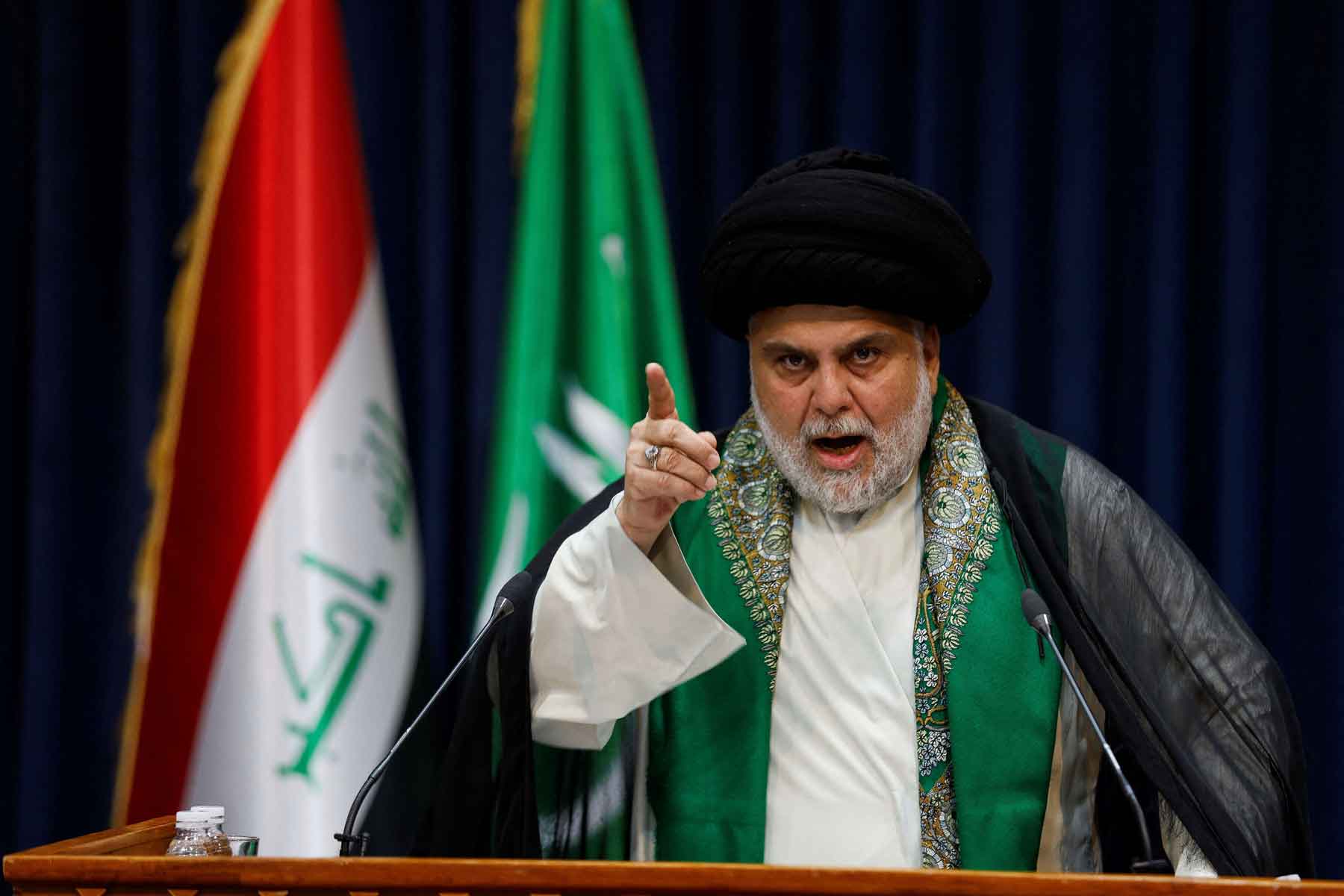
Iraqi Shia cleric Muqtada al-Sadr delivers a speech in Najaf, Iraq May 17, 2024.
Sadr masters ‘power in absence’ as he postpones million-strong prayer in Babil
Sadr’s manoeuvres highlight the continued potency of symbolic mobilisation in Iraq.
Tuesday 09/12/2025
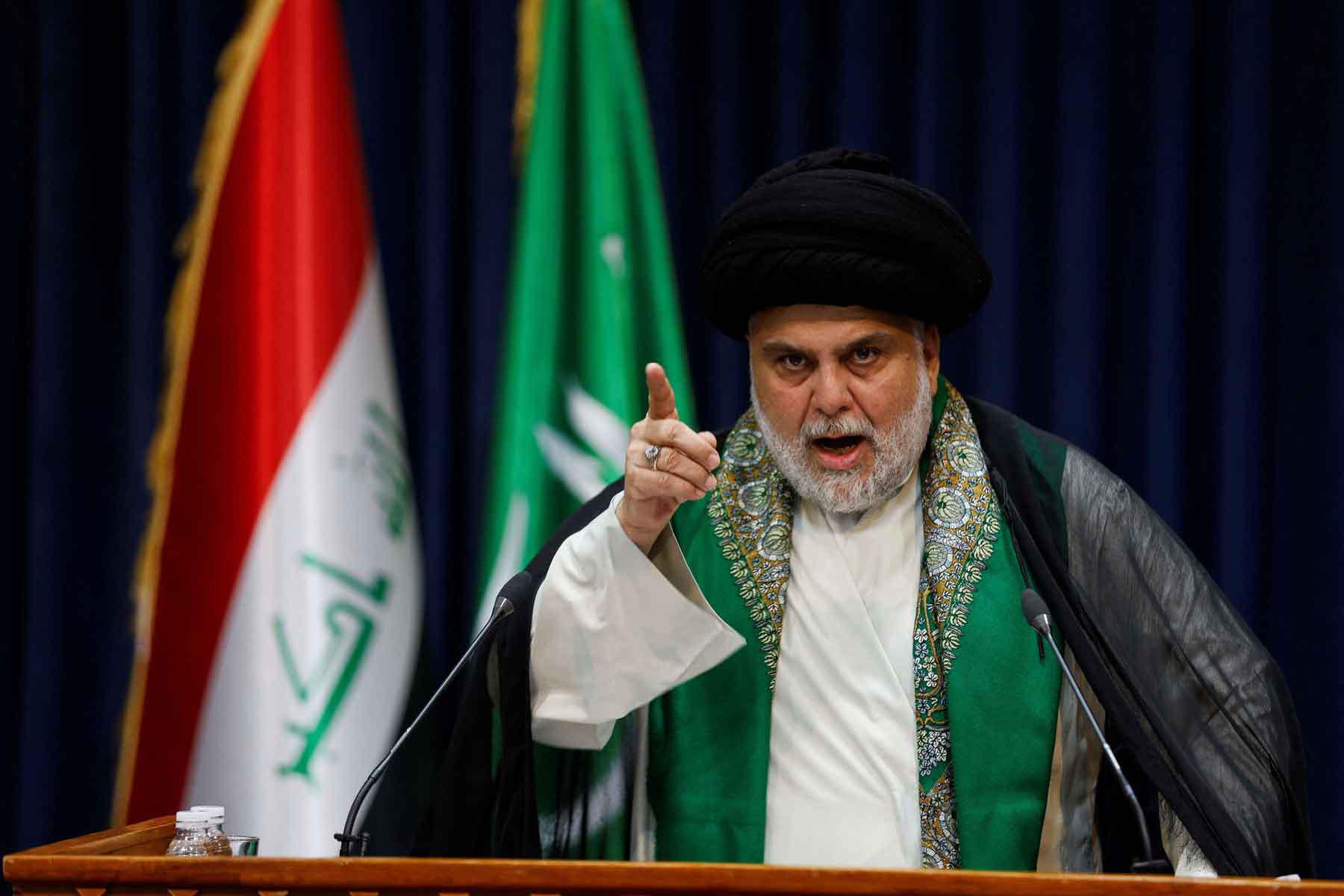
Iraqi Shia cleric Muqtada al-Sadr delivers a speech in Najaf, Iraq May 17, 2024.
BAGHDAD
Moqtada al-Sadr, leader of the Shia National Movement (formerly the Sadrist Movement), continues to exert an outsized influence on Iraq’s Shia political landscape without formally re-entering the fray, exemplifying a model of “presence in absence.”
Through carefully measured steps, from calls for mass mobilisation to disciplined retreats, Sadr demonstrates an ability to shape political rhythms through indirect yet potent signals.
Sadr’s symbolic presence, which does not rely on a permanent on-the-ground footprint, serves as a reminder that the Sadrist Movement retains control over street-level influence and strategic leverage. His absence, paradoxically, becomes an instrument of power, keeping opponents uncertain and the balance of Shiite politics delicately poised.
This dynamic was evident earlier this week when Sadr announced via his official Facebook account the postponement of a “unified Friday prayer” in Babil province, days after mobilising supporters for what he had described as a “million-strong gathering to intimidate the enemies.”
While the postponement was officially attributed to religious, social and climatic considerations, “cold, rain and precipitation,” its political implications are more nuanced. Analysts view the move as a tactical manoeuvre designed to maintain visibility and test both popular support and the reactions of rival factions within the Shiite bloc.
The choice of Babil over the movement’s traditional strongholds carried symbolic weight. The province, strategically located and demographically diverse, is considered a natural extension of the Coordination Framework, and the messaging, “a million-strong gathering to intimidate the enemies,” underscored that the initiative was as much about signalling organisational strength as religious observance.
Yet Sadr’s postponement reveals a sophisticated balancing act. Mobilising such a large-scale gathering on short notice would have posed considerable logistical and security risks, particularly amid sensitive relations with competing Shiite forces. By framing the delay as an act of compassion toward worshippers, he avoids any perception of hesitation or weakness, maintaining the movement’s moral and symbolic authority.
Observers note that the call for the unified prayer was never merely ceremonial. It functioned as a gauge of public responsiveness and a test of the movement’s capacity for rapid mobilisation outside its core territories. The move signals Sadr’s intent to reassert influence following months of political quiet, at a time when internal divisions within the Coordination Framework and ongoing governance challenges in Baghdad create a fluid power landscape.
Even in absence, Sadr reinforces his political and religious legitimacy. The message is clear: postponement does not mean cancellation but rather a recalibration of timing in line with strategic considerations.
In a broader sense, Sadr’s manoeuvres highlight the continued potency of symbolic mobilisation in Iraq. His approach, raising mobilisation levels only to suspend them strategically, allows him to measure influence, manage risks, and keep rivals on edge without triggering direct confrontation.
The Sadrist Movement retains some of its most sensitive levers of power: control over the street, the ability to transform religious occasions into political statements and the capacity to project authority even while absent. In this calculus, the timing of deploying such power remains firmly in Sadr’s hands, shaping the Shia political arena on his own terms.