

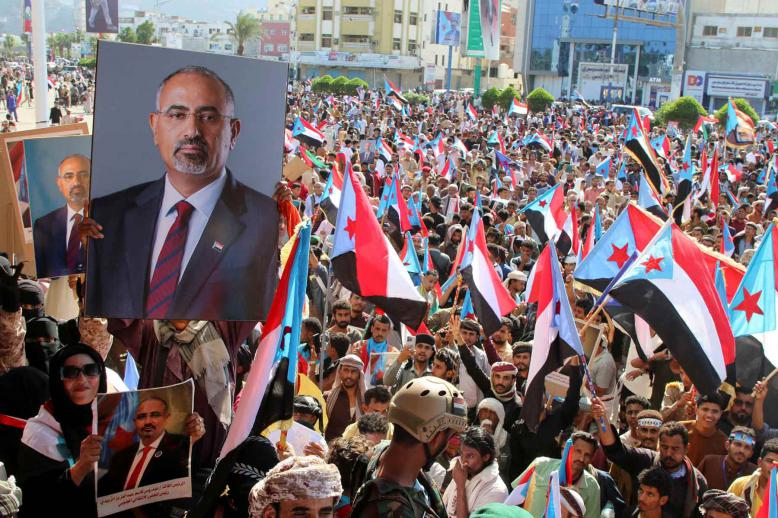
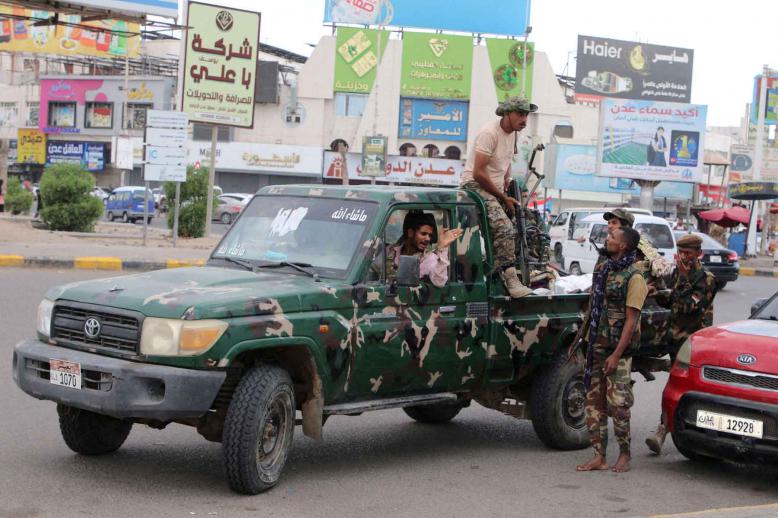
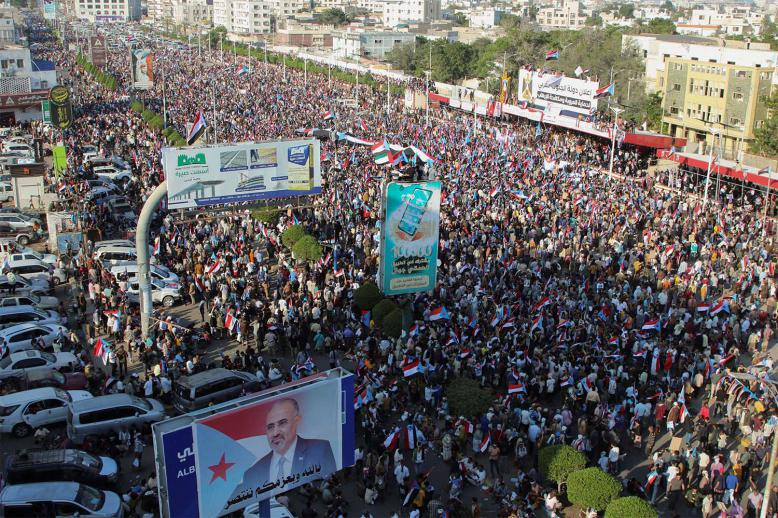
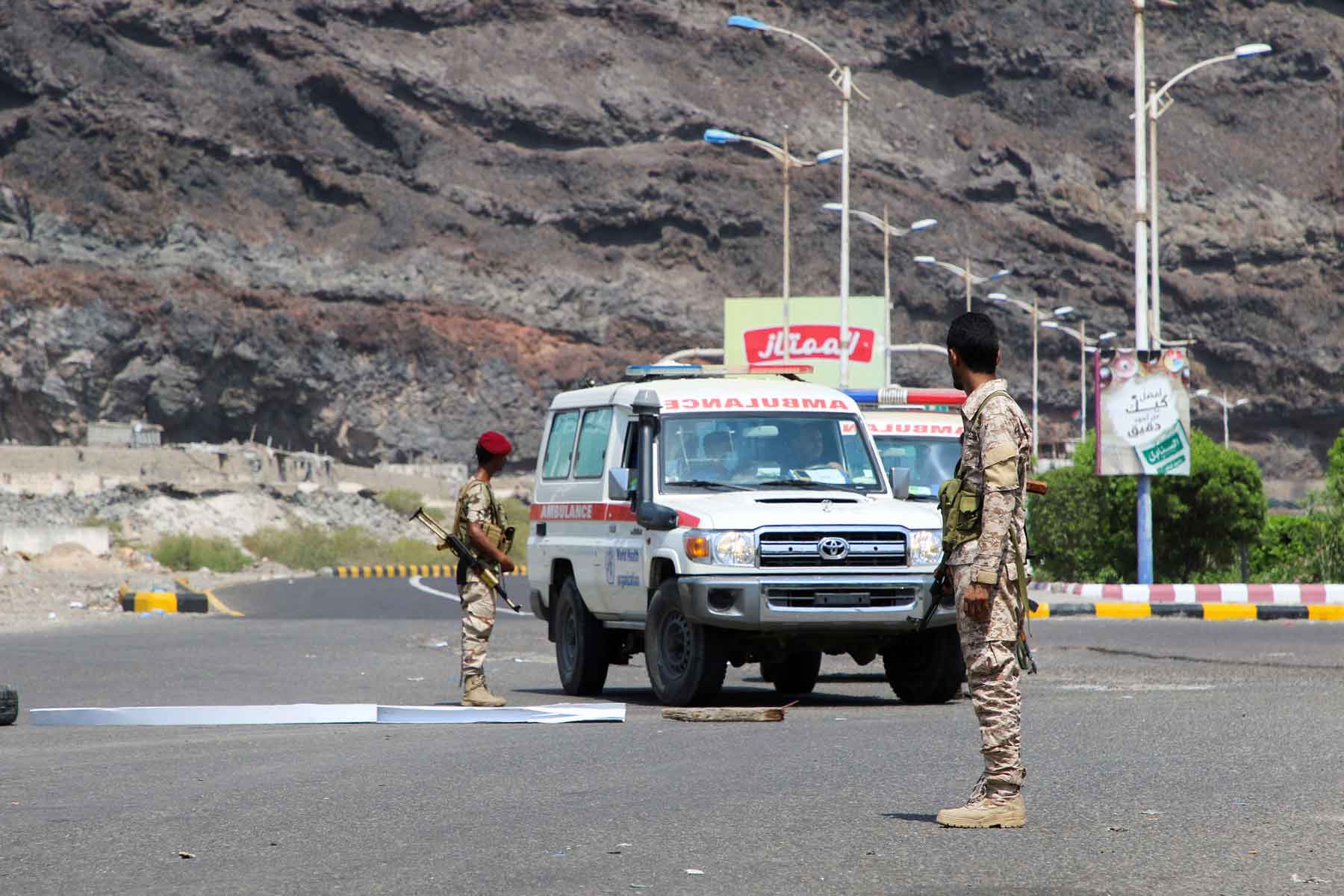
Members of the separatist Southern Transitional Council (STC) man a checkpoint in Aden, Yemen, October 2, 2021.
Saudi Arabia pushes for calm as STC gains stoke alarm over Yemen’s division
Developments in southern Yemen have heightened concerns about further territorial division.
Wednesday 10/12/2025
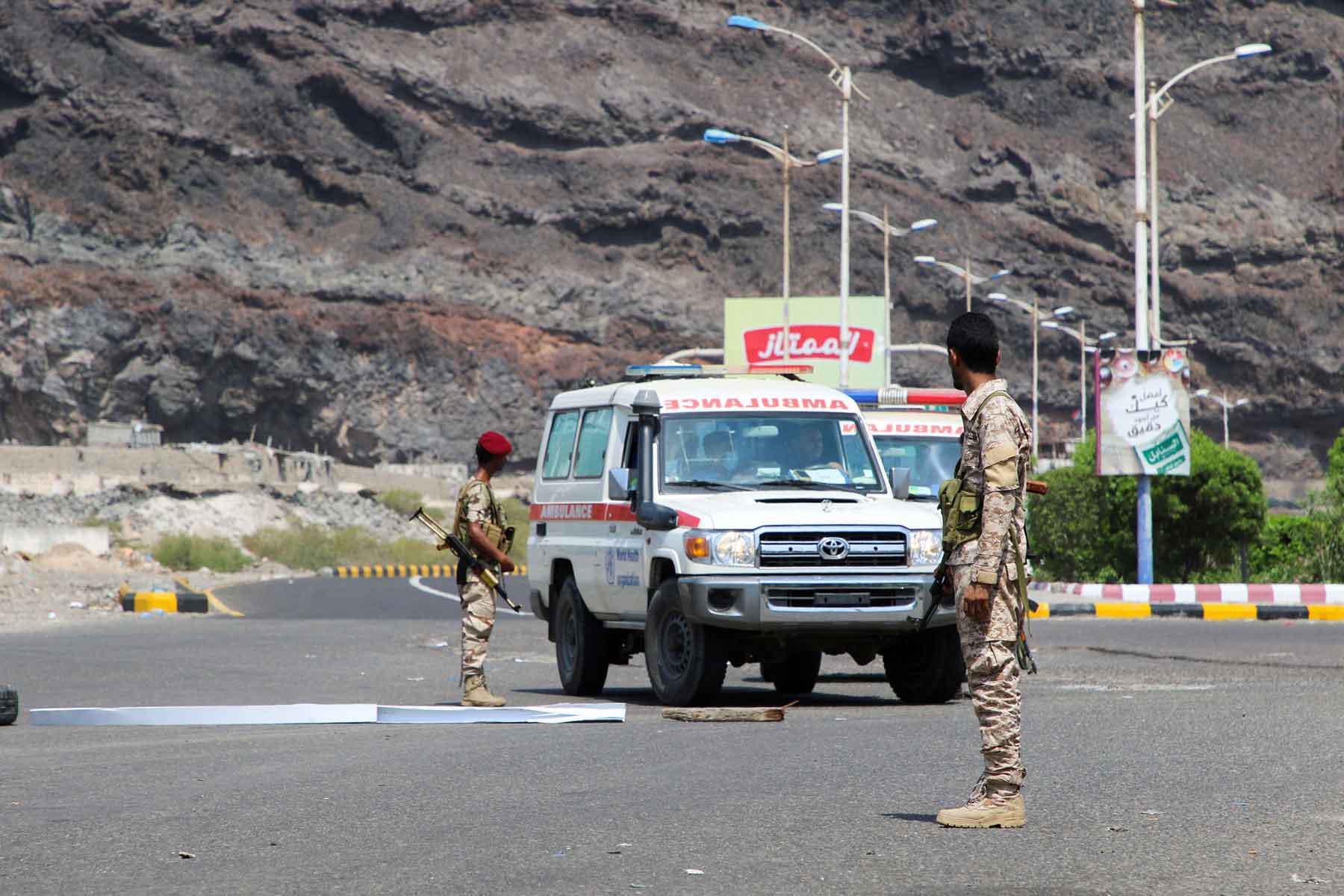
Members of the separatist Southern Transitional Council (STC) man a checkpoint in Aden, Yemen, October 2, 2021.
RIYADH
In a move underscoring Saudi Arabia’s mounting concern over the potential collapse of long-running efforts to secure a comprehensive peace in Yemen, the kingdom called on Wednesday for the withdrawal of all Southern Transitional Council (STC) forces from the eastern Yemeni provinces of Hadramawt and Al-Mahra. The initiative seeks to defuse rising tensions and avert a fresh conflict that could further fragment the war-torn country.
The call signals that Riyadh does not regard eastern Yemen as a peripheral arena but as a critical region that must be stabilised to safeguard the prospects of any future negotiations.
Saudi officials argue that any armed confrontation between STC forces and government units or local formations in the east, many of which retain tribal or local loyalties to the former Sana’a government or to the internationally-recognised government, could ignite a disastrous new conflict. Such an escalation, they warn, would threaten both the Riyadh Agreement and broader de-escalation efforts with the Houthis.
In recent days, STC forces completed their takeover of Al-Mahra and have seized territory in Hadramawt and Shabwa, including oil fields and facilities, according to both the STC and local authorities.
Major General Mohammed al-Qahtani, head of the Saudi delegation to Hadramawt, told tribal leaders during a meeting on Wednesday, reported by official media, that the kingdom remains committed to supporting de-escalation and ending the conflict.
“Saudi Arabia and the UAE are exerting every effort to achieve comprehensive peace in Yemen,” he said.
Qahtani emphasised that “the southern cause is a just cause that cannot be ignored or bypassed,” but stressed that “the kingdom’s position is to demand the withdrawal of all forces affiliated with the Southern Transitional Council from Hadramawt and Al-Mahra.”
He added that Riyadh “rejects dragging this vital province into new conflicts it cannot bear,” noting that “Hadrami society is peaceful, and the province is not a battlefield.” He also reaffirmed Saudi support for the Homeland Shield Forces (Quwwat Dir’ al-Watan) to take responsibility for securing military camps in both provinces.
Earlier on Wednesday, Yemeni political parties and groups aligned with the internationally-recognised government voiced their opposition to what they described as STC attempts to “subjugate the provinces of Shabwa, Hadramawt and Al-Mahra by force.”
While regional and international efforts have so far failed to bring an end to the war between government forces and the Houthis, developments in southern Yemen in recent days have heightened concerns about further territorial division.
Two days earlier, Chairman of Yemen’s Presidential Leadership Council Rashad al-Alimi, accused the STC of “undermining the legitimacy” of the internationally-recognised government. He urged the international community to apply public pressure to ensure the withdrawal of “STC forces arriving from outside Hadramawt and Al-Mahra.”
On Tuesday evening, UN envoy to Yemen Hans Grundberg called on all actors to reduce tensions through dialogue in Hadramawt and Al-Mahra. His appeal followed meetings in Riyadh with Yemeni Foreign Minister Shaea al-Zindani, the Saudi and Emirati ambassadors to Yemen, Mohammed al-Jaber and Mohammed al-Zaabi, representatives of the five permanent members of the UN Security Council, and other diplomats.
On December 5, Hadramawt saw a fragile calm after limited but deadly clashes between STC forces and the Hadhramaut Tribal Alliance, which left 10 fighters dead on both sides. The violence marked a breach of a truce reached two days earlier under Saudi mediation.
The flare-up prompted Alimi to travel to Saudi Arabia to discuss the situation, while also instructing government authorities to set up an investigative committee.
On December 4, Hadramawt authorities announced a Saudi-brokered de-escalation agreement with Hadhramaut Tribal Alliance, enabling the resumption of oil supplies in the province.
The agreement followed a December 1 announcement by state oil company Petromasila that it had halted all production and refining operations because of deteriorating security conditions. The shutdown came after the alliance seized company facilities east of Mukalla, the provincial capital, following nearly a week of unrest.
Yemen’s oil exports have been suspended since October 2022, when Houthi attacks targeted ports in government-held areas.
Militarily, Hadramawt’s coastal cities, including Mukalla and the historic Al-Shihr, are controlled by the Hadhrami Elite Forces, which answer to the STC. Cities and the desert areas of Wadi Hadramawt remain under the control of military units loyal to the Yemeni government.