

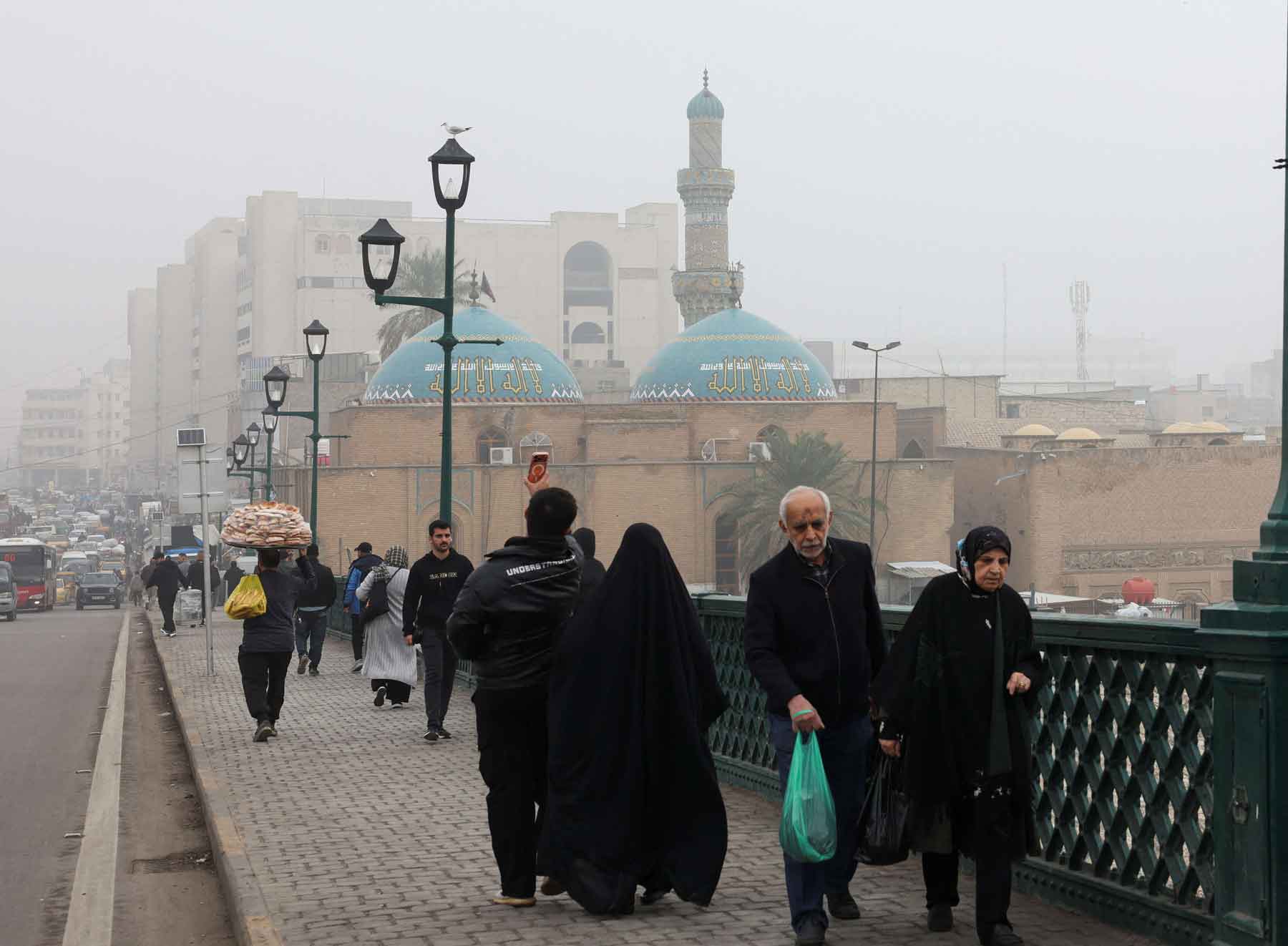
People walk across a bridge during a foggy day in Baghdad, December 11, 2025.
Political maneuvering in Baghdad delays selection of new prime minister
While the manoeuvre may buy breathing space, it does not resolve the underlying impasse, leaving the question of leadership hanging in the balance.
Tuesday 16/12/2025
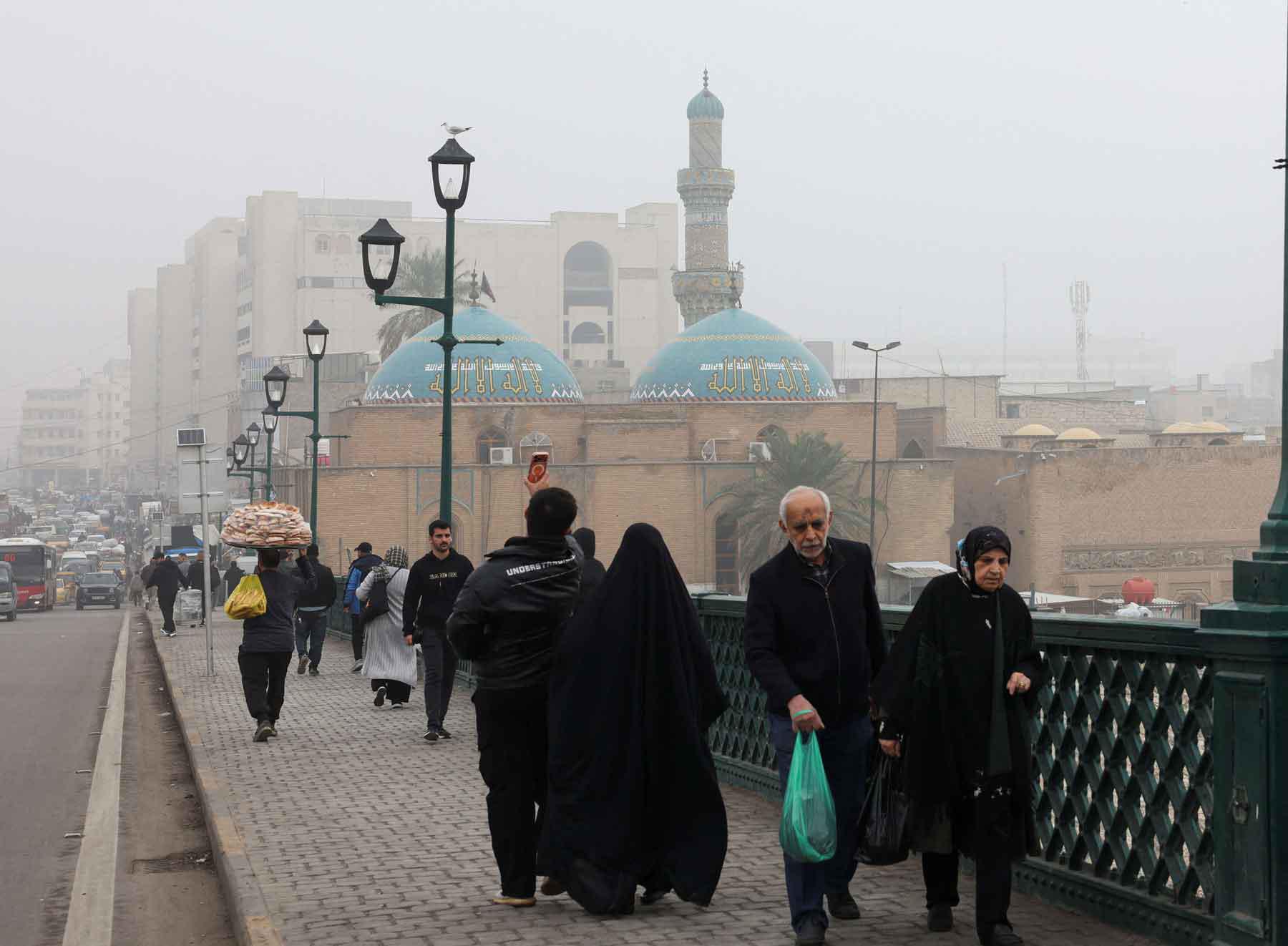
People walk across a bridge during a foggy day in Baghdad, December 11, 2025.
BAGHDAD –
In a bid to contain internal tensions and manage mounting divisions among its ranks, Iraq’s Shia Coordination Framework appears to be recalibrating its political priorities, turning attention away from agreeing on a consensus candidate for prime minister and toward convening parliament to elect its speaker.
The move comes as the bloc struggles to resolve deep-seated disagreements over who should lead the next government, weeks after the final certification of election results.
The Coordination Framework’s call to hold a parliamentary session and select the legislature’s presiding body is widely seen by observers as an effort to shift the perception of gridlock onto the Sunni bloc, framing the crisis as procedural rather than the product of internal Shia disputes.
A statement issued after the Coordination Framework’s recent meeting at outgoing Prime Minister Mohammed Shiaa al-Sudani’s office emphasised “national duties” and “constitutional mechanisms” without offering any concrete indication that a consensus candidate for prime minister would soon emerge.
Analysts suggest the move is tactical: by prioritising the election of the parliamentary speaker, a post traditionally reserved for the Sunni component, the Coordination Framework buys time to regroup while projecting an image of constitutional responsibility. At the same time, it places the Sunni bloc under early scrutiny, signalling that any delays in forming the new government are not solely the responsibility of the Shiite majority.
The bloc’s internal deadlock remains evident. The Nasr coalition, led by former Prime Minister Haider al-Abadi, indicated that the framework’s recent meeting would not resolve the prime ministerial nomination, suggesting a likely delay of at least two weeks. The remarks underscore the depth of divisions within the Shia alliance, revealing disagreements that go beyond procedural issues to the heart of power-sharing arrangements.
However, the strategy carries risks. Extending the stalemate, even after the parliamentary speaker is elected, could further erode trust between the Coordination Framework and its partners, inviting both domestic and international pressure to expedite government formation.
Time is a critical factor. Constitutional deadlines, triggered after the Supreme Federal Court certified election results on December 14, will soon require formal steps to establish the new government.
For now, the Coordination Framework appears to be managing its interim failure to reach consensus on a prime ministerial candidate through a tactical reprioritisation of constitutional milestones. Yet, while this manoeuvre may buy breathing space, it does not resolve the underlying impasse, leaving the question of leadership, and the stability of Iraq’s next government, hanging in the balance.