

Convergence of views
Egypt backs Kurdistan region as pillar of stability as Barzani meets Sisi
The Egyptian-Kurdish talks highlight how the Kurdistan region’s experience is increasingly seen beyond Iraq as part of a broader regional stability equation.
Monday 22/12/2025
Convergence of views
ERBIL/CAIRO –
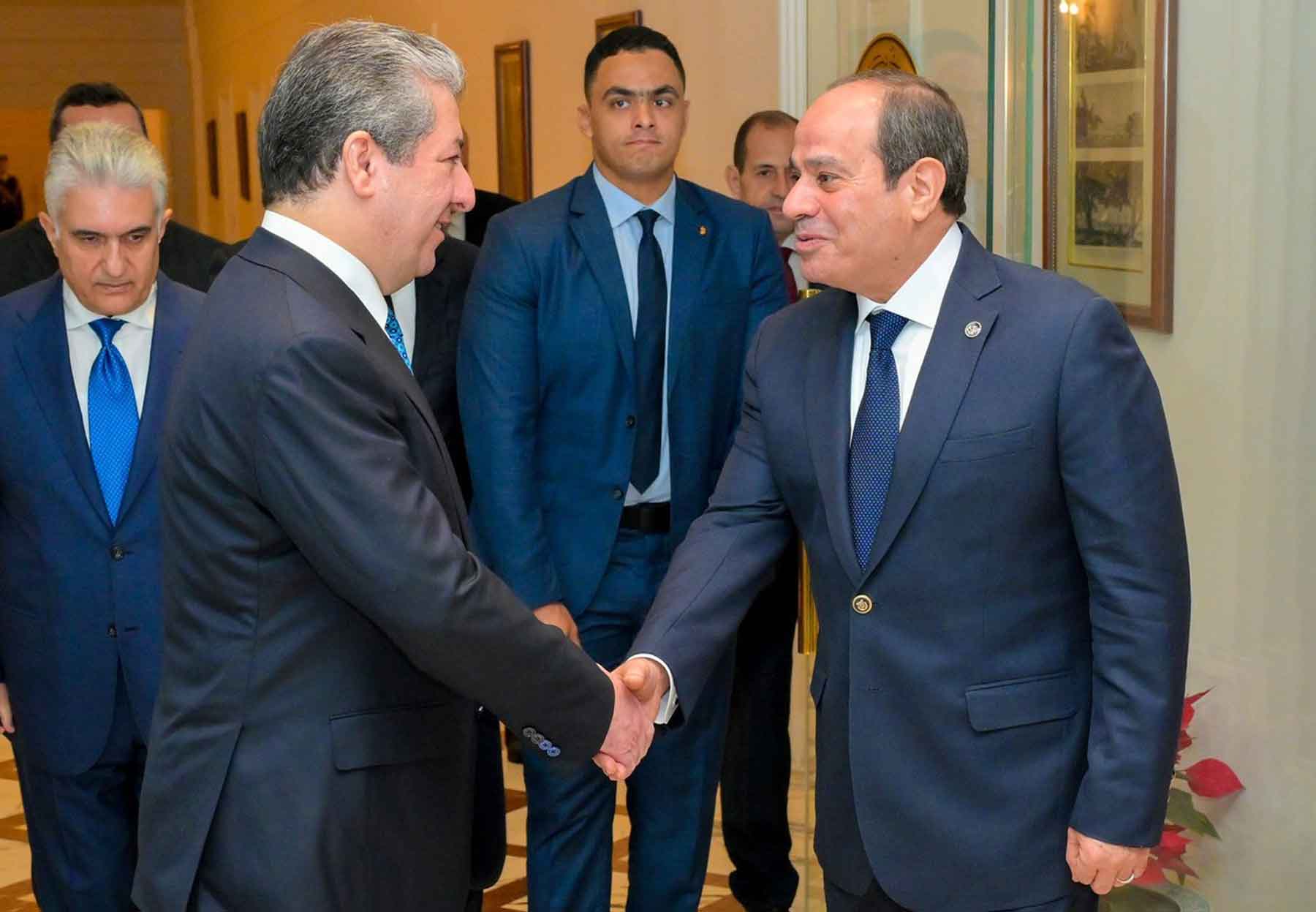
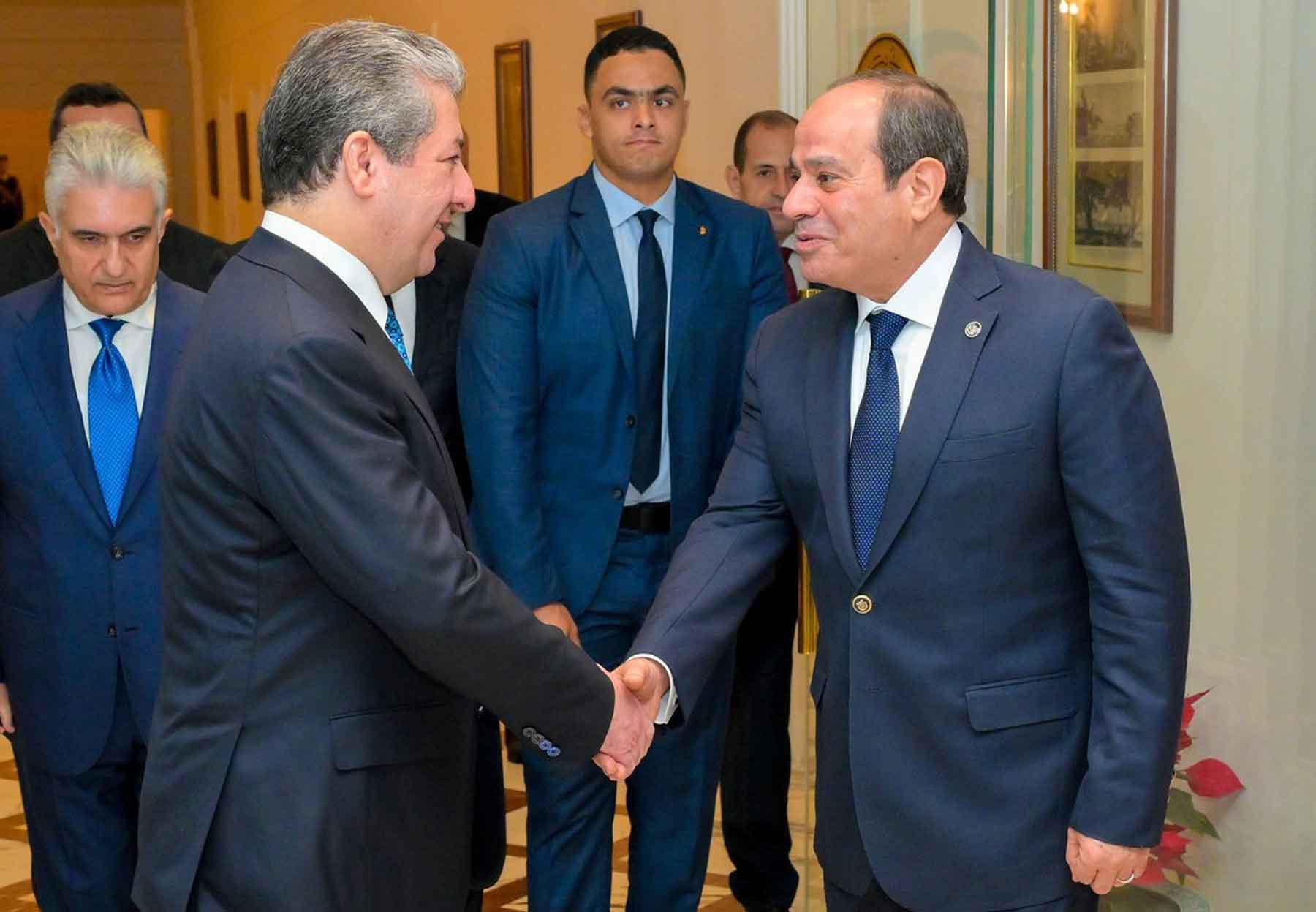
Kurdistan Region Prime Minister Masrour Barzani and Egyptian President Abdel Fattah al-Sisi stressed the need to bolster security and stability in Iraq and the wider region during talks in Cairo, amid mounting regional challenges affecting energy, security and economic prospects.
The meeting, held at Al-Ittihadiya, reflected a convergence of views between Erbil and Cairo on the primacy of stability as a foundation for sustainable political and economic development, the Kurdistan regional government said in a statement.
The talks come at a time of heightened regional volatility, lending added significance to the role played by the Kurdistan region as a relatively stable enclave within Iraq. Despite compounded financial and administrative pressures, Erbil has largely maintained security and institutional continuity compared with other parts of the country plagued by recurring instability.
In recent years, the Kurdish leadership has focused on building disciplined security institutions, strengthening the rule of law and linking stability to economic performance and public services. That approach has helped the region weather repeated shocks, despite what officials in Erbil describe as restrictive policies by Iraq’s federal government, including delays in paying public sector salaries that have weighed heavily on citizens.
Alongside its financial strains, the Kurdistan region has faced repeated attacks on oil and gas facilities, blamed on armed militias. Regional officials say the federal authorities have failed to act decisively to deter the assaults, which pose a threat not only to the region’s economy but also to Iraq’s broader energy security. Even so, Erbil has sought to contain the fallout and prevent the attacks from triggering wider instability.
Egypt, a key regional power, views the Kurdistan region as an important pillar of balance and stability, according to the statement. During the meeting, Sisi expressed Egypt’s readiness to deepen bilateral ties and expand cooperation, signalling Cairo’s confidence in the role played by the Kurdish leadership in an increasingly unsettled region.
Barzani, for his part, praised Egypt’s role under Sisi in supporting regional security and promoting peaceful coexistence. Both sides underscored the importance of boosting cooperation in investment and trade, seeing economic stability as a key driver of long-term security.
The Egyptian-Kurdish talks highlight how the Kurdistan region’s experience is increasingly seen beyond Iraq as part of a broader regional stability equation, built on political leadership, functioning security institutions and resilience under pressure at a time when the Middle East faces deepening crises.