

Fresh momentum into a stalled political process
Iraq lawmakers end impasse, paving way for government formation
Atroshi, a member of the Kurdistan Democratic Party (KDP), secured 178 votes, comfortably defeating rival candidate Rebwar Karim, who won 104.
Wednesday 31/12/2025
Fresh momentum into a stalled political process
BAGHDAD -
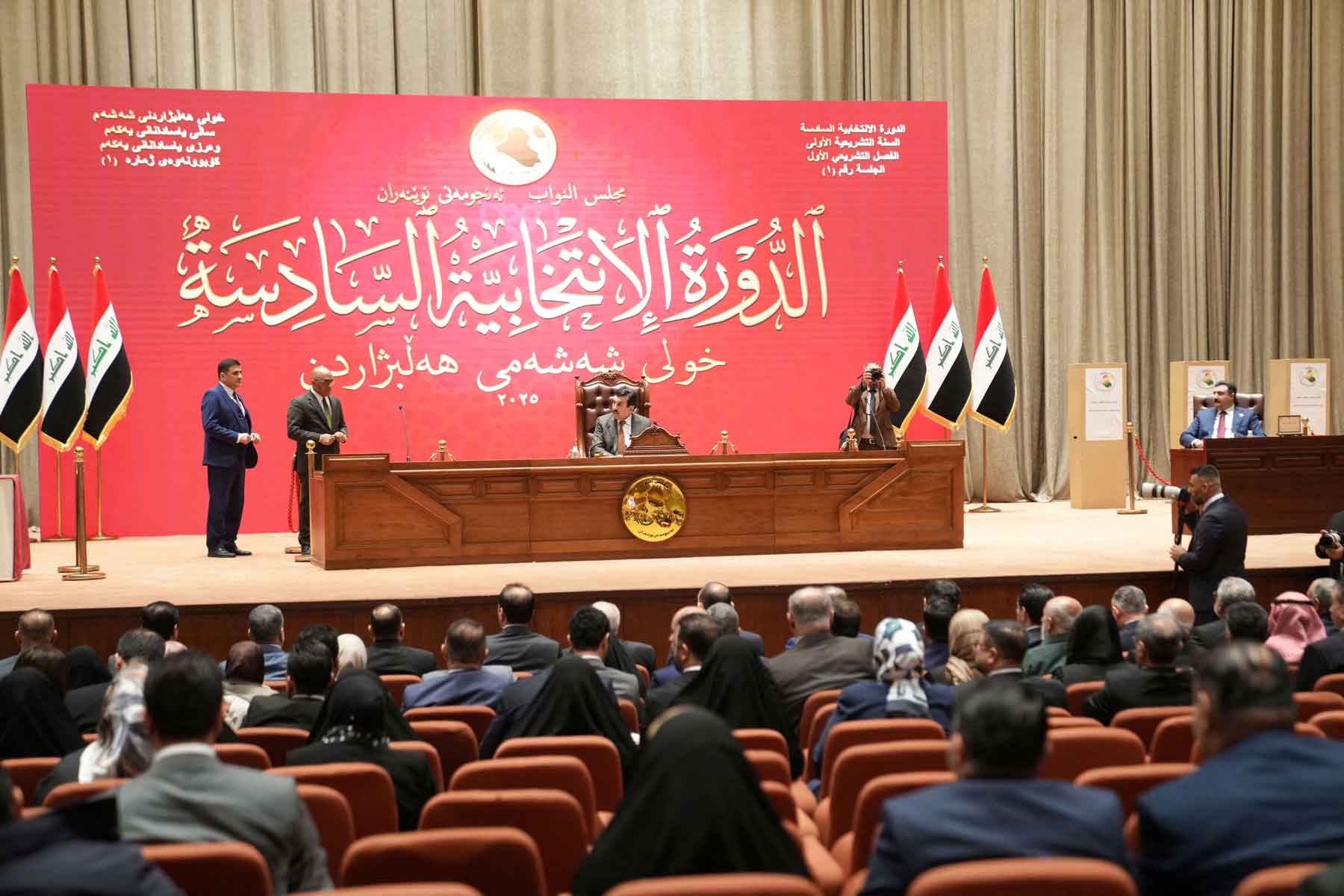
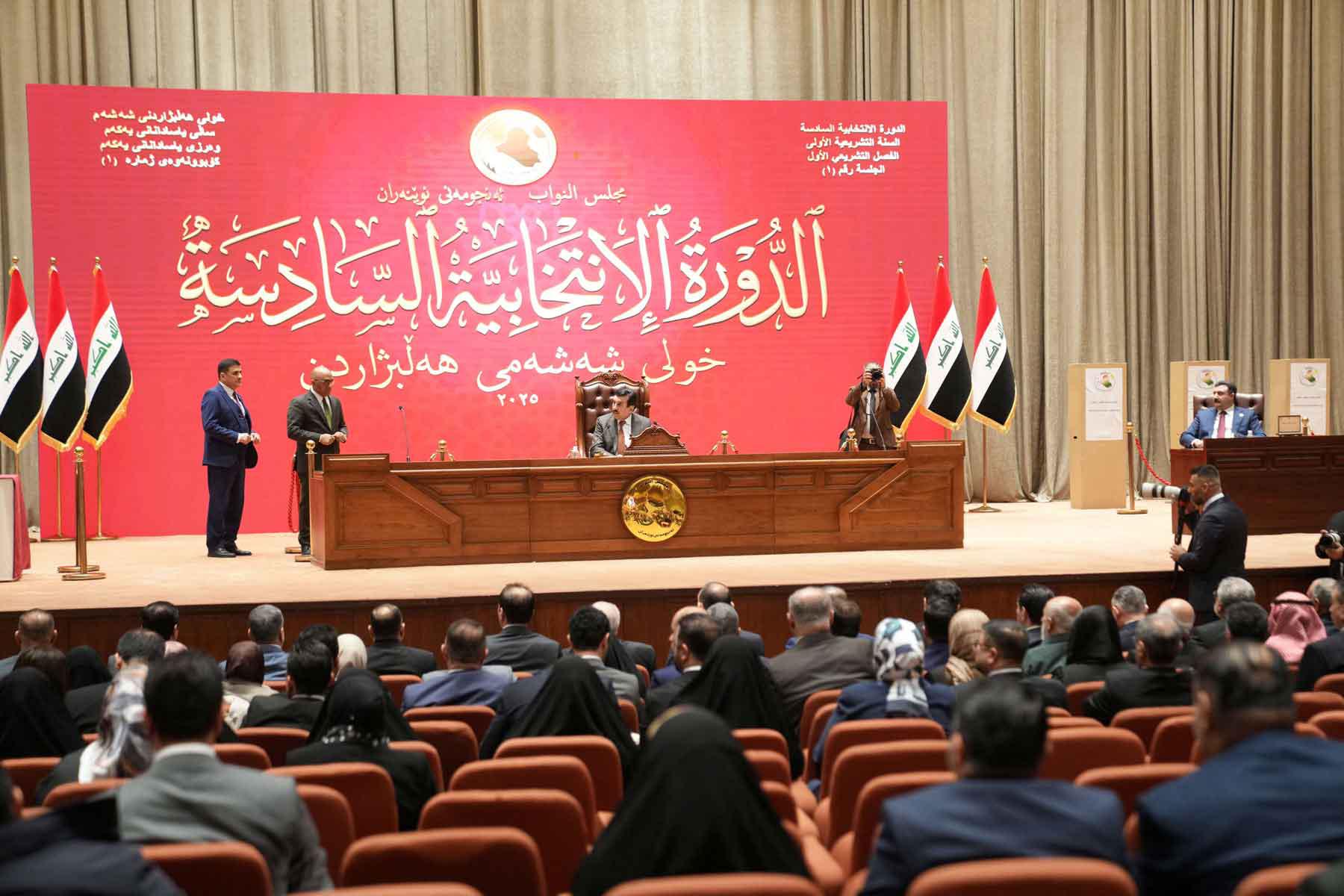
The election of Kurdish lawmaker Farhad Amin Atroshi as second deputy speaker of Iraq’s parliament has marked a decisive shift in the country’s sixth parliamentary term, breaking weeks of deadlock and setting in motion the formal countdown to forming a new government.
After a protracted process marked by repeated ballots and legal constraints, lawmakers succeeded in completing the parliament’s leadership bureau, a step widely seen as the true starting gun for negotiations over the presidency and the premiership. The breakthrough follows intense bargaining among the main political blocs and careful navigation of rulings by the Federal Supreme Court, Iraq’s highest judicial authority.
Atroshi, a member of the Kurdistan Democratic Party (KDP), secured 178 votes, comfortably defeating rival candidate Rebar Karim, who won 104. The margin reflected broad backing from Iraq’s dominant political forces, including the Shia Coordination Framework, the Sunni-led Taqaddum alliance and the KDP, while Karim’s support was largely drawn from opposition groups critical of Iraq’s long-standing power-sharing arrangements.
The vote was more than a routine filling of a vacant post. Political observers described it as a test of intent among rival blocs, gauging whether parliament could move beyond tactical obstruction towards compromise. The successful outcome, after three rounds of voting, also signalled a willingness to comply with court rulings that restrict candidate substitutions unless all nominees withdraw, a rule that had previously contributed to the impasse.
Replacing KDP lawmaker Shakhawan Abdullah with Atroshi was therefore not merely a change of names, but a calculated move designed to unlock negotiations and present a figure with broader parliamentary acceptability. The manoeuvre ultimately proved effective, allowing lawmakers to overcome procedural hurdles and political fatigue.
With the leadership now complete, Iraq’s parliamentary top table reflects the familiar post-2003 balance: Speaker Haibat al-Halbousi from the Sunni Taqaddum bloc, first deputy speaker Adnan Faihan of the Shia Sadiqoun movement, and second deputy speaker Atroshi representing the Kurdish component through the KDP. While this distribution aligns with entrenched political convention, it is underpinned this time by prior understandings aimed at accelerating government formation and avoiding a constitutional vacuum.
The completion of the leadership bureau clears the way for negotiations over far more consequential posts. It also strengthens the KDP’s hand ahead of talks with its Kurdish rival, the Patriotic Union of Kurdistan, over the presidency, a position traditionally reserved for a Kurd but fiercely contested between the two parties.
Under the constitution, parliament now has 30 days to elect a president, who will then task a prime ministerial nominee with forming a cabinet. The start of this deadline is expected to intensify pressure on political blocs to shift from brinkmanship to mutual concessions.
Many analysts see the consolidation of the parliamentary leadership by figures representing Iraq’s main political heavyweights as an indication that an emerging three-way alignment is close to forming the largest bloc. If so, the naming of the next prime minister is likely to be the product of this alignment, potentially shortening a process that in previous cycles dragged on for months.
For now, Atroshi’s election has injected fresh momentum into a stalled political process, offering cautious optimism that Iraq’s leaders may finally be prepared to move from procedural battles towards the formation of a new executive.