

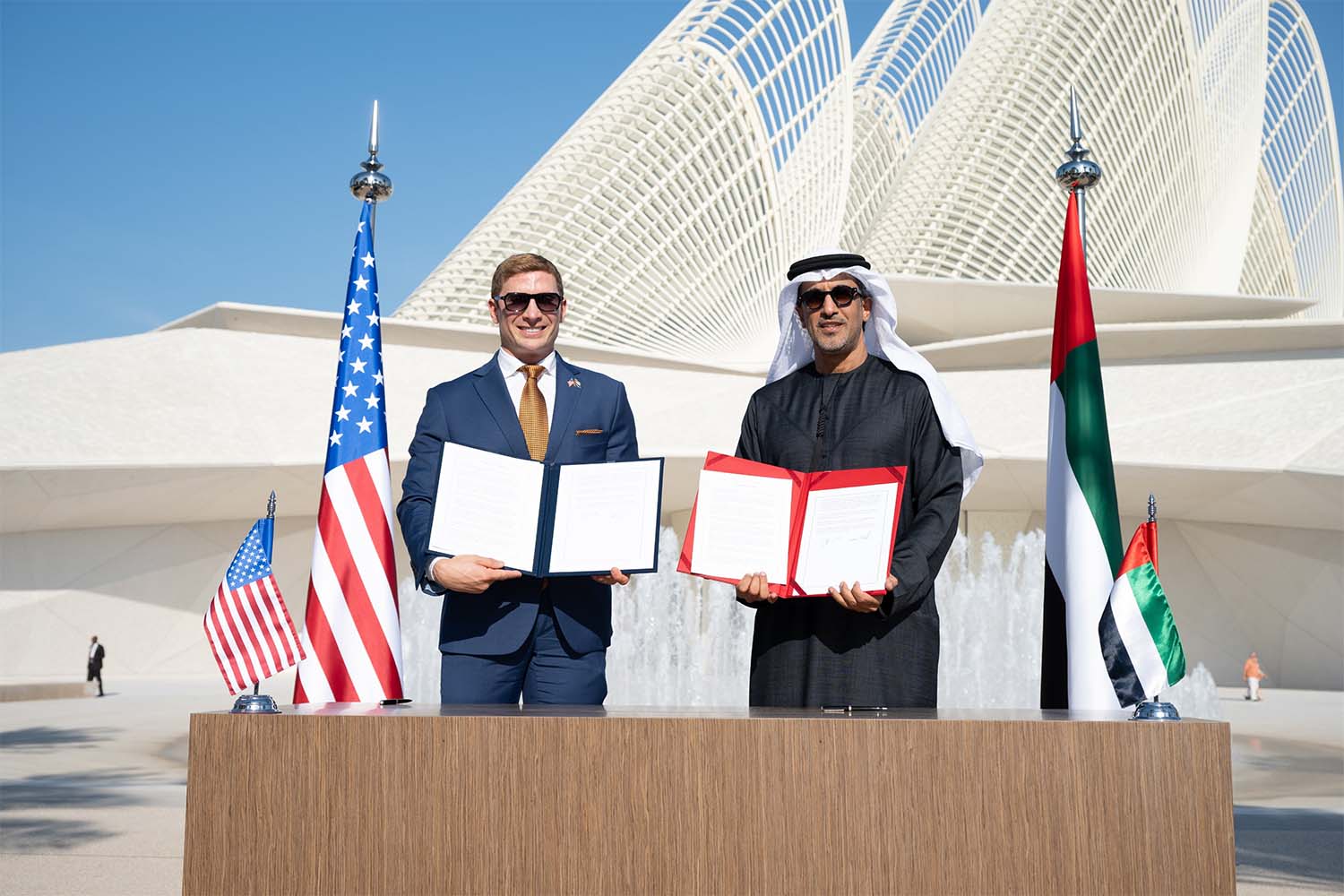
US Under Secretary Jacob Helberg and UAE Minister of State Saeed Al Hajeri during the signing at the Zayed National Museum
UAE joins US-led Pax Silica initiative
The UAE’s accession marks a historic step in artificial intelligence and tech supply chain security.
Thursday 15/01/2026
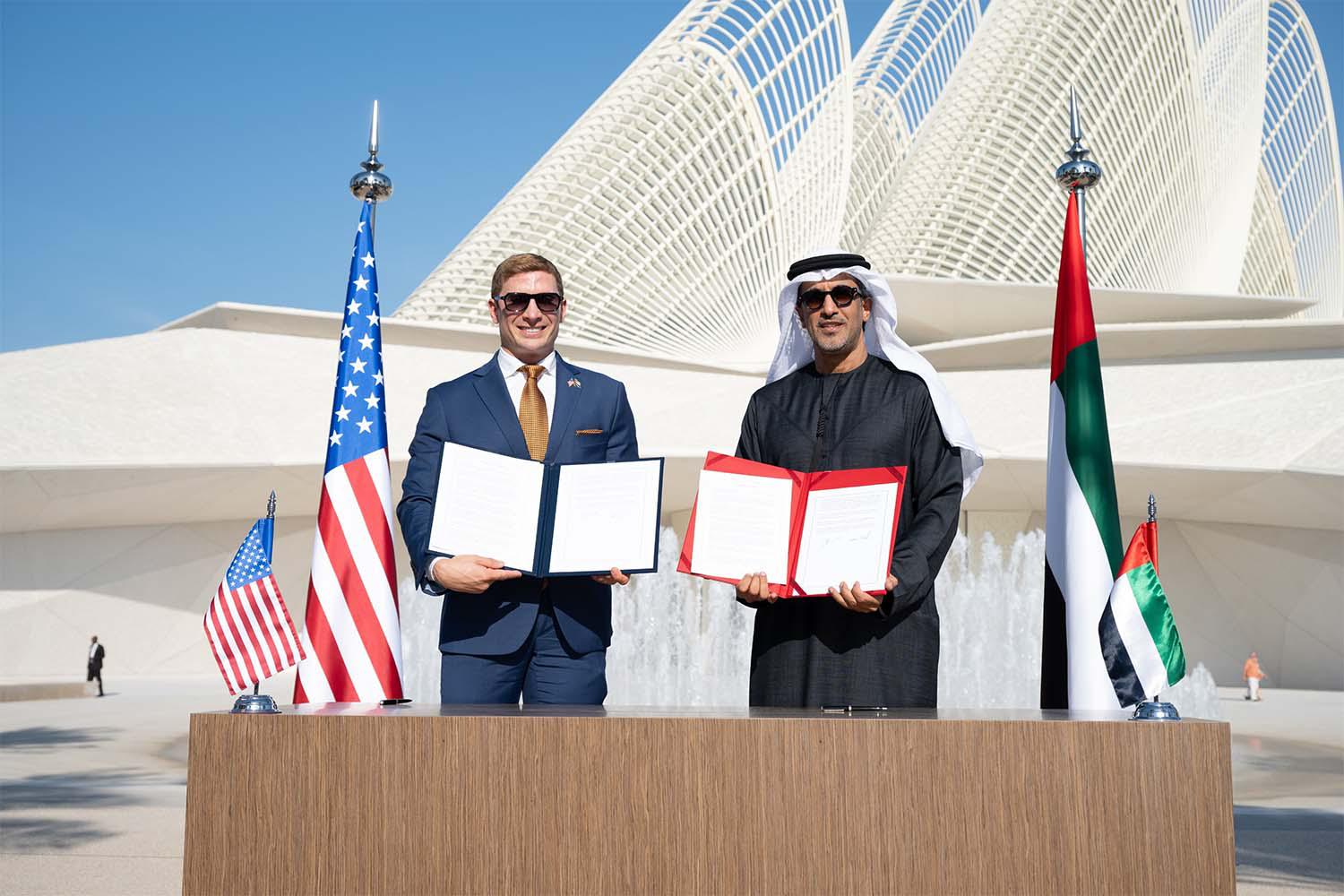
US Under Secretary Jacob Helberg and UAE Minister of State Saeed Al Hajeri during the signing at the Zayed National Museum
ABU DHABI - In a landmark development for global technology cooperation and the Middle East's economic diversification, the United Arab Emirates has formally joined Pax Silica, a US-led economic security coalition focused on securing supply chains for artificial intelligence (AI), semiconductors, and critical minerals.
The Pax Silica Declaration was signed on Wednesday in Abu Dhabi by UAE Minister of State Saeed Bin Mubarak Al Hajeri and US Under Secretary of State for Economic Affairs Jacob Helberg.
This accession marks the UAE as the ninth signatory to the initiative, joining partners including Australia, Israel, Japan, the Republic of Korea (South Korea), Qatar, Singapore, the United Kingdom, and the United States.
Pax Silica, launched in December 2025 by the US Department of State, is described as the flagship effort on AI and supply chain security. Drawing its name from the Latin "pax" (peace, stability, and prosperity) and "silica" (the precursor to silicon used in computer chips), the initiative aims to build a secure, resilient, and innovation-driven ecosystem across the entire technology stack - from critical minerals and energy to advanced manufacturing, semiconductors, AI infrastructure, and logistics.
US officials emphasize that the 21st century will run on "compute and the minerals that feed it," positioning Pax Silica as a "coalition of capabilities" to reduce coercive dependencies (particularly on China), protect sensitive technologies, and unlock AI-driven prosperity among trusted partners. The non-binding declaration commits signatories to multilayered partnerships, joint investments, and trusted technology ecosystems.
The UAE's entry is particularly significant for the Gulf region. As a leader in energy, sovereign wealth funds, and ambitious AI ambitions (including massive data center investments and diversification beyond hydrocarbons), the Emirates brings substantial capital, infrastructure, and strategic location to the table.
Officials highlight this as a "structural transformation" in the regional economic order, echoing Sheikh Mohammed bin Zayed's vision of preparing for a post-oil future.
Under Secretary Helberg praised the UAE's role, saying that "the UAE’s leadership in energy, investment, and technological innovation make it an indispensable partner."
The accession also advances broader diplomatic goals, including normalization efforts involving Israel and Gulf states through shared tech projects like industrial parks and AI hubs.
This move follows Qatar's signing just days earlier on January 12, 2026, giving the Middle East two key representatives in the coalition. India is expected to join next month, further expanding the group.
The UAE's participation aligns with its push to become a global AI hub, promising enhanced access to advanced US technologies, reduced supply chain vulnerabilities, and opportunities for co-investment in critical minerals and infrastructure. As the world races toward AI dominance, Pax Silica signals a new era of "silicon statecraft"—where trusted alliances shape the future of innovation, security, and prosperity.
With the current date of January 15, 2026, this development underscores the rapid evolution of tech diplomacy and the Gulf's pivotal role in the AI age.