

Redefining urban mobility
Electric air taxis set to redefine urban transport in Dubai by year-end
The first phase of operations will connect four strategically-located vertiports at Dubai International Airport, Downtown Dubai, Dubai Marina and Palm Jumeirah.
Friday 16/01/2026
Redefining urban mobility
DUBAI –
Dubai is preparing to introduce commercial electric air taxi services by the end of this year, marking a major milestone in the emirate’s ambition to redefine urban mobility and become the first city in the world to operate a city-wide aerial taxi network.
Mattar Al Tayer, Chairman of Dubai’s Roads and Transport Authority (RTA), said on Friday that electric air taxis developed by California-based Joby Aviation are expected to begin carrying passengers before the close of the year. The announcement follows the successful first test flight of Joby’s fully electric aircraft in Dubai in June 2025, a landmark step in integrating aerial mobility into the city’s existing transport system.
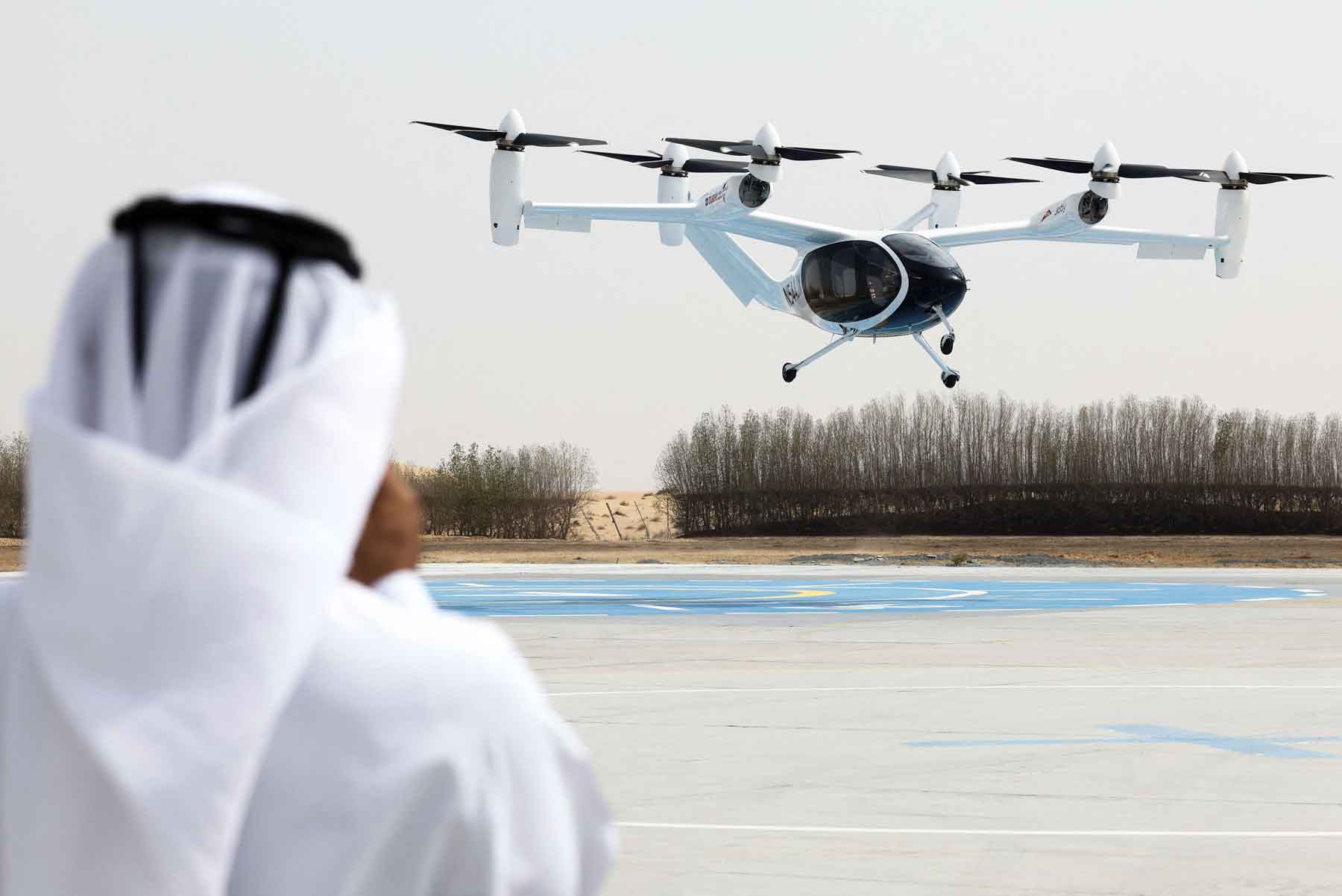
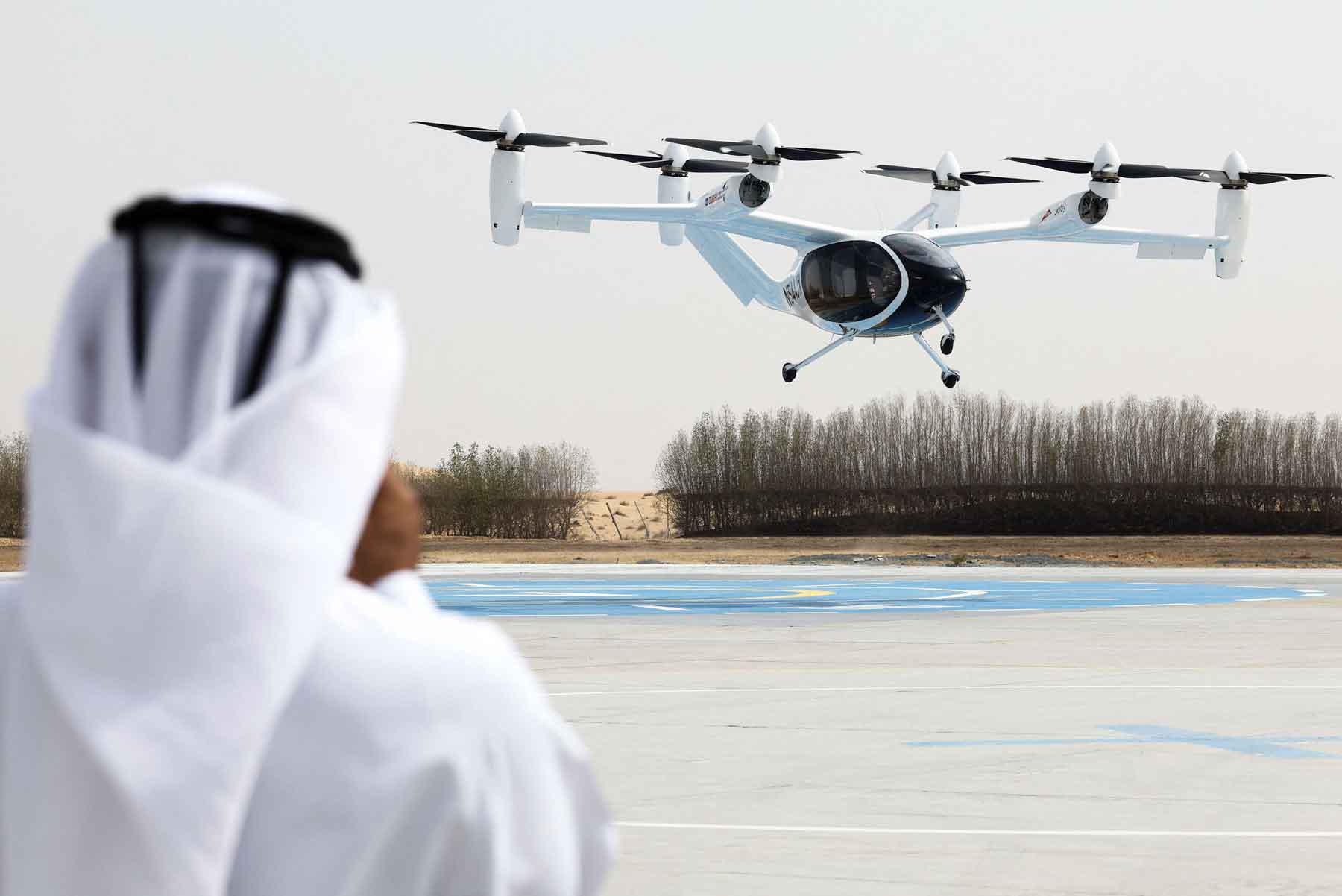
The Joby Aerial Taxi, an electric vertical take-off and landing (eVTOL) aircraft, is capable of travelling distances of up to 160 kilometres at speeds of 320 km/h. Designed with six rotors, the aircraft produces zero operating emissions and significantly less noise than conventional helicopters, making it suitable for use in dense urban environments.
Dubai’s move into aerial transport is underpinned by a six-year exclusive operating agreement signed in early 2024 between Joby Aviation and the RTA, granting the company sole rights to operate air taxi services in the emirate during the initial phase. Officials say the partnership reflects Dubai’s broader strategy to adopt advanced, sustainable transport solutions and reduce congestion on its roads.
The first phase of operations will connect four strategically-located vertiports at Dubai International Airport, Downtown Dubai, Dubai Marina and Palm Jumeirah. The facilities are being developed in collaboration with Skyports Infrastructure and will be located at high-profile sites including Dubai Mall, Atlantis The Royal, Dubai International Airport and the American University in Dubai.
According to the RTA, the inaugural commercial flight is expected to depart from Dubai International Airport, linking travellers to key hotels and business districts in a fraction of current journey times. A trip between the airport and Palm Jumeirah, for example, is expected to take around 10 minutes, compared with up to 45 minutes by car during peak traffic.
While the service is initially expected to cater to premium travellers, officials insist pricing will be competitive. Fares are expected to be comparable to those of an Uber Black ride, with booking likely to be integrated into Uber’s ride-hailing app, reflecting the company’s global partnership with Joby Aviation.
Extensive testing has been carried out ahead of the launch, including more than 40,000 miles of trial flights in hot-weather conditions in the United States. Joby has also begun the certification process to become a licensed air taxi operator in the UAE, which includes inspections, pilot and mechanic training, and approval of operational manuals.
The aircraft can carry a pilot and up to four passengers and will typically operate at altitudes between 1,000 and 3,000 feet. Authorities say boarding procedures will be swift and far less onerous than conventional airport security checks, further enhancing the appeal of the service for short urban journeys.
Beyond Dubai, longer-term plans include expanding routes to other emirates, including Abu Dhabi, and scaling up the fleet to around 100 aircraft. Officials insist concerns about overcrowded skies are unfounded, noting that flight volumes will remain tightly regulated.