

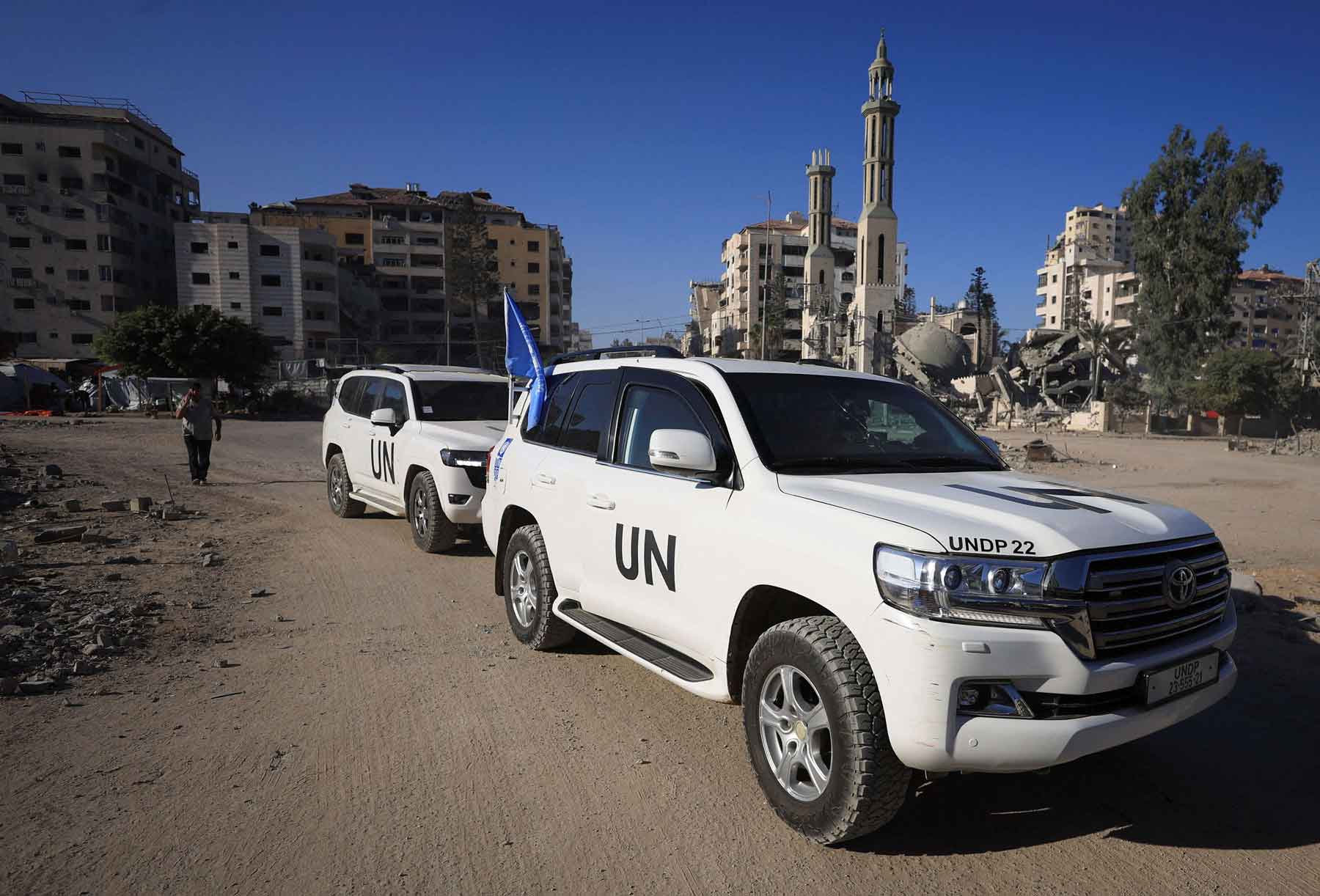
Concerns about the board's impact on the work of the UN
Trump’s board raises concerns over future of international mediation
Many rights experts and advocates have said that Trump overseeing a board to supervise a foreign territory’s governance resembles a colonial structure.
Sunday 18/01/2026
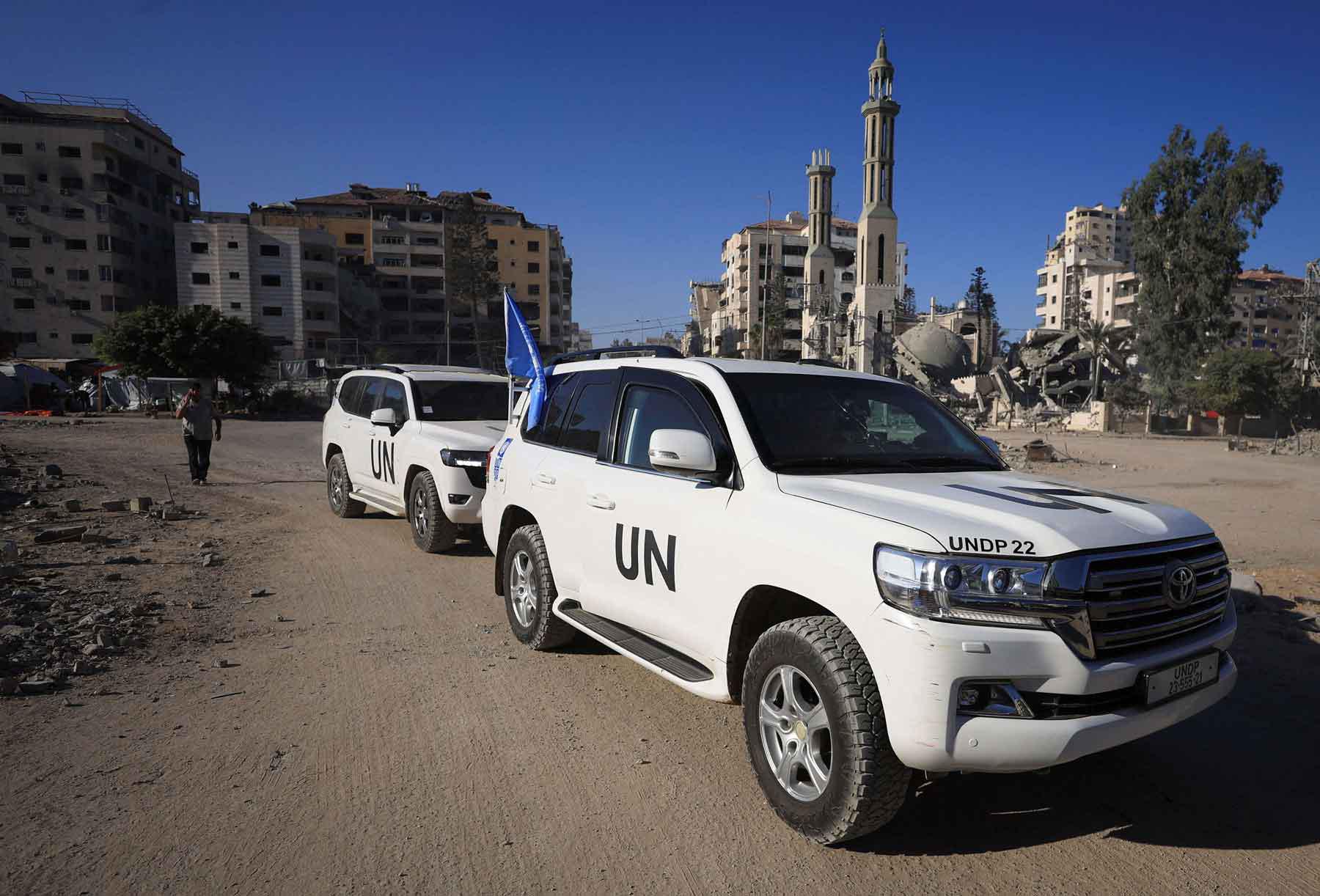
Concerns about the board's impact on the work of the UN
LONDON – Governments reacted cautiously on Sunday to US President Donald Trump’s invitation to join his “Board of Peace” initiative aimed at resolving conflicts globally, a plan that diplomats said could harm the work of the United Nations.
Only Hungary, whose leader is a close Trump ally, gave an unequivocal acceptance in response to the invitations, which have been addressed to some 60 nations and began arriving in European capitals on Saturday, according to diplomats.
Other governments appeared reluctant to make public statements, leaving officials to express concerns anonymously about the impact on the work of the UN.
The board would be chaired for life by Trump and would start by addressing the Gaza conflict and then be expanded to deal with other conflicts, according to a copy of the letter and draft charter.
Member states would be limited to three-year terms unless they pay $1 billion each to fund the board’s activities and earn permanent membership, the letter states.
“This simply offers permanent membership to partner countries who demonstrate deep commitment to peace, security, and prosperity,” the White House said in a post on X.
Italian Prime Minister Giorgia Meloni, visiting South Korea, told reporters her country was “ready to do our part,” although it was not clear whether she was specifically referring to Gaza or the broader peace.
Canada’s Prime Minister Mark Carney said on Sunday he had agreed to Trump’s Board of Peace for Gaza in principle although details were still being worked out.
The Board of Peace’s mandate was only authorised by the United Nations Security Council through 2027 and was solely focused on the Gaza conflict.
‘Dark times’
The inclusion of a ‘charter’ in the invitation letter stoked concerns among some European governments that it could undermine the work of the United Nations, which Trump has accused of not supporting his efforts to end conflicts around the world.
“It’s a ‘Trump United Nations’ that ignores the fundamentals of the UN charter,” said one diplomat.
Three other Western diplomats said it looked as if it would undermine the United Nations if it went ahead.
A further three diplomats and an Israeli source said that Trump wanted the Board of Peace to eventually have a broader role beyond Gaza that would oversee the other conflicts that Trump has said he has resolved.
The leaders of France, Germany, Italy, Hungary, Australia, Canada, the European Commission and key Middle East powers were among those invited to sit on the Board of Peace, according to officials.
“Declaring that durable peace requires pragmatic judgment, common-sense solutions, and the courage to depart from approaches and institutions that have too often failed,” the document showed.
In what appeared to be directed at the United Nations, the document added that there was a “need for a more nimble and effective international peace-building body.”
Trump, who covets the Nobel Peace Prize, said in the letter that the board would convene in the near future, adding: “This board will be one of a kind, there has never been anything like it!”
In public comments in response to a reporter’s question, a senior UN official did not address the plan directly, but said the United Nations was the only institution with the moral and legal ability to bring together every nation, big or small.
“And if we question that … we fall back and very, very, dark, times,” Annalena Baerbock, president of the United Nations General Assembly, told Sky News, adding that it was up to individual states to decide what to do.
The White House on Friday named some individuals who will sit on the board, which would outlive its role supervising the temporary governance of Gaza, under a fragile ceasefire since October.
They included US Secretary of State Marco Rubio, President Donald Trump’s special envoy Steve Witkoff, former British prime minister Tony Blair and Trump’s son-in-law, Jared Kushner.
Israel and the Palestinian militant group Hamas signed off on Trump’s plan, which says a Palestinian technocratic administration will be overseen by an international board, which will supervise Gaza’s governance for a transitional period.
Trump goes for global peace role
“It’s going to, in my opinion, start with Gaza and then do conflicts as they arise,” President Donald Trump said in an interview earlier this week.
Many rights experts and advocates have said that Trump overseeing a board to supervise a foreign territory’s governance resembles a colonial structure, while Blair’s involvement was criticised last year due to his role in the Iraq war and the history of British imperialism in the Middle East.
The White House did not detail the responsibilities of each member of the board. The names do not include any Palestinians. The White House said more members will be announced over the coming weeks.
It also named a separate, 11-member “Gaza Executive Board” to support the technocratic body.
This would include Turkish Foreign Minister Hakan Fidan, UN Middle East peace coordinator Sigrid Kaag, United Arab Emirates International Cooperation Minister Reem al-Hashimy, Israeli-Cypriot billionaire Yakir Gabay and officials from Qatar and the United Arab Emirates.
Israeli Prime Minister Benjamin Netanyahu’s office said the composition of this board had not been coordinated with Israel and contradicted its policy, possibly a reference to Fidan’s presence, as Israel objects to Turkish involvement. Israel’s government also has a tense relationship with Qatar. An Israeli government spokesperson declined to comment beyond the statement.