

Fragility of post-war settlements
Syria offensive derails Kurdish talks, triggers tensions in Turkey
The developments have reverberated across the border in Turkey. Ankara warned it would not tolerate any “provocations” as Kurdish groups prepared protests against the Syrian offensive.
Tuesday 20/01/2026
Fragility of post-war settlements
DAMASCUS – Negotiations between Syria’s president and the leader of the Kurdish-led Syrian Democratic Forces (SDF) collapsed, a Kurdish official said, as government troops pushed deeper into Kurdish-held areas, fuelling renewed clashes in northern Syria and triggering tensions across the border in Turkey.
President Ahmed al-Sharaa and SDF commander Mazloum Abdi had been holding talks in Damascus aimed at securing a ceasefire and agreeing on the integration of the Kurdish-run administration and armed forces into the Syrian state. The discussions followed rapid territorial gains by the Syrian army in areas long controlled by the SDF and were widely seen as a critical test of whether Syria’s Kurdish question could be resolved through political compromise rather than force.
However, Kurdish officials said the talks ended without agreement, accusing Damascus of demanding total capitulation. “The negotiations held yesterday in Damascus between General Mazloum and Mr al-Sharaa have collapsed entirely,” said Abdel Karim Omar, a senior Kurdish official. “Their sole demand is unconditional surrender. A firm and decisive stance from the international community is urgently required.”
Syria’s Kurds established a de facto autonomous region in the country’s north during the civil war, exercising self-rule for more than a decade with backing from the United States in the fight against Islamic State. Sharaa, who enjoys support from both Washington and Ankara, has rejected Kurdish demands for decentralisation or federal arrangements, insisting instead on the full redeployment of the Syrian army across the country.
The Kurdish issue was discussed on Monday during a phone call between Sharaa and US President Donald Trump, according to the Syrian presidency. The two leaders “emphasised the need to guarantee the Kurdish people’s rights and protection within the framework of the Syrian state” while affirming “the importance of preserving the unity and independence of Syrian territory” and cooperation against Islamic State.
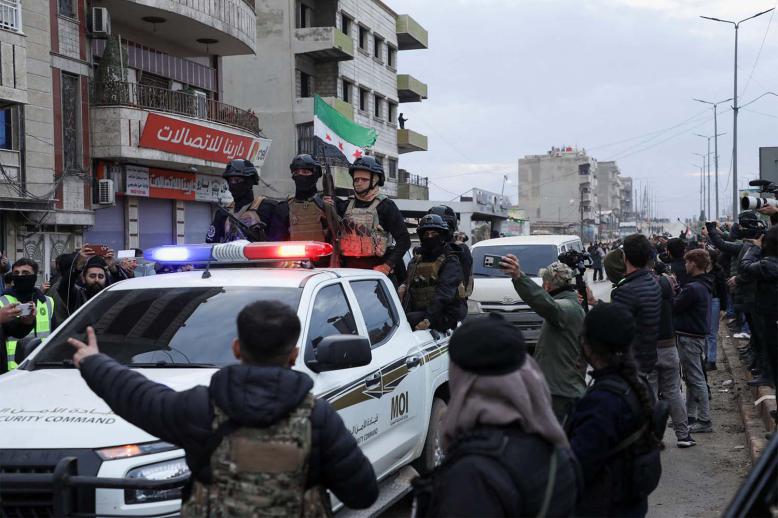
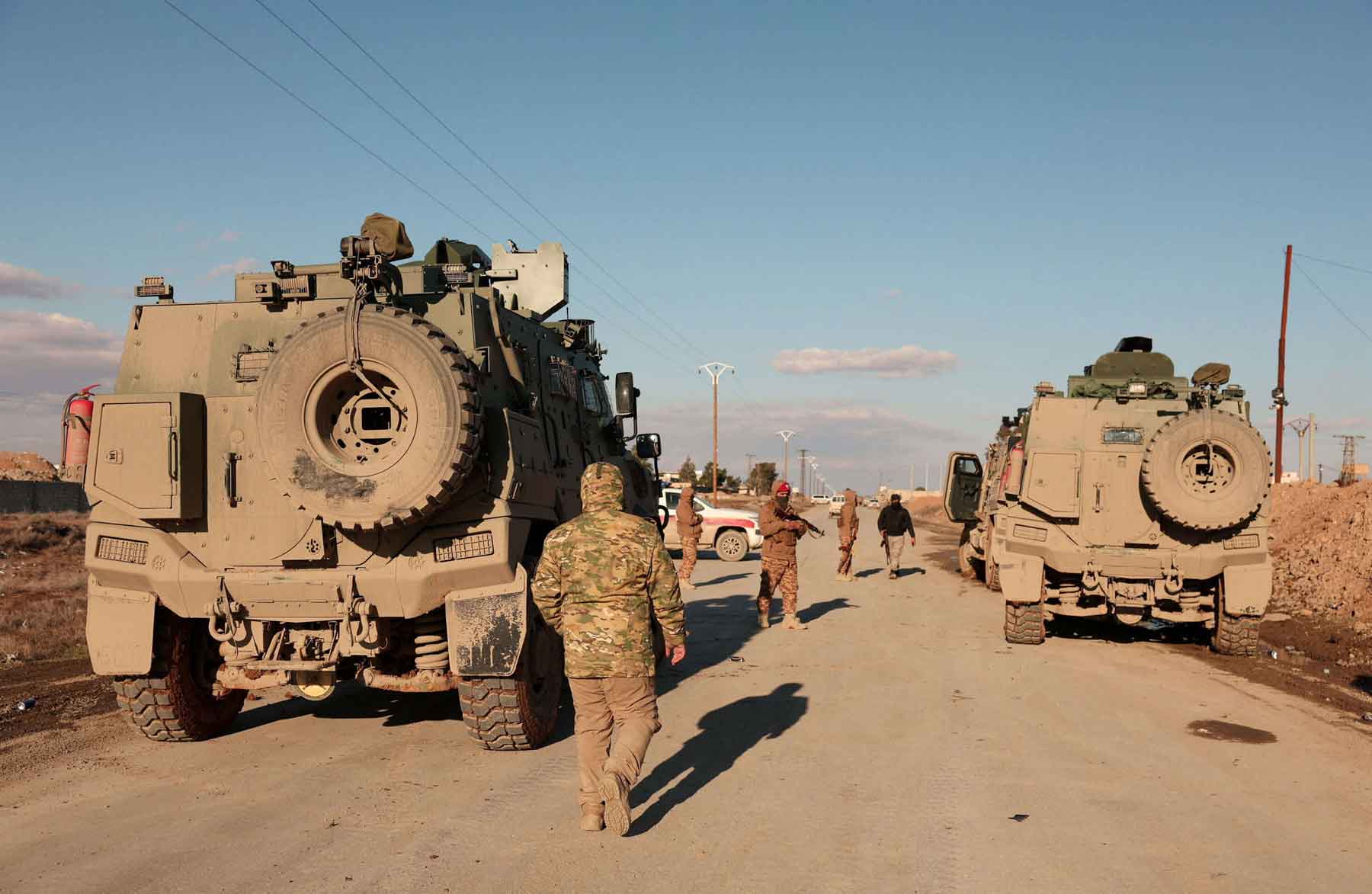
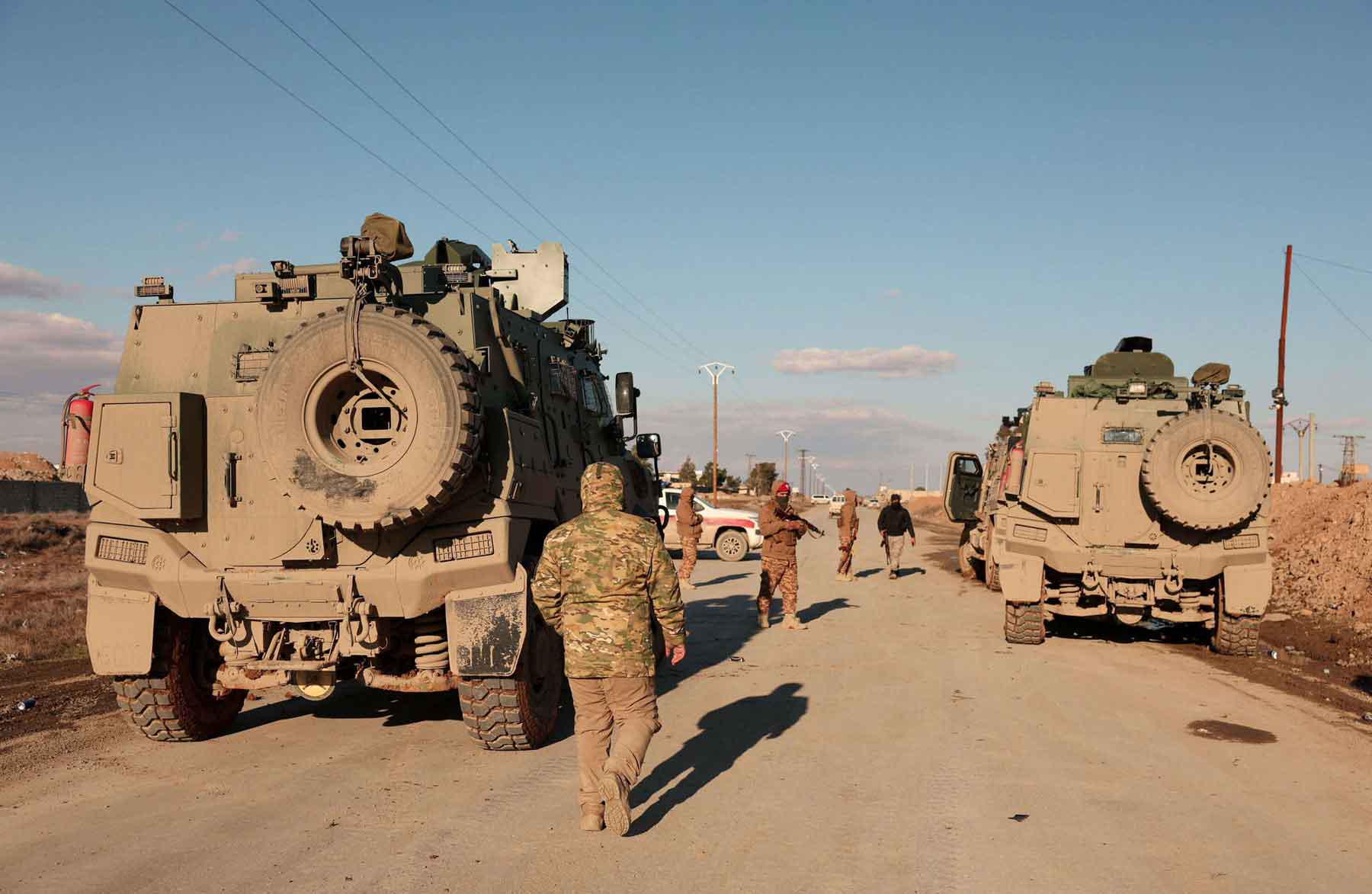
Despite a ceasefire announced over the weekend, fighting flared briefly on Monday in the northern city of Raqa, once the de facto capital of Islamic State in Syria. A correspondent reported heavy bombardment and on Tuesday witnessed a large convoy of armoured vehicles and troops moving towards the northeastern city of Hasakeh, a Kurdish stronghold with a sizeable Arab population.
In response to the army’s advance, the SDF issued a call for mobilisation, urging “young Kurds, men and women” inside and outside Syria to “join the ranks of the resistance.” In Hasakeh, journalists saw dozens of civilians, including women and elderly people, taking up arms and manning checkpoints.
Under the ceasefire arrangement reached on Sunday, the SDF agreed to hand over control of the Arab-majority provinces of Deir Ezzor and Raqa, which it had administered since the US-backed defeat of Islamic State. Damascus also assumed responsibility for thousands of IS detainees and their families held in Kurdish-run prisons and camps.
In Deir Ezzor, residents expressed exhaustion after years of instability. “We’re not asking for a miracle, we just want stability and a normal life,” said Safia Keddo, a 49-year-old teacher. In Raqa, residents toppled a statue of a woman erected during Kurdish rule. “We support Kurdish civil rights, but we don’t support them having a military role,” said Khaled al-Afnan, 34.
The SDF has already withdrawn from several strategic sites, including the Al-Omar oil field, Syria’s largest, and the nearby Tanak field. Local Arab tribal fighters, some of whom had previously allied with the SDF, sided with Damascus and seized the areas ahead of the arrival of government forces.
Analysts warn that the government’s momentum has cast doubt on the durability of both the ceasefire and a broader March agreement between Damascus and the Kurds.
Mutlu Civiroglu, a Washington-based Kurdish affairs expert, said the advances had raised “serious doubts about the durability” of the understandings reached so far. Although Sharaa issued a decree last week granting Kurds official recognition, Kurdish leaders said it fell short of their expectations.
In Qamishli, the main Kurdish city in northeastern Syria, activist Hevi Ahmed described the agreement as “a disappointment after years of hope that the Syrian constitution might contain a better future for the Kurds”.
The developments have reverberated across the border in Turkey, home to a large Kurdish minority. Ankara warned on Tuesday it would not tolerate any “provocations” as Kurdish groups prepared protests against the Syrian offensive, which Turkey has described as a legitimate fight against terrorism.
Interior Minister Ali Yerlikaya said Turkish authorities were closely monitoring events. “We are meticulously monitoring, moment-by-moment, the recent developments in Syria and all movements along our border,” he wrote on X. “We will not tolerate any initiatives, provocations or any misinformation campaign targeting the peace of our country.”
The violence has also cast a shadow over Turkey’s fragile peace process with the Kurdistan Workers’ Party (PKK), which last year announced it would end its four-decade insurgency in favour of democratic means. That process has largely stalled as fighting escalates in Syria.
Early on Tuesday, PKK leader Murat Karayilan vowed the group would “never abandon” Syria’s Kurds. “Whatever the cost, we will never leave you alone… we as the entire Kurdish people and as the movement, will do whatever is necessary,” he was quoted as saying by the pro-Kurdish Firat news agency.
Inside Turkey, the pro-Kurdish DEM party called for protests in the southeastern town of Nusaybin, across the border from Qamishli, accusing Ankara of hypocrisy. “You cannot treat those you call ‘citizens’ on this side of the border as ‘enemies’ on the other,” the party said. Police broke up demonstrations in Diyarbakir and Istanbul on Monday, arresting 10 people, including a French journalist.
Wladimir van Wilgenburg, an expert on Syrian Kurdish affairs, warned that the unrest risked derailing Turkey’s efforts to end the PKK conflict altogether. “There’s a risk it could blow up with cross-border protests,” he said, noting calls for Kurds from Iraq and Turkey to join their counterparts in Syria.