

Diverse contributions to literary creativity and the publishing industry
Sheikh Zayed Book Award Marks 20 Years of Cultural Impact in Cairo
Built on a model rooted in transparency, the award has become an inclusive platform celebrating creativity in literature, thought, translation and publishing.
Monday 02/02/2026
Diverse contributions to literary creativity and the publishing industry
CAIRO – Over the past two decades, the Sheikh Zayed Book Award has firmly established itself as one of the Arab world’s most prestigious cultural prizes, with a growing global presence that extends well beyond its financial and symbolic recognition of writers and intellectuals.
Since its inception, the award has evolved into a comprehensive cultural project aimed at supporting knowledge production, strengthening the publishing industry, empowering the Arabic language and opening wide avenues for intercultural dialogue with the wider world.
Built on a solid institutional model rooted in transparency, specialisation and a broad range of intellectual fields, the award has become an inclusive platform celebrating creativity in literature, thought, translation and publishing. In doing so, it has helped amplify the voice of Arab culture in international forums and positioned Arabic creativity within a global cultural conversation.
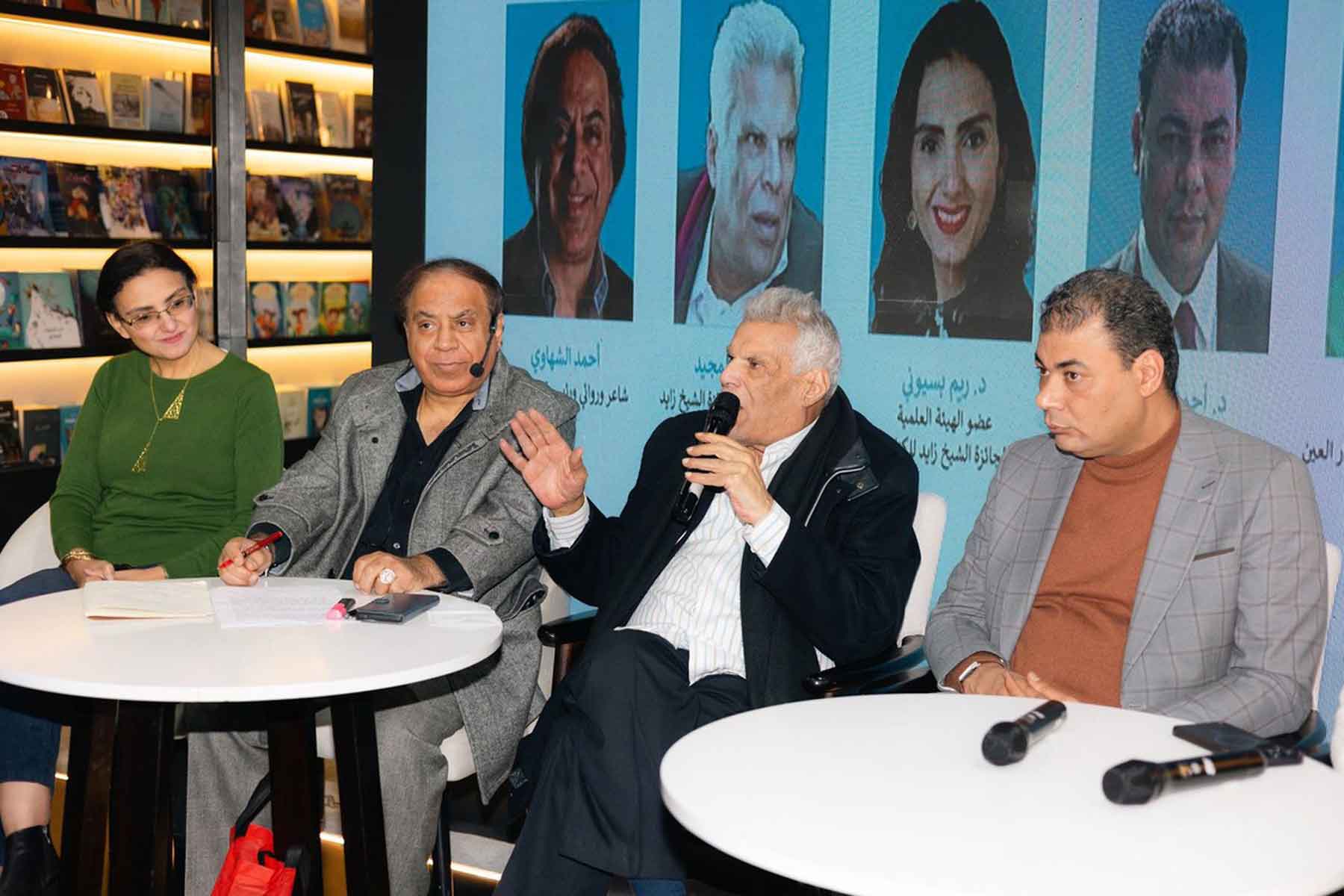
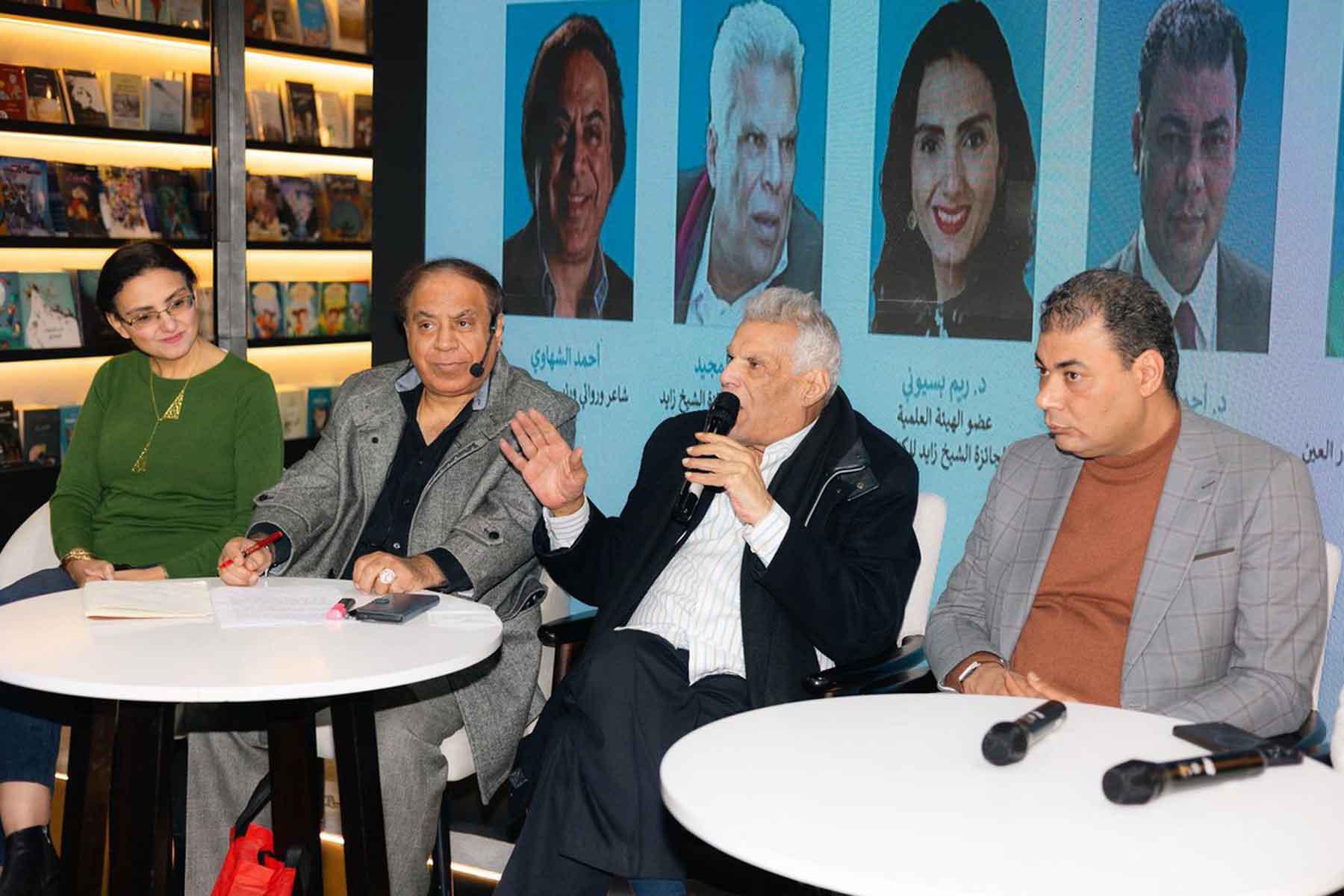
This legacy was celebrated at the 57th Cairo International Book Fair, where the Abu Dhabi Arabic Language Centre hosted a cultural seminar titled “Twenty Years of Giving: Celebrating the Sheikh Zayed Book Award.” The event honoured a number of Egyptian cultural figures who have received the award and examined its profound impact on the Arab cultural landscape.
The panel brought together novelist Ibrahim Abdel Meguid, novelist Reem Bassiouney, publisher and executive director of the Bayt Elhekma for Creative Industries Ahmed El Saeed, publisher and director of Al Ain Publishing and Distribution House Fatima El Boudy. The discussion was moderated by poet Ahmed Al Shahawi.
Opening the session, Shahawi introduced the speakers and highlighted their diverse contributions to literary creativity and the publishing industry. He praised the Sheikh Zayed Book Award for its pivotal role in spreading knowledge, supporting writers and thinkers, opening new horizons for younger generations and strengthening the presence of Arab culture both regionally and internationally.
‘A matter of fate’
Novelist Abdel Meguid said he had never actively pursued literary prizes, noting that throughout his career he had applied for only one award, back in early 1969. Winning the Sheikh Zayed Book Award for Literature, he said, came “by chance.”
Abdel Meguid recounted how he had sent a friend request on Facebook to Ali bin Tamim, chairman of the Abu Dhabi Arabic Language Centre, who later called him personally to inform him of the award. While prizes, he said, had played an important role in his journey, their significance was particularly human rather than purely symbolic.
“No matter how established a writer may be, literature cannot be relied upon as a stable source of income in the Arab world,” he said, stressing that awards provide genuine support, especially during illness or periods of personal hardship.
He described the Sheikh Zayed Book Award as a truly global prize, pointing to its more than ten categories and its strong commitment to supporting translation. In a region where authors often struggle with translation rights and high costs, he said, the award had adopted an effective and systematic approach to addressing these challenges.
Abdel Meguid added that the prize had clearly contributed to presenting Arabic literature to the world. Too often, he said, Arab writers travelling abroad find conversations dominated by terrorism rather than culture or creativity. “This award has helped change that narrative by carrying the Arab literary voice to international cultural platforms.”
He dismissed the notion of a so-called “curse of writing”, saying he could not imagine life without it. “Writing is where I find real comfort,” he said, concluding that “awards, in the end, are a matter of fate”.
On international prizes, Abdel Meguid argued that Arab writers were often treated unfairly. Nobel laureates, he said, were not necessarily better than Arab creators, but distorted perceptions of Arabic literature abroad, weak translation movements and the impact of political events continued to obstruct genuine cultural recognition.
A dynamic and evolving prize
Boudy said her work with a large number of writers across the Arab world had earned her Algeria’s Order of Merit, but stressed that the Sheikh Zayed Book Award held particular importance for its attention to young creators and its ability to offer them real visibility.
She noted that for many writers and authors, winning the award had served as a genuine gateway into the broader cultural scene. Describing it as a “dynamic and constantly evolving” prize, she said its development was especially evident in publishing and technology-related categories.
Boudy added that the award was among the first Arab prizes to recognise fields linked to modern publishing and technology, and that its financial value had enabled her to carry out a number of professional and personal projects.
She also praised the award’s intelligent engagement with cultural realities, particularly its support for publishers through initiatives such as providing a dedicated pavilion at the Frankfurt Book Fair, which she said fostered confidence and reassurance about international participation. This role, she argued, was among the award’s most influential contributions. She concluded by revealing plans to publish and receive new works in the coming period.
A model of transparency
Novelist Bassiouney said her experience serving on the award’s scientific committee had revealed the strength of its institutional framework, which she described as operating at the highest levels of transparency and objectivity.
She explained that specialised judging panels evaluate submissions according to rigorous academic criteria rather than personal taste alone, with committees deliberately chosen for their diversity of perspectives and literary sensibilities to ensure fairness and balance.
Bassiouney stressed her belief that the Arabic language represents a unifying identity across the Arab world. “Language is existence,” she said, describing it as a direct reflection of culture, consciousness and history.
Any award that supports and celebrates Arabic, she added, constitutes a genuine contribution to Arab culture, benefiting all Arab countries alike. Language, she said, is not merely a tool of communication but an identity and a culture in its own right. Writing, she concluded, may be “a gift from God,” but recognition and appreciation provide powerful motivation to continue and create.
Supporting new voices
Publisher Ahmed Al Saeed said the Sheikh Zayed Book Award stood out for recognising not only books, but also integrated cultural projects and the people behind them. He pointed to its strong focus on scientific committees and robust evaluation mechanisms.
The award, he said, carries a double responsibility: it gives significant momentum to the winning project while also enhancing confidence in the publisher’s choices. This moral and symbolic impact, he argued, is the most lasting.
Saeed stressed that the award does not necessarily claim to select “the best”, but rather acknowledges the quality of a cultural project and encourages its continuation. Every publisher or writer, he said, must have a clear vision and a distinct project, expressing confidence in the success of Bayt Al Hikma’s experience in this regard.
His own publishing philosophy, he explained, is rooted in supporting new voices alongside established names, engaging with diverse subjects, presenting heritage through the perspectives of its custodians and paying particular attention to children’s and young adult literature.
He added that rejecting some works is often a matter of alignment with publishing direction rather than disagreement with authors, noting his interest in publishing literary theory while avoiding critical studies of well-established writers whose reputations no longer depend on such analyses.