

Ceaseless efforts to evacuate people from flooded areas
Unrelenting efforts in Morocco to evacuate, rescue flood victims up north
Morocco shows a high capacity to handle a massive wave of floods, with the rapid mobilisation of authorities and community cohesion serving as the pillars of crisis management.
Thursday 05/02/2026
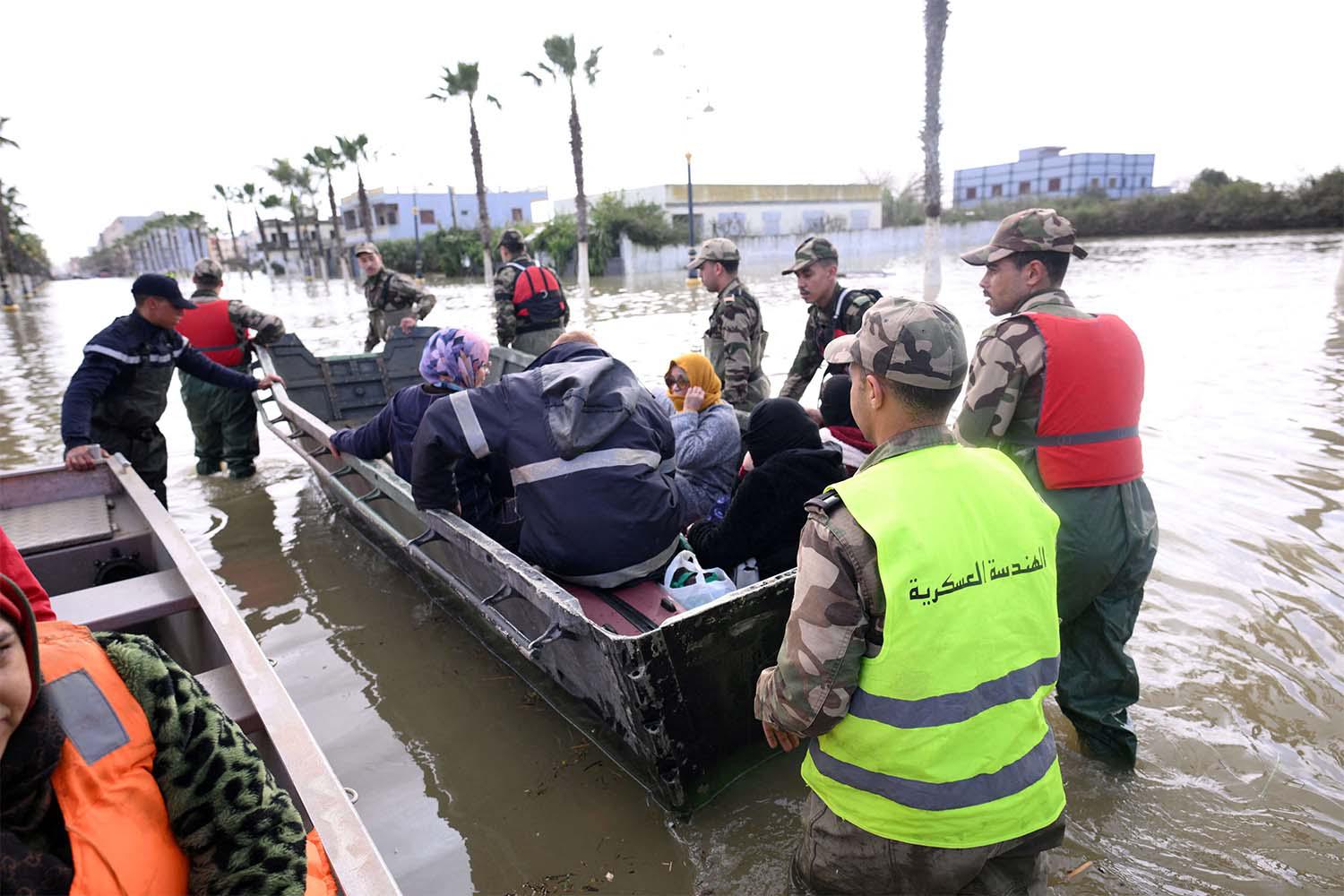
Ceaseless efforts to evacuate people from flooded areas
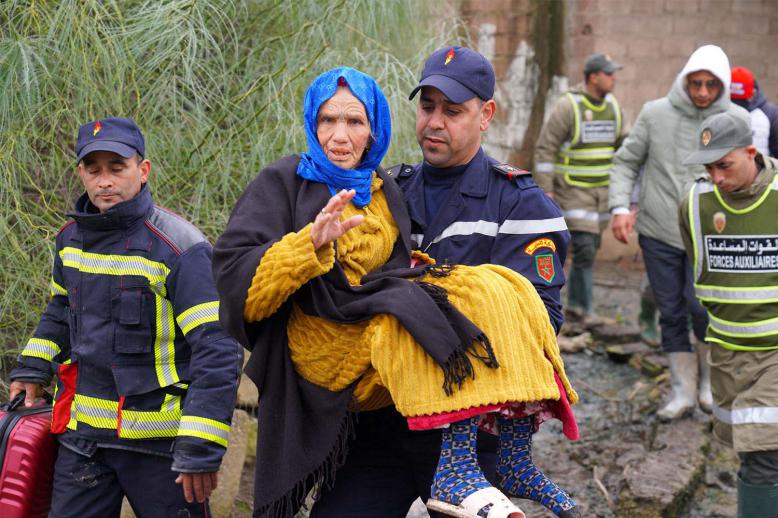
RABAT – Evacuation and rescue efforts are continuing at an accelerated pace across Morocco to confront the repercussions of floods that have struck vast areas of the northwest. In a race against time, the primary goal remains the protection of lives and the mitigation of losses. Since the first warnings regarding rising river levels and brimming dams were issued, authorities at all levels have moved with a proactive approach based on preventive evacuation before the danger reaches its peak.
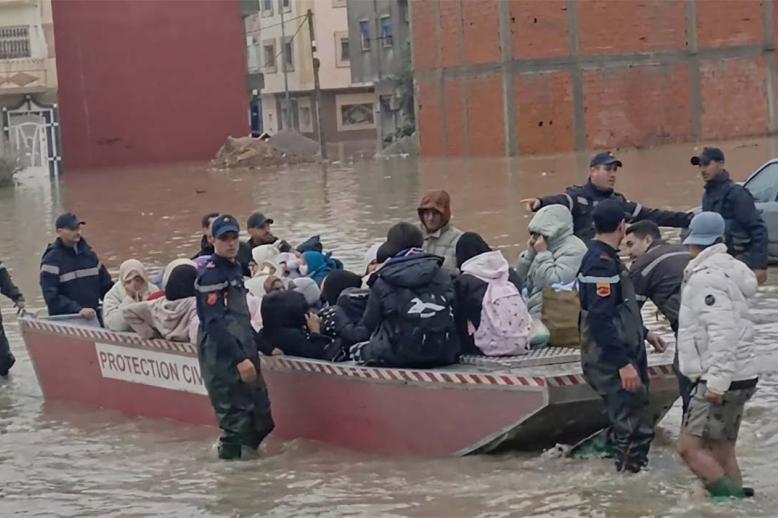
These efforts have resulted in the relocation of more than 100,000 people from threatened areas—particularly in the Larache province, the city of Ksar El Kebir, and areas adjacent to the Loukkos River—to temporary shelters equipped to provide food, medical care, and basic necessities.
Integrated Rescue Operations
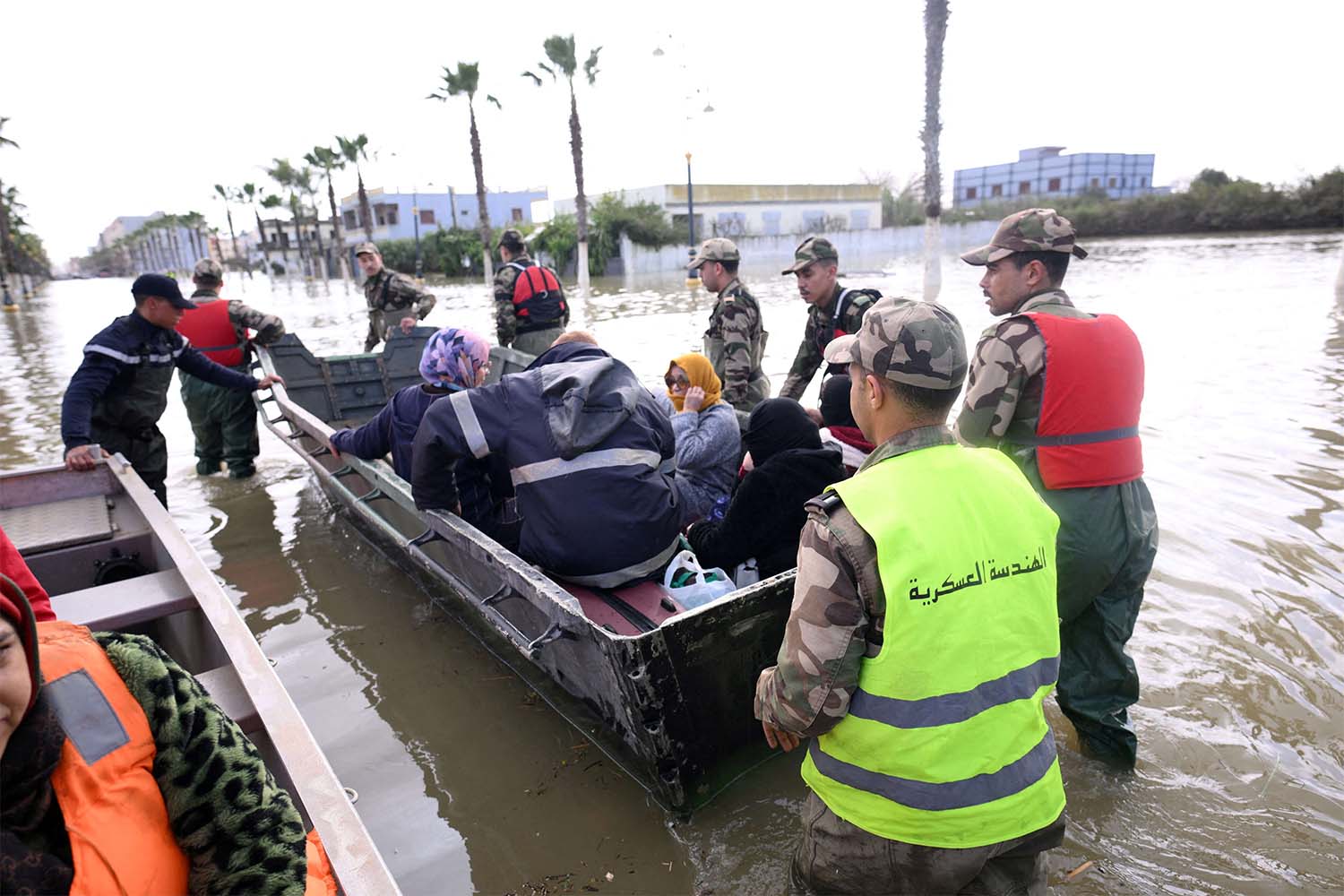
The Army, Gendarmerie, Auxiliary Forces, and Civil Protection teams have participated in rescue operations, supported by helicopters to reach isolated villages surrounded by water. This field coordination has enabled the evacuation of entire families from rooftops and submerged fields under difficult weather conditions. Simultaneously, specialized departments have intensified the monitoring of dams and valleys, adopting calculated preventive discharge operations to limit the risks of flash floods.
Crisis in Numbers: A Record Rainfall
Morocco is facing an unprecedented flood wave in the northwestern plains due to torrential rains and record-breaking river levels as the rainfall rose 215% higher than last year and 54% above the historical average.
The interior ministry said that 108,432 people have been evacuated in one of the largest preventive operations in recent years with a geographic focus on Larache province, including Ksar El Kebir, Suaken, and Oulad Ouchih.
In Ksar El Kebir, authorities confirmed that approximately 85% of the population has already evacuated. Government television aired footage of shelter camps providing refuge after entire neighborhoods became ghost towns due to the overflowing Loukkos River.
Dam Safety: The Oued El Makhazine Situation
Concerns have risen regarding the Oued El Makhazine Dam, which is currently operating at 146% of its capacity after weeks of heavy rain. However, the Ministry of Equipment and Water has moved to reassure the public.
Salah Eddine Dahbi, Director General of Water Engineering, stated that no abnormalities or unusual symptoms have been recorded at the dam or its equipment, despite exceeding its normal capacity since January 6. He explicitly denied rumors regarding a potential collapse.
Key Technical Data on the Dam:
|
|
|
|
|
|
|
|
|
|
|
|
|
|
|
The Ministry has shifted from monthly to twice-daily technical monitoring and utilized specialized teams for precision inspections. Hydrological simulations have been implemented to determine exact scenarios for managing the water flow.
Community Solidarity and Future Readiness
Parallel to the official response, a remarkable wave of community solidarity has emerged. Volunteers and local associations have engaged in supporting affected families, echoing the national unity seen during the Al Haouz earthquake in 2023. This cohesion reflects a national culture that views solidarity as a cornerstone in times of crisis.
While these exceptional rains have ended a seven-year drought—which had previously forced Morocco to accelerate investments in desalination—they have simultaneously tested institutional readiness.
Morocco once again emerges as a model in disaster management, where the state and society integrate to face nature with a spirit of unity that has proven stronger than adversity.