

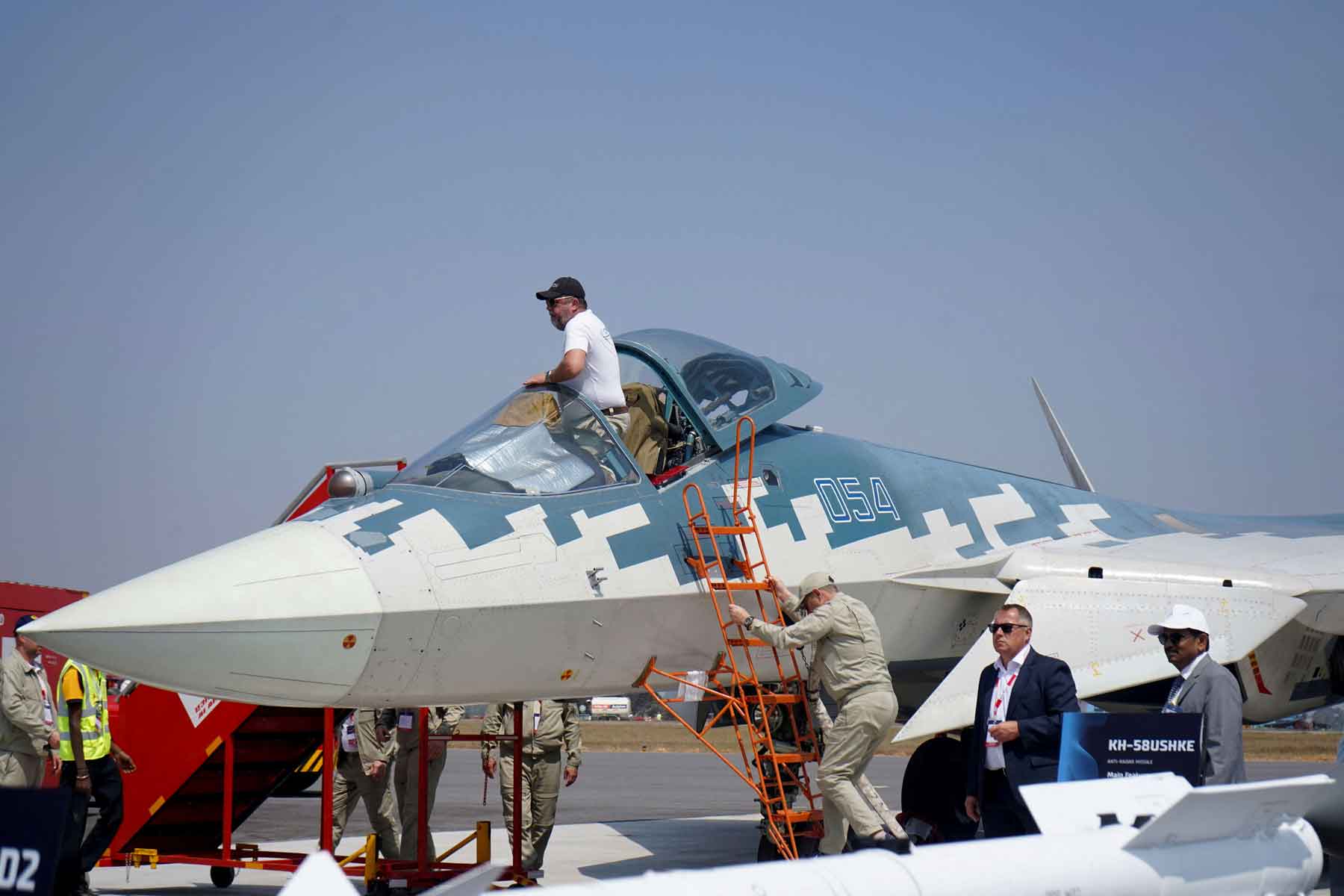
A qualitative leap in capability, giving Algeria access to advanced radar-evasion
Washington threatens sanctions as Algeria acquires Russian jets
For Washington, Algeria’s acquisition of such advanced Russian weaponry represents a particularly sensitive development.
Sunday 08/02/2026
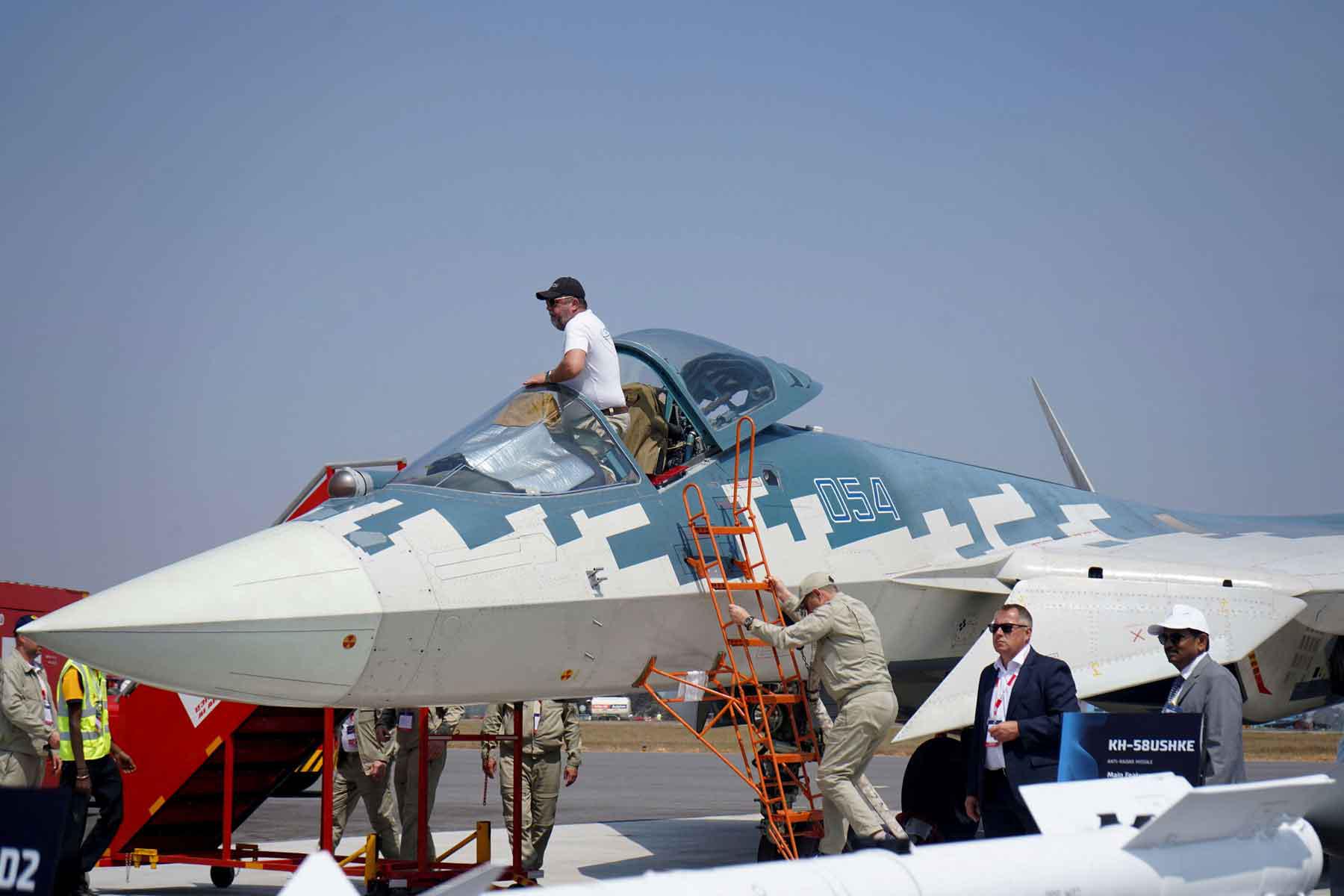
A qualitative leap in capability, giving Algeria access to advanced radar-evasion
WASHINGTON – The United States warned that Algeria could face sanctions under the Countering America’s Adversaries Through Sanctions Act (CAATSA) over its reported purchase of Russia’s export-variant Su-57E fifth-generation fighter jets, known to NATO as the “Felon,” in a move that risks adding new strain to relations between the two countries.
Robert Palladino, head of Middle East affairs at the US State Department, raised the possibility during testimony before the Senate Foreign Relations Committee last week, signalling growing concern in Washington over Algiers’ deepening defence ties with Moscow.
The US may impose sanctions on Algeria because of its purchase, Palladino said, adding that Washington had reviewed media reports about the deal and found them “concerning.”
He stressed that Washington continues to engage closely with the Algerian government on areas of mutual interest, but acknowledged significant disagreements, with the arms deal representing a key point of contention.
““We are working closely with the Algerian government on issues where we find common ground,” Palladino said. “At the same time, we have serious differences on many other topics, and the arms deal is an example of what the United States considers problematic,” he told lawmakers.
The CAATSA law, adopted in 2017, is designed to restrict funding for Russia’s defence and intelligence sectors and penalise countries that enter into “significant transactions” with them. It also seeks to prevent the transfer of advanced military technology that could undermine the technological and strategic advantage of US allies.
The controversy intensified after reports confirmed Algeria had acquired the Su-57E export model, making it the first foreign operator of Russia’s most advanced stealth fighter. Moscow had previously announced that the aircraft had secured its first overseas customer without disclosing the buyer’s identity.
For Washington, Algeria’s acquisition of such advanced Russian weaponry represents a particularly sensitive development. US officials fear the deal could not only strengthen Russia’s defence industry at a time of heightened geopolitical tensions, but also alter the military balance in the Mediterranean basin and across Africa.
Analysts note that Algeria has long been one of Russia’s largest arms customers, relying heavily on Russian combat aircraft, air defence systems and military technology. However, the potential acquisition of fifth-generation stealth fighters marks a qualitative leap in capability, giving Algeria access to advanced radar-evasion, sensor fusion and combat technologies previously unavailable outside Russia.
Reports suggest the deal could be worth billions of dollars, which Washington views as direct financial support for Russia’s defence sector amid ongoing global rivalries and Western efforts to isolate Moscow economically.
US officials have reportedly used diplomatic channels, often discreetly, to persuade Algeria to reconsider the purchase, reflecting the strategic importance Washington places on limiting Russia’s defence exports and maintaining influence with key regional partners.
The issue is not new in Washington policy circles. Senator Marco Rubio previously urged the imposition of sanctions on Algeria in a September 2022 letter to then-Secretary of State Antony Blinken, arguing that Algeria’s large-scale procurement of Russian weapons warranted action under CAATSA. Rubio later moderated his stance after becoming Secretary of State, reflecting the delicate balance between enforcing sanctions legislation and preserving diplomatic ties.
Algeria’s air force already operates a substantial fleet of Russian-made fighter jets and air defence systems, underscoring a long-standing military partnership with Moscow rooted in decades of technical and logistical cooperation.
In Washington, lawmakers and policy analysts are now assessing whether Algeria’s reported Su-57 acquisition meets the legal threshold for sanctions under CAATSA. Potential measures could include restrictions on dollar-denominated transactions, limitations on access to the global financial system, bans on the export of US components or technologies used in defence systems, and broader diplomatic pressure in international forums.
The developments come as Russia intensifies efforts to market the Su-57 globally through international air shows and defence exhibitions organised by the state-owned United Aircraft Corporation, seeking to expand its share of the global arms market despite Western sanctions.
India is among the countries closely monitoring the aircraft, as it seeks advanced fifth-generation technology to support its indigenous Advanced Medium Combat Aircraft (AMCA) programme. Moscow has expressed willingness to share certain Su-57 technologies and allow licensed production abroad, highlighting the strategic importance Russia attaches to exporting its flagship stealth fighter.
For Algeria, the reported acquisition underscores its determination to modernise its armed forces and preserve strategic autonomy. For Washington, however, the deal represents a test case for enforcing sanctions legislation while maintaining fragile diplomatic engagement with a key North African partner in a rapidly shifting geopolitical landscape.