

The most realistic option at present
Iraq weighs extending Sudani’s term to break political deadlock
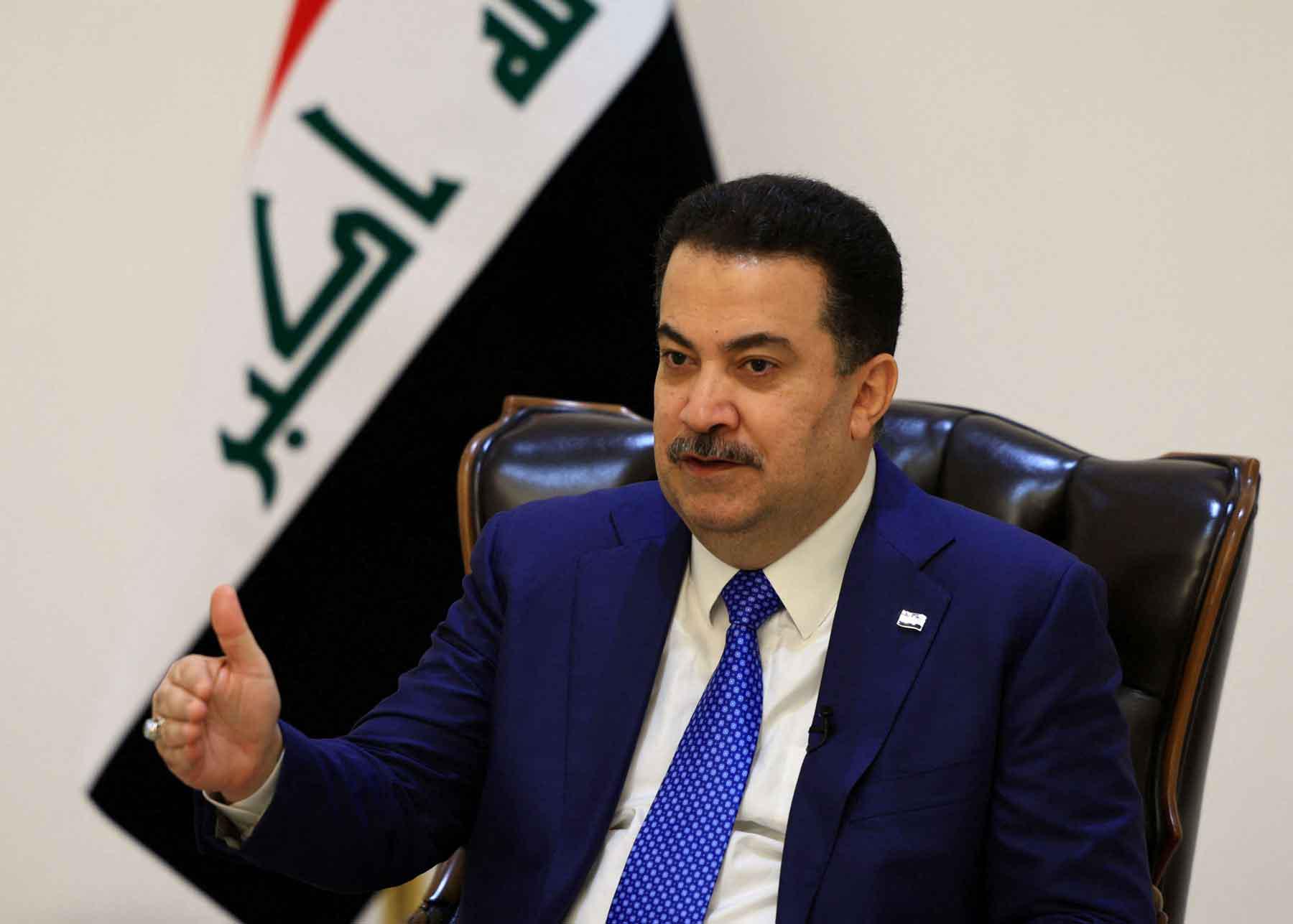
Sudani received a formal proposal outlining a one-year extension of his caretaker government’s mandate under restricted executive authority.
Tuesday 10/02/2026
The most realistic option at present
BAGHDAD – Iraq’s ruling Coordination Framework has proposed extending the tenure of caretaker Prime Minister Mohammed Shiaa al-Sudani for an additional year with limited powers, in a temporary bid to break a deepening political impasse following Washington’s firm rejection of Nouri al-Maliki returning as premier.
A source within the Coordination Framework, an alliance of Iraq’s dominant Shia political forces, said late on Monday that Sudani had received a formal proposal outlining a one-year extension of his caretaker government’s mandate under restricted executive authority.
The proposal reflects mounting concern among political leaders over the prolonged stalemate, with observers expecting the paralysis to persist for months, echoing previous government formation crises. Iraq’s current caretaker administration itself took nearly a year to emerge after earlier political deadlock.
The Iraqi parliament has already failed three consecutive times to convene a session to elect a president, a key constitutional step required before naming a prime minister. On Monday, lawmakers held a brief 30-minute session during which several newly elected members were sworn in, without addressing the leadership vacuum.
According to the local Shafaq News agency, the source said that one of the influential political poles within the Shia political establishment had delivered Sudani a document containing a proposal aimed at resolving the political impasse “while preserving the political and parliamentary rights of all components.”
The source, speaking on condition of anonymity, said Sudani would discuss the proposal with Shia political leaders in upcoming Coordination Framework meetings, noting that it could face resistance or gain broader support depending on political consensus.
Leaders of Iraq’s main Shia, Sunni and Kurdish factions, grouped under the State Administration Coalition, met on Sunday at the government palace but failed to reach agreement on filling the presidency or forming a new government.
Sudani himself relinquished his parliamentary seat on Sunday after winning more than 92,000 personal votes in the October 2025 parliamentary elections. His political alliance secured more than 400,000 votes overall, translating into 46 parliamentary seats, reinforcing his standing as a key political figure despite the caretaker status of his government.
Maliki, who served as prime minister from 2006 to 2014, has meanwhile reiterated his determination to seek the premiership again, despite US opposition. He described Washington’s stance as “blatant interference” in Iraq’s internal affairs, insisting that selecting the head of government remains a sovereign national decision governed by constitutional processes and the will of the Iraqi people. Iraq’s presidency and several political factions have also rejected what they characterised as American interference.
US President Donald Trump warned on January 27 that Washington would halt support for Iraq if Maliki returned to power, signalling that such a move would damage bilateral relations. Maliki remains a deeply-polarising figure domestically and internationally, with critics blaming his tenure for fuelling sectarian tensions and weakening state institutions.
Media reports have also pointed to growing divisions within the Coordination Framework itself, as Maliki’s insistence on securing the premiership complicates efforts to reach consensus.
Prominent Sunni leader Mohammed al-Halbousi, head of the Taqaddum party and former parliament speaker, has publicly opposed Maliki’s candidacy, describing his previous tenure as deeply damaging.
“Our experience with Maliki was bitter for all Iraqis,” Halbousi told Dijlah television. “We want a Shia candidate who is open to partners and to Iraq’s Arab environment. There are many capable candidates.”
He added that Iraq was still grappling with the consequences of Maliki’s period in office and required a leader capable of restoring stability and rebuilding international partnerships.
“We need a figure who can reconnect Iraq with the world and its Arab surroundings,” he said. “Maliki has disputes with everyone, and Iraq needs calm and a new experience because people are concerned about the country’s future.”
Halbousi also warned against ignoring US signals regarding Iraq’s political trajectory and bilateral ties, saying Iraq must consider alternative candidates to avoid further isolation.
Additional pressure has come from Washington’s economic leverage. Bloomberg reported last week that US officials had warned Iraqi counterparts that Iraq’s access to oil export revenues could be curtailed if Maliki were appointed prime minister, reflecting American concerns over his close ties to Iran.
The warning has intensified political tensions and added urgency to efforts within the Coordination Framework to find a compromise candidate or interim arrangement, as Iraq faces the risk of prolonged institutional paralysis, strained international relations and further domestic instability.