

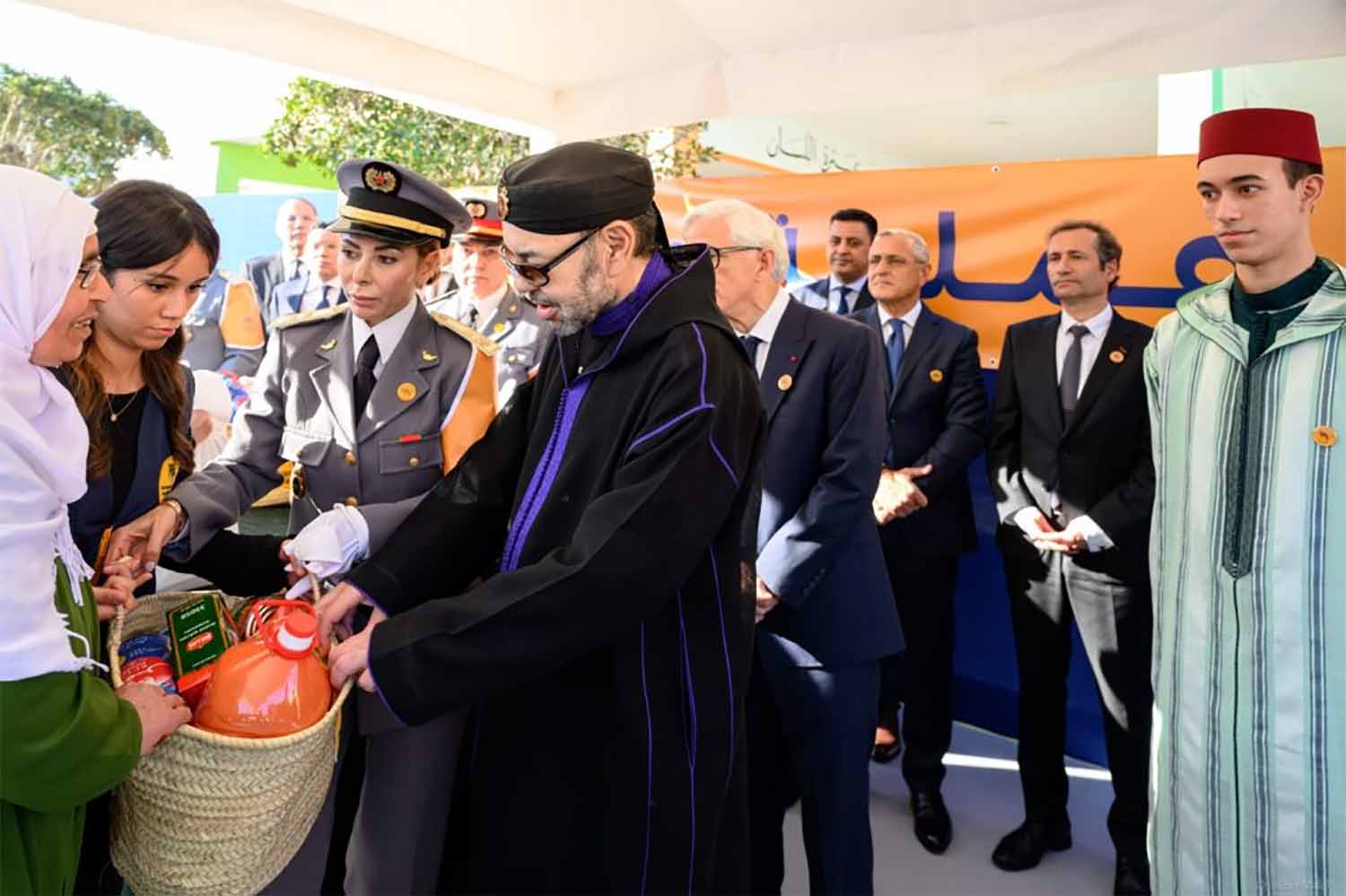
The event underscores a defining feature of Morocco’s social policy
Royal solidarity: Dignity for the people, unity for the nation
The Ramadan solidarity campaign launched by King Mohammed VI conveys a message that resonates beyond the holy month: social protection is not merely assistance — it is an investment in stability, cohesion, and human dignity.
Monday 23/02/2026
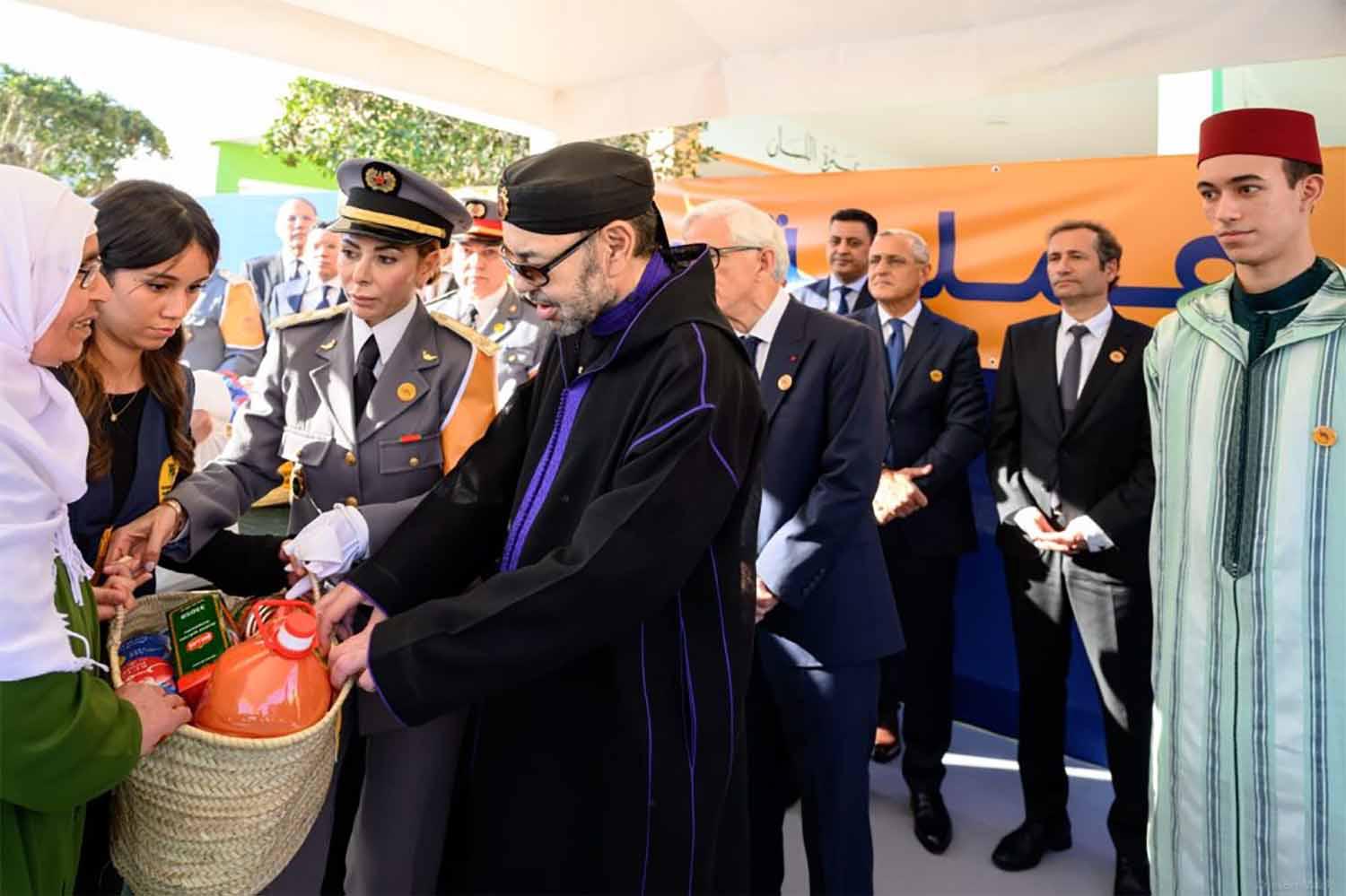
The event underscores a defining feature of Morocco’s social policy
In Salé’s Hay Al Inbiaath district, King Mohammed VI, accompanied by Crown Prince Moulay Hassan, launched the national “Ramadan 1447” solidarity campaign led by the Mohammed V Foundation for Solidary. More than a ceremonial moment, the event underscored a defining feature of Morocco’s social policy: a sustained commitment to protecting vulnerable citizens while reinforcing national cohesion.
Now in its 28th year, the initiative will support over 4.3 million people through the distribution of essential food supplies funded by a budget exceeding 305 million dirhams. While its timing during Ramadan highlights values of compassion and sharing, the operation’s significance lies in its institutional continuity and scale. It reflects a model in which solidarity is embedded in public action rather than confined to seasonal charity.
A Structured Social Response
The program prioritizes households facing socio-economic vulnerability, including widows, elderly citizens, and persons with disabilities. With nearly three-quarters of beneficiaries living in rural areas, the initiative also addresses territorial disparities and the particular hardships faced by remote communities.
Beyond the immediate relief it provides, the operation responds to broader economic pressures affecting low-income households. By ensuring access to basic food staples, it helps stabilize living conditions during a period when household expenditures typically rise.
Data-Driven Targeting and Transparency
For the second consecutive year, beneficiary identification relies on Morocco’s Unified Social Registry, a data-based system that uses socio-economic indicators to ensure equitable targeting. This shift toward evidence-based allocation marks an important evolution in social governance, strengthening transparency, fairness, and efficiency.
Such mechanisms are increasingly essential in modern welfare systems, enabling governments to direct resources where they are most needed while reinforcing public confidence in institutional processes.
National Mobilization and Institutional Coordination
The operation mobilizes a wide network of public institutions, local authorities, social workers, and volunteers across the country. Multi-tier oversight committees monitor supply chains and distribution, while health and food safety authorities ensure quality standards.
This coordinated approach illustrates how humanitarian outreach, administrative oversight, and community engagement can work in tandem to deliver large-scale social programs effectively.
From Seasonal Aid to Social Cohesion
Since its launch in 1998, the Ramadan food support initiative has grown from a modest assistance program into a nationwide operation with cumulative funding exceeding 2.5 billion dirhams. The number of beneficiary families has expanded dramatically, reflecting both increased social needs and the state’s commitment to inclusive development.
In this evolution, solidarity is no longer limited to emergency relief. It functions as a stabilizing force that strengthens social cohesion, reinforces trust in public institutions, and promotes a shared sense of belonging.
A Model of Compassionate Governance
At a time when widening inequalities challenge social stability across many regions, Morocco’s approach illustrates how compassion, institutional continuity, and data-driven governance can converge to support vulnerable populations while preserving dignity.
The Ramadan campaign conveys a message that resonates beyond the holy month: social protection is not merely assistance — it is an investment in stability, cohesion, and human dignity.
The views expressed are solely those of the author and may or may not reflect those of Middle East Online
