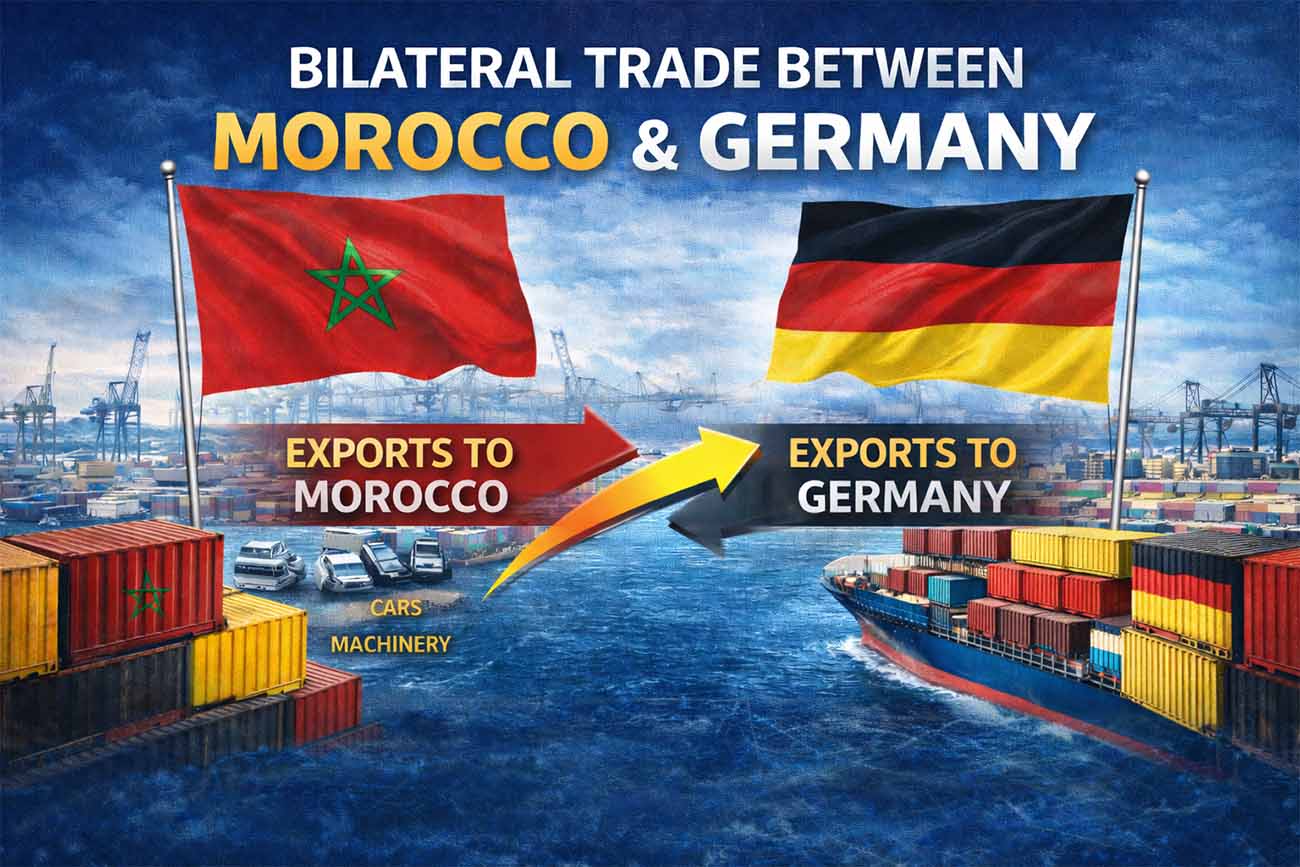
A strategic convergence: Morocco and Germany enter a new economic era
With total bilateral trade reaching €7.37 billion, Morocco and Germany have crossed a new threshold.
Friday 27/02/2026
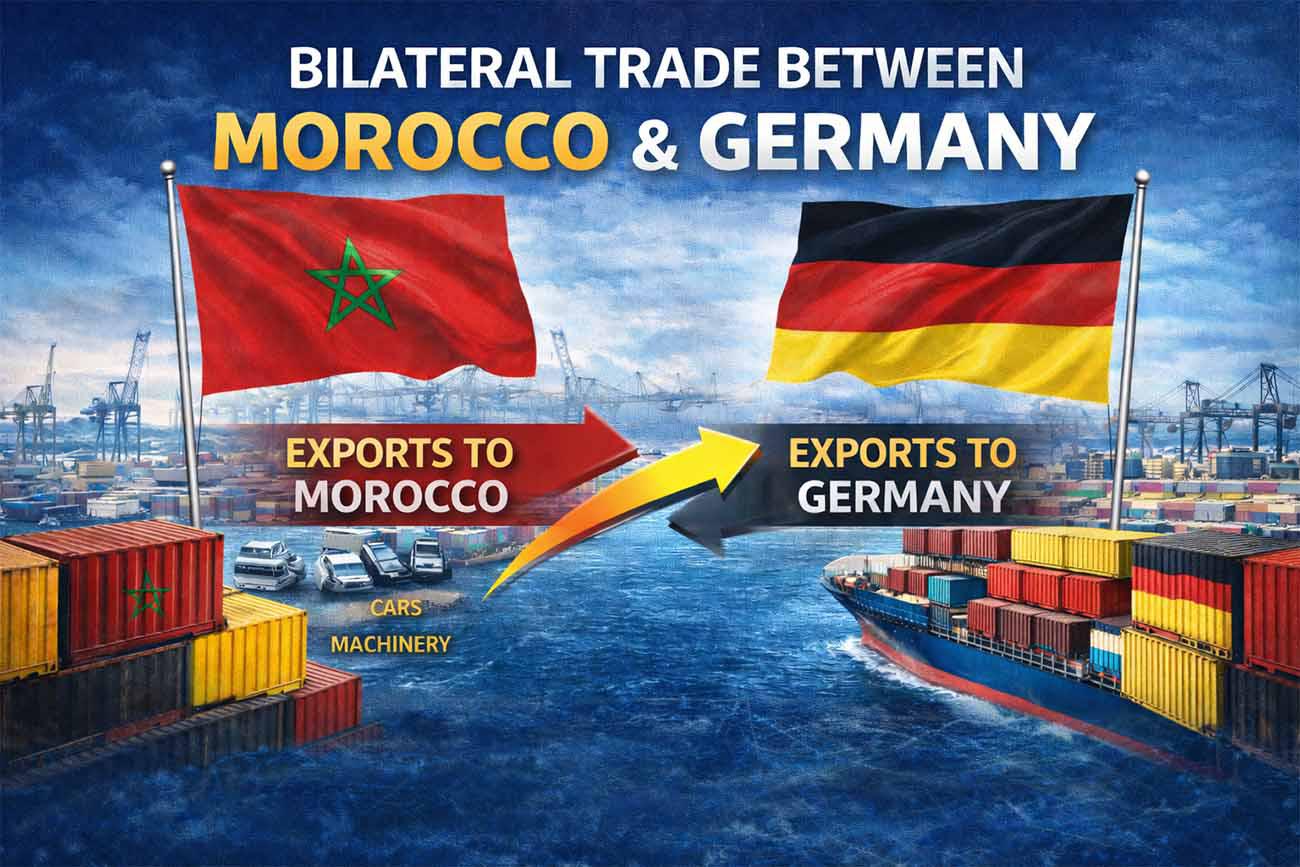
The 2025 trade figures released by the Federal Statistical Office of Germany (Destatis) tell a story that goes far beyond numbers. They reveal the consolidation of a partnership that has quietly but steadily evolved into one of the most promising economic relationships in the Euro-Mediterranean space.
With total bilateral trade reaching €7.37 billion, Morocco and Germany have crossed a new threshold. Only a few years ago, exchanges stood at €4.9 billion (2022), before rising to €6.5 billion (2024). The 2025 leap confirms a sustained upward trajectory. This is not incremental growth—it is the affirmation of strategic confidence.
Germany’s Confidence in Morocco
German exports to Morocco reached approximately €3.9 billion this year, elevating Morocco to 49th place among global destinations for German exports. In the competitive ecosystem of German trade, such progress reflects trust, predictability, and long-term economic alignment.
Germany—the largest economy in the European Union and the world’s third-largest in nominal terms—does not expand partnerships by coincidence. As Berlin refines its supply-chain diversification strategy and strengthens its industrial resilience, Morocco has emerged as a reliable and forward-looking partner.
Geography plays a role. Stability plays a role. But above all, Morocco’s sustained industrial transformation plays the decisive role.
From Trade to Industrial Integration
What is most encouraging is the qualitative transformation of trade flows. The relationship is no longer centered on traditional sectors alone. While German machinery, automotive components, and advanced industrial equipment continue to support Morocco’s manufacturing ecosystem, Moroccan exports are climbing the value ladder.
In 2025, Morocco exported goods worth €3.47 billion to Germany. Growth has been particularly robust in automotive manufacturing, electrical wiring systems, textiles, and agricultural products. Germany is increasingly importing vehicles assembled and manufactured in Morocco—a powerful indicator of integration into global automotive value chains.
Even more promising is the expansion in high value-added segments such as automotive electronics. These sectors reflect technological transfer, industrial sophistication, and workforce specialization. They signal that Morocco is not merely participating in trade; it is co-producing industrial value.
A Narrowing Trade Gap, A Balanced Partnership
Although the trade balance still favors Germany—with a surplus of roughly €430 million—the gap is gradually narrowing. Moroccan exports are growing at a faster pace in strategic sectors, steadily reducing traditional imbalances.
This evolution strengthens the partnership rather than destabilizing it. Balanced trade fosters sustainability. It reinforces mutual benefit. It deepens interdependence in constructive ways.
A Leading African Partner
In the 2025 ranking of Germany’s trading partners, Morocco has consolidated its position among the top 60 worldwide and stands among Germany’s foremost partners in Africa, alongside South Africa and Egypt. Yet Morocco’s distinguishing feature is not only its rank—it is its momentum.
Trade between Germany and Morocco is expanding faster than Germany’s average trade growth with North African countries. This dynamism is fueled by forward-looking investments, particularly in green hydrogen and advanced automotive industries. These sectors align directly with Germany’s energy transition strategy and Europe’s industrial modernization agenda.
Green hydrogen cooperation, in particular, opens the door to a new chapter of strategic convergence—linking Morocco’s renewable energy potential with Germany’s technological and industrial expertise.
A Partnership with Strategic Depth
The 2025 data confirm a structural evolution: trade between Morocco and Germany has shifted decisively toward complex industrial products and integrated supply chains. The relationship is no longer peripheral. It is becoming systemic.
For Morocco, this trajectory validates years of industrial policy, infrastructure development, and regulatory reform. For Germany, it offers a stable, competitive, and geographically proximate platform for sustainable growth.
The €7.37 billion milestone is therefore not an endpoint—it is a foundation. It reflects a partnership anchored in trust, aligned in strategic vision, and oriented toward shared prosperity.
If current trends continue, Morocco and Germany will not simply trade more. They will build together—an industrial bridge linking Europe and Africa in a model of modern, mutually beneficial cooperation.