

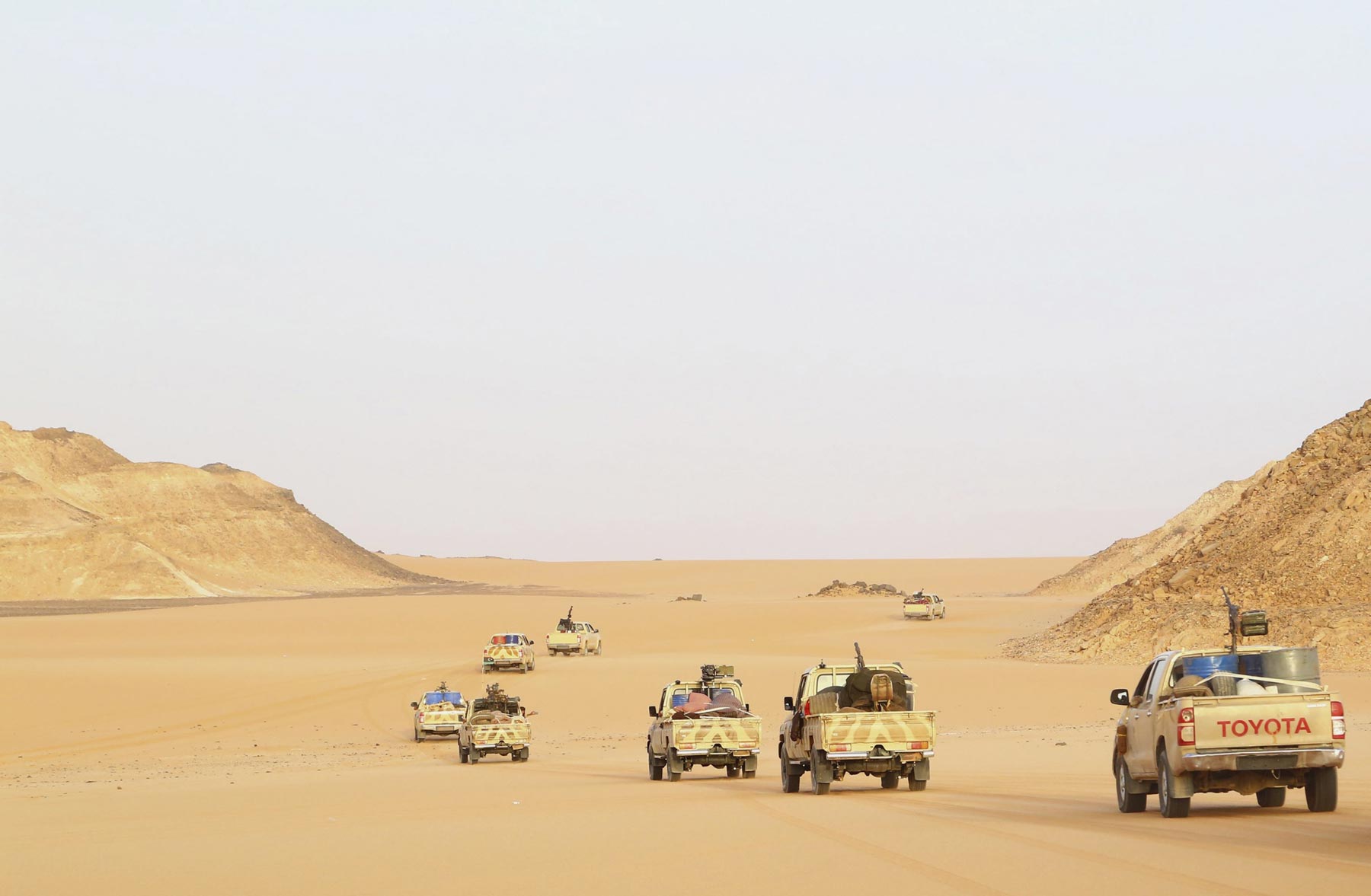
The clampdown has not halted smuggling
Power struggle intensifies across Libya, Chad, Niger border triangle
The struggle for influence over desert trade routes, fuel supplies and cross-border movements is far from over, raising fears of prolonged instability across one of Africa’s most strategically sensitive frontier regions.
Monday 18/05/2026
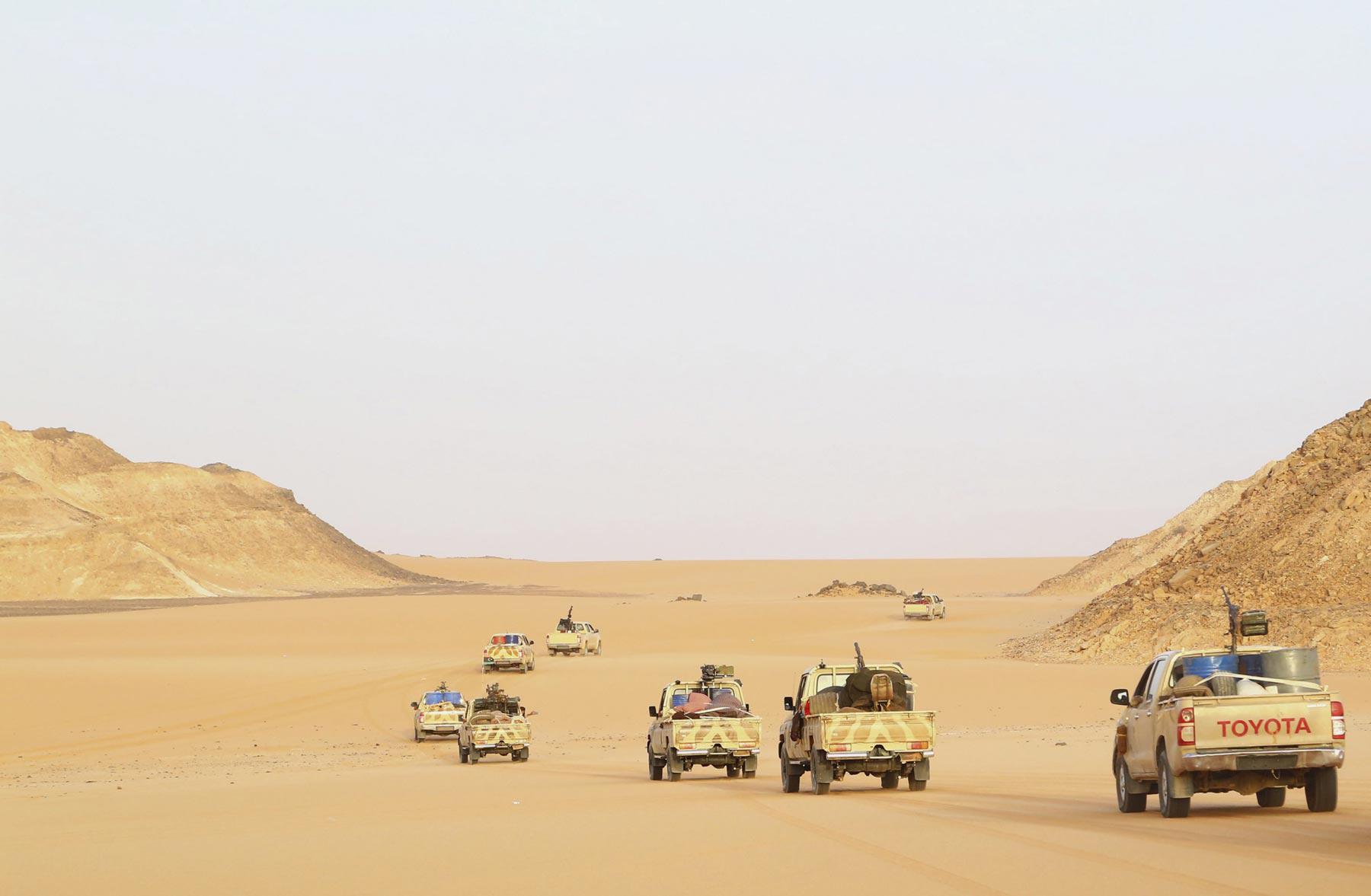
The clampdown has not halted smuggling
PARIS – The vast desert frontier linking Libya, Chad and Niger is undergoing a profound transformation as armed groups, smuggling networks and rival regional powers compete for control of one of the Sahara’s most strategic informal trade corridors.
A report by French publication Afrique XXI said years of conflict in Libya, combined with political upheaval in Niger following the 2023 military coup, have dramatically altered security alliances and economic networks across the region, creating a volatile new balance of power stretching from southern Libya to northern Chad and north-eastern Niger.
For decades, the frontier zone functioned as an interconnected commercial space where fuel, food, migrants, gold and consumer goods moved across largely ungoverned desert routes linking Sebha in southern Libya to Tibesti in Chad and Dirkou in Niger. Local traders and transporters relied on networks that often operated beyond formal state control.
But traders, former rebels and security officials interviewed by the publication said the situation has changed significantly over the past year as forces loyal to eastern Libyan commander Khalifa Haftar have expanded their influence across southern Libya.
One Chadian trader described the shift bluntly: “Haftar’s grip is tightening.”
According to the report, checkpoints once operated by Chadian and Nigerien rebel factions along desert supply routes have increasingly been dismantled and replaced by posts controlled by Haftar’s self-styled Libyan National Army. These crossings had previously generated large revenues for armed groups, particularly through taxes imposed on fuel convoys travelling towards Chad and Niger.
Former Nigerien rebel Abdel Kader said armed factions including Chad’s Front for Change and Concord and Niger’s Patriotic Front for Liberation once jointly controlled strategic crossings north of Kouri Bougoudi, collecting payments from transporters to finance their operations. That system, he said, has largely disappeared under the advance of Haftar’s forces.
The tightening security environment has also disrupted the lucrative informal fuel trade that long connected Libya with neighbouring states. Authorities aligned with Benghazi have moved to curb unofficial fuel exports to Chad and Niger, contributing to steep increases in fuel prices across remote northern regions.
Yet the clampdown has not halted smuggling. Instead, routes have shifted eastwards into Niger, which several traders and officials described as the new weak point in the Sahara security landscape.
The report said fuel is now increasingly entering northern Niger through a combination of official deliveries and black-market networks tied to tankers originating from the Soraz refinery in Zinder, partly owned by China National Petroleum Corporation. In remote desert towns such as Chirfa and Dirkou, fuel is reportedly sold through informal systems on a first-come, first-served basis, with transporters hauling dozens of jerrycans across thousands of kilometres of desert tracks.
Security officials and former customs officers said the Sahara’s informal economy remains deeply entrenched despite stronger military oversight. One former customs official argued that trade patterns in the region are shaped more by geography than by national borders, noting that residents of northern Chad and Niger often find it easier to source goods from Libya than from their own capitals.
At the same time, Chad and Libya have strengthened military coordination along their shared frontier. The report said a joint Chadian-Libyan force was recently deployed around the gold-mining area of Kouri Bougoudi, backed by Libyan vehicles and Chadian logistical support. Chad has also expanded military operations across Tibesti, establishing special forces positions in several strategic desert zones.
A senior Chadian officer said trenches had been dug along parts of the frontier to restrict smuggling and infiltration, while additional deployments had significantly improved territorial control since President Mahamat Idriss Deby visited the region in 2023.
Despite these measures, the report warned that north-eastern Niger is increasingly becoming the Sahara’s new security vacuum. Vast desert spaces, weak state control and the proliferation of armed groups have created conditions similar to those seen in southern Libya a decade ago.
Several rebel movements from Chad, Niger and Libya are now believed to operate rear bases inside Nigerien territory, including the Chadian CCMSR and FACT factions, Niger’s MPLJ movement and the Libyan group known as the “Revolutionaries of the South”.
The latter group, led by Mahamat Wardougou, also known as Kochi, has emerged as a major force in recent months. According to the report, the group has attempted to impose control over smuggling routes for fuel, weapons and narcotics linking Libya, Chad and Niger.
The group reportedly kidnapped fighters loyal to Haftar in January and later claimed responsibility for the killing of a Libyan National Army officer in Gatrun in February. That attack triggered retaliatory operations by Haftar’s forces, backed by the joint Chad-Libya force, against rebel positions inside Nigerien territory.
Clashes reportedly spread across large stretches of desert near the Libya-Niger border, with rebel groups launching counterattacks after their bases were targeted.
Former rebels and regional observers warned that the growing confrontation could destabilise an already fragile region, particularly as multiple external actors become involved. Some fighters claimed the “Revolutionaries of the South” receive support from authorities in Tripoli and potentially from Algeria, while drawing backing from Toubou communities spread across Libya, Chad and Niger.
Analysts cited in the report said the conflict reflects a broader restructuring of power across the Sahara, where armed movements, state militaries and informal commercial networks are increasingly intertwined.
While Haftar’s forces and the Chadian army have succeeded in tightening control over parts of southern Libya and north-western Chad, the report concluded that the struggle for influence over desert trade routes, fuel supplies and cross-border movements is far from over, raising fears of prolonged instability across one of Africa’s most strategically sensitive frontier regions.