

Damascus appears determined to press ahead with the parliamentary roadmap
Syria holds vote in Kurdish areas in bid to cement transitional authority
With voting now completed in Hasakah and Ain al-Arab, only Sweida remains outside the parliamentary process because of unresolved security and political tensions.
Monday 25/05/2026
Damascus appears determined to press ahead with the parliamentary roadmap
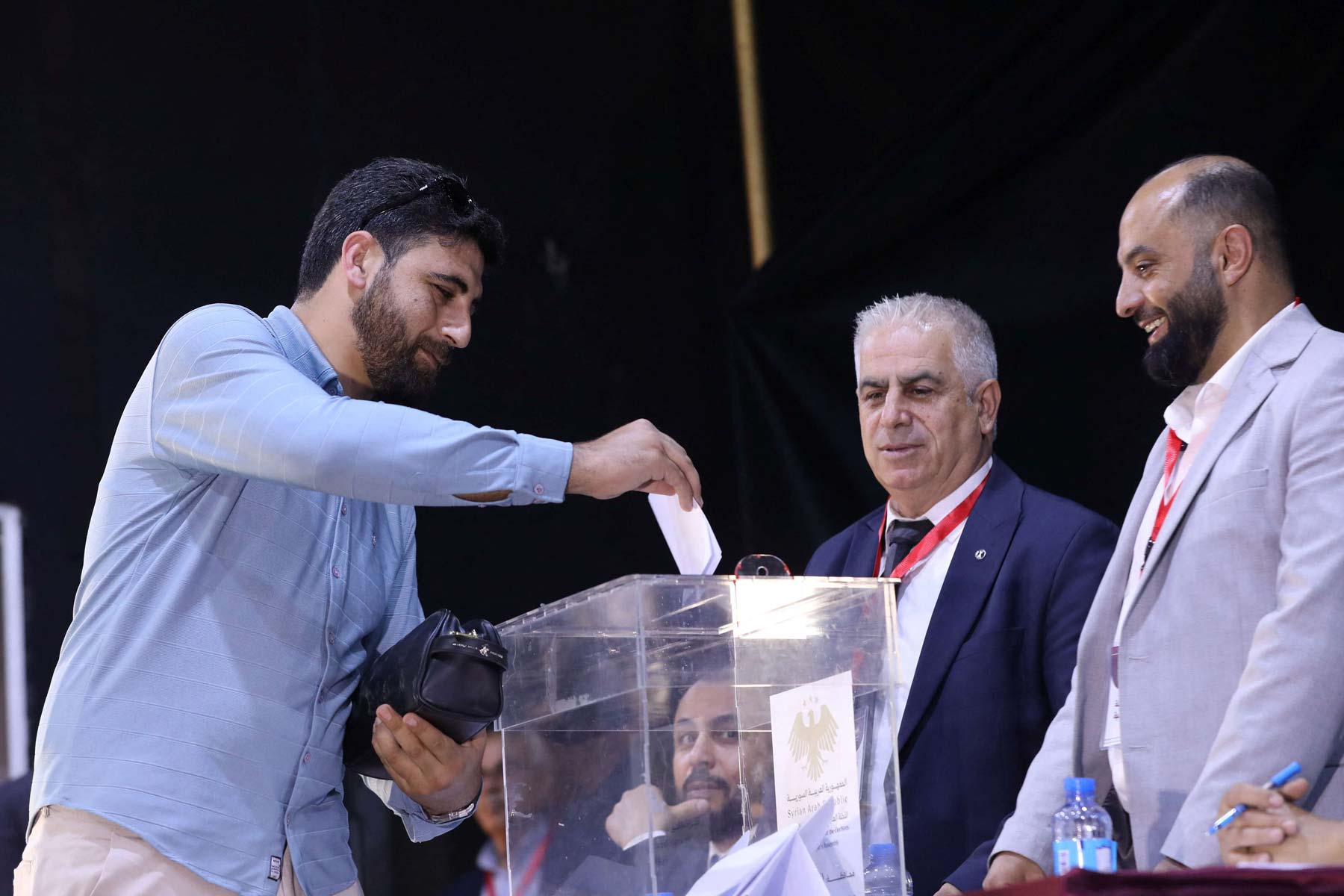
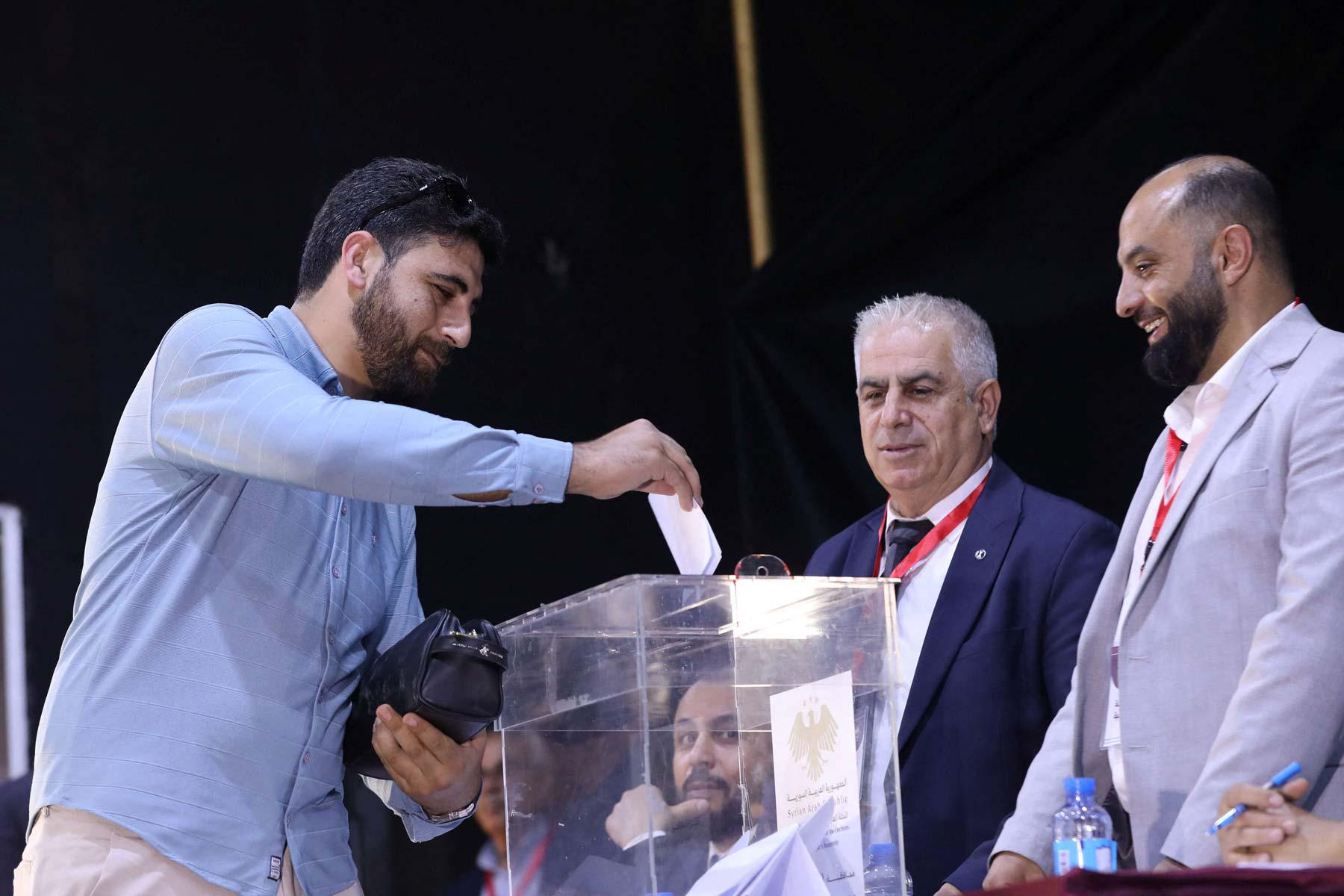
DAMASCUS – Syria on Sunday completed a delayed round of parliamentary voting in predominantly Kurdish areas of the northeast, as Damascus moved to consolidate its transitional political framework and extend state institutions into regions that had long remained outside full central government control.
The ballot in Hasakah province and the Kurdish-majority town of Ain al-Arab, also known as Kobane, comes months after an agreement between Damascus and Kurdish-led authorities on integrating local civilian and military institutions into the Syrian state.
State news agency SANA said turnout exceeded 95 percent in some districts, while election officials described the vote as a major step towards completing the formation of Syria’s transitional People’s Assembly.
The Higher Committee for People’s Assembly Elections announced preliminary winners in Hasakah, Qamishli and Ain al-Arab, with candidates given 48 hours to submit appeals before final results are ratified.
Committee spokesperson Nawar Najma said the elections reflected the desire of residents in the northeast to become part of “a unified national framework” and described the process as a key test for Syria’s transitional phase.
The vote forms part of a broader political transition launched after major political changes in late 2024 and parliamentary elections held in October 2025, which established the foundations of Syria’s new legislative system.
Under the transitional constitutional declaration signed by interim President Ahmad al-Sharaa, the 210-member parliament combines elected and appointed representation. Around 70 members are directly appointed by the president, while the remainder are selected through local electoral colleges composed of pre-approved delegates.
The assembly will serve a renewable 30-month mandate and is expected to oversee key legislation, approve state budgets and treaties, shape public policy and supervise parts of the country’s institutional reconstruction.
Sunday’s vote was originally postponed alongside elections in Raqqa and Sweida provinces because of security concerns, underscoring the continuing fragility of the political and security environment in several regions of Syria.
The elections in Hasakah and Ain al-Arab are particularly significant because of the strategic and political sensitivity of northeastern Syria, where Kurdish-led authorities established autonomous structures during the years of conflict.
The ballot follows months of negotiations between Damascus and the Syrian Democratic Forces over integrating Kurdish-administered territories into state institutions while preserving aspects of local governance and determining the future role of SDF-linked armed forces.
While Syrian officials framed the elections as a step towards national reintegration and institutional stability, the process has drawn criticism from several Kurdish political groups, which argued that the voting mechanism lacks democratic legitimacy.
In a joint statement, Kurdish parties said the system amounted to “an appointment process” rather than a genuine election and failed to represent the “free Kurdish will.” They also criticised the allocation of only four parliamentary seats to Kurds, despite the Kurdish population in Syria numbering around two million people.
Analysts say the elections illustrate Damascus’s broader strategy of gradually restoring institutional authority across the country while maintaining tight political control over the transition process.
The government argues that rebuilding legislative institutions is essential for preserving continuity and managing the next phase of political reconstruction after years of war and fragmentation.
Officials also see the completion of voting in previously excluded regions as important for strengthening the legitimacy of the transitional framework and demonstrating that state institutions can function across geographically and politically divided territories.
Observers, however, note that the process remains heavily managed by authorities appointed by the transitional leadership, limiting the scope for independent political competition.
Despite the criticisms, Damascus appears determined to press ahead with the parliamentary roadmap as part of efforts to reinforce central authority and project an image of institutional normalisation after years of conflict.
With voting now completed in Hasakah province and Ain al-Arab, only the southern province of Sweida remains outside the parliamentary process because of unresolved security and political tensions.
Election officials said the first session of the new parliament is expected to convene once President Sharaa announces the remaining appointed members of the chamber, formally completing the structure of Syria’s transitional legislature.