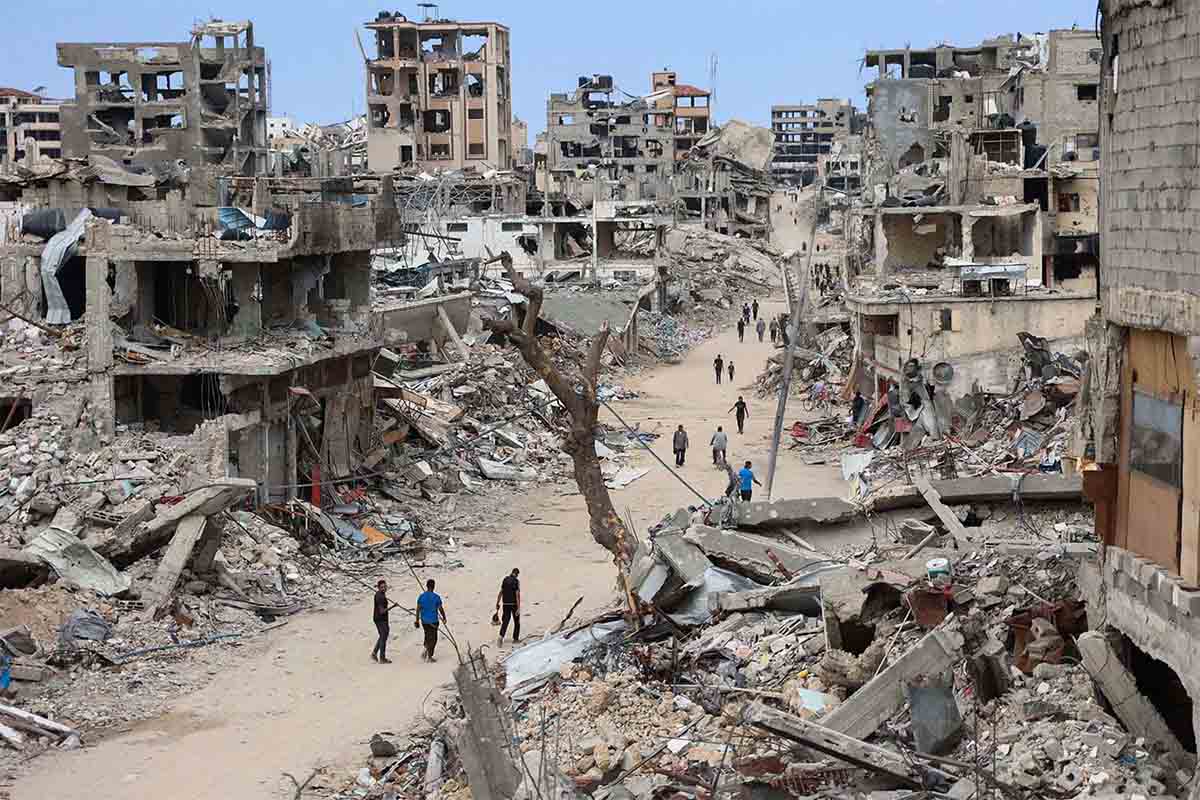
Post-war Gaza
Gaza shattered the illusion of Middle East normalization
The Gaza war fundamentally altered the political environment in which normalization diplomacy once operated with relative ease.
Wednesday 27/05/2026
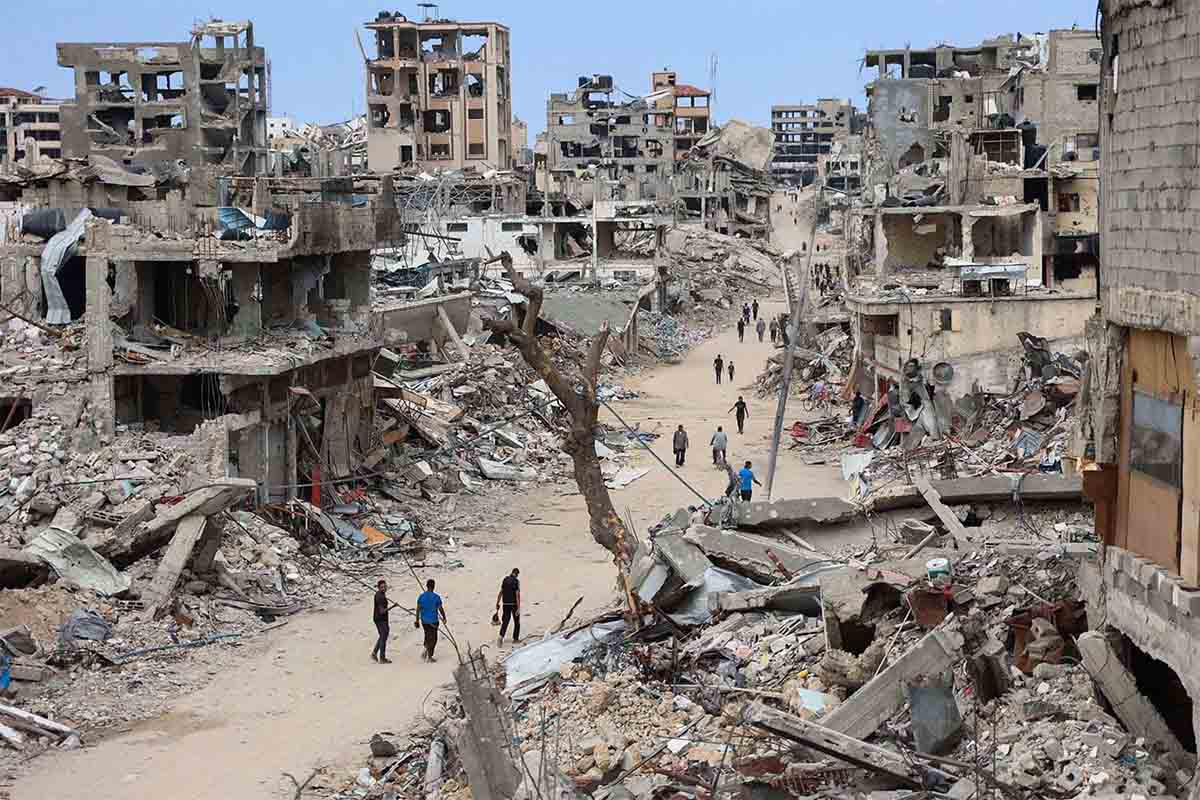
Post-war Gaza
The growing effort to pull Pakistan into Middle Eastern normalization politics reflects a wider strategic tension emerging across the region: the widening disconnects between externally promoted diplomatic frameworks and political realities inside the Muslim world.
Recent remarks by Lindsey Graham highlighted that tension clearly. Although President Donald Trump did not mention Pakistan while discussing regional diplomacy and de-escalation efforts involving Iran, Senator Graham’s comments nevertheless reflected how some political circles increasingly interpret regional diplomacy through the prism of the Abraham Accords and broader normalization objectives.
For more than four years, the Abraham Accords were presented not simply as bilateral agreements between Israel and several Arab states, but as the foundation of a new regional order. Their supporters portrayed normalization as the principal route toward Middle Eastern stability, economic integration and strategic cooperation. Yet the post-Gaza regional environment has complicated that narrative considerably.
The Gaza war fundamentally altered the political environment in which normalization diplomacy once operated with relative ease. What was previously framed as a strategic realignment is now increasingly viewed across the Muslim world through the lens of legitimacy, sovereignty and public sentiment. The region is entering a phase where symbolic diplomacy alone can no longer override political memory or domestic pressures.
Across much of the Muslim world, normalization now carries growing political costs. Public opinion shifted sharply following the devastation in Gaza, placing governments under mounting domestic pressure. Several states that once approached normalization primarily through strategic and economic calculations must now navigate a far more sensitive political landscape.
Even regional powers that previously appeared open to gradual diplomatic recalibration have become noticeably more cautious. Saudi Arabia, while continuing strategic engagement with Washington, has slowed movement toward normalization amid heightened domestic and regional sensitivities after Gaza. Other governments across the region increasingly face the same dilemma: balancing strategic partnerships abroad while managing public anger at home.
Pakistan’s strategic balancing act
Pakistan occupies a particularly important position within this environment.
Unlike several regional actors that adjusted their diplomatic posture in recent years, Islamabad has maintained a relatively consistent position on Palestine across successive civilian and military governments. Pakistan continues to support the establishment of an independent Palestinian state based on pre-1967 borders, with Al-Quds Al-Sharif as its capital, in accordance with international law and United Nations resolutions.
That position is tied not only to foreign policy calculations, but also to Pakistan’s political identity. Since the country’s founding, support for Palestinian self-determination has remained closely linked to the vision articulated by Quaid-e-Azam Muhammad Ali Jinnah. Any abrupt shift toward normalization with Israel would therefore carry significant political and societal consequences domestically.
This helps explain why external pressure campaigns directed at Pakistan often generate resistance rather than policy adjustment.
Islamabad’s diplomatic engagement during periods of regional escalation, particularly involving Iran, appears to have unsettled some advocates of normalization politics. Pakistan’s approach emphasized de-escalation, dialogue and regional stability without linking those efforts to normalization with Israel. Islamabad’s diplomatic engagement also reflected broader concerns that another major confrontation involving Iran could destabilize the wider Middle East, disrupt energy corridors and deepen political polarization across Muslim-majority states. That distinction matters because it challenges an increasingly common assumption in some policy circles: that diplomatic legitimacy in the Middle East must ultimately pass through the Abraham Accords framework.
For some policymakers and lobbying networks in Washington and elsewhere, this creates a strategic complication. If regional de-escalation can proceed independently of normalization politics, then the claim that normalization represents the only viable pathway toward stability becomes more difficult to sustain.
Symbolism, sovereignty and the new regional fault lines
The issue extends beyond Pakistan alone.
A similar dynamic emerged in the controversy surrounding Somaliland’s reported plans to establish a purported diplomatic presence in occupied Jerusalem. Several Muslim-majority countries, including Pakistan, rejected the move, while organizations such as the Muslim World League described it as inconsistent with international law and the legal status of occupied Al-Quds.
The reaction reflected broader concerns about the use of Jerusalem as a platform for symbolic diplomatic engineering. Critics viewed the move not only through the lens of Somalia’s territorial integrity, but also as part of a wider effort to manufacture political legitimacy through alignment with one of the most contested issues in the Middle East.
Pakistan’s response emphasized support for the sovereignty and territorial integrity of the Somalia, rejection of unilateral arrangements linked to occupied territory and continued support for a lawful political settlement regarding Palestine.
More importantly, the controversy demonstrated how normalization politics increasingly intersects with wider questions of legitimacy, sovereignty and geopolitical symbolism.
Middle Eastern competition today is shaped not only by military power or economic leverage, but also by symbolism. Embassy relocations, normalization announcements and diplomatic recognition campaigns increasingly function as instruments of strategic signaling. States use such measures to shape perceptions of legitimacy and gradually normalize contested political realities.
Yet this strategy also carries risks.
Efforts to tie regional diplomacy exclusively to normalization agendas may ultimately weaken broader de-escalation initiatives. Stability in the Middle East depends not only on agreements between governments, but also on political legitimacy and public acceptance across the region itself.
This reality has become increasingly visible after Gaza, where the political costs associated with normalization have risen sharply across many Muslim-majority societies. Governments may continue pursuing strategic partnerships quietly, but overt external pressure aimed at forcing alignment often produces backlash rather than consensus.
Pakistan’s position illustrates this dilemma clearly. Islamabad has attempted to balance regional diplomacy, strategic autonomy and support for Palestine without fully aligning itself with either confrontation politics or normalization politics. Whether that balancing strategy remains sustainable in an increasingly polarized region remains uncertain.
What is becoming clearer, however, is that durable regional stability cannot be built solely through externally designed geopolitical frameworks. Political arrangements endure when they carry legitimacy, public acceptance and sensitivity to the historical realities that continue to shape the Muslim world.
The post-Gaza Middle East is increasingly exposing a reality normalization advocates can no longer easily dismiss: strategic agreements alone cannot substitute for political legitimacy.
Saima Afzal is a researcher specializing in South Asian security, counterterrorism, and broader geopolitical dynamics across the Middle East, Afghanistan, and the Indo-Pacific. Her work examines strategic affairs and evolving patterns of regional conflict. She is currently a Research Scholar at Justus Liebig University, Germany.