
A new diplomatic gravity is emerging
Beijing at the centre: How China is becoming the new gravitational force of global diplomacy
From the Gulf to Africa, from Europe to Latin America, governments are increasingly turning to Beijing not only for investment, but also for mediation, strategic balance, and political engagement.
Monday 08/06/2026
A new diplomatic gravity is emerging
or decades, global diplomacy revolved around Washington. Major crises, peace negotiations, sanctions regimes, and strategic alliances were largely shaped by the United States and its Western partners. Today, that geopolitical landscape is changing rapidly. A new diplomatic gravity is emerging — and its centre is increasingly Beijing.
China is no longer acting merely as the world’s factory or largest trading nation. It is positioning itself as a diplomatic power capable of speaking simultaneously with rivals, adversaries, and competing blocs. From the Gulf to Africa, from Europe to Latin America, governments are increasingly turning to Beijing not only for investment, but also for mediation, strategic balance, and political engagement.
This transformation did not happen overnight. It is the result of a deliberate long-term strategy by Chinese President Xi Jinping to reshape China’s global role and present Beijing as an alternative centre of international influence.
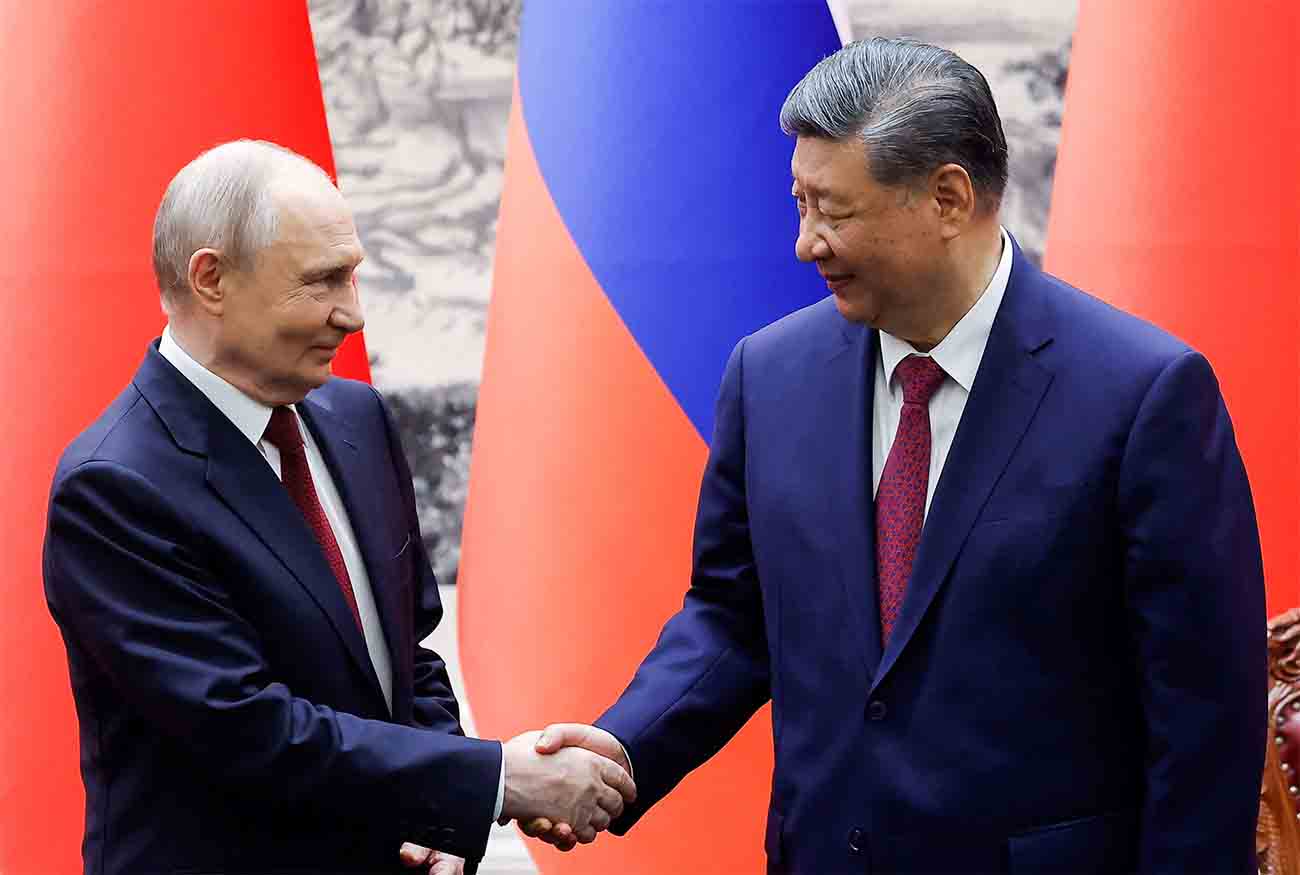
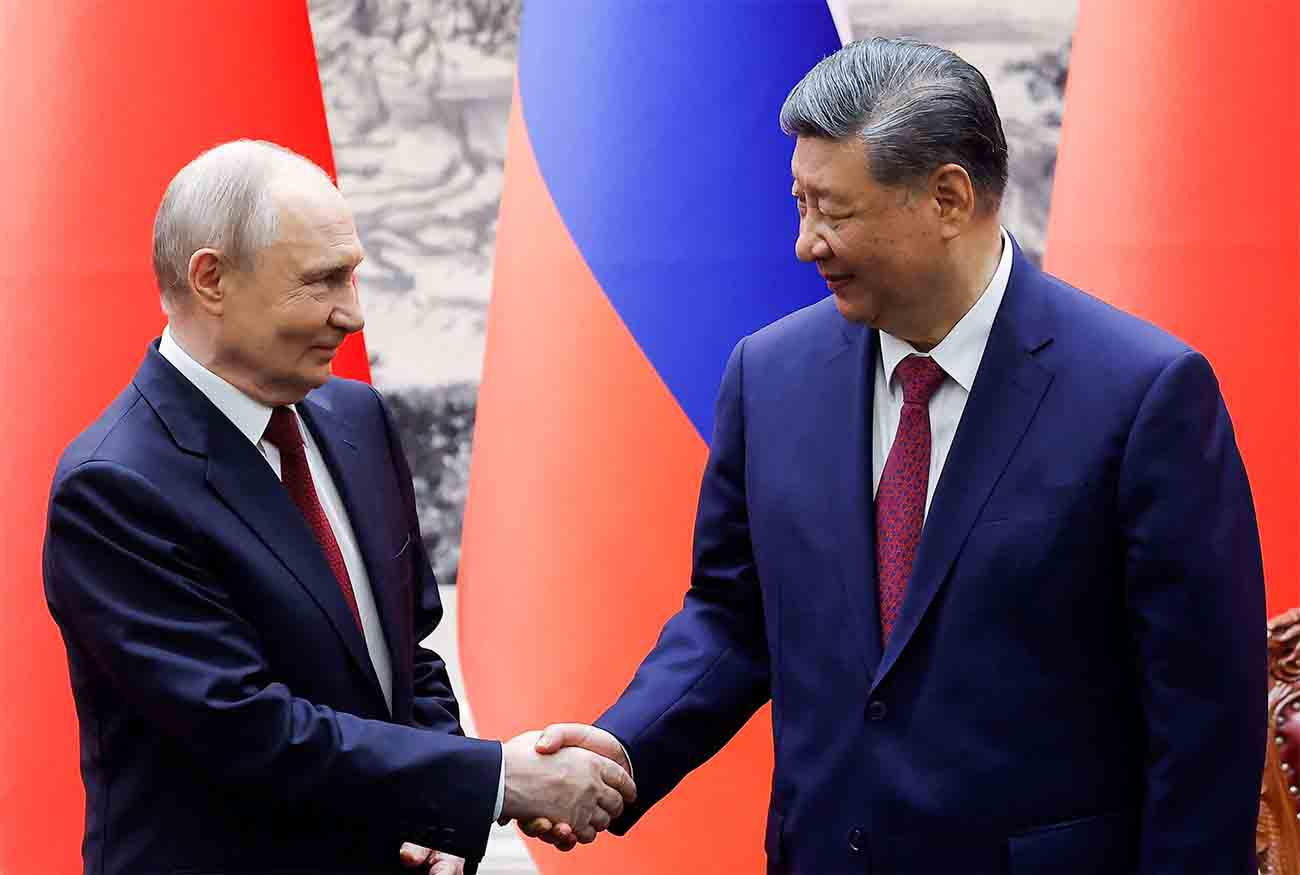
Recent events illustrate this shift clearly. Within days, Beijing hosted high-level engagement with both the United States and Russia, placing China at the centre of the world’s most important geopolitical triangle.
The symbolism was powerful. While Washington remains deeply involved in military crises from Eastern Europe to the Middle East, China increasingly presents itself as the actor speaking the language of stability, dialogue, and economic connectivity.
The Middle East has become one of the clearest examples of China’s diplomatic rise. Beijing’s mediation between Saudi Arabia and Iran in 2023 was not simply a regional breakthrough. It was a global message. China demonstrated that it could achieve something Washington had failed to accomplish for years: bringing two major rivals back to the negotiating table.
That agreement changed perceptions of Chinese diplomacy across the Arab world. Beijing was suddenly seen not only as an economic partner, but also as a political actor capable of influencing regional security.
Since the outbreak of the Iran war, China has accelerated this diplomatic positioning. Beijing repeatedly called for ceasefires, protection of energy routes, and political dialogue instead of military escalation.
Chinese diplomacy during the crisis was carefully calculated. Beijing avoided direct military involvement while maintaining communication with Iran, Gulf states, Russia, Europe, and the United States simultaneously. This ability to engage with all sides is becoming one of China’s strongest diplomatic advantages.
Unlike the United States, China rarely frames its foreign policy around ideology, democracy promotion, or military alliances. Instead, Beijing promotes principles such as sovereignty, non-interference, and economic development. For many countries in the Global South, this approach appears less confrontational and more pragmatic.
China’s message is simple: stability creates development, and development creates influence.
This strategy is particularly attractive to countries exhausted by wars, sanctions, and geopolitical polarization. Many states now view Beijing as a balancing force in an increasingly unstable world.
The expansion of BRICS is another sign of China’s growing diplomatic gravity. Originally an economic grouping, BRICS is increasingly becoming a political platform for countries seeking alternatives to Western-led institutions. China has used the organization to deepen ties with emerging powers and amplify the voice of the Global South.
At the same time, China’s Belt and Road Initiative has created a vast diplomatic network stretching across Asia, Africa, the Middle East, and Latin America. Infrastructure projects are no longer merely economic investments. Ports, railways, industrial zones, and digital networks have become instruments of political influence.
Many governments now calculate their foreign policy with China in mind because Beijing is deeply connected to their economic future.
Energy politics has also strengthened China’s diplomatic leverage. China is the largest buyer of Gulf energy exports and a major partner for Iran, Saudi Arabia, and other regional powers. During the recent tensions surrounding the Strait of Hormuz, Beijing emphasized the need to keep global energy routes open and pushed for de-escalation.
This gives China something extremely valuable in diplomacy: relevance to all sides.
Yet China’s rise as a diplomatic centre is not without contradictions. Beijing still avoids taking major security burdens comparable to those carried by the United States. It prefers mediation without military commitments. Critics argue that China benefits from global instability while avoiding the costs of managing it.
Others question whether China can truly become a global diplomatic leader while maintaining close ties with Russia and Iran. European governments, in particular, remain cautious about Beijing’s strategic intentions.
There is also a deeper structural challenge. Diplomatic influence ultimately depends on trust. While many countries welcome Chinese investment and mediation, they are still uncertain about a future international order dominated by Beijing.
Nevertheless, the global trend is becoming difficult to ignore.
The world is entering a period of fragmented power where no single country can dominate international politics alone. In this emerging multipolar system, China is positioning itself not necessarily as the replacement for the United States, but as the central node connecting competing powers, economies, and regions.
This is what makes Beijing increasingly resemble a gravitational centre. Countries with different ideologies, alliances, and conflicts are all being pulled into China’s diplomatic orbit because of trade, energy dependence, investment, technology, or geopolitical necessity.
In previous decades, global leaders travelled to Washington to seek legitimacy, security guarantees, or diplomatic breakthroughs. Today, many are increasingly making the same journey to Beijing.
That shift may become one of the defining geopolitical transformations of the twenty-first century.