

Economic partnership over political interference
Sharaa rules out role against Hezbollah as Syria puts borders talks on hold
Instead of focusing on contentious political issues, Damascus wants to prioritise economic cooperation and development initiatives with Beirut.
Sunday 14/06/2026
Economic partnership over political interference
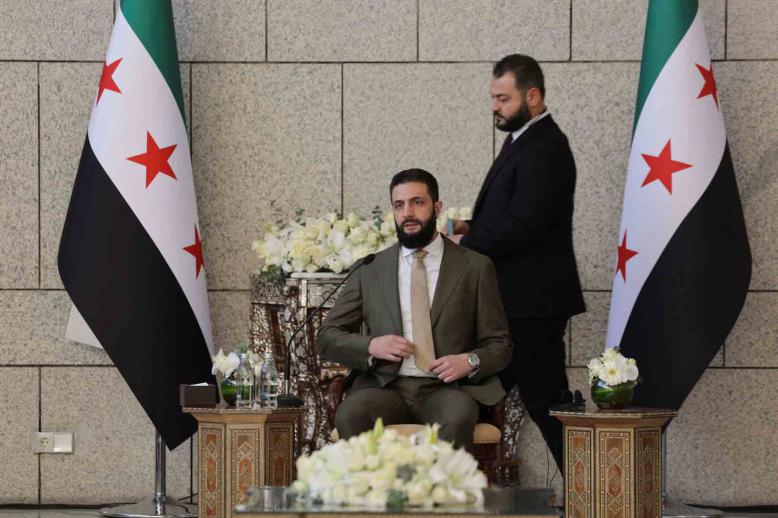
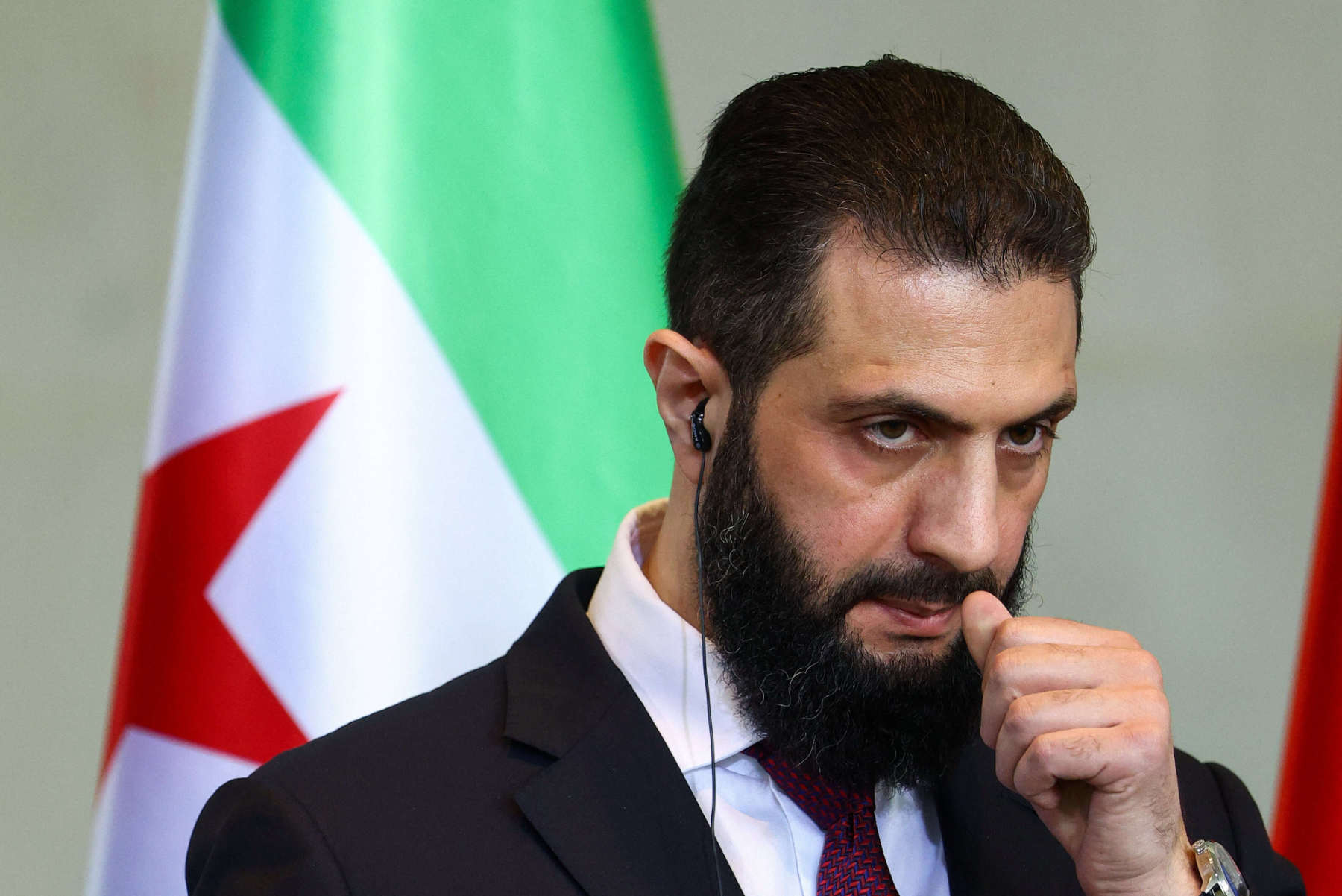
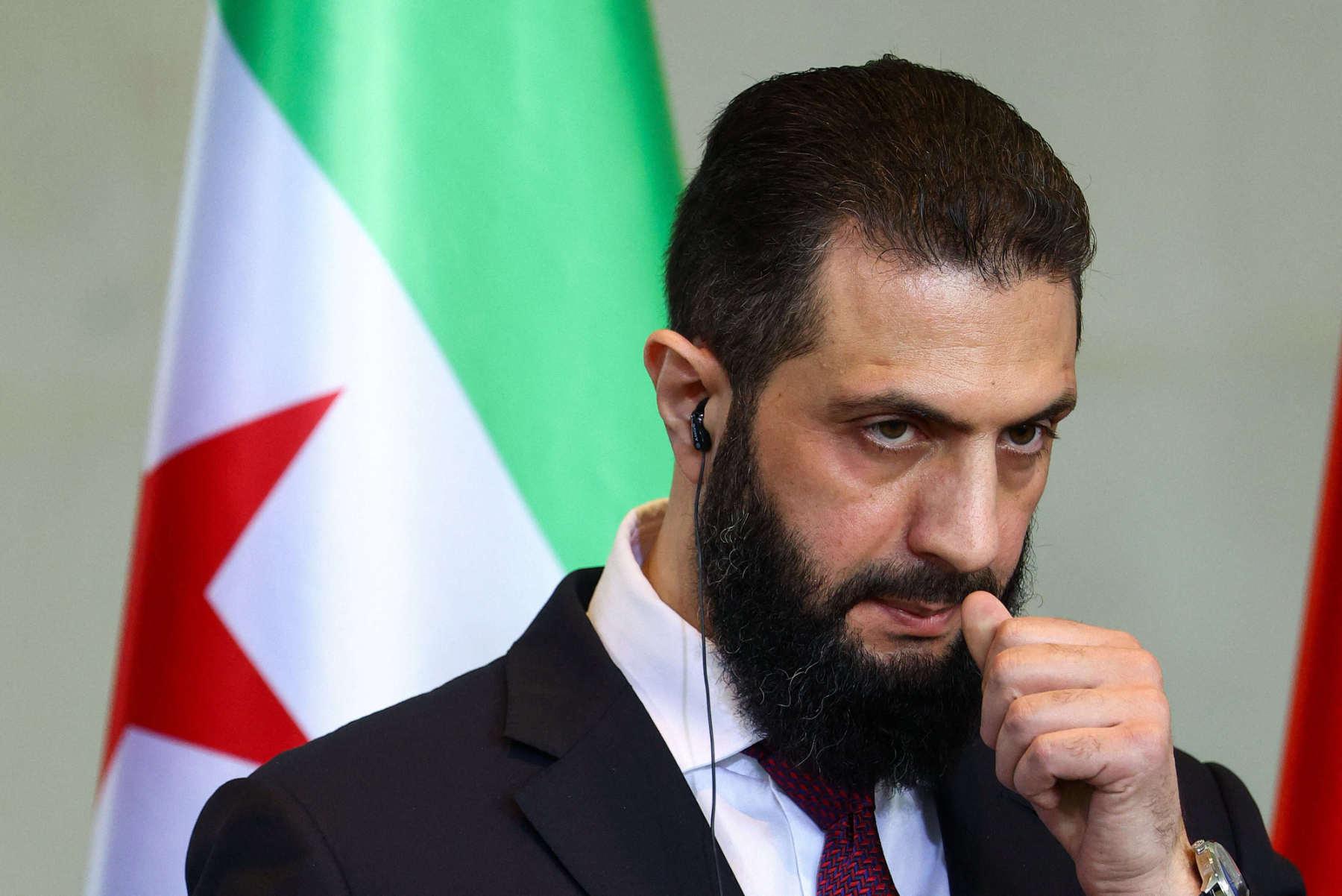
DAMASCUS – Syrian President Ahmed al-Sharaa firmly rejected on Saturday speculation that Damascus could intervene in Lebanon or play a military role against Hezbollah, while revealing that Syria and Lebanon have agreed to postpone detailed discussions on their long-disputed border and focus instead on economic cooperation, development and regional stability.
His remarks come amid reports that the United States has explored whether Syria's new leadership could help curb Hezbollah's influence in Lebanon as the Iran-backed group remains locked in conflict with Israel.
Speaking during a meeting with a delegation of tribal leaders and dignitaries from the Damascus countryside province, Sharaa said claims of Syrian involvement in Lebanon were unfounded.
"Some continue to spread rumours about Syrian intervention in Lebanon, but this is simply not true," he said in comments carried by Syria's state news agency SANA.
"We consistently call for an end to the war, the strengthening of state institutions, greater economic integration and efforts to calm the situation in Lebanon as much as possible."
Rejecting a return to past policies
The Syrian leader's comments appeared aimed at distancing Damascus from decades of interventionist policies that characterised relations under the Assad family, whose forces maintained a dominant presence in Lebanon until their withdrawal in 2005.
Diplomatic sources say the administration of US President Donald Trump has intensified contacts with Syria's new leadership since the outbreak of the Hezbollah-Israel war on March 2, seeking to assess whether Damascus could play a role in limiting Hezbollah's influence inside Lebanon.
Proposals reportedly focused on enhanced security coordination along the porous Syria-Lebanon border, long viewed as a key route for weapons smuggling and militant movement.
Trump fuelled speculation last week when he suggested Syria could potentially assist efforts against Hezbollah.
"I'd like to see a more surgical attack on Hezbollah," Trump told NBC News. "We can help them with that, or we can recommend Syria."
However, Syrian officials have repeatedly signalled that Damascus has no desire to become directly involved in Lebanon's internal conflicts.
Syrian Interior Ministry spokesman Noureddine al-Baba recently said Damascus stood alongside Lebanese President Joseph Aoun in preserving Lebanon's sovereignty and security, stressing that any Syrian role would require full coordination with Beirut.
Border delimitation put on hold
Addressing the sensitive issue of border demarcation, Sharaa acknowledged that the matter remains unresolved nearly eight decades after Lebanon's independence.
"The demarcation of the Syrian-Lebanese border has remained an outstanding issue since 1946 and is an extremely complex file," he said.
While Lebanese officials have repeatedly raised the matter, Damascus believes other priorities should take precedence.
"There are more urgent issues in the relationship between the two countries that need to be addressed first," he said.
Sharaa argued that both countries are still dealing with the legacy of a troubled relationship.
"The Syrian-Lebanese relationship was built during previous periods on unhealthy foundations. There is a Lebanese wound resulting from Syrian intervention in Lebanon, and there is a Syrian wound resulting from Hezbollah's intervention in Syria."
"For that reason, we believe it is better to postpone detailed discussions on border demarcation at this stage."
Shebaa farms remain a major obstacle
The Syrian president highlighted the disputed Shebaa Farms area as one of the most contentious aspects of the border issue.
Part of the territory remains under Israeli occupation, while Syria and Lebanon continue to disagree over its legal status.
"It makes little sense to open this debate now before the territory is even liberated from occupation," Sharaa said. "Only then can its ownership be discussed calmly."
He also pointed to numerous practical difficulties, including villages and communities that straddle the frontier.
"There are many objective problems in the Syrian-Lebanese border file. Opening it now could trigger new disputes between the two countries at a time when we need de-escalation, not additional sources of tension."
Economic cooperation takes priority
Instead of focusing on contentious political issues, Damascus wants to prioritise economic cooperation and development initiatives with Beirut.
"The priority today is for Lebanon to benefit from the new reality in Syria in ways that strengthen stability, improve economic connectivity, support development and contribute to reforms where Syria can provide important services and facilities," Sharaa said.
His comments reflect a broader effort by Syria's post-Assad leadership to reposition the country as a regional economic partner rather than a political power broker.
Sharaa added that he saw little prospect of a near-term resolution to border disputes.
"This issue requires broader explanations, greater detail and calmer circumstances than those that currently exist."
Refugee burden and regional pressures
The Syrian leader also pointed to the continued presence of more than 1.4 million displaced Syrians in Lebanon as a major challenge.
"We have more than 1.4 million Syrian refugees in Lebanon, a country whose population does not exceed around four million people. That in itself represents a major problem for which there is still no clear solution," he said.
Lebanon is currently grappling with mounting pressures from the ongoing conflict between Hezbollah and Israel, while attempting to advance US-backed negotiations aimed at ending hostilities along the border.
President Joseph Aoun has expressed confidence in Sharaa's approach, reportedly viewing the Syrian leader as fully aware of Lebanon's political and sectarian sensitivities and unlikely to become entangled in what Lebanese officials often describe as the country's political "quagmire".
The Syria-Lebanon border dispute dates back to the French Mandate period following the First World War, when colonial authorities drew the boundaries separating the newly created State of Greater Lebanon from Syria.
Although those borders were largely retained after Lebanese independence in the 1940s, numerous sections remain disputed or poorly defined.
Beyond Shebaa Farms, disagreements persist over several frontier areas in eastern Lebanon, particularly around the Baalbek-Hermel region, while maritime boundaries remain undemarcated, complicating potential offshore oil and gas exploration.
Syria and Lebanon established a joint border commission in 2008, but progress stalled amid political tensions and the outbreak of the Syrian civil war in 2011.
Following the collapse of Bashar al-Assad's government in December 2024 and the emergence of a new administration in Damascus, the issue has returned to the diplomatic agenda. However, Sharaa's latest remarks suggest that both governments currently see economic cooperation and regional stability as more pressing priorities than resolving one of the Levant's oldest territorial disputes.