

Half pay, full pressure
Financial pressures push Palestinian Authority closer to the edge
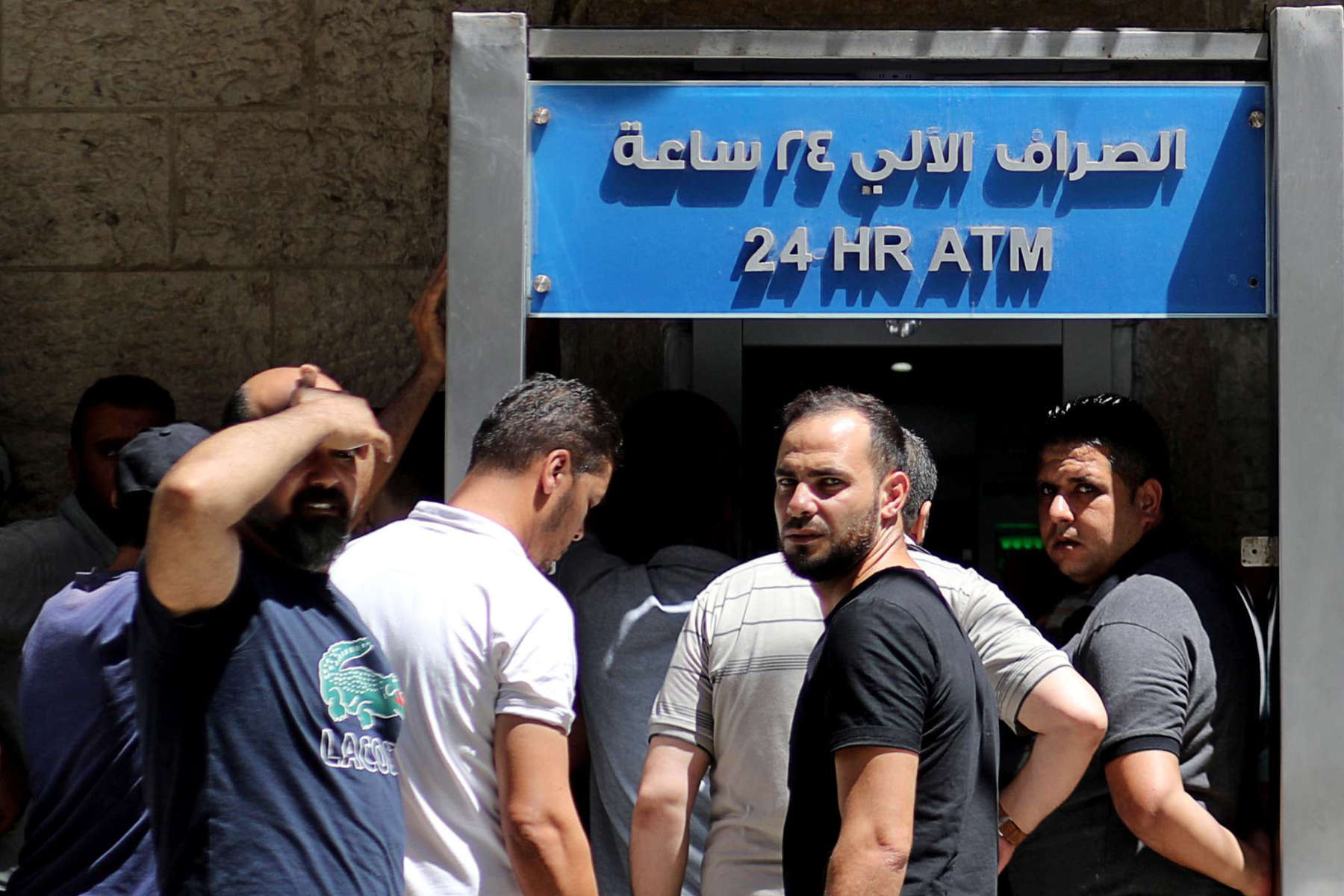
Months into the crisis, the Palestinian government is still paying only partial salaries to public sector workers in an effort to preserve a minimum level of financial stability.
Thursday 18/06/2026
Half pay, full pressure
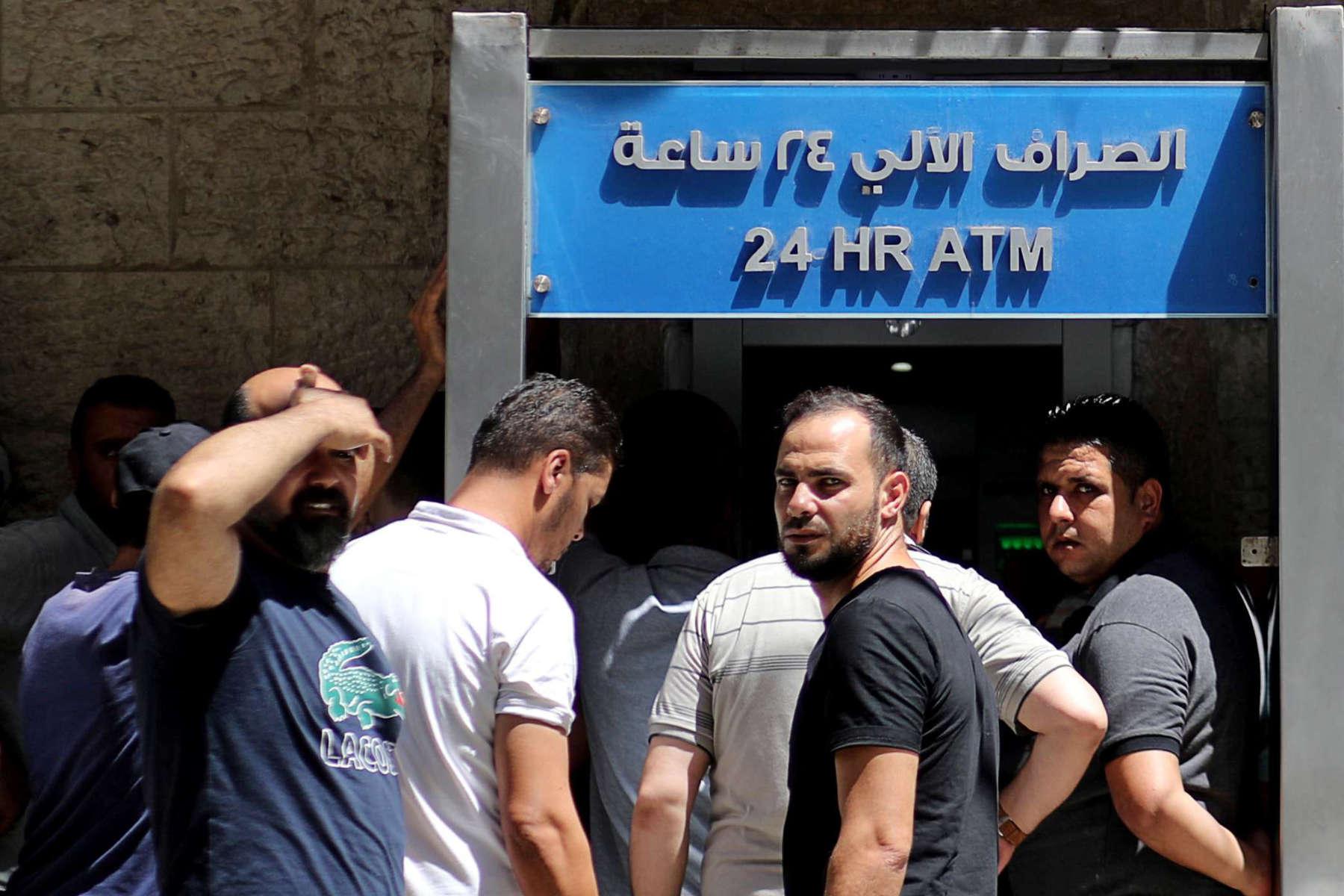
RAMALLAH, West Bank – The Palestinian Authority is facing one of the most severe financial crises in its history as Israel continues to withhold and deduct large portions of Palestinian tax revenues, leaving the government struggling to pay salaries, maintain services and avert a wider economic collapse.
Months into the crisis, the Palestinian government is still paying only partial salaries to public sector workers in an effort to preserve a minimum level of financial stability. But economists warn that the strategy is becoming increasingly difficult to sustain as revenue sources shrink and alternative financing options run out.
At the centre of the crisis are so-called clearance revenues, customs duties and taxes collected by Israel on behalf of the Palestinian Authority under the 1994 Paris Protocol and transferred monthly to the Palestinian Ministry of Finance.
These revenues account for around 56 percent of total Palestinian public income, making them the backbone of government finances. Any interruption or deduction therefore has an immediate impact on the government's ability to pay salaries, fund public services and meet obligations to businesses and banks.
Israel began deducting portions of the funds in 2019, citing various reasons, and has since suspended transfers of significant amounts, creating a severe budget shortfall that has left the Palestinian Authority unable to pay full wages to its employees.
'The question is no longer why the crisis exists'
Economist Nasr Abdel Karim said the debate has shifted from the causes of the crisis to whether the Palestinian Authority can continue managing it.
"The question today is no longer why the crisis exists or what its consequences are. The real question is whether the Palestinian Authority can continue coping with it as its financial options become increasingly limited," he said.
According to Abdel Karim, the government has already exhausted most of the tools it previously relied upon to weather financial shocks, including borrowing from banks, postponing payments owed to the private sector and accumulating arrears.
"The continued withholding of clearance revenues places the Palestinian Authority in a genuine dilemma," he said. "Can any government in the world continue for a prolonged period paying half salaries while its financial options erode day after day?"
He argued that the crisis now extends far beyond public sector wages, particularly as tens of thousands of Palestinian workers have lost jobs inside Israel and the West Bank economy has entered a period of commercial slowdown and contraction.
"The government is facing a reality in which revenues are shrinking while obligations continue to rise," he said. "At the same time, the local economy is losing its ability to generate additional resources that could absorb the shock."
Abdel Karim said a meaningful solution would be difficult without either the release of withheld revenues or significant international support.
"If the international community is serious about preserving the two-state solution and supporting Palestinian institutions, it must assume greater responsibility," he said.
He called for either the release of Palestinian funds held by Israel or the creation of an Arab and international financial safety net to prevent the crisis from escalating into a broader social and economic emergency.
Aid offers temporary relief
The Palestinian Authority has repeatedly appealed for the activation of an Arab financial safety net approved in 2010, under which Arab states pledged $100 million per month to support the Palestinian government during periods of financial distress. That mechanism has never been fully implemented.
Economist Ayham Abu Ghosh said the government remains capable of paying partial salaries in the near term, thanks to available domestic revenues and recently announced international assistance.
He cited a €210 million ($240 million) European Union grant spread over several months, support from the World Bank and expectations of additional pledges from an upcoming donor conference.
However, he stressed that such funding only buys time rather than addressing the root causes of the crisis.
"These resources provide an additional margin for the government to continue operating under current conditions, but they do not solve the structural problem," he said.
Twin pillars of the economy weakened
Abu Ghosh said the Palestinian economy has historically relied on two key drivers: government spending and the income earned by Palestinian workers employed inside Israel.
Annual government expenditure typically ranges between 18 billion and 19 billion shekels ($6.1 billion-$6.5 billion), covering salaries, social assistance and operating expenses. That spending accounts for roughly one-third of Palestinian economic activity.
Any reduction therefore reverberates throughout the economy, affecting markets, businesses and consumer spending.
The second pillar has been Palestinian labour inside Israel, which before the Gaza war generated between $5.1 billion and $5.8 billion annually for the Palestinian economy.
Those flows have fallen sharply since Israel drastically reduced work permits following the outbreak of war in Gaza in October 2023.
"Only around 30,000 to 40,000 Palestinian workers remain employed inside Israel today, compared with significantly higher numbers before the war," Abu Ghosh said.
The loss of those two major sources of liquidity has weakened economic activity across the occupied West Bank, contributing to deeper contraction, higher unemployment and rising poverty.
According to a recent report by the World Bank, unemployment in the West Bank has climbed above 27 percent, while around 18 percent of the population now lives in poverty.
Risks for banks and businesses
The consequences of the crisis extend well beyond public employees.
Contractors, pharmaceutical suppliers, service providers and other companies linked directly or indirectly to government spending are also under mounting pressure.
Abu Ghosh warned that a prolonged financial crisis could eventually affect the Palestinian banking sector because of its significant exposure to the government and related borrowers.
Palestinian banks have extended around $12 billion in credit facilities, he said. Of that total, approximately $3.5 billion is linked directly to the Palestinian Authority, around $2 billion to public sector employees and another $1.5 billion to companies that conduct business with the government.
"That means nearly $7 billion of banking exposure is directly or indirectly connected to the government," he said.
Any prolonged deterioration could constrain banks' ability to extend new credit to private businesses, weighing further on investment, economic growth and job creation.
Limited room for manoeuvre
Economists say the Palestinian Authority has already deployed most of the domestic measures available to it, including bank borrowing, financial settlements with utility providers and the use of local financing mechanisms.
As a result, future developments are likely to depend on two factors: whether Israel resumes full transfers of clearance revenues and whether international donors step in with substantial financial support.
At the same time, analysts stress the importance of accelerating financial and administrative reforms within Palestinian institutions, including tighter expenditure controls and restructuring spending to match available revenues.
With no clear sign of an imminent breakthrough in the clearance revenue dispute, the Palestinian Authority faces a mounting challenge that increasingly extends beyond monthly salaries to the future stability of the Palestinian economy itself.
Observers warn that unless urgent political and financial solutions emerge, pressure on government institutions, the private sector and the banking system will continue to intensify, driving up poverty and unemployment and threatening broader economic and social stability across the Palestinian territories.