
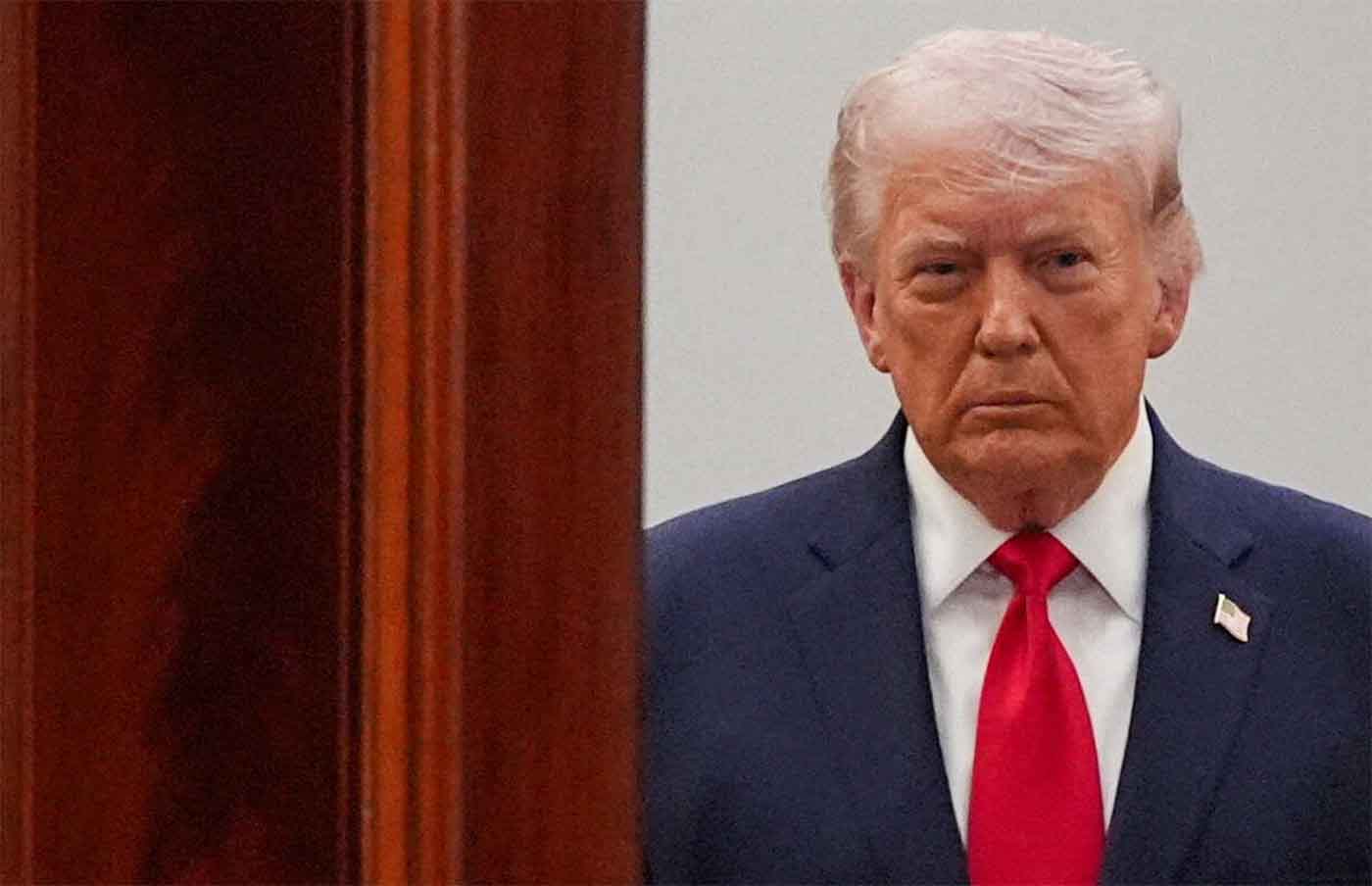
US President Donald Trump
Trump and the aestheticization of fear
Trump’s genius—if that is the word—is his intuitive understanding that contemporary media culture rewards spectacle over substance. He understands that outrage generates engagement, that provocation dominates news cycles, and that symbolic gestures often matter more politically than concrete achievements.
Thursday 18/06/2026
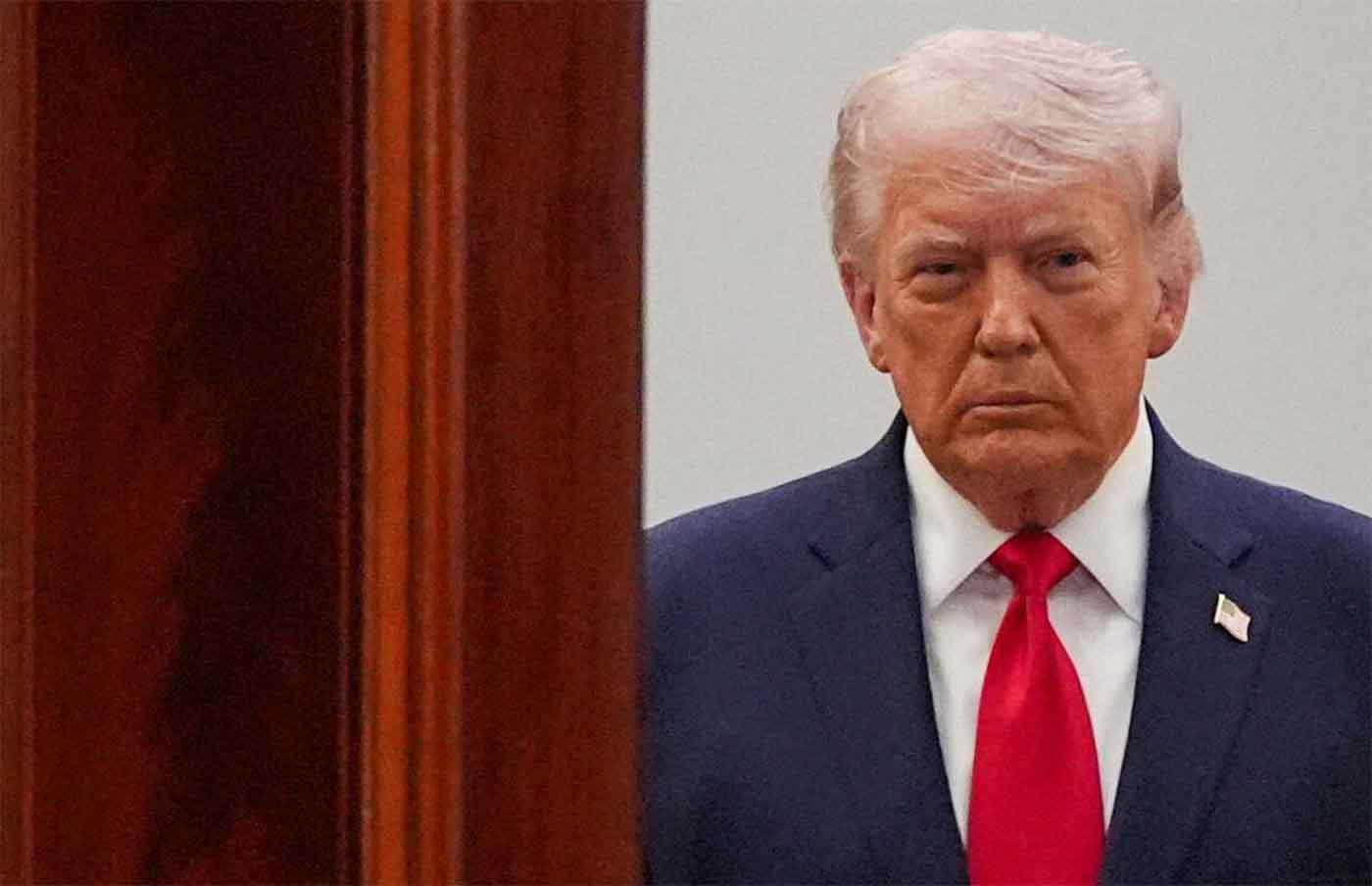
US President Donald Trump
In 2016, during the first Trump campaign, I wrote an article asking whether American democracy could survive the reduction of politics to entertainment. At the time, the question seemed exaggerated to some readers. Politics had always contained theatrical elements. Presidents cultivated images. Campaigns relied on slogans and symbolism. The boundary between politics and spectacle was hardly new.
Yet something different appeared to be emerging. Entertainment was no longer merely a tool of politics. Politics itself was becoming a branch of entertainment. A decade later, the consequences are increasingly difficult to ignore.
Recently, Donald Trump referred to immigrants using imagery drawn from science fiction, playing upon the double meaning of the word “alien.” The term has a legal meaning, of course. But Trump's rhetoric deliberately invokes a second image as well: the extraterrestrial invader, the creature from another world, the threatening presence familiar from countless films, television shows, and conspiracy theories.
The reference is revealing. It is tempting to dismiss such language as merely another example of political hyperbole. That would be a mistake. What makes the rhetoric disturbing is not simply its hostility toward immigrants. It is the way it transforms political reality into a form of entertainment.
Immigrants cease to appear as human beings with histories, families, aspirations, and vulnerabilities. They become characters in a spectacle. The border becomes a movie plot. Political judgment gives way to narrative identification. Citizens are invited not to deliberate but to consume. The language is grotesque precisely because it collapses the distinction between governing and performing.
More than eighty years ago, Walter Benjamin recognized the danger. In his influential essay, “The Work of Art in the Age of Mechanical Reproduction,” Benjamin argued that fascism aestheticizes politics. Rather than enabling genuine democratic participation, fascist movements transform politics into a spectacle. Social conflicts become dramas. Economic contradictions become myths. Citizens become spectators. Politics ceases to be something people do together. It becomes something they watch.
Benjamin's insight has acquired renewed relevance in the age of social media, reality television, and algorithmic attention. The modern political leader increasingly resembles a content creator. Success depends less upon governing than upon maintaining visibility. Attention becomes more important than truth. Emotional engagement becomes more important than judgment. The result is a politics of permanent performance.
Trump did not invent this condition. He merely mastered it. The deeper problem is that contemporary ideology no longer requires belief. As Žižek has repeatedly argued, modern power often functions through cynical participation rather than genuine conviction. People do not need to believe that immigrants are literally invaders from another world. They need only enjoy the fantasy. The spectacle works even when everyone knows it is a spectacle. Indeed, its effectiveness may depend precisely upon that fact. Politics becomes a game in which reality matters less than the pleasure of performance, outrage, and identification.
The deeper danger is not misinformation but derecognition. Democratic life depends upon the capacity to encounter others as participants in a shared world. Spectacle interrupts that encounter. The immigrant no longer appears as a person but as an image. The neighbor becomes a symbol. Recognition gives way to projection. Once human beings are transformed into aesthetic objects, cruelty becomes easier because the relation between self and other has already been broken.
Trump’s genius—if that is the word—is his intuitive understanding that contemporary media culture rewards spectacle over substance. He understands that outrage generates engagement, that provocation dominates news cycles, and that symbolic gestures often matter more politically than concrete achievements. The immigrant as "alien" is effective for the same reason a Hollywood villain is effective. The image is immediate. It bypasses reflection. It operates directly on fear.
Fear is uniquely suited to aestheticization because it thrives on images rather than arguments. One does not reason oneself into panic. Fear abolishes complexity. It transforms social problems into visible enemies. It offers emotional certainty where political reality presents ambiguity. The attraction of fear lies partly in its promise of clarity. A world of economic dislocation, demographic change, and political uncertainty becomes easier to navigate when these anxieties can be projected onto a recognizable figure: the outsider, the invader, the alien. Fear is aesthetically powerful because it transforms ambiguity into imagery.
The threatening outsider, the invader, the contaminant, the alien—these figures operate less as political concepts than as emotional triggers. Their power lies precisely in their ability to transform uncertainty into a vivid and compelling narrative. Fear becomes enjoyable. Anxiety becomes entertainment. Trump's rhetoric works because it exploits a reservoir of images already accumulated by popular culture. Decades of films, television series, and conspiracy narratives have prepared audiences to associate the alien with invasion, infiltration, replacement, and existential threat. Politics no longer needs to invent new fears. It can recycle images already circulating within entertainment culture.
Contemporary forms of domination often operate through entertainment itself. Citizens are not necessarily commanded. They are distracted. They are not always censored. They are overwhelmed. Politics becomes another stream of consumable content. Žižek's deeper insight is that ideological fear rarely attaches itself to its true object. Social anxieties generated by economic insecurity, cultural dislocation, political distrust, or technological change are difficult to represent directly. They are diffuse, abstract, and often resistant to clear explanation.
Ideology resolves this problem by concentrating those anxieties upon a visible figure. The immigrant, the outsider, the alien becomes a kind of screen onto which broader uncertainties are projected. What makes such figures politically effective is not that they explain social problems but that they make them appear intelligible. Complexity is condensed into an image. The object of fear acquires a significance far exceeding anything it actually possesses because it has become the symbolic bearer of anxieties that originate elsewhere.
The result is not active citizenship but passive spectatorship. In this respect, Trump's rhetoric should not be understood as a break from contemporary media culture. It is its logical culmination. The significance of Trump's rhetoric is not that it represents the opposite of liberal society. It emerges from tendencies already present within it. A culture organized around consumption, branding, entertainment, and attention inevitably rewards those most skilled at transforming politics into spectacle.
The immigrant becomes an alien. The political opponent becomes a villain. The election becomes a season finale. Government becomes content. The distinction between reality and representation steadily erodes. One need not exaggerate the comparison to recognize its dangers. Fascism has historically depended upon dehumanization. Human beings become symbols. Neighbors become threats. Complex social realities are reduced to emotionally charged images that eliminate the need for thought.
The immigrant is no longer a worker, a parent, a refugee, or a person seeking opportunity. He becomes an invader. A contaminant. An alien. The rhetorical move is ancient. What is new is the medium through which it operates. The twentieth century witnessed the rise of mass propaganda. The twenty-first century has witnessed the rise of algorithmic spectacle. The old political rally has been supplemented by viral clips, memes, social-media feeds, and endless cycles of outrage. Politics increasingly resembles an entertainment ecosystem whose primary purpose is to maintain attention.
This is why Trump's science-fiction rhetoric matters. The issue is not that a politician made a tasteless joke. The issue is that political discourse itself increasingly speaks in the language of entertainment. When citizens become audiences, democracy begins to weaken. When governing becomes performance, accountability becomes difficult. When human beings become characters in a spectacle, cruelty becomes easier. And when politics becomes television, television eventually becomes politics.
The danger confronting American democracy today is not merely authoritarianism in its traditional form. It is the fusion of politics and entertainment into a single cultural apparatus in which attention replaces judgment and spectacle replaces reality.
Benjamin saw the danger in the age of radio and film. We are living through its digital sequel. Benjamin feared a society in which politics would become artifice, spectacle, and myth. What he could not have foreseen was a culture in which the distinction between politics and entertainment would disappear almost entirely. The danger is no longer simply that citizens are manipulated. It is that they increasingly experience manipulation as entertainment. Democracy cannot survive indefinitely when its citizens cease to act as participants in a common world and come to understand themselves primarily as fans, consumers, and spectators.
The first casualty of spectacle is not truth. It is the ability to recognize another human being.
Sam Ben-Meir teaches philosophy at the City University of New York, College of Technology. He is the author of Ethical Interanimality: Toward a Relational Philosophy of Nature (Westphalia Press, 2026).