

Ancient stones, timeless influence
Syrian landmark reveals forgotten roots of Gothic architecture
Despite differences over the precise chronology, scholars agree on one point: Qalb Lozeh represents one of the high points of early Syrian architecture.
Friday 19/06/2026
Ancient stones, timeless influence
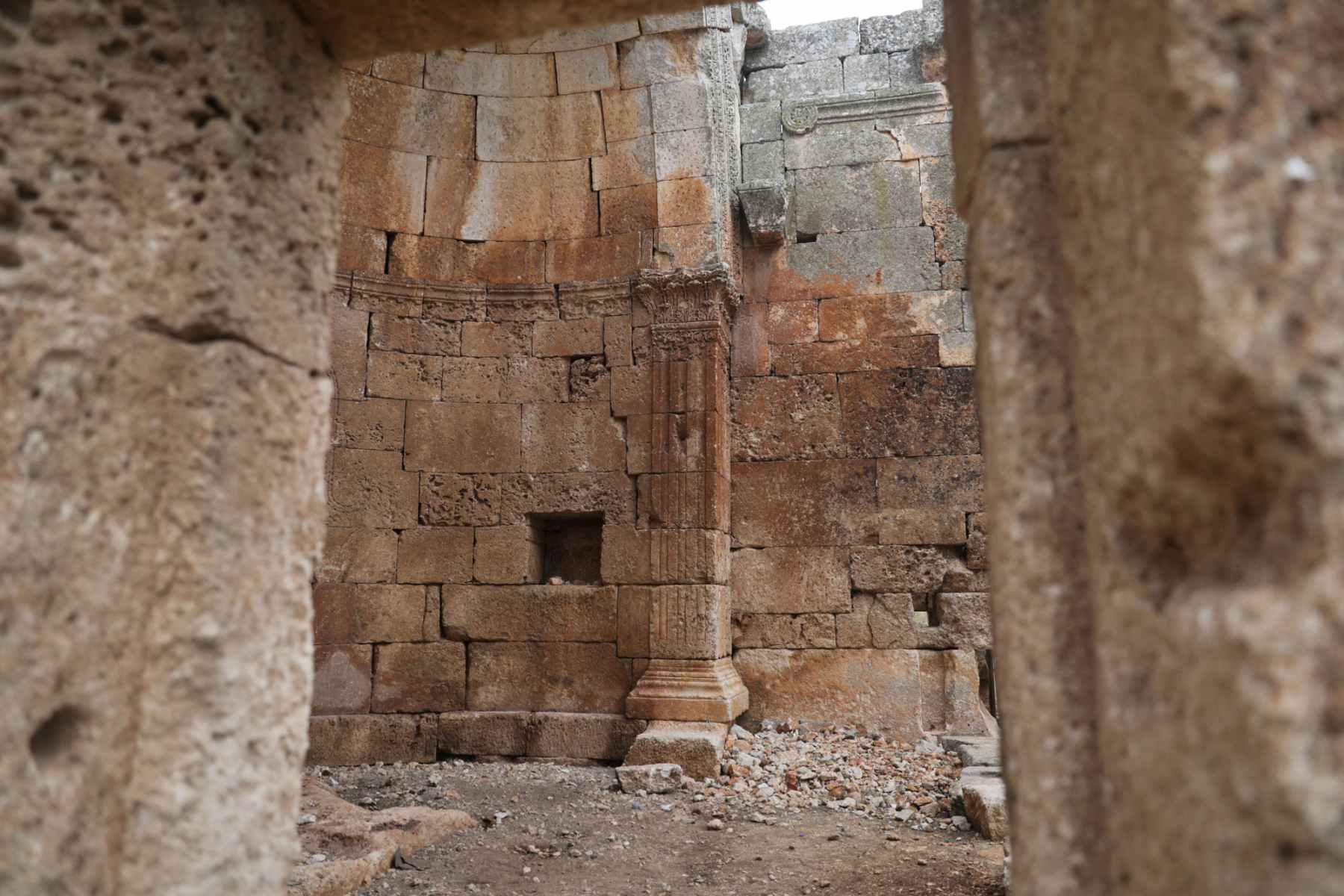
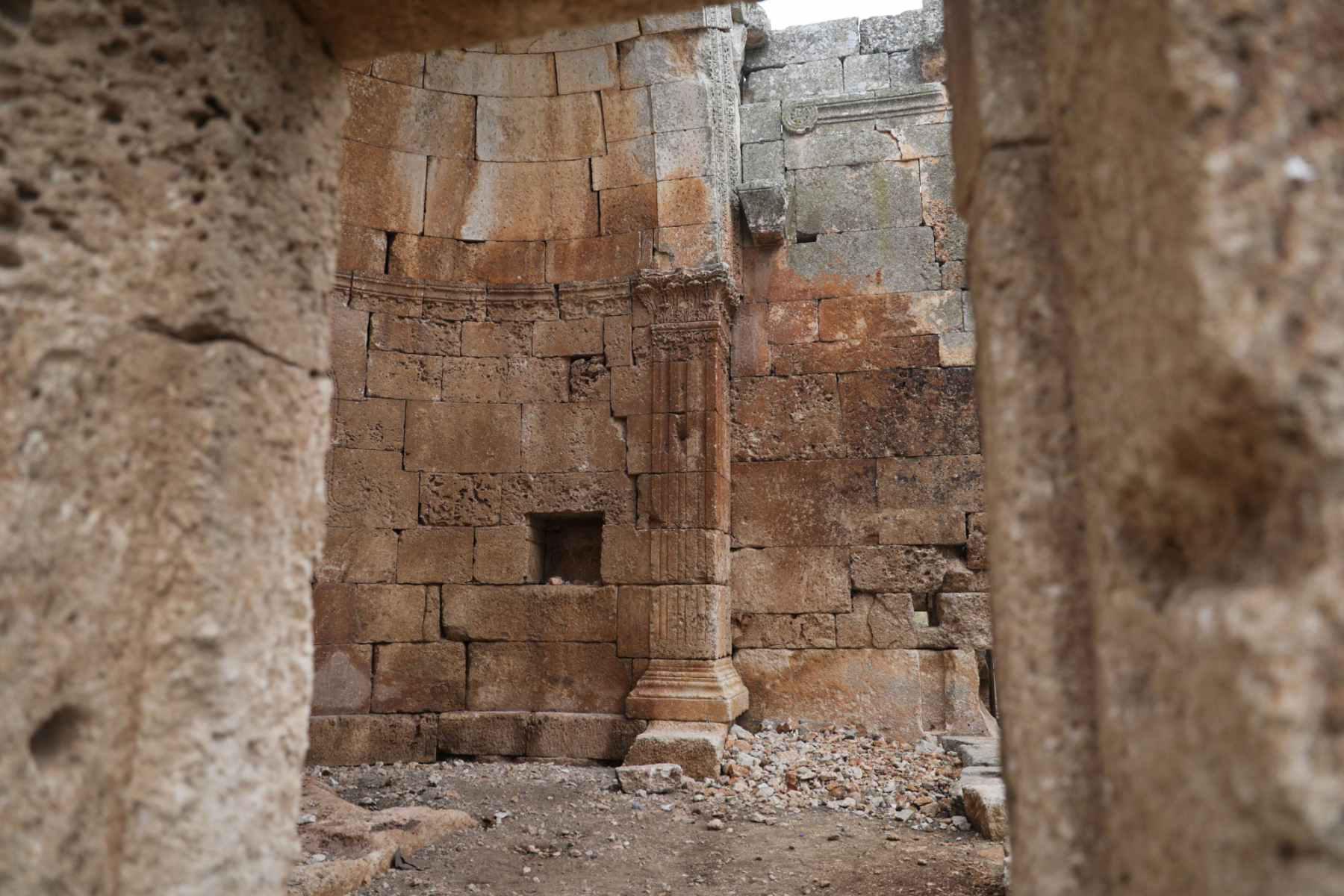
IDLIB, Syria – Perched on a hillside overlooking the rugged landscapes of north-western Idlib, the Church of Qalb Lozeh rises from the limestone plateau like a monument frozen in time. More than 1,500 years after it was built, the Byzantine-era church remains one of Syria’s most remarkable architectural treasures, a masterpiece that not only survived the centuries but may also have helped shape the design of Europe’s most celebrated cathedrals.
In its imposing silence, Qalb Lozeh tells the story of a civilisation that transformed stone into a language of faith, beauty and engineering ingenuity. Situated in what is now one of Syria’s most famous “Dead Cities”, the church stands as a reminder of a period when northern Syria was a thriving centre of agriculture, trade and culture during the late Roman and Byzantine eras.
Since being inscribed on the UNESCO World Heritage List in 2011 as part of the Ancient Villages of Northern Syria, Qalb Lozeh has become a symbol of the region’s forgotten prosperity. The surrounding settlements, scattered across vast limestone plateaus, reveal a highly organised society that flourished more than fifteen centuries ago, leaving behind an extraordinary concentration of churches, homes, olive presses and public buildings.
Archaeologists generally date the church to the second half of the fifth century, a period marked by an unprecedented wave of church construction across northern Syria. American archaeologist Howard Crosby Butler estimated that it was built around 480 AD, while French scholar Georges Tchalenko argued for a slightly later date in the closing years of the century.
Despite differences over the precise chronology, scholars agree on one point: Qalb Lozeh represents one of the high points of early Syrian architecture.
Its builders moved beyond conventional construction techniques to create a structure distinguished by bold geometry, balance and sophistication.
The church served not only as a place of worship but also as the heart of a bustling religious community. Historians believe the village became an important stop for pilgrims travelling through the region, helping explain the scale of the building and the supporting infrastructure discovered nearby. Archaeological evidence points to the presence of service buildings, stone presses and accommodation for visitors, reflecting both the religious and economic vitality of the settlement.
The genius of the design is immediately evident.
Constructed in the basilica style, the church measures roughly 25 metres in length and 15 metres in width and is divided into three aisles. Rather than relying on traditional columns, its builders used massive stone piers supporting broad arches, creating a sense of strength, openness and visual harmony that was unusual for its time.
The southern façade is regarded as the church’s most striking feature. Adorned with elaborate stone carvings, nine windows and three entrances, it centres on a grand portal decorated with symbols associated with the Archangels Michael and Gabriel, blending artistic expression with religious symbolism.
At the western entrance stands an imposing porch flanked by two towers rising three storeys high. The symmetrical façade creates a powerful visual impact and was designed to accommodate large numbers of worshippers and pilgrims.
It is this twin-tower arrangement that has fuelled one of the most fascinating debates in architectural history.
A growing number of historians argue that Qalb Lozeh served as an early model for elements later associated with Romanesque and Gothic architecture in Europe.
British architectural historian Diana Darke has described the church as the earliest known example of a façade featuring twin towers separated by a central arched entrance, a design that would later become a defining feature of many European cathedrals.
Following the devastating fire at Paris’s Notre-Dame Cathedral in 2019, Darke renewed interest in the Syrian church by highlighting striking similarities between Qalb Lozeh and the famous French landmark.
“Notre-Dame's architectural design, like all Gothic cathedrals in Europe, comes directly from Syria's Qalb Lozeh church,” she argued, pointing to the twin towers and other design elements that appeared centuries before Gothic architecture emerged in France.
Darke believes merchants, monks and pilgrims travelling between Syria and Europe carried these architectural ideas westward long before the Crusades.
“Nothing develops in a vacuum,” she has noted. “Everything builds on earlier steps and evolves differently in different environments.”
Syrian historian Fayez Qawsara shares a similar view. He argues that European visitors to Syria during the 11th and 12th centuries were deeply impressed by Qalb Lozeh’s balanced proportions and towered façade and helped transmit its architectural language to Europe.
“The architectural beauty of Qalb Lozeh surpasses that of many other churches in the region,” Qawsara says. “Anyone who studies the history of Gothic church architecture will find traces of Syrian influence. The greatest proof of that is Notre-Dame.”
French historian Eugene-Melchior De Vogue, who visited the site in 1862, was equally captivated. In his landmark study “Central Syria: Civil and Religious Architecture from the First to the Seventh Century,” he described Qalb Lozeh as one of the most magnificent churches he had encountered in the East.
The church’s significance extends beyond its influence on Europe. It is also a testament to the ingenuity of Syrian builders, who worked with locally available limestone and decorated the structure with carvings inspired by nature, including vine branches and foliage that symbolised life and fertility in ancient Syrian art.
These intricate details soften the monument’s imposing stone surfaces, turning it into a vast sculptural work where strength and elegance coexist.
The origins of the church’s name are also rooted in local history. While the village is today known as Qalb Lozeh, or “Heart of the Almond”, some researchers believe the name may derive from an older linguistic root associated with refuge or shelter, reflecting the role the site may once have played as a haven during periods of instability.
Whatever the origins of its name, the church remains one of the crown jewels of Syria’s ancient villages, settlements abandoned centuries ago yet preserved as extraordinary snapshots of a vanished world.
Within its weathered stones lies the memory of a society that mastered urban planning, religious architecture and agricultural production long before much of medieval Europe emerged.
Despite wars, political upheaval and the passage of centuries, Qalb Lozeh still stands defiantly against the skyline of northern Syria.
Each arch, tower and carved stone bears witness to the creativity of the people who built it. And in its enduring silhouette, the church continues to tell a story that reaches far beyond Syria’s borders, a story of how ideas carved into limestone on a remote Syrian hillside may have helped shape the architectural heritage of the wider world.