

Seeking solutions where conflicts intersect
Four nations rally in Cairo as Gaza, Iran and Sudan test regional stability
Discussions focused on Gaza, Sudan, Libya, the Iranian file and developments across the Horn of Africa, with participants stressing the need for continued consultation.
Monday 22/06/2026
Seeking solutions where conflicts intersect
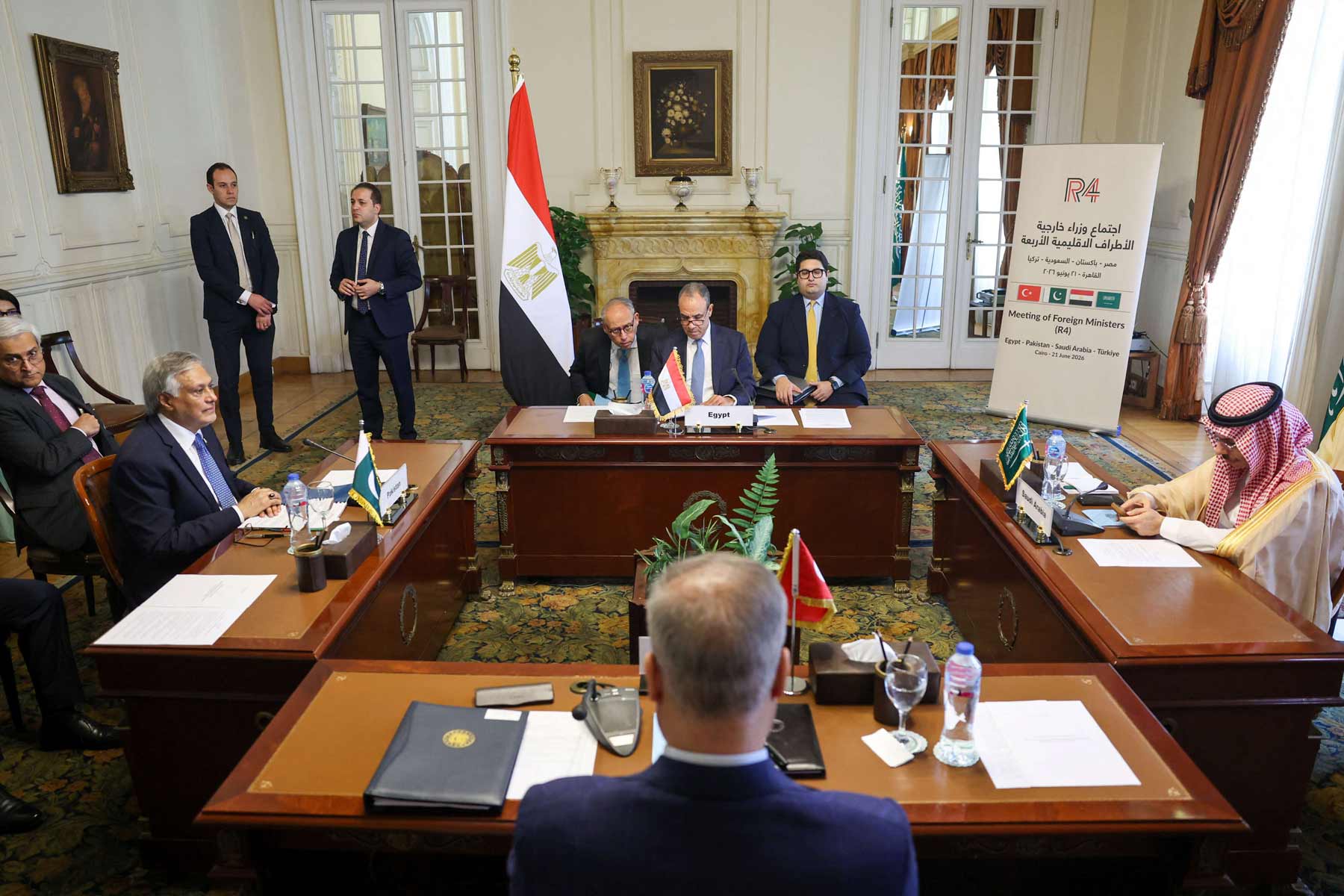
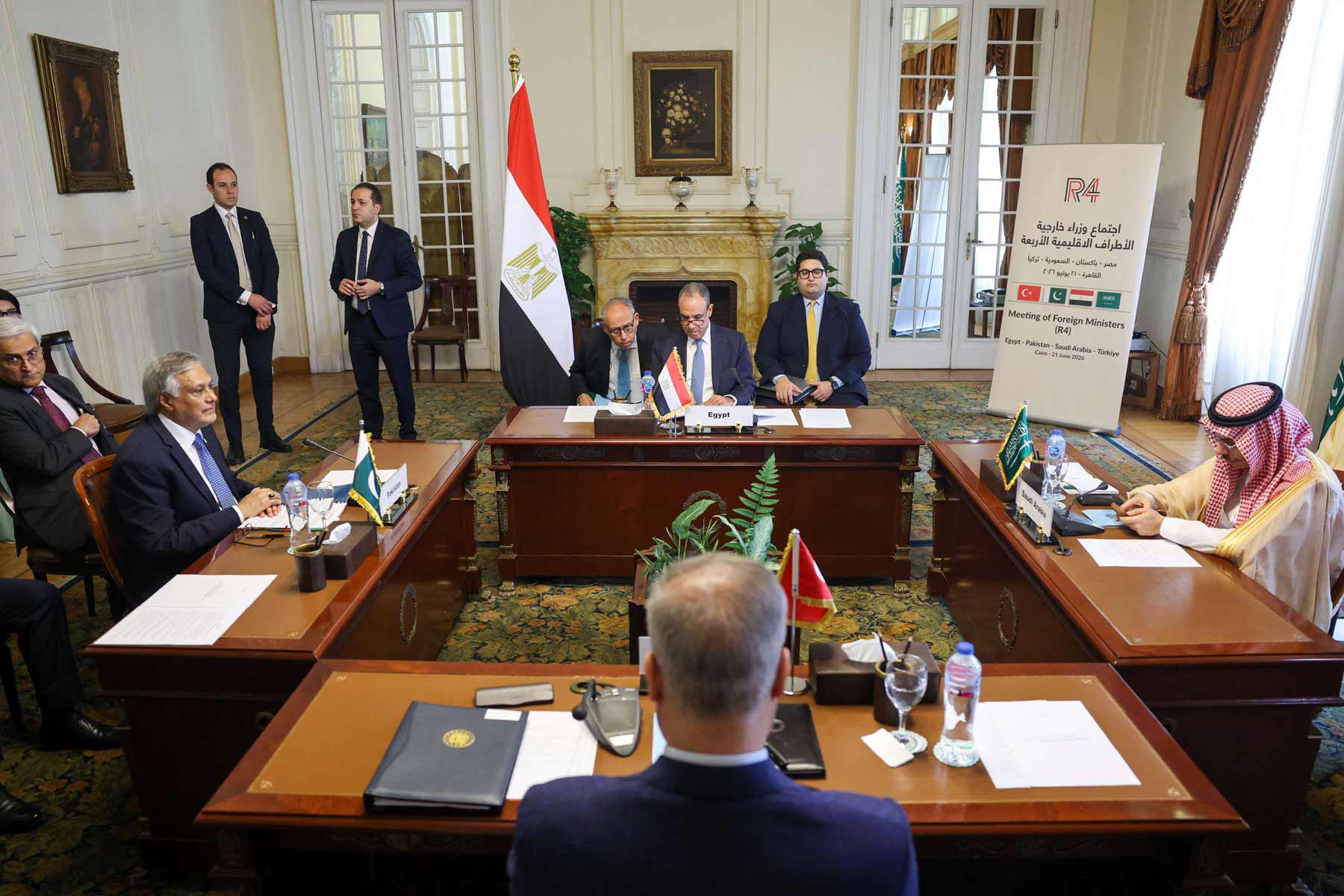
CAIRO – Egypt, Saudi Arabia, Turkey and Pakistan moved to strengthen regional coordination on Sunday as senior diplomats gathered in Cairo to address a growing list of crises stretching from Gaza and Sudan to Libya, Iran and the Horn of Africa, highlighting a broader effort by regional powers to shape the Middle East's security architecture amid a period of profound uncertainty.
The meeting marked the fourth ministerial gathering between the four countries and the first since the signing of the Islamabad Memorandum of Understanding between the United States and Iran, an agreement aimed at ending months of confrontation and opening a new diplomatic track between Washington and Tehran.
Egyptian Foreign Minister Badr Abdelatty hosted Saudi Foreign Minister Prince Faisal bin Farhan, Turkish Foreign Minister Hakan Fidan and Pakistani Foreign Minister Mohammad Ishaq Dar for talks that regional officials described as part of an ongoing consultation mechanism designed to coordinate positions on key strategic issues.
According to Egyptian officials, discussions focused on Gaza, Sudan, Libya, the Iranian file and developments across the Horn of Africa, with participants stressing the need for continued consultation to support regional security and stability.
The ministers welcomed the US-Iran memorandum signed in Islamabad on June 18, describing it as a constructive step towards reducing tensions that had threatened regional security, global energy supplies, major shipping lanes and international trade.
They called for the rapid launch and successful completion of the next phase of negotiations between Washington and Tehran, emphasising that any final agreement must take into account the security concerns of countries across the Gulf and the wider Middle East.
Their discussions coincided with high-level negotiations in Switzerland between American and Iranian officials aimed at consolidating the ceasefire and addressing broader issues, including Iran's nuclear programme and regional security arrangements.
Egyptian President Abdel Fattah al-Sisi praised the intensive coordination among the four countries and stressed the importance of ensuring the success of the diplomatic process, reflecting growing regional support for efforts to avoid a return to military confrontation.
The Palestinian issue remained central to the talks. The ministers reiterated support for Palestinian self-determination and the establishment of an independent Palestinian state based on the June 4, 1967 borders, with East Jerusalem as its capital.
They also discussed the humanitarian and political situation in Gaza, where concerns remain over the durability of the October 2025 ceasefire and the prospects for a broader political process capable of addressing the roots of the conflict.
Sudan's civil war was another major focus. After more than three years of fighting, the conflict has evolved into a regional security concern affecting Red Sea stability, migration patterns and economic activity throughout northeast Africa.
Libya also featured prominently, with ministers acknowledging that political fragmentation and institutional rivalries continue to obstruct efforts to achieve a comprehensive settlement and organise long-delayed national elections.
Beyond individual crises, the Cairo meeting highlighted an emerging regional consensus that the Middle East's conflicts can no longer be treated as isolated issues. Security challenges in Gaza affect Red Sea stability, developments in Sudan influence the Horn of Africa, while tensions involving Iran reverberate across the Gulf and global energy markets.
Analysts view the growing cooperation among Egypt, Saudi Arabia, Turkey and Pakistan as part of a broader effort by regional powers to build a framework capable of managing crises, reducing external shocks and preserving stability at a time when traditional international mechanisms have struggled to deliver lasting solutions.
While the Cairo consultations are not intended to replace international mediation initiatives, they reflect an increasingly assertive regional diplomacy seeking a greater role in shaping the political and security future of the Middle East.