

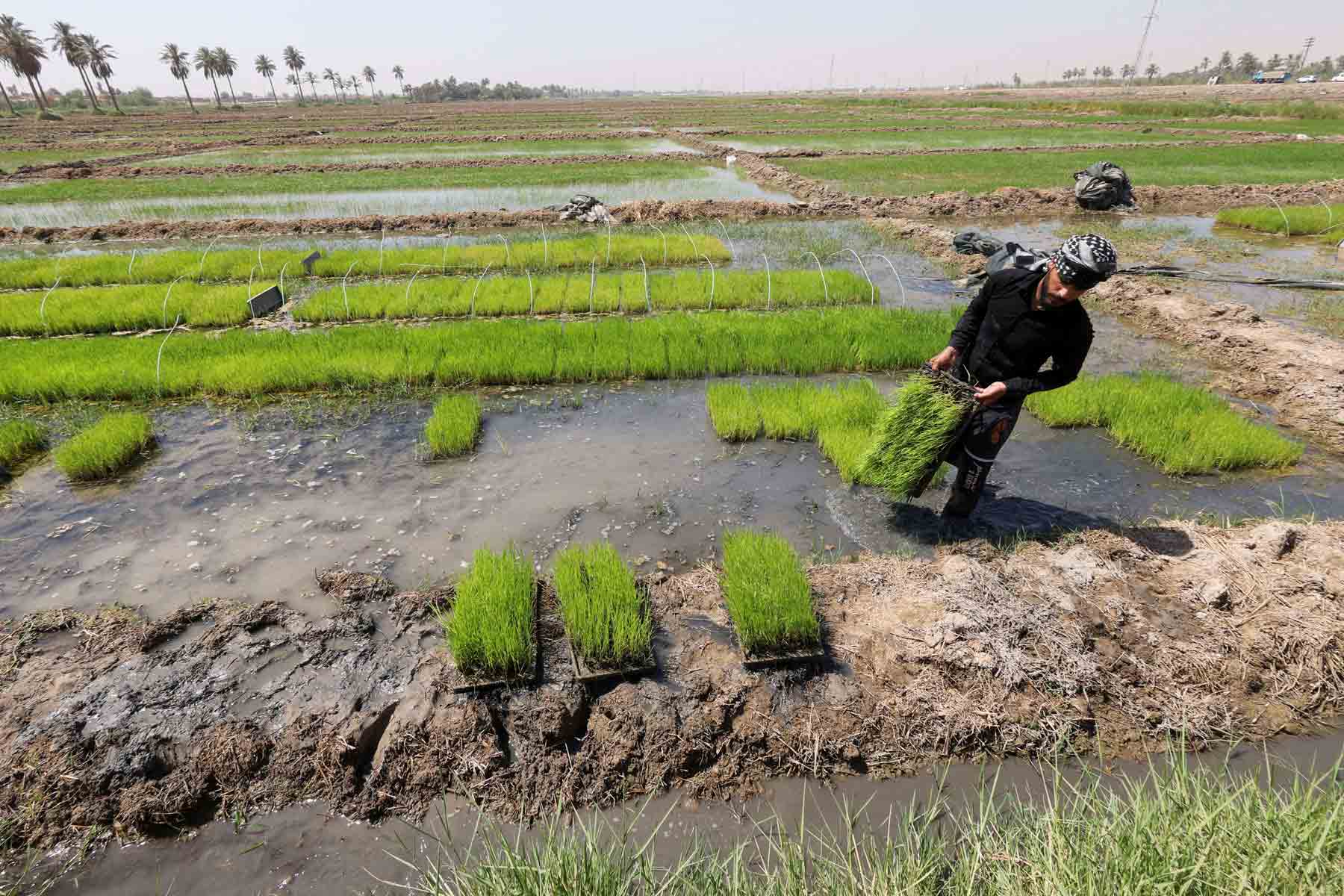
Fields alive again after years of thirst
Iraq’s rice fields spring back to life as water levels surge
While last year’s rice harvest was negligible, Iraqi officials say production could reach around 300,000 metric tons this season.
Tuesday 23/06/2026
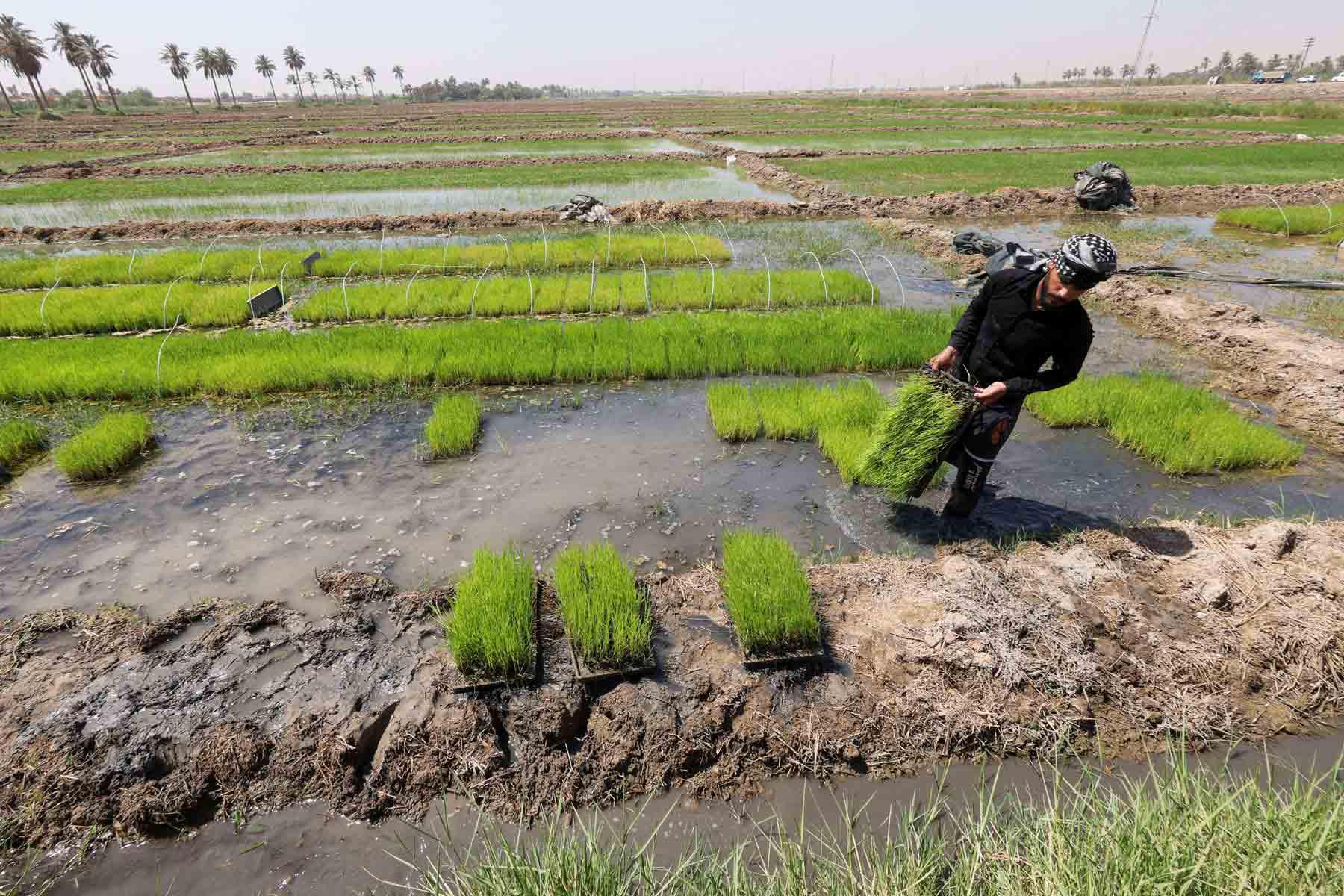
Fields alive again after years of thirst
AL-MISHKHAB, Iraq – Alaa al-Ibrahimi is planting rice again for the first time in years at his farm in Al-Mishkhab, in Iraq’s Najaf region.
“Last year, I did not cultivate a single dunam … This year, by God’s will, we got water,” he said, as workers sowed Anbar rice, his preferred variety, on his plot of around 100 dunams, or 25 hectares.
After years of drought that left water reserves at historic lows and prompted strict curbs on water-intensive crops, heavy rains and increased river flows from Iraq’s neighbours have once again allowed rice growers to flood their fields.
Cultivation of the staple crop has expanded to its largest area in four years, bringing economic relief for farmers like Ibrahimi and supporting the government’s push for more self-sufficient food production.
But, while welcome, the improvement in farming conditions across a region spanning from Morocco to Syria remains tenuous, particularly in Iraq, which ranks fifth globally for climate risk, according to the United Nations, and faces a long-term trend of higher temperatures and declining rainfall.
“The recovery is real, but it is not yet sustainable,” said Harry Istepanian, a water expert and founder of the Iraq Climate Change Center. “The gains could be reversed within one dry season.”
Water levels rise, rice production booms
Rice, a staple in Iraq, is among the most water-intensive crops and is typically grown in flooded fields.
Last year, the agriculture ministry approved rice cultivation on just 200 dunams of farmland due to the drought. This summer, however, it has given a green light to about 362,000 dunams.
“This significant expansion is due to the abundance of water in the Tigris and Euphrates rivers,” Deputy Agriculture Minister Mahdi Sahar al-Jubouri said.
Iraq’s water storage, which last year stood at some 4.5 billion cubic metres amid what authorities described as the worst water crisis in decades, has surged to about 30 billion cubic metres in 2026, Istepanian said.
While last year’s rice harvest was negligible, Iraqi officials say production could reach around 300,000 metric tons this season.
Most will be sold to the state and distributed through Iraq’s long-running food ration programme, which provides subsidised staples to low- and middle-income households. Even so, Iraq will still need to import around 800,000 tons of rice to meet demand, according to the ministry.
Farmers, meanwhile, are moving quickly to cash in this season’s easing of cultivation restrictions.
While premium Anbar rice is prized for its aroma and commands higher prices, many growers are opting for jasmine varieties to secure better returns.
“I only cultivated the jasmine variety because of its high yield, and most farmers grow jasmine due to its economic viability,” said farmer Sattar Sarhan.
Short-term gain, long-term vulnerability
Such pragmatism is understandable, given the rebound’s uncertain future.
“This is a sharp improvement from 2025,” said Istepanian. “But any expansion will still need to remain linked to available water allocations and irrigation efficiency.”
Iraq, he warned, is entering a phase of increasing hydro-climatic volatility, with prolonged droughts interrupted by episodic heavy rainfall and temporary gains in water storage.
Other forces beyond nature are at work as well.
Upstream damming by Turkey and Iran has for years bred cross-border tensions and left Iraq at the mercy of its neighbours for 70 percent of its water supply.
This year’s rise was driven not only by domestic rainfall but also by higher inflows from upstream countries, where heavy precipitation and snowmelt filled reservoirs, forcing dam operators to release excess water.
Longer-term water security will still depend on sustained coordination with neighbouring governments and deeper reforms at home.
For now, though, Iraqi rice farmers like Ibrahimi are simply thankful for the return to a way of life many were not sure they would ever see again.
“I can now meet my family’s needs,” he said. “Including my children’s school fees.”