

A test of accountability
Tunisia parliament lifts immunity of 10 lawmakers
Yousri Bouab, a member of parliament’s Internal Rules Committee, said the session examined 21 separate files involving 11 lawmakers.
Thursday 25/06/2026
A test of accountability
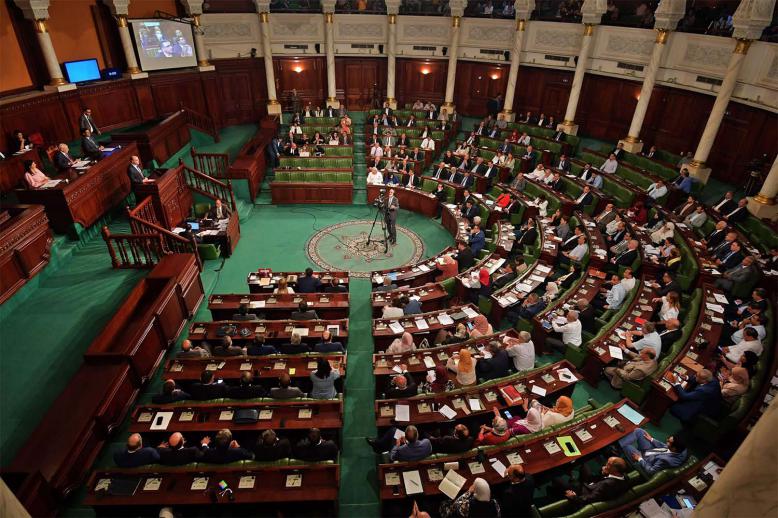
TUNIS – Tunisia’s parliament has voted to lift the parliamentary immunity of 10 lawmakers, clearing the way for the judiciary to pursue a series of election-related cases dating back to before the current legislative term.
The decision was approved during a closed-door plenary session on Tuesday and concerns files that have been pending for years, many linked to alleged electoral violations from previous election cycles.
Yousri Bouab, a member of parliament’s Internal Rules Committee, said the session examined 21 separate files involving 11 lawmakers. Most of the cases, he said, concerned alleged electoral offences that predated the current parliamentary mandate.
A request involving another lawmaker was postponed for procedural reasons and referred back to the relevant parliamentary committee for further examination.
According to Bouab, the deputies concerned did not seek to retain their parliamentary immunity and agreed to its removal to allow legal proceedings to continue before the competent courts.
The lifting of immunity does not constitute a finding of guilt and merely removes a procedural obstacle preventing judicial authorities from pursuing investigations or court proceedings while an individual holds parliamentary office.
MP Fatma Mseddi told local radio station Diwan FM that she had personally requested the lifting of her immunity, along with several colleagues, and that the move was approved during the confidential parliamentary session.
Mseddi said the case against her dates back to 2019, when former Secretary of State Adel Jerboui filed a complaint accusing her of making false allegations after she held a news conference in which she spoke about what she described as suspicions of corruption surrounding him.
She noted that the case has remained active since 2019 and said she wanted immunity lifted to ensure the judicial process could proceed without delay.
“I have complete confidence in the judiciary,” she said.
Mseddi added that most of the deputies whose files were examined during the session had been targeted by complaints filed by Tunisia’s Independent High Authority for Elections over alleged electoral irregularities, which she described as “empty and trivial” cases.
She said the session reflected lawmakers’ commitment to the principle that all institutions and authorities must remain subject to the rule of law.
“There is no fear of the judiciary or of the state of law,” she said.
Under the parliament’s internal regulations, requests to lift immunity are reviewed on the basis of reports prepared by the parliamentary committee responsible for immunity matters. Lawmakers concerned are given the opportunity to address parliament personally, or through a representative, before a vote is held.
Decisions are adopted by a majority of members present, and immunity-related sessions are conducted in private because of the nature of the cases involved.
The Assembly of the Representatives of the People devoted Tuesday’s confidential plenary session to examining the requests after parliament’s bureau reviewed the files on June 4 and referred them to the full chamber for a decision.
Article 27 of parliament’s internal rules stipulates that lawmakers must examine immunity requests based on a report prepared by the immunity committee and distributed to all members before the plenary session.
Article 28 states that if parliament rejects a request to lift immunity, a second request cannot be submitted concerning the same facts that formed the basis of the original rejected application.
MP Nizar Seddik confirmed that parliament had approved requests concerning 10 lawmakers, while consideration of another case was postponed for organisational reasons and referred back to the relevant committee.
Speaking to local media, Seddik said the deputies involved had not attempted to shield themselves behind parliamentary immunity and had voluntarily chosen to relinquish the constitutional protection in order to appear before the courts and allow the cases to be resolved definitively.
He added that other lawmakers are also facing separate legal proceedings and that their files may be submitted to future parliamentary sessions for consideration.
The latest decision comes against the backdrop of continuing judicial cases linked to the parliamentary elections that produced the current legislature following two rounds of voting held between December 2022 and January 2023.
Tunisia’s current parliament has previously witnessed similar controversies. In 2023, security forces arrested MP Wajdi Ghaoui shortly after he took the parliamentary oath, executing a judicial warrant linked to allegations of falsified voter endorsements submitted during his election campaign.
That same year, prosecutors in Manouba announced the existence of a case involving another lawmaker over multiple alleged electoral offences.
Under Tunisian law, members of parliament benefit from two forms of immunity. The first provides absolute protection against prosecution, detention or trial for opinions expressed or actions carried out in connection with parliamentary duties. The second, a relative form of immunity, protects lawmakers from prosecution for offences committed during their parliamentary term.
This relative immunity can be lifted in four situations: if a lawmaker voluntarily waives it, if parliament votes to remove it, in cases where the individual is caught in the act of committing an offence, or when the parliamentary mandate expires.
The latest vote therefore opens the way for judicial authorities to resume proceedings in the approved cases, while underscoring parliament’s role in balancing constitutional protections with judicial accountability.