

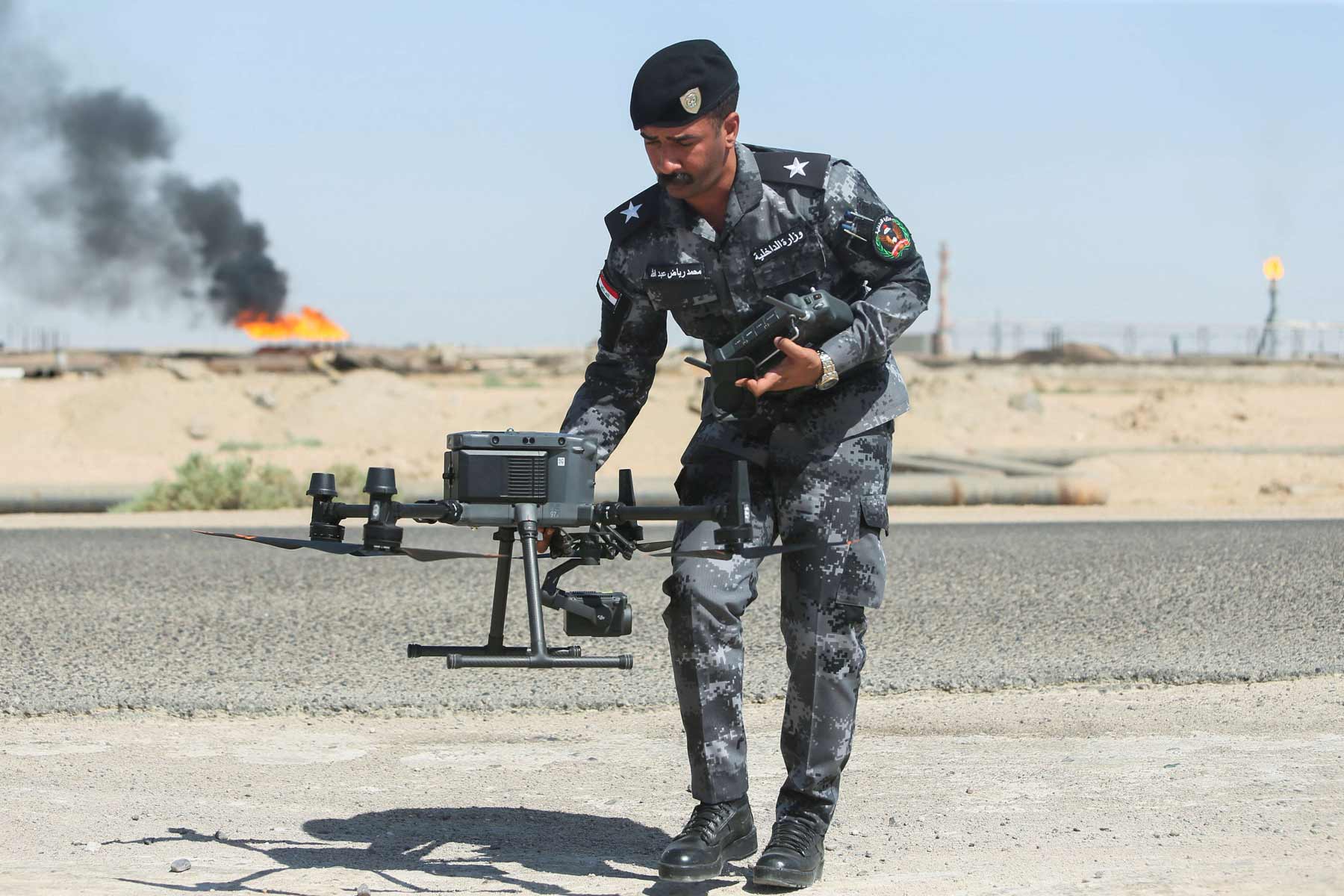
Protecting the skies, enforcing the law
Iraq orders anti-terror law applied to illegal drone users, manufacturers
The directive significantly raises the legal stakes for offenders by placing illegal drone-related activities under legislation carrying some of Iraq's harshest criminal penalties.
Thursday 25/06/2026
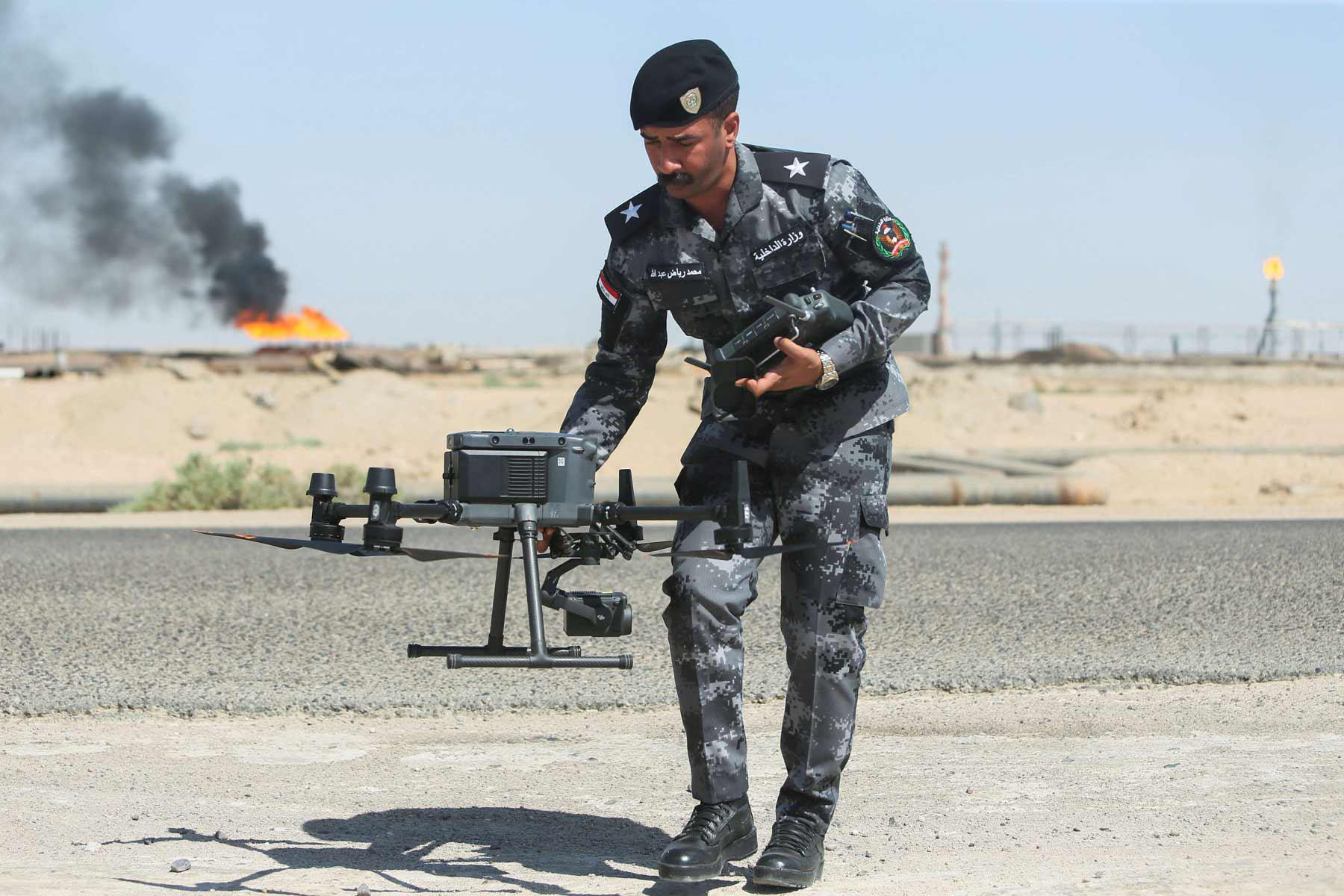
Protecting the skies, enforcing the law
LONDON/BAGHDAD – Iraq's Supreme Judicial Council has instructed courts to apply the country's anti-terrorism legislation to individuals involved in the manufacture, possession or use of drones for unlawful purposes, in a move reflecting growing concern over the proliferation of unmanned aircraft and their use in attacks linked to armed groups.
The council said in a statement that it had directed the relevant courts to enforce the provisions of Anti-Terrorism Law No. 13 of 2005 against "everyone who manufactures, uses, or possesses drones that are used for purposes contrary to the law."
The directive significantly raises the legal stakes for offenders by placing illegal drone-related activities under legislation carrying some of Iraq's harshest criminal penalties.
The move comes as Iraqi authorities seek tighter control over the country's airspace and attempt to curb the use of drones in smuggling, espionage and attacks targeting security forces, state institutions and critical infrastructure.
Drone warfare has emerged as one of Iraq's most pressing security challenges in recent years, with armed factions increasingly relying on unmanned aircraft to conduct operations inside Iraq and beyond its borders.
The issue has gained additional urgency following a series of regional incidents linked to pro-Iran armed groups operating in Iraq.
Last month, the United Arab Emirates condemned what it described as terrorist drone attacks launched from Iraqi territory, saying one drone struck a power generator outside the inner perimeter of the Barakah nuclear power plant.
Saudi Arabia also announced that its air defences intercepted and destroyed three drones that entered the kingdom's airspace from Iraq, warning that it reserved the right to respond to any attack threatening its sovereignty and security.
Within Iraq itself, security concerns have intensified following repeated drone incidents. Last Saturday, the Joint Operations Command reported that a drone crashed near the guesthouse of Parliament Speaker Haibat al-Halbousi in Karma district of Anbar province. Authorities said the aircraft was not carrying explosives and caused only a brush fire without significant damage.
The judiciary's decision also follows earlier cases involving militant groups' use of drones. In April, Iraq's Central Criminal Court handed death sentences to 11 Islamic State members convicted of plotting attacks against state institutions. According to the court, the militants had received specialised training in manufacturing explosives and using drones for terrorist purposes.
Security analysts say the growing availability of commercial drone technology has transformed the security landscape, allowing armed groups to carry out operations with greater precision and lower costs than conventional attacks.
The latest judicial directive forms part of broader efforts by Iraqi authorities to strengthen state control over security and restrict the activities of armed actors operating outside official institutions.
Officials argue that the spread of drones poses a direct threat to public safety, economic facilities and national stability, requiring stronger legal measures to deter their misuse.