
Regional turmoil accelerated the Turkish-Egyptian reconciliation
Egypt-Turkey shared understandings on regional issues
The eastern Mediterranean remains one of the most significant challenges facing relations between the two countries.
Friday 26/06/2026
Regional turmoil accelerated the Turkish-Egyptian reconciliation
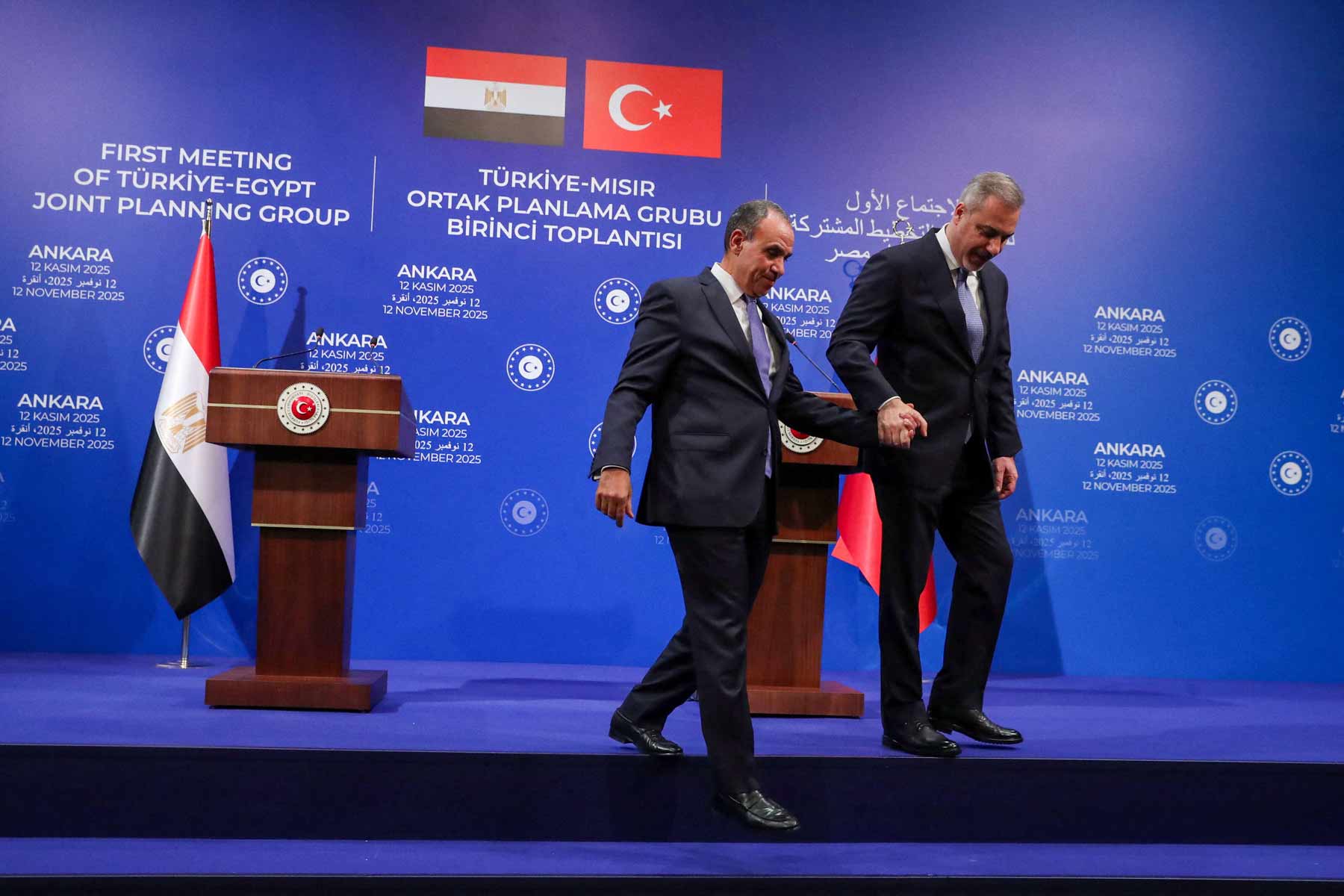
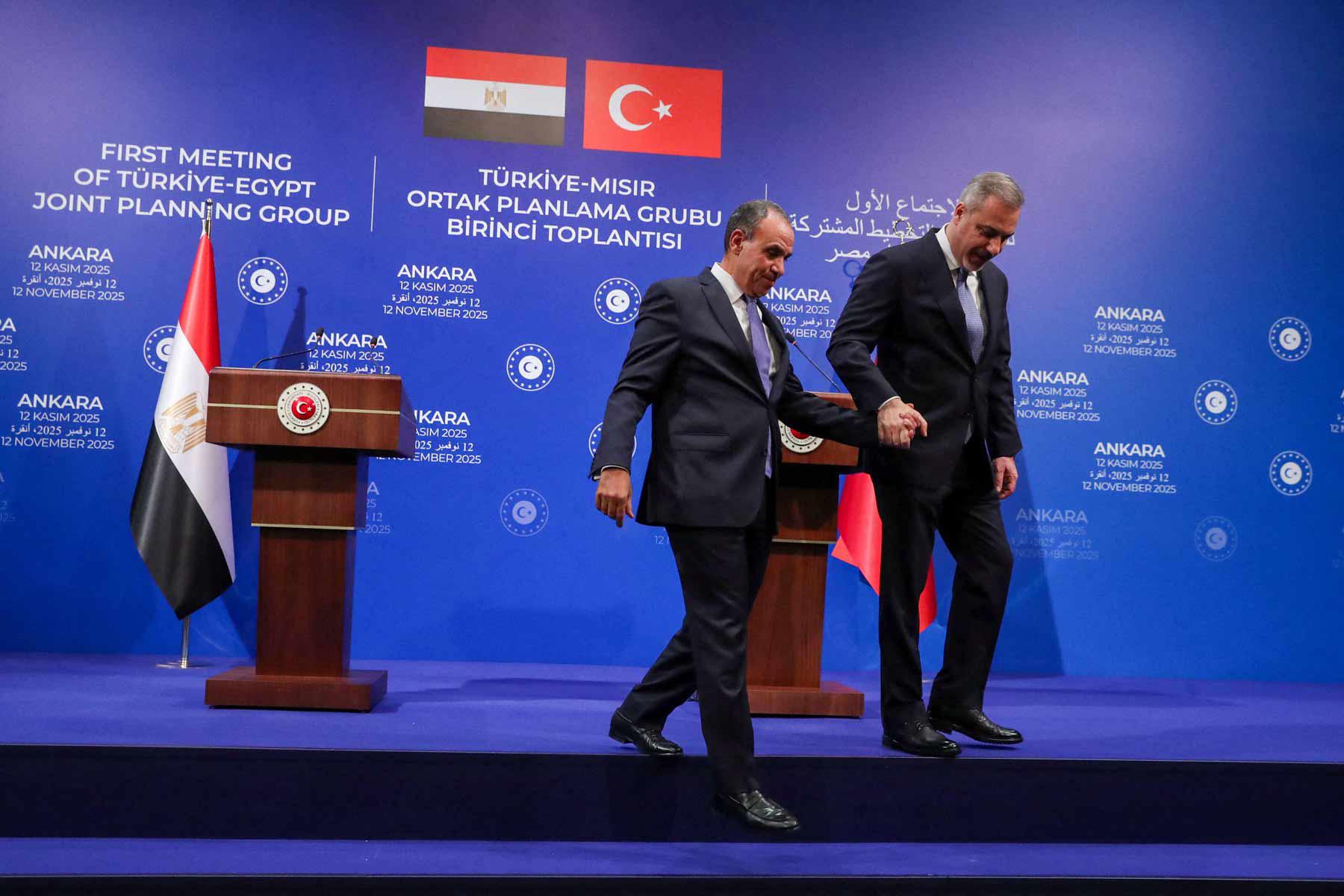
The Egyptian-Turkish reconciliation has begun to produce positive results in the form of shared understandings on a number of regional issues. The growing rapprochement has been reflected in the increasing frequency and diversity of meetings between senior officials from the two countries, while the scope of their discussions has expanded to encompass several vital issues across the Middle East.
The latest moves have taken shape through a forum bringing together Egypt, Turkey, Saudi Arabia and Pakistan, tasked with developing clear approaches to dealing with some of the region's most pressing issues.
Four meetings have been held across the four countries, the latest taking place in Cairo about a week ago. All focused on preparing to respond collectively to the region's new realities, as the outcome of the US-Israeli war against Iran has revealed the emergence of a regional order whose final contours have yet to take shape.
Within this emerging order, Washington, Tehran and Tel Aviv may all play complex and often contradictory roles. None of the four countries currently has an obvious role in this evolving framework. Coordination among them and agreement on priorities would provide significant advantages and create an opportunity to safeguard their interests.
On the bilateral level, Cairo and Ankara have made considerable progress in narrowing the political gap between them. A substantial portion of the disputes that strained relations for nearly a decade has been resolved. The remaining differences have either been set aside or their sources of tension have been reduced and contained, particularly the issue of the Muslim Brotherhood. Agreement has emerged on several regional issues, benefiting from the lessons of the period of tension, which ultimately failed to destroy relations between the two countries. Matters that were neither resolved amicably nor quietly bypassed never developed into intractable crises.
In Libya, differing assessments and rival interventions have gradually given way to greater convergence and understanding. Egypt aligned itself with the influential forces in eastern Libya, while Turkey supported their counterparts in the west. Although the rivalry between the two camps at one stage became highly polarised, it did not seriously poison relations between Cairo and Ankara. Flexibility has gradually surfaced, bringing with it more constructive approaches.
The initiative put forward by the US administration to unify Libya's principal forces in the east and west would have been difficult to launch had relations between Egypt and Turkey not reached their current positive stage. Both countries have the capacity either to facilitate or obstruct such a process. The flexibility evident in the initiative suggests that Cairo and Ankara have, behind the scenes, contributed to removing many of the obstacles standing in its way.
Regardless of whether the plan proposed by Massad Boulos, US President Donald Trump's personal envoy, succeeds or fails, and irrespective of its future political and security components, its ultimate fate depends on the level of support it receives jointly from Egypt and Turkey. Together, they represent the balance of power between eastern and western Libya. No party seeking to implement a plan or promote an initiative can have confidence in its viability without securing strong backing from both countries.
The understandings between Cairo and Ankara extend well beyond the Libyan crisis. In Gaza, for example, both countries are aligned in seeking to deny Israel the opportunity to achieve its principal objectives, foremost among them eliminating the Palestinian cause and extinguishing any prospect of advancing the two-state solution.
Egypt and Turkey also play influential roles within the Peace Council chaired by Trump. Together, they stand as a barrier against the ambitions of Israeli Prime Minister Benjamin Netanyahu to reshape the Middle East solely in accordance with his own strategic vision.
Notably, the rapprochement between Cairo and Ankara has also extended to Sudan. Both support the Sudanese army as a disciplined national military institution rather than as a body driven by ideological ties to the Muslim Brotherhood. They believe the army is capable of preserving Sudan's unity and stability.
The forms of support provided by the two countries differ, ranging from political backing to military assistance. In both cases, neither Egypt nor Turkey conceals its support for the Sudanese army at the expense of the Rapid Support Forces. Whatever their differing strategic objectives, Cairo and Ankara rank among the leading external supporters of Sudan's military establishment. Greater coordination between them is expected in ways that could reduce the influence of other powers seeking to shape Sudan in line with their own interests.
Turkey's early engagement in the Horn of Africa has also contributed to raising the level of understanding with Egypt. Somalia, which faces major challenges following Somaliland's declaration of independence and its recognition by Israel, has begun to emerge on the regional map as one of the Middle East and Africa's rising flashpoints.
Because Cairo and Ankara have different calculations regarding Somalia and its surrounding region, they have sought to bridge their differences and build upon their common interests. This has created considerable room for manoeuvre. Even if full complementarity has not been achieved, there is at least a high degree of determination on both sides to avoid confrontation.
The importance of the understandings over Somalia stems from its proximity to the Red Sea, which has become increasingly exposed to threats from the Houthi movement in Yemen, as well as Iran's repeated suggestions that it could use the waterway to disrupt international navigation as part of its broader strategy for leveraging strategic maritime routes. Added to this is Ethiopia's determination to secure access to the Gulf of Aden, either through Somaliland or by gaining control of the Eritrean port of Assab.
The first route provides access to the Bab al-Mandeb Strait, while the second lies directly on the Red Sea. Both constitute vital gateways to the Suez Canal. Any understanding reached between Egypt and Turkey in this area represents an important contribution to safeguarding their mutual interests while reinforcing the principle of regional cooperation.
The eastern Mediterranean remains one of the most significant challenges facing relations between the two countries. Years ago, Egypt charted its course alongside a group of states, some or most of which are not on good terms with Turkey. The East Mediterranean Gas Forum was established without Ankara's participation, while Turkey has sought to develop a vision that would make it an influential player in the eastern Mediterranean's strategic architecture.
As those efforts failed to produce meaningful gains, Turkey shifted its focus towards Egypt, viewing Cairo as the principal key to the region. The difficulty is that every step Egypt takes towards Turkey could cost it one or more steps in its relations with Greece and Cyprus.
Egypt is therefore proceeding with great caution in trying to resolve this dilemma. It wants to strengthen ties with Ankara without losing Athens or Nicosia. Raising the ceiling of understanding between Egypt and Turkey could ultimately be sufficient to overcome this contradiction, the effects of which would extend far beyond the eastern Mediterranean.
Resolving this issue, or finding a way around it, would help consolidate the growing understandings between the two countries. Failure, however, would act as a brake on efforts to develop Egyptian-Turkish relations at the regional level and elevate them into a strategic alliance.