

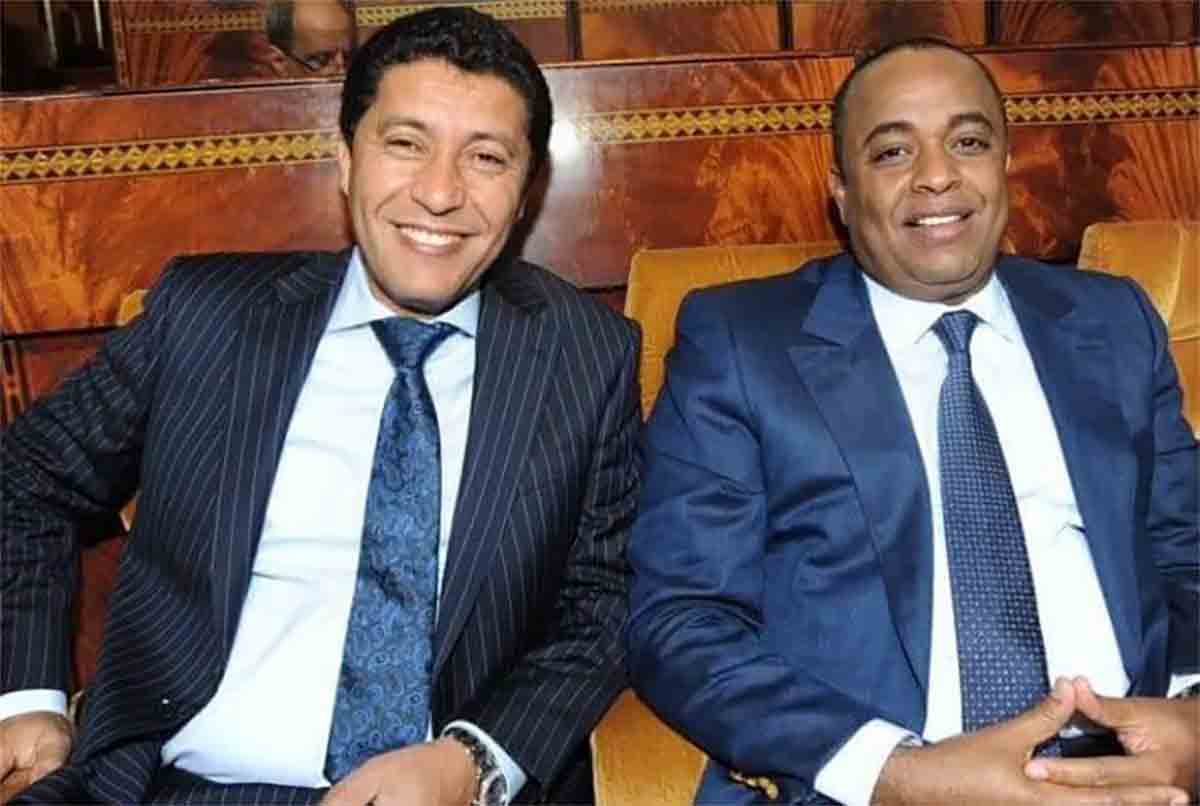
Bioui and Naciri, drug lords who were using their political influence
Heavy sentences, billions in fines conclude trials of ‘Sahara Escobar’ drug empire in Morocco
Saïd Naciri, former president of WAC football team and an ex-MP, was sentenced to 10 years in prison while Abdenbi Bioui, the powerful former president of the Oriental Regional Council, gets 12 years of criminal imprisonment.
Friday 26/06/2026
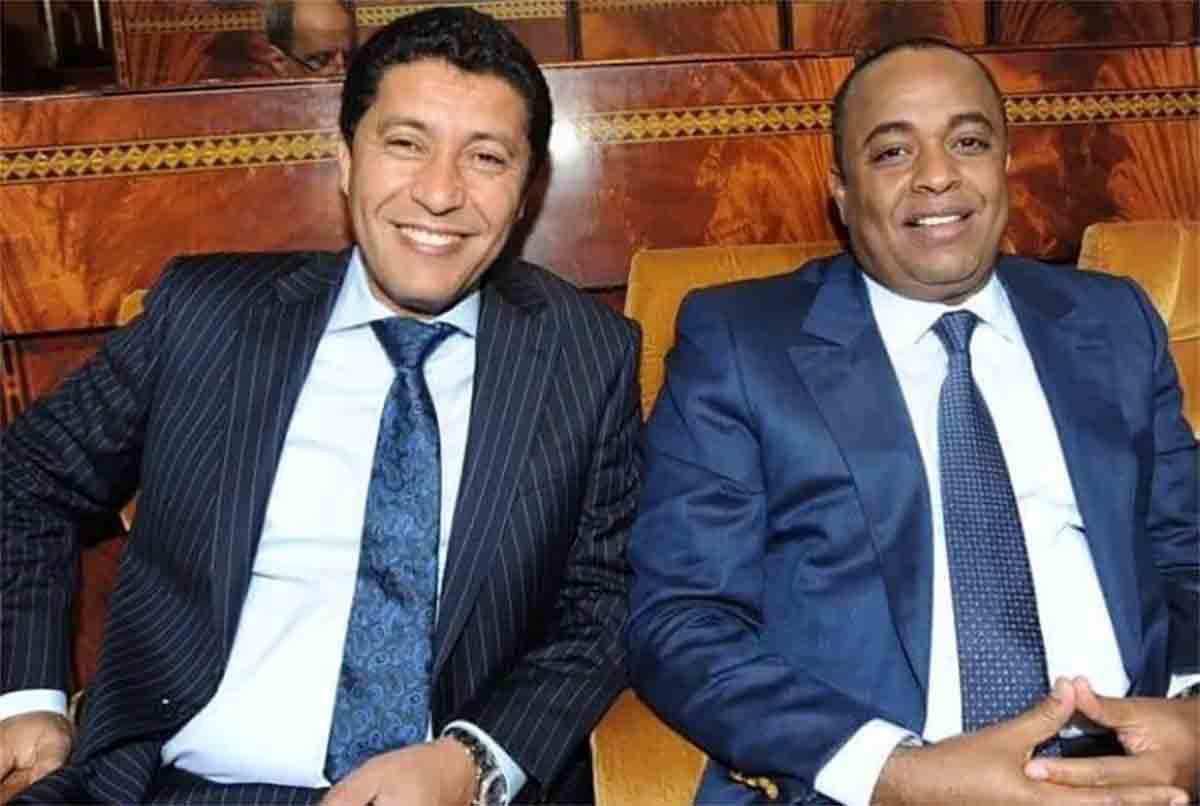
Bioui and Naciri, drug lords who were using their political influence
CASABLANCA — In one of the most high-profile anti-corruption and anti-trafficking trials in modern Moroccan history, the criminal chamber of the Casablanca Court of Appeal finally brought the curtain down on the "Sahara Escobar" affair late Thursday evening.
Following a grueling, marathon judicial process that lasted over two years, Judge Ali Torchi handed down severe prison sentences and jaw-dropping financial penalties to a network that intertwined international drug trafficking with elite political influence.
High-Profile Politicians and Sports Figures Reaped
At the center of the judicial storm were prominent political figures whose downfalls have sent shockwaves through the country's establishment.
Saïd Naciri, the former president of the prestigious Wydad Athletic Club (WAC) football team and an ex-member of parliament, was sentenced to 10 years in prison. Naciri was convicted on a litany of charges including forgery of public documents, complicity in drug possession and trafficking, fraud, abuse of power, and witness tampering. Up until his final five-minute address to the court, Naciri vehemently denied all allegations, pleading for clemency.
Abdenbi Bioui, the powerful former president of the Oriental Regional Council, received the heaviest sentence among the ringleaders: 12 years of criminal imprisonment. Bioui was convicted for his direct role in an international drug trafficking agreement and forging official documents. Unlike Naciri, Bioui chose to exercise his right to remain silent during the trial's final stretch.
Abderrahim Bioui, Abdenbi’s brother, was similarly pulled down by the family enterprise, receiving a 9-year prison sentence.
Belkacem Mir, another former parliamentarian indicted in the network, was handed 10 years in prison for forgery, corruption, and helping orchestrate illegal border crossings as part of an organized criminal group.
Billions in Financial Penalties to the State
While the prison sentences are significant, the financial repercussions of the verdict are staggering. The Court of Appeal hit the cartel members with devastating financial penalties tailored to dismantle their financial empires:
- Direct Confiscations: The court ordered the direct asset seizure of 10 million Dirhams (MAD) from Abdenbi Bioui, 8 million MAD from Abderrahim Bioui, and 6 million MAD from Saïd Naciri.
- The Custom Fines: Jointly and severally, various groups of defendants must pay billions of Dirhams to the Administration of Customs and Indirect Taxes. The largest single penalty hits a staggering 4 billion Dirhams linked to a massive operation involving the smuggling of 200 tons of cannabis resin.
- Exchange Rate & Gold Violations: Abdenbi Bioui was fined an additional 480 million MAD for foreign exchange violations. Saïd Naciri faces a 177.5 million MAD fine. Belkacem Mir was hit the hardest on this front, ordered to pay 182.58 million MAD under gold trading legislation alongside a massive 1.288 billion Dirhams for exchange control infractions.
In a twist of poetic justice, the court also awarded 1 million Dirhams in civil damages to El Hajj Ahmed Ben Ibrahim—the infamous Malian drug lord known as the "Malian" or "Sahara Escobar". Ben Ibrahim, whose prison-cell confessions and allegations of asset-spoliation against his former partners sparked the initial investigation, is to be paid directly out of the pockets of Bioui, Naciri, and Mir.
Chronology of a Judicial Earthquake
The complex web began unraveling back in December 2023 when Moroccan authorities, led by the Bureau Central d'Investigations Judiciaires (BCIJ), carried out the first wave of high-profile arrests following the confessions of the imprisoned Malian kingpin.
The extensive investigation slowly mapped out an intricate system where drug traffickers relied on high-ranking politicians, businessmen, civil servants, security personnel, and even a fashion designer to facilitate the smooth international transit of narcotics across Moroccan borders and into Europe.
Out of the 28 defendants prosecuted in the sweeping case, only nine chose to make final statements on the last day, while the remaining 19 stood silently, leaving their fate to their attorneys' closing arguments. Of the 28 on trial, only a single defendant (identified by initials N.B.) walked away with an acquittal, while the remaining co-defendants received varied sentences ranging from 2 to 8 years in prison.
The judgment marks a definitive victory for Morocco's judicial system, underscoring a stern message from Rabat that no amount of political influence or sporting prestige will shield individuals from accountability in the face of transnational organized crime.