

Analysts view the deal as a sign of shifting alliances in the Gulf-Horn corridor
Qatar, Somalia boost defence cooperation
The bilateral defence cooperation agreement appears to be part of Somalia's strategy to diversify its international security partnerships, reducing reliance on any single Gulf state while seeking support to strengthen its armed forces.
Wednesday 21/01/2026
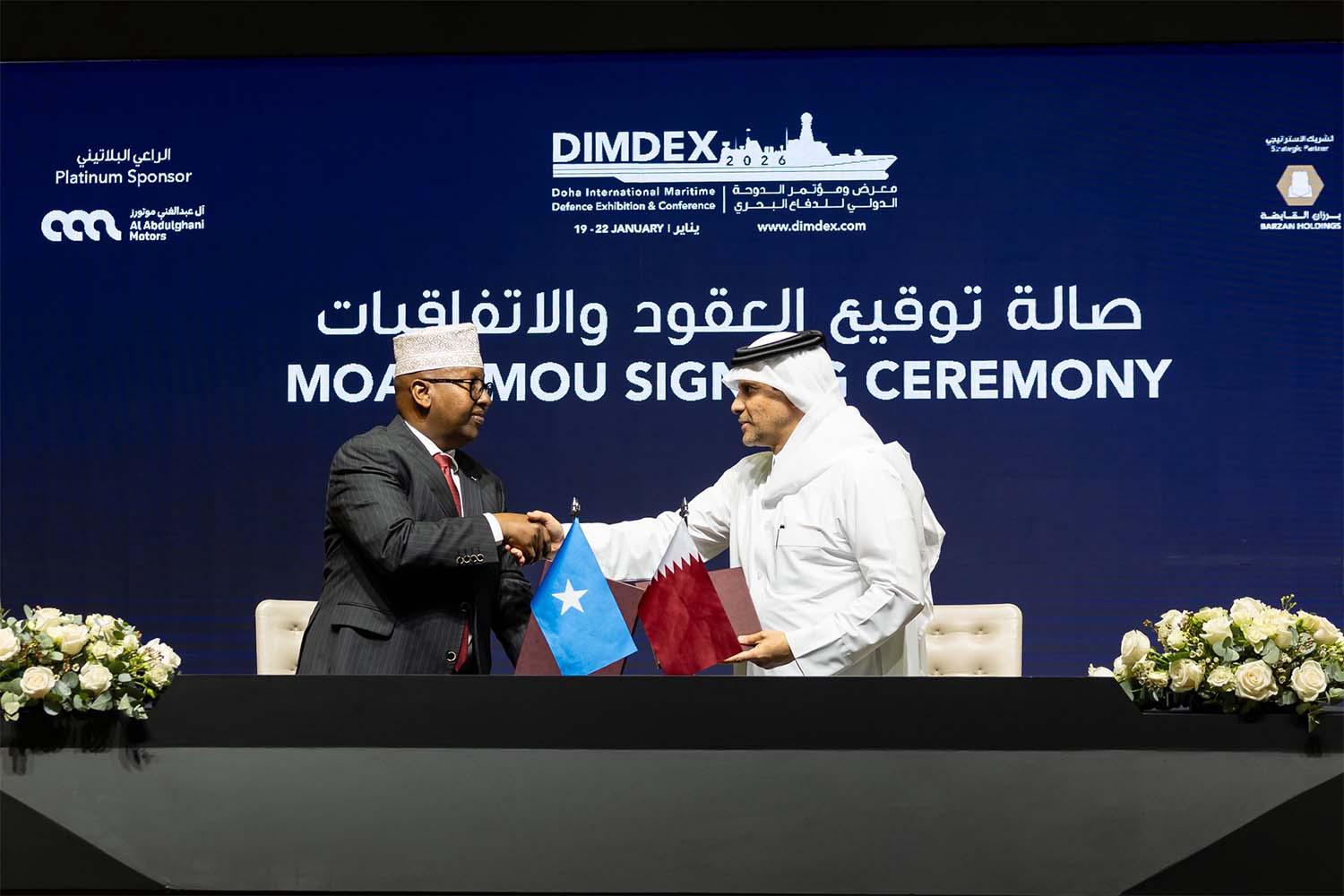
Analysts view the deal as a sign of shifting alliances in the Gulf-Horn corridor
DOHA - Qatar and Somalia signed on Tuesday a bilateral defence cooperation agreement in Doha, taking a significant step to deepen their defence ties. This development marks a notable shift in Somalia's security partnerships amid evolving regional dynamics in the Horn of Africa and the Gulf.
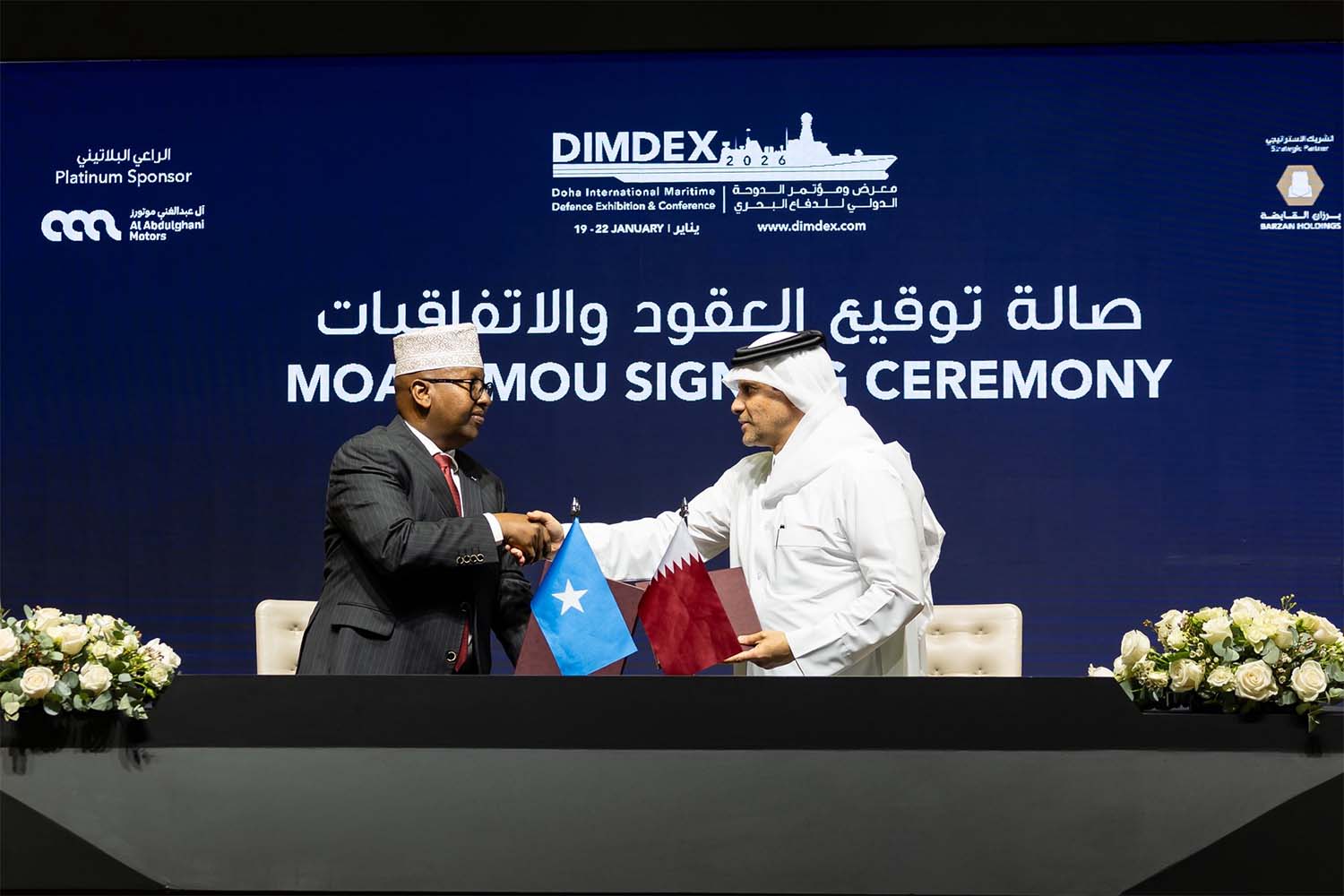
The agreement was formalized on the sidelines of the Doha International Maritime Defence Exhibition and Conference (DIMDEX 2026), a major platform for defence and maritime security discussions.
Somali Defence Minister Ahmed Moallim Fiqi and Qatar's Deputy Prime Minister and Minister of State for Defence Affairs, Sheikh Saoud bin Abdulrahman bin Hassan Al Thani, inked the deal.
According to statements from both governments and Somalia's state-run news agency SONNA, the pact focuses on several key areas, including military training programs for Somali forces, exchange of expertise and best practices, development and enhancement of defence capabilities as well as broader security coordination and joint efforts to promote regional and international stability.
Somali officials described the agreement as "historic," emphasizing its role in building the capabilities of the Somali National Army to address ongoing security challenges, including insurgencies and maritime threats.
This move comes shortly after Somalia terminated its security and defence-related partnerships with the United Arab Emirates, including arrangements involving ports and military cooperation. Mogadishu cited concerns over sovereignty and territorial integrity as reasons for ending those ties.
The Qatar deal appears to be part of Somalia's strategy to diversify its international security partnerships, reducing reliance on any single Gulf state while seeking support to strengthen its armed forces.
Qatar has long maintained warm relations with Somalia, providing humanitarian aid, development assistance, and diplomatic support in recent years.
The new defence framework builds on this foundation, aligning with Doha's broader foreign policy of fostering strategic ties across the region, particularly in areas like security and capacity-building.
The timing - amid ongoing regional tensions, including disputes over maritime boundaries, foreign military presence in the Horn of Africa, and efforts to counter threats like piracy and extremism - underscores the agreement's strategic importance. For Somalia, it represents an opportunity to access training and expertise that could bolster its fight against groups like Al-Shabaab and improve overall national defence posture.
Analysts view this as a sign of shifting alliances in the Gulf-Horn corridor, where competition among Gulf powers influences security arrangements. Qatar's engagement positions it as a key partner for Mogadishu at a time when Somalia seeks to balance relationships with multiple international actors, including Turkey (a major military trainer), Egypt, and others.