

The significance of the incident goes far beyond the amount taken
Rafidain Bank heist rekindles fears of deep-rooted corruption in Iraq
Although the value of the stolen funds is far smaller than that involved in the “theft of the century,” the danger of the latest incident lies in its symbolism and timing.
Wednesday 28/01/2026
The significance of the incident goes far beyond the amount taken
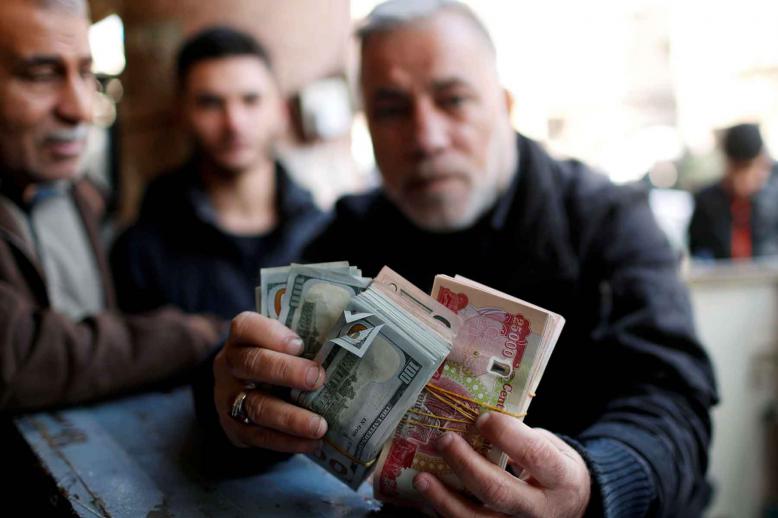
BAGHDAD – In a new incident that has reopened old wounds, the state-owned Rafidain Bank has once again been thrust into the spotlight in Iraq after the disclosure of a major theft at one of its branches in the capital, Baghdad. The stolen sum was reported to exceed half a billion Iraqi dinars, equivalent to more than $382,000.
While the precise circumstances surrounding the incident remain unclear, its significance goes far beyond the amount taken. The case has revived memories of one of the most serious corruption scandals in Iraq’s recent history, the so-called “theft of the century,” which shocked the country after exposing the involvement of powerful political and financial figures in the embezzlement of $2.5 billion in public funds from the same bank.
According to an informed source, key details of the latest theft have yet to be established, including how it was carried out, who may be behind it and how such large sums were withdrawn without being detected at the time. This opacity does not merely point to shortcomings in the initial investigation; it once again highlights deep structural flaws in oversight and governance within state-run financial institutions.
Although the value of the stolen funds is far smaller than that involved in the “theft of the century,” the danger of the latest incident lies in its symbolism and timing. Rafidain Bank, one of Iraq’s oldest and most prominent state banks, was expected to serve as a model of financial discipline rather than a recurring focal point for scandal. The repetition of such incidents within the same institution raises sharp questions over whether the reforms announced after the earlier mega-scandal amounted to little more than words on paper.
The “theft of the century” was not an isolated act of embezzlement, but a national shock that revealed the depth of corruption entrenched within the state. Investigations at the time pointed to the involvement of senior politicians, businessmen and influence networks that exploited loopholes in the financial system and weak oversight to siphon off billions of dollars. Today, with renewed reports of theft from the same bank, public opinion is increasingly shaped by the belief that the roots of the problem were never removed and that a culture of impunity still prevails.
An informed source told Iraqi Kurdish outlet Shafaq News that the latest case reflects serious weaknesses in supervisory procedures and administrative follow-up at the branch concerned. This assessment echoes longstanding criticism of Iraq’s financial system, where many institutions still rely on outdated mechanisms, lack modern auditing systems, and suffer from weak separation of powers, conditions that leave ample room for manipulation and collusion.
Attention is now turning to oversight bodies, particularly the Commission of Integrity and the Board of Supreme Audit, amid growing calls for an urgent and comprehensive investigation. Critics argue that any inquiry must go beyond identifying the direct perpetrators to uncover potential networks of collusion inside and outside the bank. Past experience has shown that symbolic measures or the scapegoating of junior employees merely recycle the crisis rather than resolve it.
The incident has also renewed calls for a thorough review of financial governance in state banks, including a reassessment of internal control mechanisms, the activation of electronic monitoring tools, and the linking of financial operations to early-warning systems capable of flagging large transactions for immediate scrutiny. The absence of such safeguards not only endangers public funds, but further erodes the already fragile trust between citizens and state institutions.
The latest theft at Rafidain Bank cannot be treated as an isolated episode. Instead, it must be seen within the broader context of Iraq’s accumulated corruption crises. It is a stark reminder that the “theft of the century” was not an exception, but a natural outcome of a dysfunctional system that continues to reproduce the same failures. Without genuine political will to hold all those involved to account, regardless of their rank or influence, public money will remain vulnerable to plunder, and scandals will continue to recur, with different figures, but driven by the same logic.