


The significance of Sadr’s decision extends far beyond Saraya al-Salam itself
Sadr redraws Iraq’s Shiite power map with challenge to armed factions
Asaib Ahl al-Haq, led by Qais al-Khazali, declared support for restricting weapons to the state and rejected what it described as uncontrolled arms outside official institutions.
Friday 29/05/2026
The significance of Sadr’s decision extends far beyond Saraya al-Salam itself
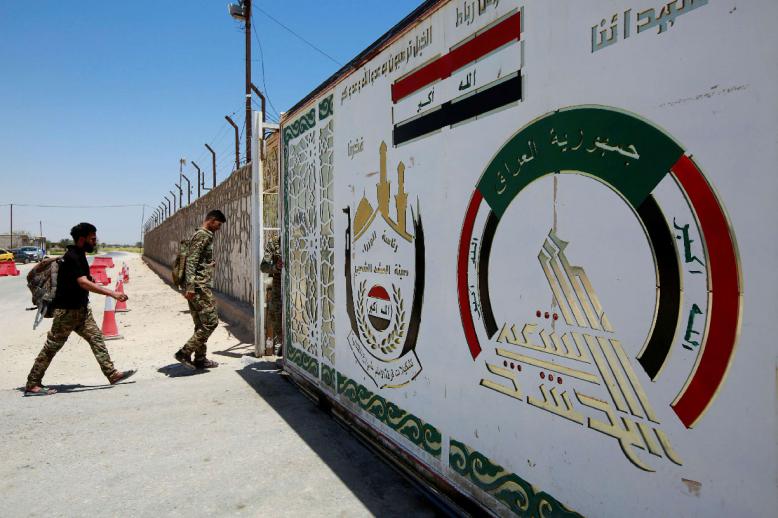
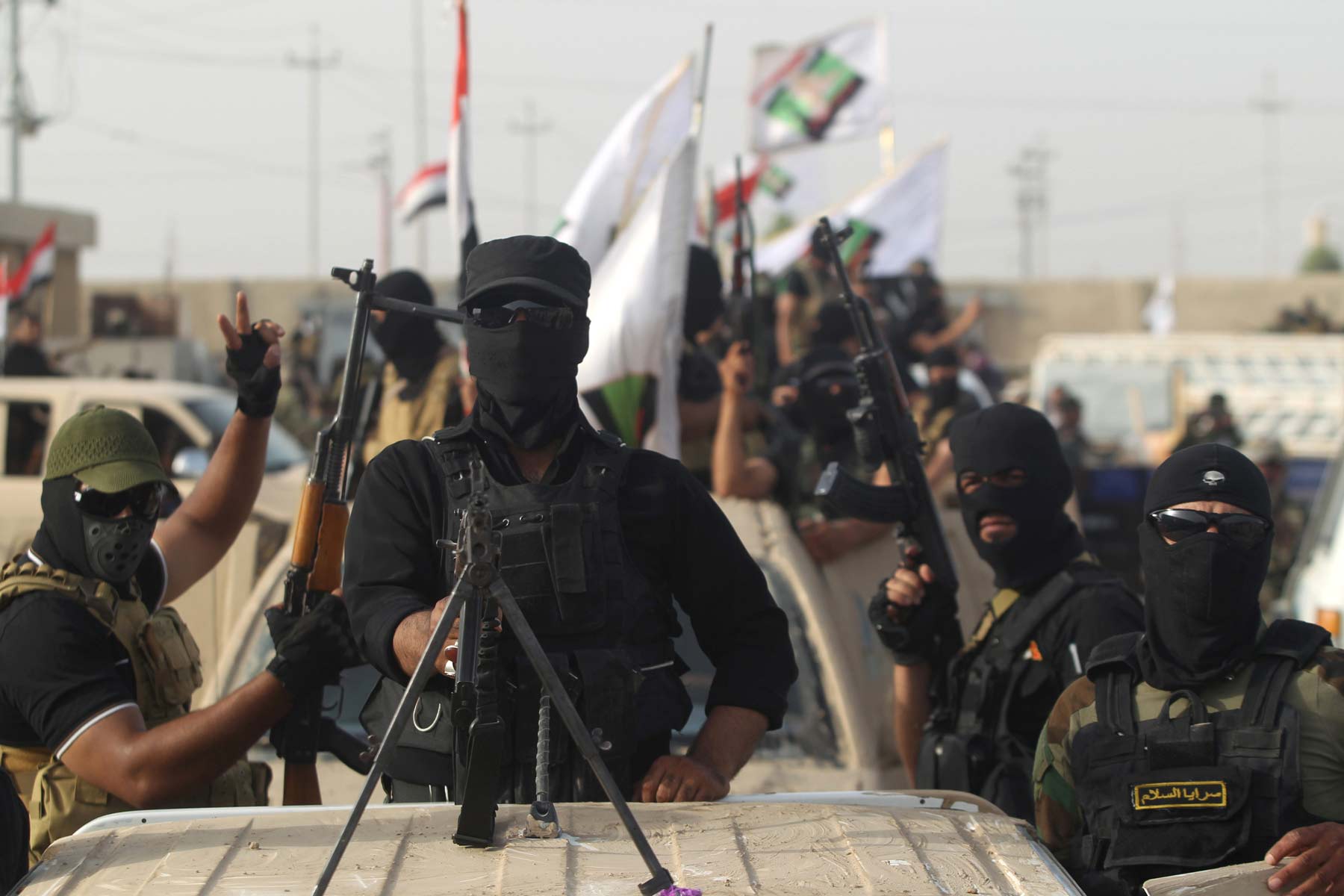
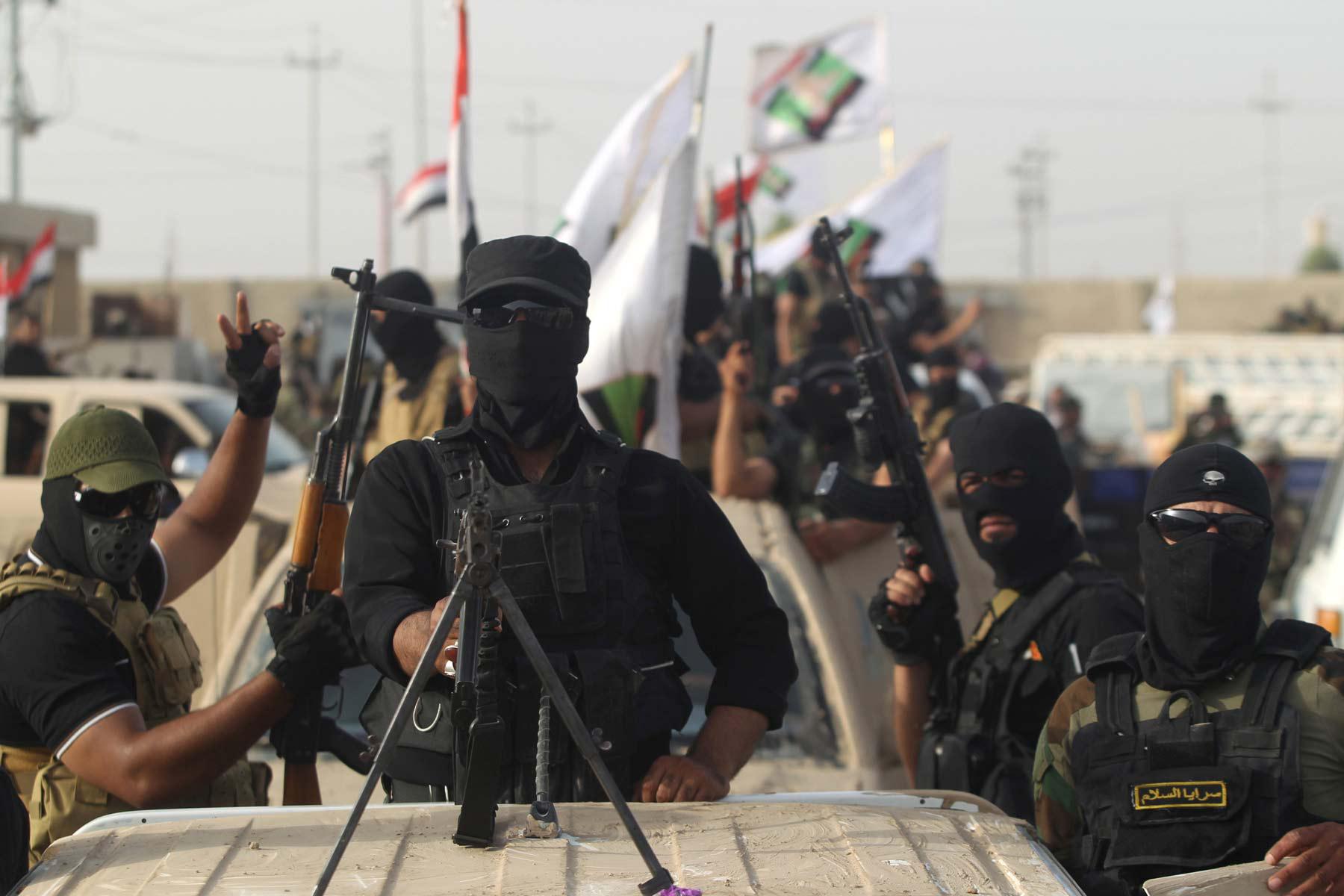
BAGHDAD – Muqtada al-Sadr’s decision to place his armed wing, Saraya al-Salam, under state authority has triggered one of Iraq’s most consequential debates in years over the future of militias, state sovereignty and Iranian influence, exposing deep divisions within the country’s Shiite political establishment and placing rival factions under unprecedented pressure.
The move came as Iraq’s new government faces intensifying American and regional demands to curb the power of armed groups operating outside full state control, a challenge that successive governments have struggled, and largely failed, to address since the rise of the Popular Mobilisation Forces during the war against ISIS.
Sadr, one of Iraq’s most influential Shiite clerics and political leaders, announced this week that Saraya al-Salam would formally separate from the Shiite National Movement and integrate into state institutions. He later issued a one-week deadline for commanders to complete the transition process.
A directive from Sadr’s office tasked senior militia officials, including military adviser Abu Doaa al-Issawi and jihadist aide Tahseen al-Hamidawi, with finalising the separation by June 5. Civilian structures associated with the movement are to be folded into Al-Bunyan al-Marsous, a charitable organisation linked to the Sadrist movement.
Prime Minister Ali al-Zaidi quickly welcomed the initiative, describing it as “an important path toward strengthening internal stability and consolidating the principle of restricting weapons to the state.”
Zaidi urged all armed factions to operate exclusively under official institutions, insisting that the Iraqi state alone should possess the authority to carry weapons and enforce the law.
For many Iraqi observers, however, the significance of Sadr’s decision extends far beyond Saraya al-Salam itself.
The cleric’s move directly challenges the political legitimacy of rival Shiite factions that continue to maintain powerful military wings while simultaneously participating in government and parliament.
By taking the first symbolic step himself, Sadr has shifted the burden onto competing groups, particularly factions aligned closely with Iran, forcing them to publicly define their positions on whether weapons should remain outside full state control.
Some factions attempted to adapt quickly to the new political atmosphere.
Asaib Ahl al-Haq, led by Qais al-Khazali, declared support for restricting weapons to the state and rejected what it described as uncontrolled arms outside official institutions.
Khazali himself argued that resistance movements without broader political and developmental projects could eventually become “a burden on society,” signalling an effort to reposition his faction politically amid changing public and regional pressures.
Yet analysts note that most factions endorsing the principle of state authority have not committed to dismantling their military structures.
Instead, they argue they already operate legally under the Popular Mobilization Forces, which became an official state institution funded by the Iraqi government after the anti-ISIS war.
This ambiguity lies at the centre of Iraq’s militia dilemma.
Although PMF factions receive state salaries and operate under formal legislation, many retain independent command systems, ideological loyalties and political agendas that frequently supersede official military authority.
As a result, Iraq’s weapons debate is no longer merely about legality, but about who ultimately decides when and how force is used.
The divisions become sharper among factions most closely tied to Iran’s regional network of allied armed groups.
Kataib Sayyid al-Shuhada rejected calls to hand over weapons, insisting that “resistance weapons” would remain necessary as long as external threats persisted.
Its spokesman Kazem al-Fartousi criticised proposals for fully integrating militias into state institutions, arguing that each faction possessed distinct operational and political functions.
Harakat al-Nujaba and Kataib Hezbollah have also publicly rejected disarmament efforts, despite reports that some other armed groups may be considering limited forms of restructuring.
The disagreement reflects broader tensions over Iran’s role in Iraq.
Tehran views Iraqi armed factions as one of its most important regional instruments of influence, alongside allied groups in Lebanon, Syria and Yemen. Any meaningful reduction in militia autonomy could weaken Iran’s leverage across the region.
Security analysts believe Iran is therefore likely to manage the process quietly rather than openly oppose it, seeking to influence how factions are integrated into state structures without surrendering strategic influence entirely.
At the same time, Baghdad faces mounting pressure from Washington to reduce militia influence within state institutions.
Earlier this month, reports emerged that Iraqi officials, including Prime Minister Zaidi, former premier Mohammed Shia al-Sudani and veteran Shiite leader Hadi al-Amiri, were working on an “executive project” aimed at restructuring armed factions before presenting proposals to the United States.
The plan reportedly includes removing heavy and medium weapons, restructuring the Popular Mobilization Forces and reshaping parts of Iraq’s security apparatus, including intelligence agencies.
But Iraqi political sources remain sceptical about whether the government can realistically implement such measures.
Years of conflict transformed many militias into powerful political, military and economic networks deeply embedded within the Iraqi system itself. Any attempt to fundamentally alter their status risks destabilising the fragile balance of power inside the Shiite political camp.
For Sadr, however, the move provides a powerful political advantage.
He can now present himself as the first major Shiite leader willing to place his own weapons under state authority, reinforcing his long-standing nationalist rhetoric and distinguishing himself from rivals accused of prioritising factional or foreign interests over the Iraqi state.
Whether the initiative ultimately leads to meaningful institutional reform remains uncertain.
The deeper question confronting Iraq is not whether politicians publicly endorse restricting weapons to the state, most now do, but whether armed factions are willing to relinquish the independent power structures that have become central to Iraq’s post-2003 political order.
That unresolved struggle may shape the future of the Iraqi state itself, determining whether Baghdad can genuinely restore a monopoly on force or whether militias will continue operating simultaneously as state actors and autonomous armed powers.