

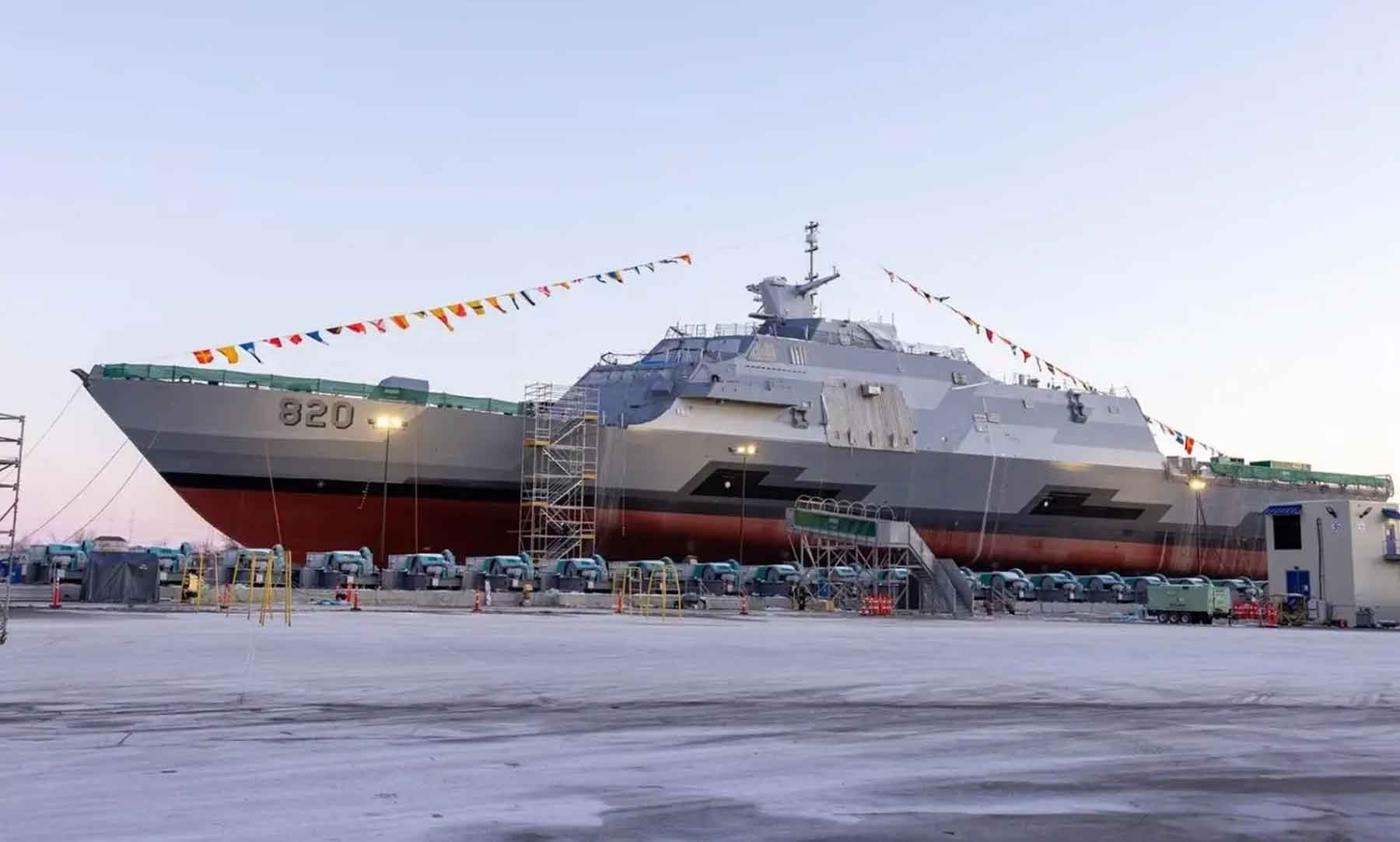
A view of His Majesty King Saud, the first of four multi-mission combat vessels under Saudi Arabia’s Tuwaiq Project.
Saudi Arabia launches first Tuwaiq Project ship as US defence ties deepen
The Tuwaiq Project signals a deeper strategic recalibration of the Saudi naval posture, reflecting evolving security priorities.
Wednesday 17/12/2025
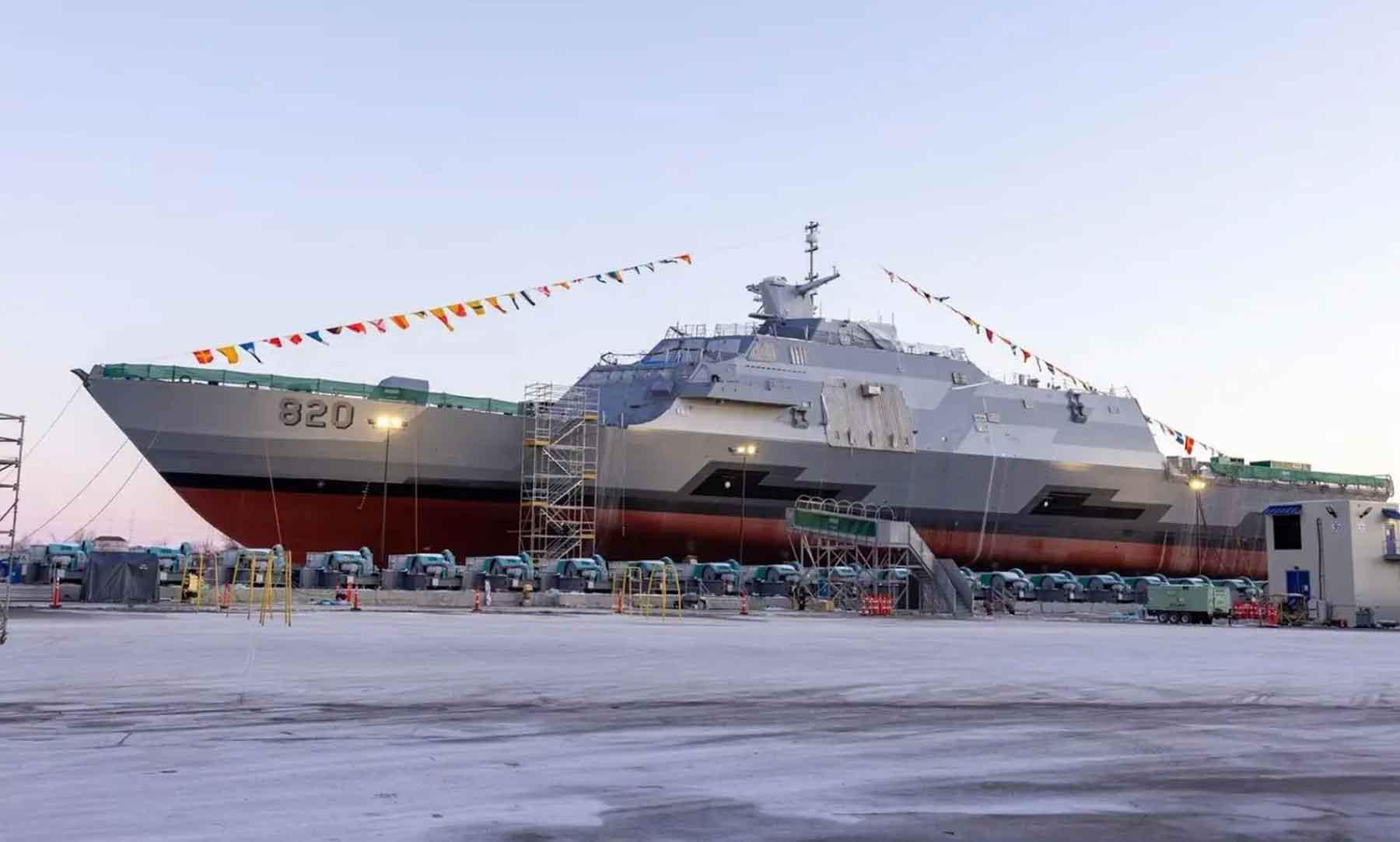
A view of His Majesty King Saud, the first of four multi-mission combat vessels under Saudi Arabia’s Tuwaiq Project.
RIYADH -
The launch of His Majesty King Saud, the first of four multi-mission combat vessels under Saudi Arabia’s Tuwaiq Project, marks more than a milestone in shipbuilding. It signals a deeper strategic recalibration of the kingdom’s naval posture, reflecting evolving security priorities and a long-term ambition to become a more capable and self-reliant maritime power.
The ceremony, held in the US state of Wisconsin, brought together senior Saudi and American military officials alongside representatives from defence giants Lockheed Martin and Fincantieri. While the setting underscored the strength of Saudi-US defence ties, the message from Riyadh was clear: the Tuwaiq Project sits at the heart of a broader transformation of the Royal Saudi Naval Forces (RSNF).
Saudi Chief of Naval Staff Lieutenant General Mohammed al-Ghuraibi described the programme as a “strategic cornerstone” of naval development, pointing to the leadership’s sustained backing of military modernisation. His remarks framed the project not simply as an acquisition of new hardware, but as part of a comprehensive effort to build a modern, professional force supported by advanced technologies, upgraded infrastructure and intensive training.
At its core, the Tuwaiq Project aims to deliver four advanced, multi-mission vessels capable of operating across a wide spectrum of threats, aerial, surface and subsurface. This versatility reflects the increasingly complex maritime environment facing Saudi Arabia, from protecting critical shipping lanes in the Red Sea and the Arabian Gulf to safeguarding energy infrastructure and responding to asymmetric threats.
Yet the project’s significance extends beyond the ships themselves. It forms part of a wider naval modernisation drive that includes upgrading King Abdulaziz Naval Base in Jubail with enhanced maintenance and training facilities. By investing in shore-based infrastructure alongside new platforms, Riyadh appears intent on ensuring long-term operational readiness rather than short-term capability gains.
The international dimension of the programme also carries strategic weight. Construction in the United States and collaboration with American and Italian defence firms highlight the kingdom’s reliance on established partners, while discussions between Ghuraibi and US Chief of Naval Operations Admiral Daryl Caudle point to an effort to deepen operational co-operation between the two navies. This aligns with Saudi Arabia’s broader approach of combining external partnerships with a push to localise military industries under Vision 2030.
That localisation agenda is increasingly central to Riyadh’s defence planning. While the first Tuwaiq vessels are being built abroad, the programme is widely seen as a stepping stone towards expanding domestic capabilities in naval maintenance, systems integration and, eventually, shipbuilding. In this sense, the project fits squarely within Vision 2030’s goals of strengthening national defence capacity and reducing long-term dependence on foreign suppliers.
Strategically, the timing matters. Maritime security has become a growing concern across the Middle East, driven by regional rivalries, threats to commercial shipping and the global importance of energy supply routes. By investing in a more agile and technologically advanced navy, Saudi Arabia is positioning itself to play a more assertive role in safeguarding its interests and contributing to regional stability.
The launch of His Majesty King Saud is therefore best understood not as a ceremonial moment, but as an early marker of intent. As the remaining vessels under the Tuwaiq Project take shape, the programme will offer a clearer picture of how Saudi Arabia intends to project power at sea, and how seriously it is pursuing the goal of a modern, resilient and strategically autonomous naval force.