

Close political, economic and defence cooperation
Sisi in Abu Dhabi to reinforce Egypt-UAE alliance, discuss regional crises
Sisi’s visit to Abu Dhabi reflects deepening strategic coordination between two key regional powers amid escalating tensions across the Middle East.
Monday 09/02/2026
Close political, economic and defence cooperation
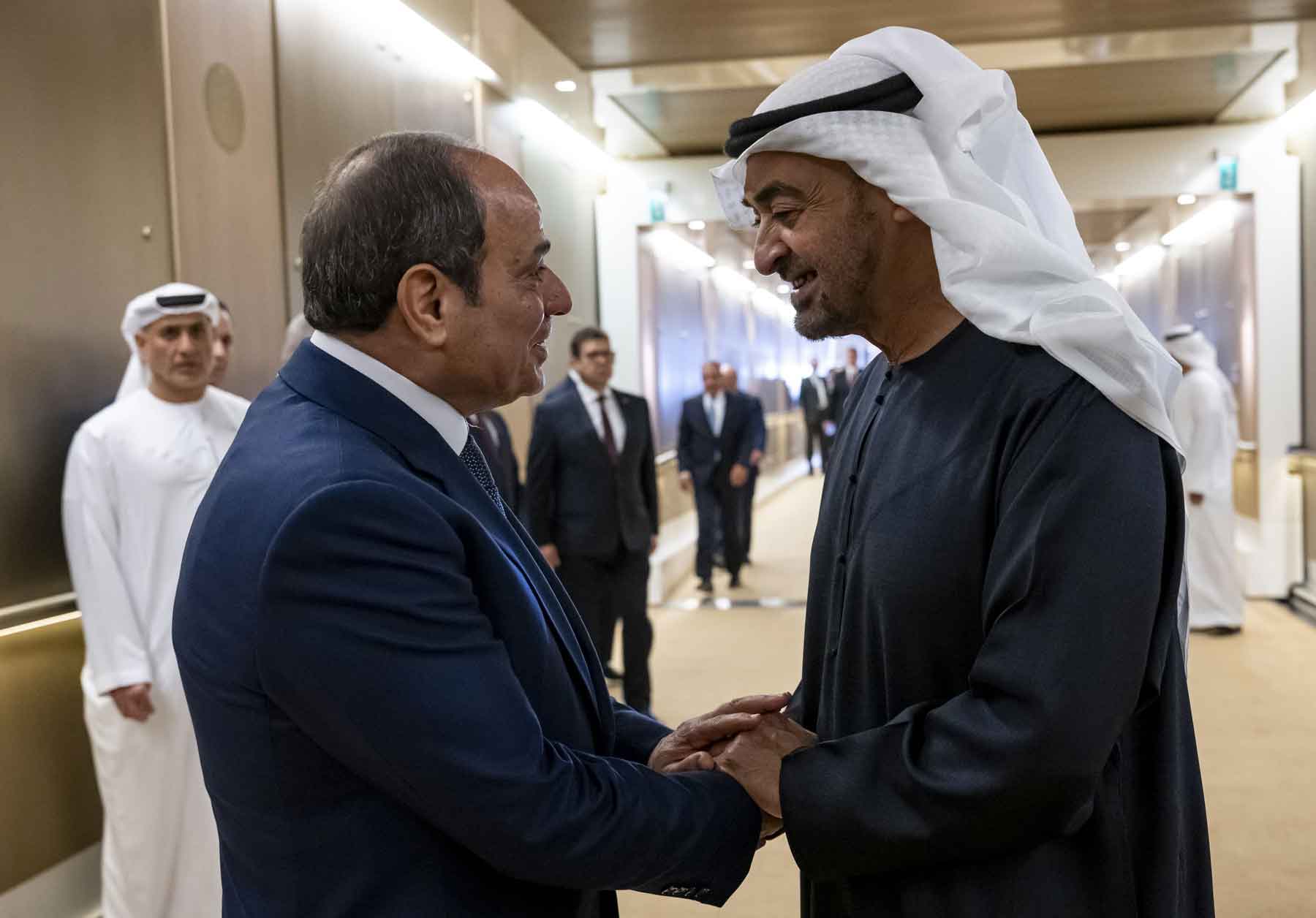
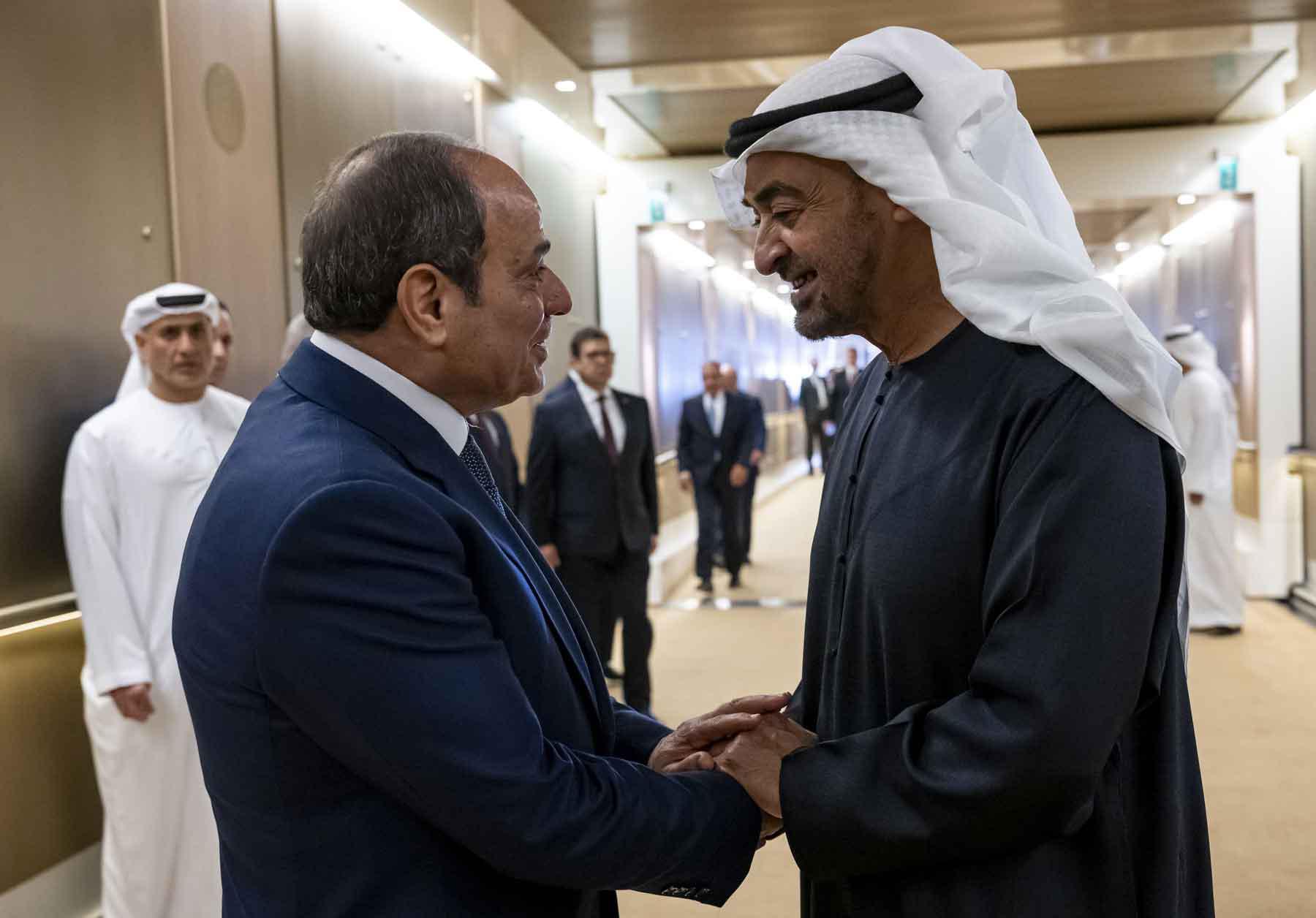
CAIRO / ABU DHABI – Egypt’s President Abdel Fattah al-Sisi arrived in Abu Dhabi on Monday for talks with UAE President Sheikh Mohamed bin Zayed Al Nahyan, in a visit reflecting deepening strategic coordination between two key regional powers amid escalating tensions across the Middle East.
The Egyptian presidency described the trip as a “fraternal visit”, adding that Sheikh Mohamed bin Zayed personally received Sisi upon his arrival at Abu Dhabi International Airport, alongside senior Emirati officials, ministers and Egypt’s ambassador to the UAE.
According to official statements from both sides, the talks focused on strengthening bilateral ties and enhancing coordination on regional and international issues of mutual concern, particularly developments in the Middle East and efforts to maintain regional stability.
The two leaders stressed the importance of continued consultation to address regional crises, underscoring their shared commitment to advancing a ceasefire in Gaza, ensuring the uninterrupted delivery of humanitarian aid, and working toward a just and comprehensive peace based on the two-state solution.
Sisi’s visit comes at a sensitive juncture marked by mounting geopolitical challenges, including tensions in the Red Sea, ongoing conflicts in the region and broader concerns over regional security. Egypt and the UAE are widely regarded as pillars of stability in the Arab world, maintaining close political, economic and defence cooperation.
The visit also reflects a pattern of sustained high-level engagement between the two countries. Sisi visited the UAE twice in 2025, most recently in June, while Sheikh Mohamed bin Zayed travelled to Egypt three times last year, including a visit in September.
Beyond political coordination, the partnership between Cairo and Abu Dhabi has expanded significantly in recent years, particularly in economic and strategic sectors.
The UAE is among Egypt’s largest investors, with major projects including the $35 billion Ras El Hekma coastal development on Egypt’s Mediterranean coast, alongside investments in energy, infrastructure and financial services.
Analysts say the alliance has played a key role in shaping regional security dynamics and confronting extremist movements, while strengthening cooperation on economic resilience and regional development.
Observers expect the visit could help advance negotiations on a comprehensive economic partnership and potential free trade arrangements aimed at boosting bilateral trade, facilitating the movement of goods and services and strengthening supply chains amid disruptions affecting global shipping routes, particularly in the Red Sea.
In the energy sector, the UAE has also emerged as a central partner in Egypt’s ambition to position itself as a regional hub for energy and green transition, including renewable energy and hydrogen development.
During his visit, Sisi also toured the Mohamed bin Zayed University of Artificial Intelligence, where he was briefed on the institution’s academic programmes and research initiatives, highlighting growing cooperation in advanced technology and innovation.
The close coordination between Egypt and the UAE continues to serve as a cornerstone of their strategic partnership, reflecting shared priorities in safeguarding regional stability, supporting economic development and navigating an increasingly volatile geopolitical landscape.