

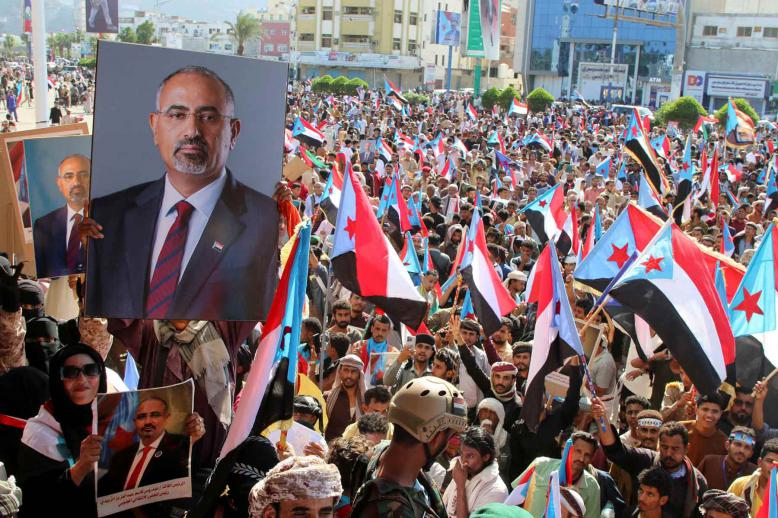
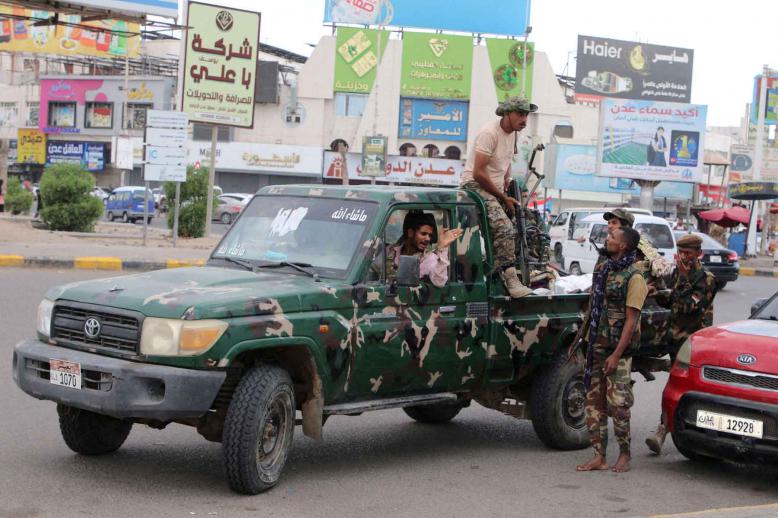
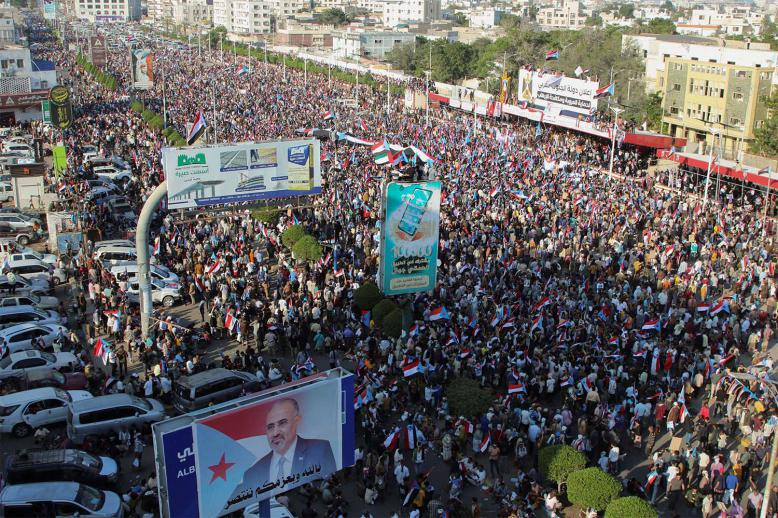
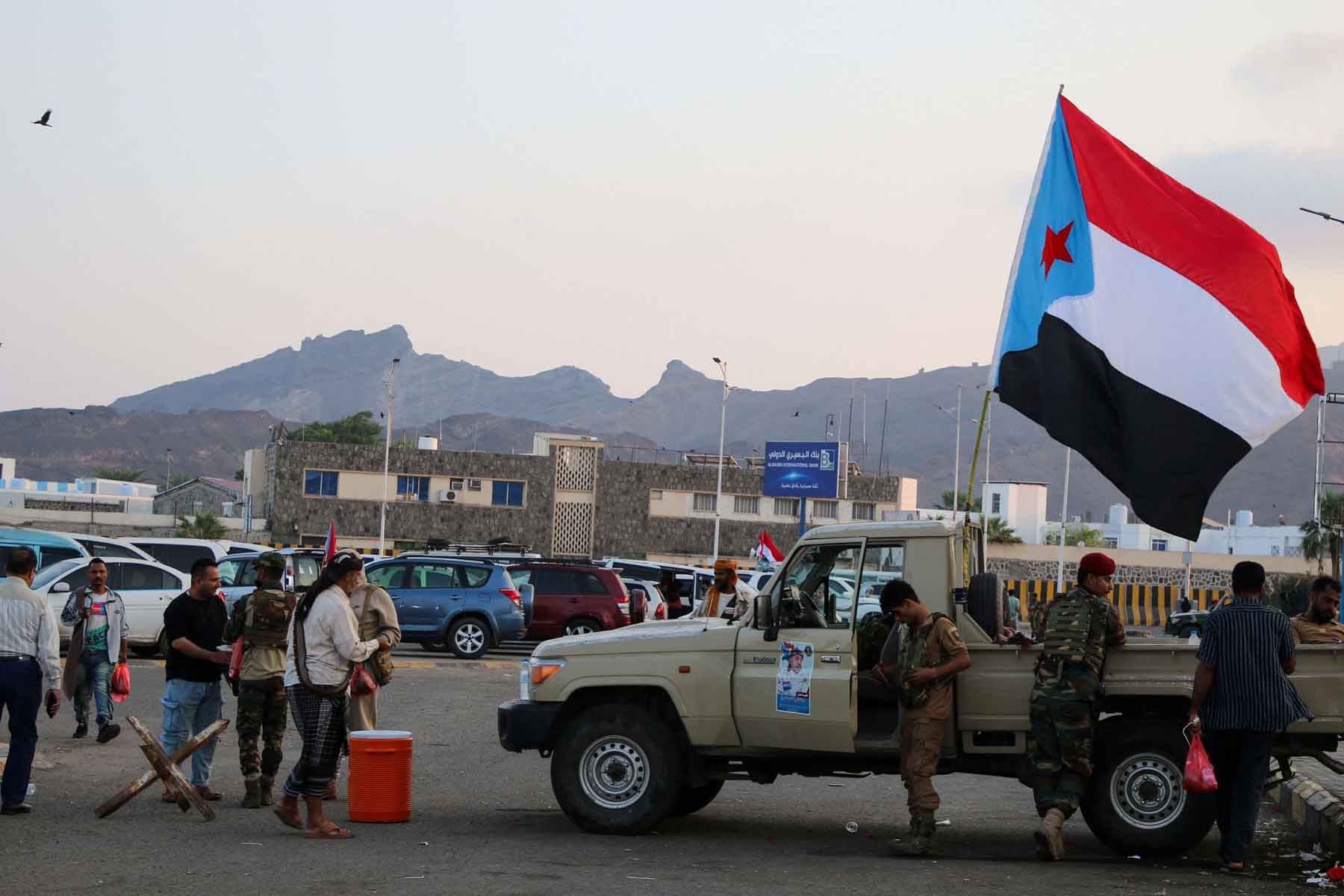
A flag of the UAE-backed separatist Southern Transitional Council (STC) flutters on a military patrol truck in Aden, Yemen, January 1, 2026.
Southern Yemen tensions ease as STC redeploys forces
National Shield forces had begun participating in field operations alongside southern troops.
Friday 02/01/2026
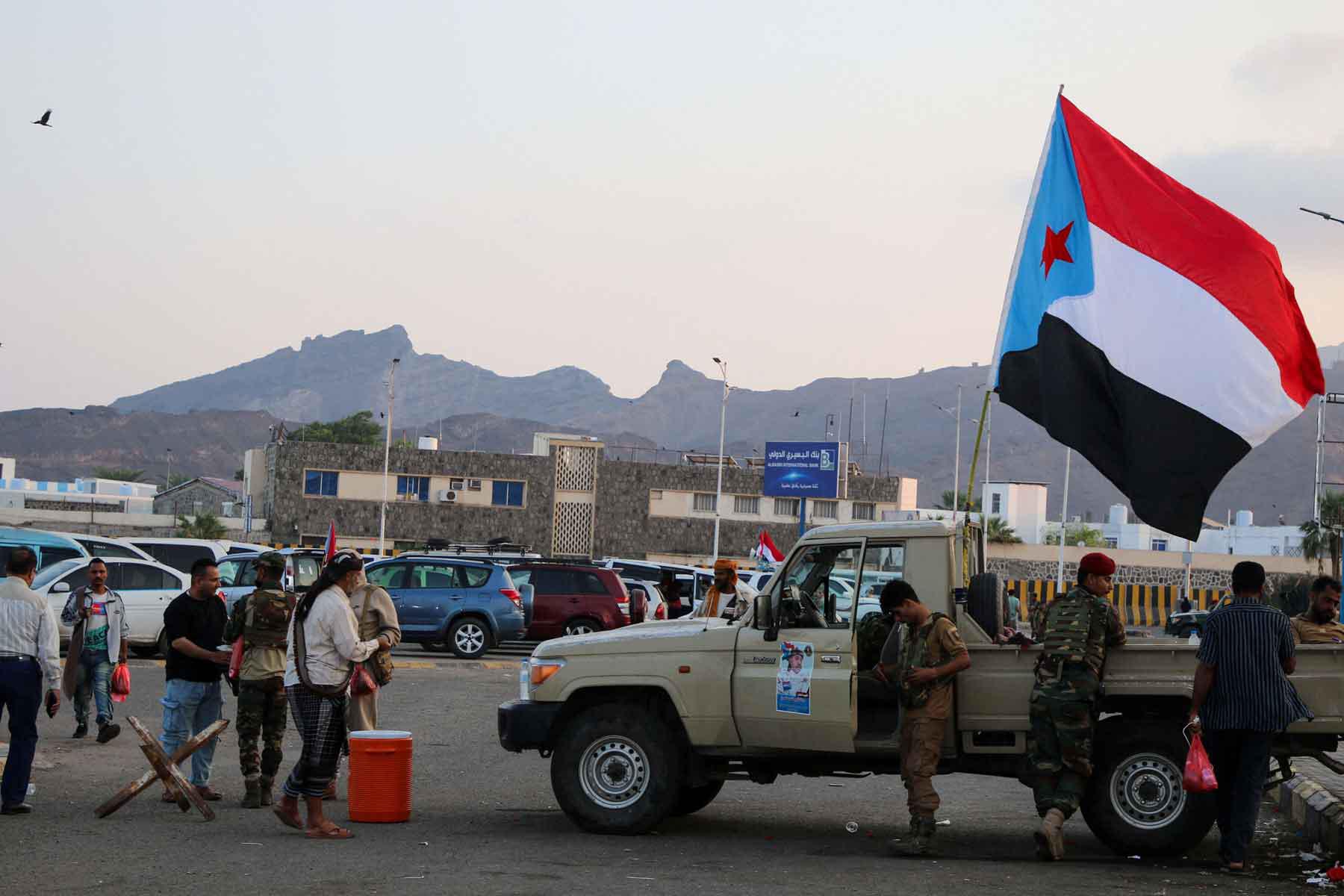
A flag of the UAE-backed separatist Southern Transitional Council (STC) flutters on a military patrol truck in Aden, Yemen, January 1, 2026.
AL MUKALLA / ADEN -
Yemen’s Southern Transitional Council (STC) announced on Wednesday the redeployment of its forces in the eastern provinces of Hadramout and Mahra, in coordination with Saudi-backed government units known as the National Shield forces, amid heightened regional tensions and mounting international scrutiny.
In a statement, STC military spokesman Mohammed al-Naqeeb said the move came “within the framework of coordination with the Arab coalition led by Saudi Arabia,” confirming that National Shield forces had begun participating in field operations alongside southern troops.
He added that STC forces retained “full control” over what the group calls the Promising Future operation theatre in Hadramout and Mahra, while emphasising that the redeployment aimed to strengthen security arrangements rather than signal a withdrawal.
The National Shield forces are largely composed of southern Yemeni fighters, operate under the internationally-recognised Yemeni government and receive direct backing from Riyadh. According to Naqeeb, the first National Shield brigade has already repositioned in the Thamud area, with additional units expected to deploy to Ramat and other locations across the two provinces, in line with prior agreements.
The STC said the redeployment was carried out under directives from its president Aidarus al-Zubaidi and was intended to safeguard “the security, safety and unity of the south,” particularly in Hadramout and Mahra.
Naqeeb argued that the ongoing operation sought to cut off arms-smuggling routes used by the Iran-backed Houthi movement, combat extremist organisations and halt what he described as the mismanagement of Hadramout’s natural resources — objectives the council says are key to restoring stability across southern Yemen.
Emergency measures and rising tensions
The announcement follows a series of rapid and destabilising developments. On Tuesday, Yemen’s Presidential Leadership Council chairman Rashad al-Alimi declared a nationwide state of emergency for 90 days, renewable, citing what he called “attempts to divide the republic.”
Tensions escalated sharply after the Saudi-led coalition carried out air strikes on what it said were weapons shipments unloaded at the port of Mukalla, an area under STC control. Saudi officials claimed the arms were destined for separatist forces, allegations the United Arab Emirates has firmly denied.
Shortly afterwards, Abu Dhabi announced the formal end of the mission of its remaining counterterrorism units in Yemen, noting that it had already withdrawn most of its forces in 2019 as part of the Arab coalition backing the Yemeni government.
The STC’s expansion into Hadramout and Mahra in early December — provinces that together account for nearly half of Yemen’s landmass — has brought Saudi Arabia and the UAE, nominal allies in Yemen’s war, to a point of rare public disagreement.
While the STC insists it has agreed to the deployment of Saudi-aligned government forces, Saudi officials have maintained that their security concerns would only be fully addressed if STC forces withdrew entirely from the newly seized territories, particularly areas close to the Saudi border.
Local concerns and broader stakes
Residents in Hadramout have expressed cautious hope that the latest arrangements could reduce tensions. “We don’t want war. We want security and stability in Hadramout and everywhere,” said Musaed Salem, a bus driver from Qatn, welcoming the presence of additional government forces.
The STC has dismissed criticism of the deal, stressing that the National Shield units are largely composed of southerners and funded and supervised by Saudi Arabia, a point it says undermines accusations that the council is threatening regional security.
Despite these assurances, the developments have revived fears that Yemen’s fragile anti-Houthi alliance could fracture further. The STC, which controls key ministries within the coalition government, has long accused successive governments of politically and economically marginalising the south, and continues to call for independence — a demand rejected by Yemeni authorities, who insist on preserving the country’s unity.
The council’s December advance has also raised renewed speculation that southern Yemen — an independent state between 1967 and 1990 — could move towards secession, even as the wider conflict with the Houthis grinds on into its second decade.
Analysts warn that infighting among nominal allies risks undermining efforts to stabilise Yemen, secure key ports and borders and counter both militant groups and Houthi forces that have controlled the capital Sana’a and much of the north since 2014.