

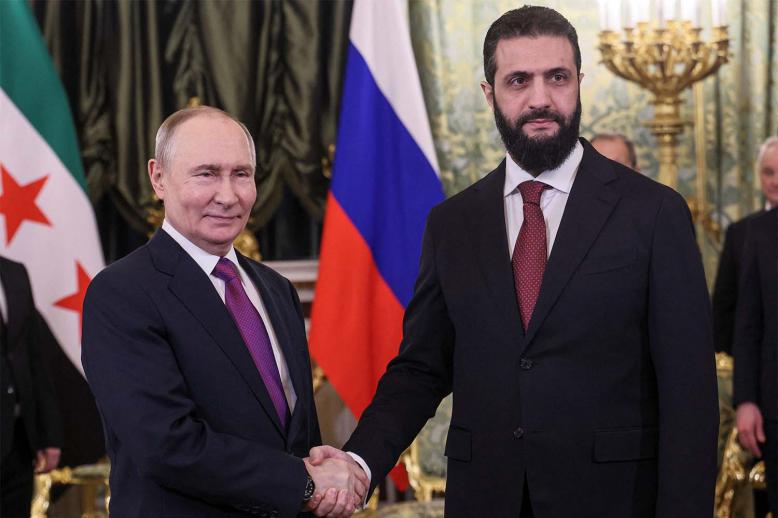
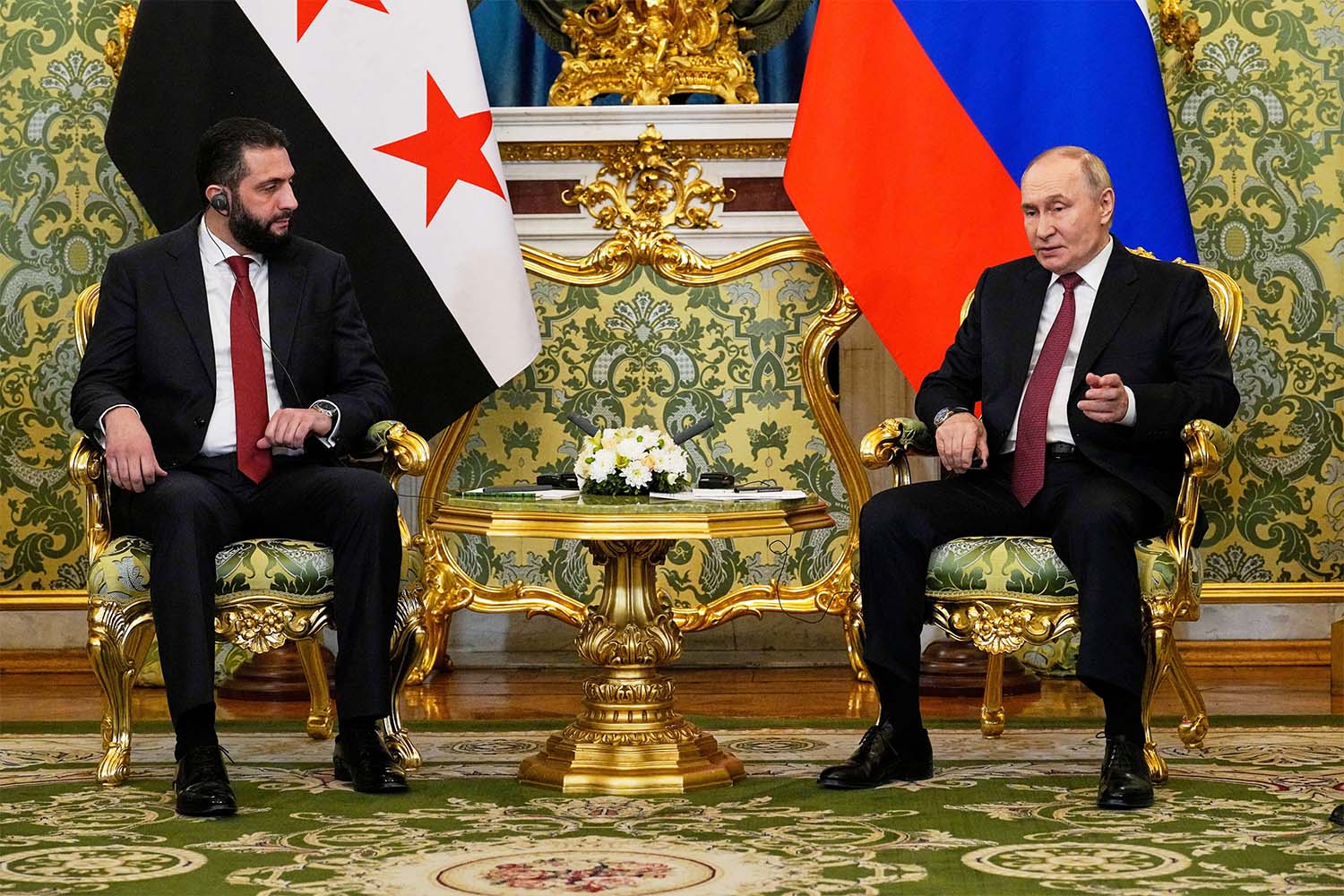
Sharaa last met with Putin in Moscow on October 15
Syria's President to meet Putin in Moscow on Wednesday
The Moscow summit could reinforce pragmatic realism over past enmities, helping stabilize the country amid ongoing reconstruction challenges and geopolitical maneuvering.
Tuesday 27/01/2026
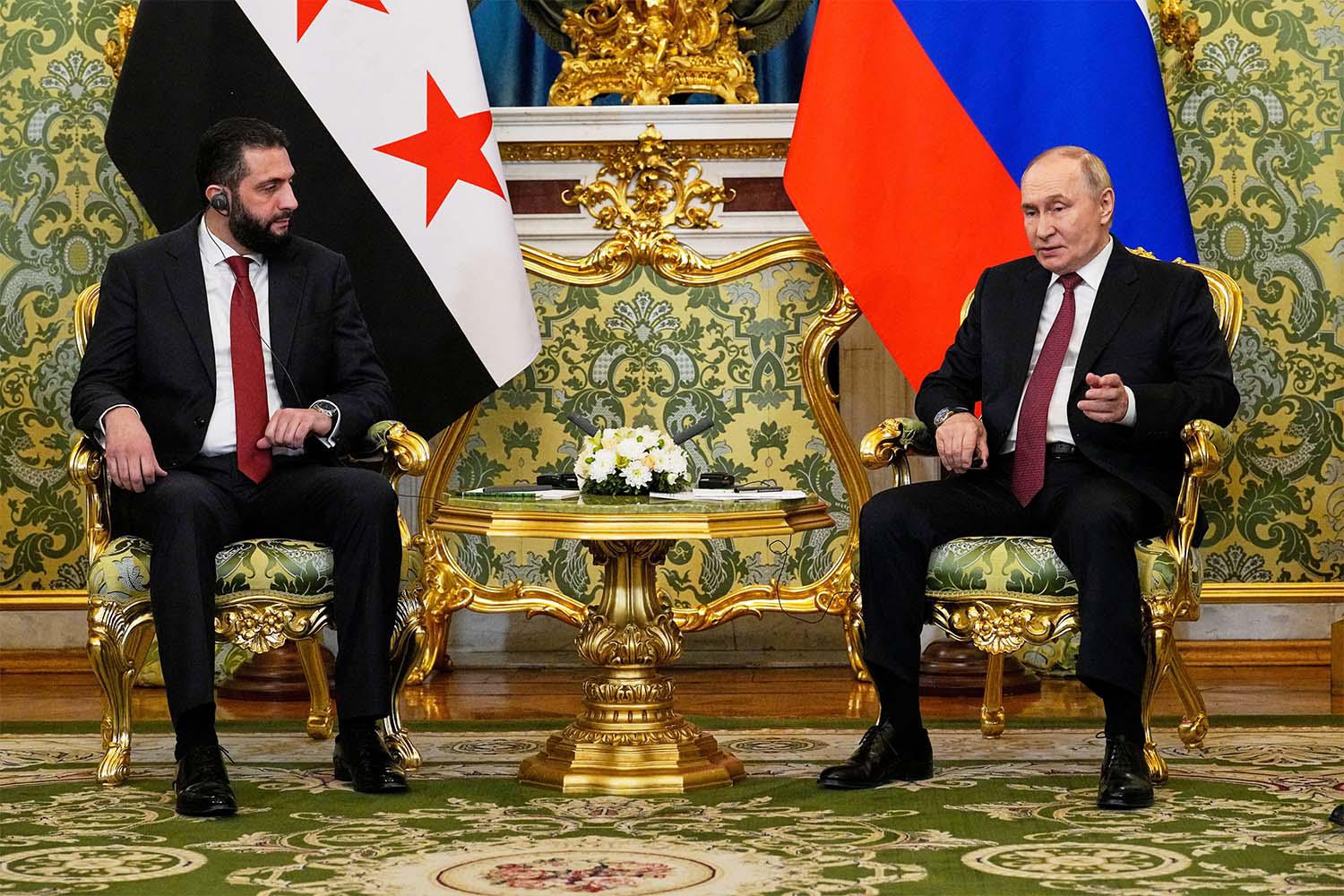
Sharaa last met with Putin in Moscow on October 15
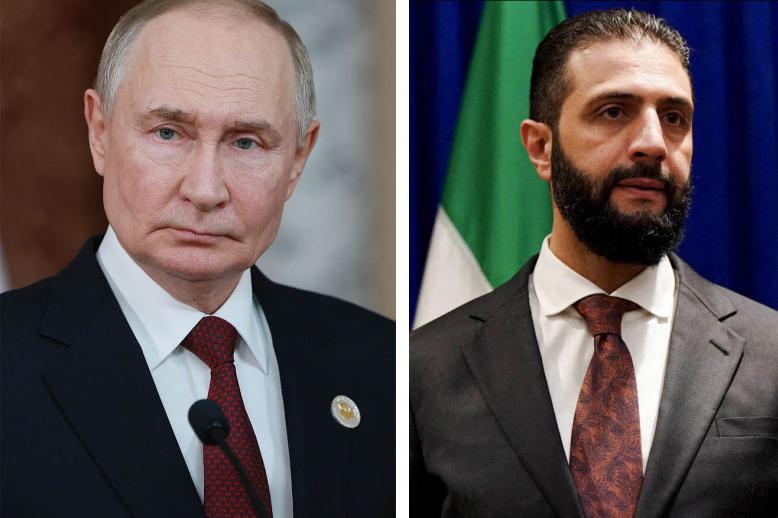
MOSCOW - Syrian President Ahmed al-Sharaa is set to travel to Moscow on Wednesday for talks with Russian President Vladimir Putin, according to reports from pro-government Syrian media on Monday.
The meeting, announced by Syria TV, marks another high-level engagement between the two leaders since the dramatic fall of Bashar al-Assad's regime in late 2024.
This upcoming visit follows Sharaa's first face-to-face meeting with Putin in Moscow on October 15 — just months after rebel forces led by Sharaa's Hayat Tahrir al-Sham (HTS) coalition toppled Assad, who fled to Russia and was granted asylum.
That initial encounter was widely seen as a pragmatic pivot. Despite Russia's years of military support for Assad — including airstrikes against opposition groups — both sides prioritized continuity in bilateral ties, particularly regarding Russia's strategic military presence in Syria.
During the October 2025 talks, Sharaa pledged to honour past agreements between Damascus and Moscow, signaling that Russia could retain access to its key facilities — the Tartus naval base and Hmeimim airbase on the Mediterranean coast. These bases remain vital for Russia's power projection in the Middle East, the Mediterranean, and even logistical support to Africa.
Putin, in turn, emphasized longstanding "friendly" relations spanning decades and expressed readiness to expand cooperation in energy, infrastructure reconstruction, and economic projects amid Syria's post-conflict recovery.
The January 2026 meeting comes at a time when Syria continues to navigate complex internal and regional dynamics.
Sharaa's administration has pursued reconciliation efforts, including a recent ceasefire agreement with the Syrian Democratic Forces (SDF) in the northeast and diplomatic outreach to regional powers such as Saudi Arabia, Qatar, Turkey, and France.
Russia, meanwhile, has adjusted its footprint — notably evacuating a smaller base in Qamishli at Damascus's request — while maintaining its core interests.
Analysts expect the Moscow discussions to focus on several priorities, such as Security and military cooperation, economic reconstruction and regional stability.
The timing of the visit underscores Sharaa's efforts to secure international legitimacy and rebuild state institutions following the transitional period.
Having addressed the United Nations and engaged with global leaders, Sharaa appears intent on redefining Syria-Russia relations on terms of "sovereignty, territorial integrity, and security stability," as he described in earlier statements.
For Putin, engaging Damascus remains a way to preserve influence in a volatile region, counter Western isolation efforts, and demonstrate Russia's reliability as a partner even after regime change.