

Renewed partnership
Turkey, Egypt cement strategic partnership with defence pact, trade drive
Erdogan described Egypt as Turkey’s largest trading partner in Africa and said both countries were working towards raising bilateral trade to $15 billion.
Wednesday 04/02/2026
Renewed partnership
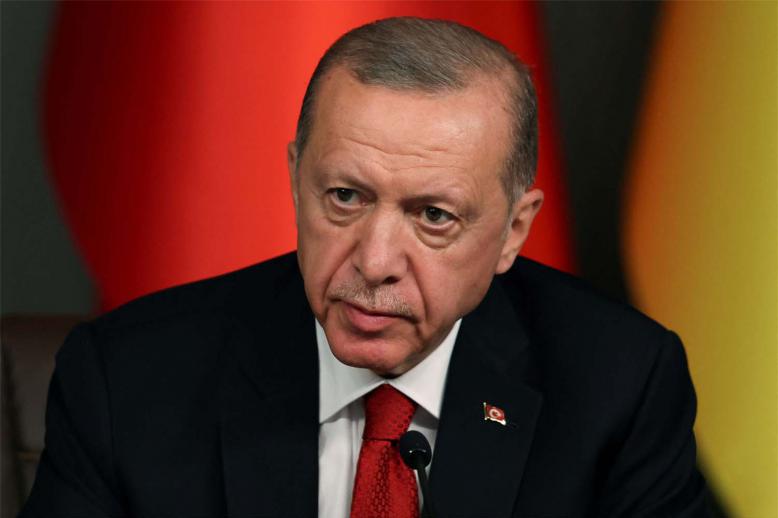
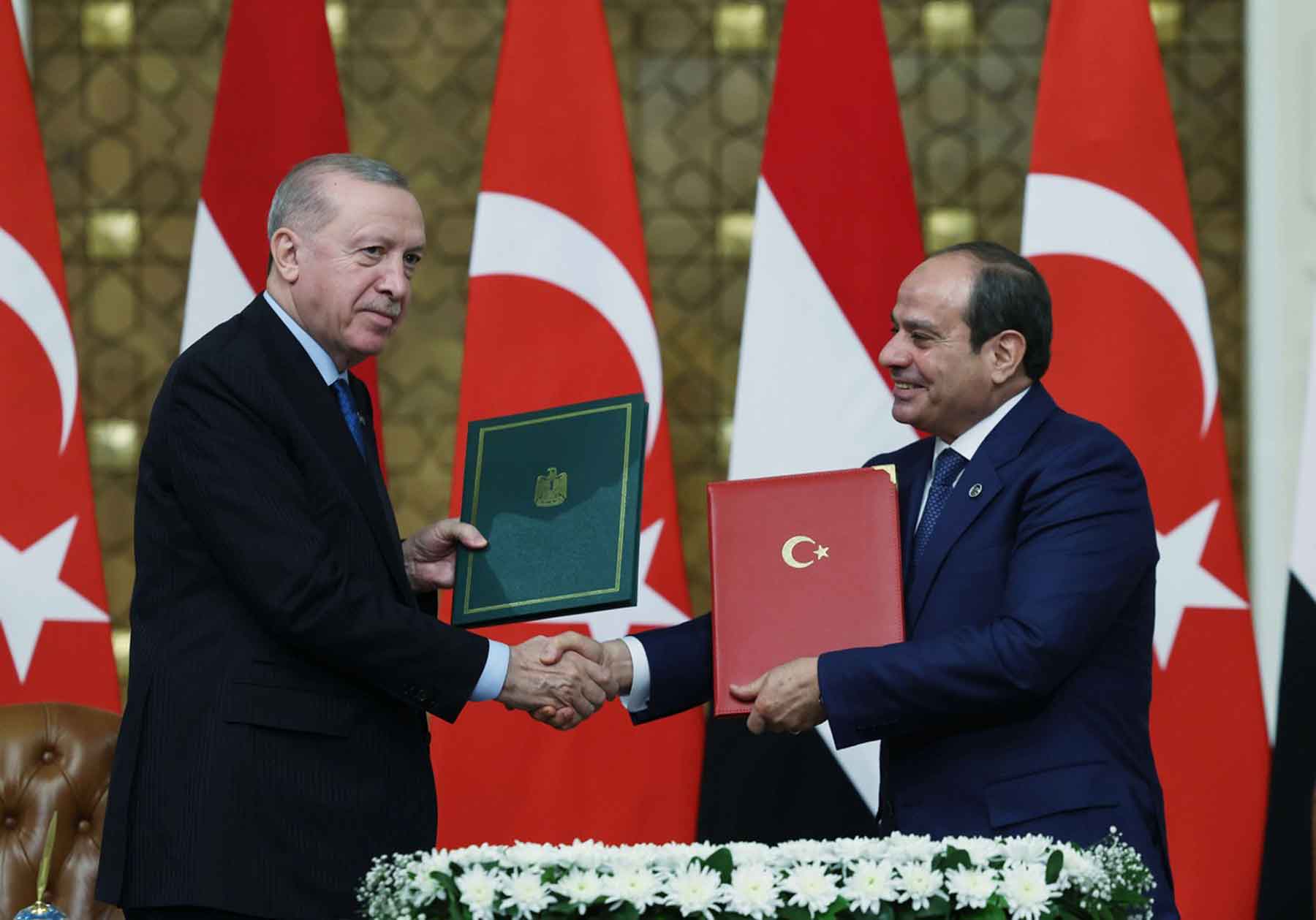
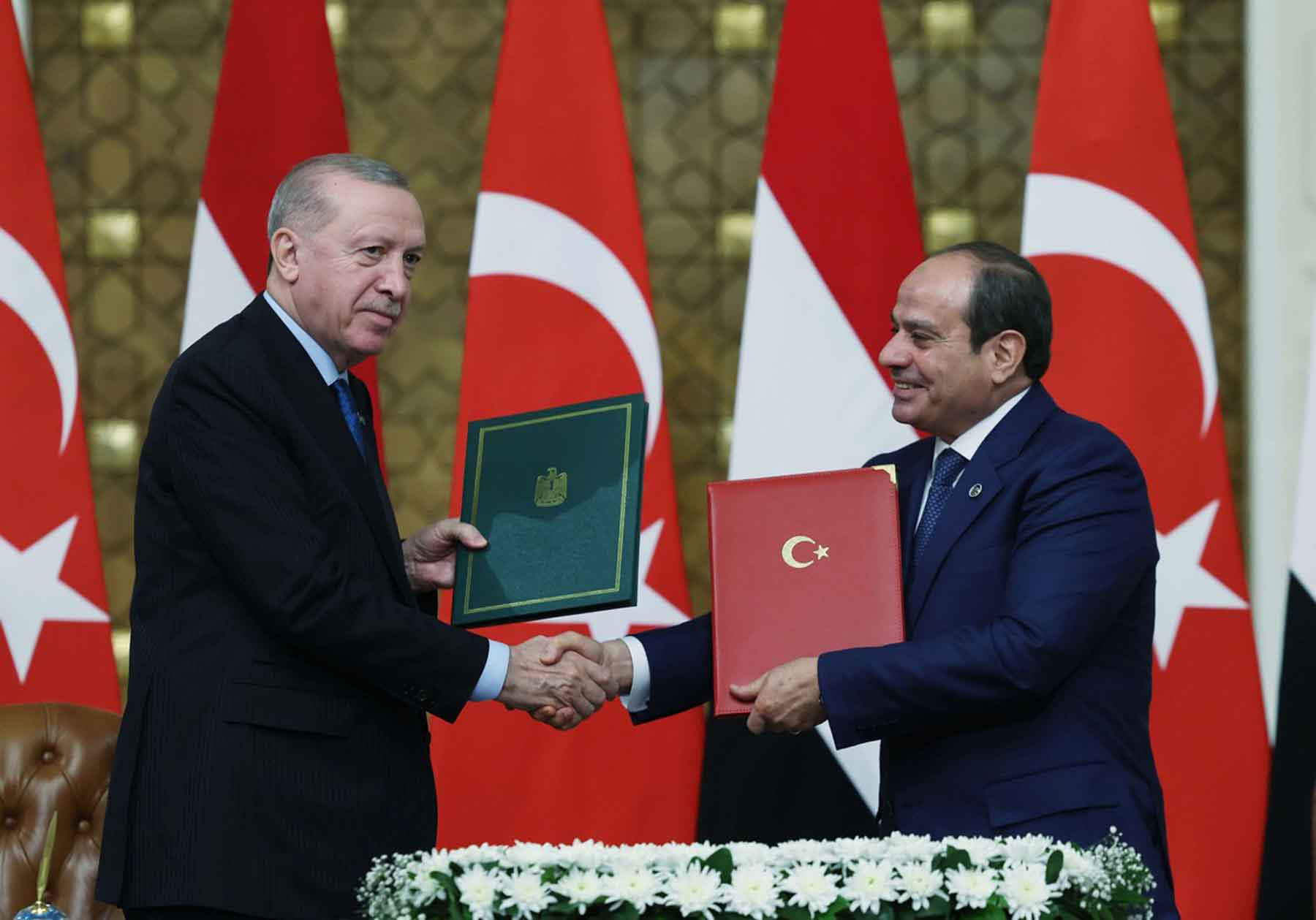
CAIRO – Turkish President Recep Tayyip Erdogan’s visit to Cairo on Wednesday and his talks with Egyptian President Abdel Fattah al-Sisi marked a decisive acceleration in relations that have shifted from nearly a decade of estrangement to what both sides now describe as a strategic partnership.
The two leaders oversaw the signing of a wide-ranging set of cooperation agreements spanning defence, trade, health, agriculture and youth affairs, underscoring the depth of a rapprochement that is increasingly reshaping regional alignments in the eastern Mediterranean and beyond.
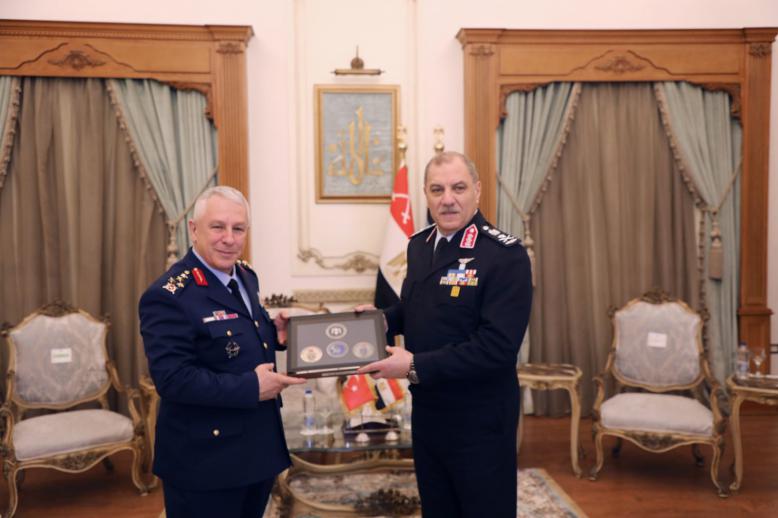
Central to the new phase was the signing of a framework military agreement, a step seen by analysts as laying the groundwork for closer security coordination and a tactical alignment capable of influencing balances of power across the Mediterranean basin.
The defence deal was accompanied by memoranda of understanding covering pharmaceutical regulation, medical supplies, plant quarantine, veterinary services, foreign trade and investment, as well as social services, youth and sport. Together, they signal a deliberate move from diplomatic normalisation to institutionalised cooperation.
Erdogan described Egypt as Turkey’s largest trading partner in Africa and said both countries were working towards raising bilateral trade to $15 billion. He also highlighted ambitions to expand cooperation in maritime transport, freedom of navigation and maritime security, areas of growing importance amid competition over energy routes and influence in the Mediterranean.
Trade between the two countries has expanded rapidly in recent years, reaching $8.8 billion in 2024. Turkish exports to Egypt stood at $4.2 billion, while imports reached $4.6 billion, reflecting a more balanced commercial relationship. Business ties were further reinforced on Wednesday with the closing session of the Turkish-Egyptian Business Forum in Cairo, held alongside Erdogan’s visit and attended by senior representatives from the private sector and financial institutions in both countries. Discussions focused on joint investments, new trade agreements and strengthening private-sector partnerships.
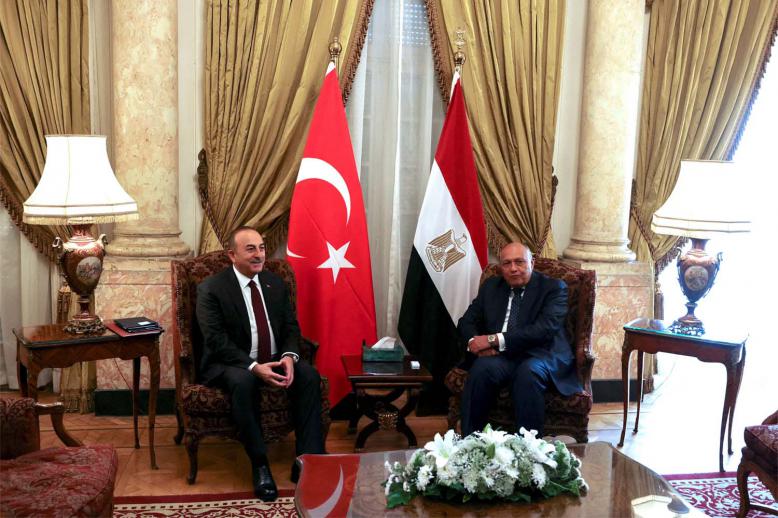
The Turkish-Egyptian reconciliation is widely regarded as one of the most significant geopolitical shifts in the Middle East over the past decade. After years of open rivalry and ideological confrontation following the 2013 ousting of Egypt’s Islamist-led government, Ankara and Cairo have pursued what officials describe as a pragmatic reset, prioritising strategic and economic interests over political differences.
Turkey has recalibrated its regional policy, recognising that prolonged hostility with Egypt constrained its ambitions in the Mediterranean and Africa. Egypt, for its part, has adopted a strategy of measured engagement, reinforcing its role as a pivotal regional actor while opening channels with former rivals to bolster economic stability and regional influence. High-level visits and sustained diplomatic contacts have already translated into joint initiatives across trade, energy, defence, tourism, healthcare, technology and agriculture.
Regional crises also featured prominently in the talks. Erdogan and Sisi condemned recent violations of the Gaza ceasefire following renewed Israeli strikes and called for the full implementation of the US-backed plan to end the war. Both leaders stressed the need for continued coordination to support ceasefire efforts and alleviate the humanitarian catastrophe in Gaza, where violence has continued despite truce arrangements.
Beyond Gaza, discussions covered wider regional concerns, including Iran, Sudan and Somaliland. The two leaders emphasised the urgency of a ceasefire and a comprehensive political settlement to end Sudan’s nearly three-year civil war, warning of the destabilising consequences of continued conflict. Erdogan also reiterated Turkey’s preference for diplomacy in addressing tensions with Iran, including disputes over its nuclear programme, while criticising Israel’s recognition of Somaliland as a violation of Somalia’s sovereignty.
Erdogan’s Cairo visit followed a stop in Saudi Arabia, where Ankara is also seeking to deepen economic and energy cooperation. The back-to-back visits highlight Turkey’s broader push to repair and strengthen ties with key Arab powers after years of strained relations, signalling a recalibration of its Middle East policy towards economic integration and strategic partnerships.
For Egypt, the renewed partnership with Turkey fits into a wider effort to diversify alliances, attract investment and consolidate its position as a central economic and political hub linking Africa, the Middle East and the Mediterranean. As cooperation expands from trade into defence and regional diplomacy, the Turkish-Egyptian thaw appears set to become a durable pillar of the region’s evolving geopolitical landscape.